Practice session
Parking & stopping
Loading…
Every question on this page
The whole pool, with the answer and the explanation for each one. Practise first, then read through anything you were unsure of.
Show all 14 questions with answers
1 of 14 · Parking & stopping
Within what distance of a fire hydrant is it illegal to park?
- A.5 metresAnswer
- B.3 metres
- C.10 metres
- D.15 metres
Explanation: You must not park within 5 metres of a fire hydrant. The distance is measured from the point at the curb beside the hydrant, and it keeps the hydrant clear for fire crews.
2 of 14 · Parking & stopping
How close to a crosswalk or an intersection may you legally park?
- A.No closer than 6 metresAnswer
- B.No closer than 2 metres
- C.No closer than 20 metres
- D.Right up to the edge, if the curb is not painted
Explanation: Parking within 6 metres of a crosswalk or an intersection is illegal. A parked vehicle that close hides pedestrians from drivers, and drivers from pedestrians.
3 of 14 · Parking & stopping
You want to park on a street near a stop sign. What does the law require?
- A.Park no closer than 6 metres to the signAnswer
- B.You may park right beside the sign if you stay in the vehicle
- C.Park no closer than 1 metre to the sign
- D.Stop signs do not affect where you may park
Explanation: It is illegal to park within 6 metres of a stop sign or a traffic light. A parked vehicle there could block other drivers’ view of the sign or signal.
4 of 14 · Parking & stopping
How far from the nearest rail of a railway crossing must you be before you may park?
- A.More than 15 metresAnswer
- B.More than 5 metres
- C.More than 6 metres
- D.More than 50 metres
Explanation: Parking within 15 metres of the nearest rail of a railway crossing is illegal. Vehicles parked near the tracks block the view of approaching trains.
5 of 14 · Parking & stopping
Even where no sign says so, in which of these places is it illegal to park?
- A.On a bridge or in a highway tunnelAnswer
- B.Beside an unpainted curb on a quiet residential street
- C.In a marked stall of a shopping-centre parking lot
- D.On a street at night when there is little traffic
Explanation: Bridges and highway tunnels are on the list of places where parking is always illegal. A stopped vehicle there has no escape room and blocks traffic that cannot easily go around it.
6 of 14 · Parking & stopping
The curb beside an empty space is painted yellow. What does this tell you?
- A.You must not park thereAnswer
- B.You may park there only at night
- C.You may park there if your hazard lights are on
- D.Parking is free there
Explanation: A curb painted yellow or red means no parking, just as a sign prohibiting parking does. Signs, curb markings and common sense tell you whether you may park.
7 of 14 · Parking & stopping
When you park parallel to the curb, how close to it should your vehicle be?
- A.Within 30 centimetresAnswer
- B.Within 1 metre
- C.At least 60 centimetres away
- D.Any distance, as long as the vehicle is parallel
Explanation: Park parallel to the curb and within 30 centimetres of it. Parking farther out narrows the lane for passing traffic.
8 of 14 · Parking & stopping
You park facing uphill beside a regular curb. Which way should you turn your front wheels?
- A.To the left, away from the curbAnswer
- B.To the right, toward the curb
- C.Straight ahead
- D.It does not matter if the parking brake is set
Explanation: Uphill with a curb, turn the wheels to the left. If the vehicle rolls back, the rear of the front tire catches against the curb instead of rolling into traffic.
9 of 14 · Parking & stopping
You park facing downhill. Which way should you turn your front wheels?
- A.To the right, whether or not there is a curbAnswer
- B.To the left, whether or not there is a curb
- C.To the right only if there is no curb
- D.Straight ahead
Explanation: Facing downhill, turn the wheels to the right with or without a curb. If the vehicle starts to roll, it moves toward the curb or the edge of the road, away from traffic.
10 of 14 · Parking & stopping
You park facing uphill beside a low, rolling (mountable) curb. Which way should you turn the wheels?
- A.To the rightAnswer
- B.To the left, as for any curb
- C.Straight ahead
- D.Toward the centre line
Explanation: A rolling or mountable curb is not high enough to stop a vehicle from rolling back into traffic, so treat it like no curb and turn the wheels to the right.
11 of 14 · Parking & stopping
You park a standard-transmission vehicle facing downhill. Besides setting the parking brake, which gear should you leave it in?
- A.ReverseAnswer
- B.First gear
- C.Neutral
- D.The highest gear
Explanation: Leave a standard transmission in reverse when facing downhill, and in first gear when facing uphill or on a level surface. The gear works against the direction the vehicle would roll. An automatic goes in “park”.
12 of 14 · Parking & stopping
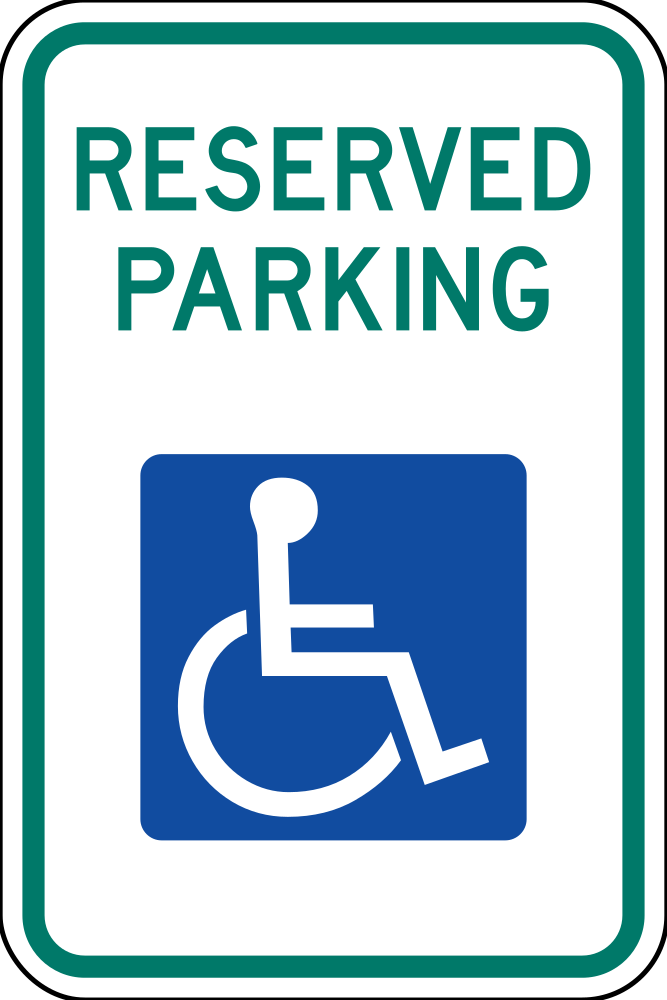
When may you park in a space marked with this sign?
- A.Only when a disabled person parking permit is displayed and a person with a disability is travelling in the vehicleAnswer
- B.Whenever a permit is displayed, even if the permit holder is not with you
- C.For a quick stop, as long as you stay with the vehicle
- D.After business hours, when the space is empty
Explanation: A space for people with disabilities may be used only when the permit is displayed in the windshield and the vehicle is carrying a person with a disability. The permit alone is not enough.
13 of 14 · Parking & stopping
You have parked on a busy street. What should you do before you open your door to get out?
- A.Check your mirror and do a shoulder check for cyclists and other vehiclesAnswer
- B.Open the door a little and let traffic steer around it
- C.Turn on your hazard lights; then no check is needed
- D.Signal left so traffic knows you are getting out
Explanation: A cyclist or another vehicle could be coming up beside you. Check the mirror and do a shoulder check before opening the door — drivers swinging doors open without checking are a common cause of crashes with cyclists.
14 of 14 · Parking & stopping
You are about to pull away from a parked position on the right side of the road. What should you check?
- A.Your left mirror, plus a shoulder check to the leftAnswer
- B.Your right mirror only
- C.Nothing — traffic must let a parked vehicle pull out
- D.Only the rear-view mirror, since a shoulder check is for highways
Explanation: When pulling away from the right side of the road, check your left mirror for vehicles coming from behind, then shoulder check the blind spot — a cyclist could be hidden there.