Practice session
Passing, lanes & freeways
Loading…
Every question on this page
The whole pool, with the answer and the explanation for each one. Practise first, then read through anything you were unsure of.
Show all 20 questions with answers
1 of 20 · Passing, lanes & freeways
On a multi-lane highway, which lane should you normally travel in?
- A.The far-left lane
- B.One of the right-hand lanesAnswer
- C.Whichever lane has the fewest vehicles
- D.It makes no difference
Explanation: On a multi-lane highway, travel in one of the right-hand lanes. This matters most if you are driving more slowly than other vehicles or signs tell you to keep out of the left lane.
2 of 20 · Passing, lanes & freeways
You are driving exactly at the speed limit in the left lane of a multi-lane highway. Which statement is true?
- A.Because you are at the limit, you may stay in the left lane as long as you like
- B.Faster drivers must wait behind you
- C.Staying in the left lane can lead others to pass on the right, which may be less safeAnswer
- D.You must speed up to match faster traffic
Explanation: Driving at the speed limit doesn't mean you should stay in the left lane. Doing so may cause other drivers to pass on the right, which may not be as safe as passing on the left.
3 of 20 · Passing, lanes & freeways
On a freeway with more than 2 lanes in each direction, which lane should you drive in?
- A.The left lane
- B.The centre lane or a right-hand laneAnswer
- C.The shoulder when traffic is slow
- D.Any lane, changing often to keep moving
Explanation: On a freeway with more than 2 lanes in each direction, drive in the centre lane or a right-hand lane. That leaves the left lane for higher-speed traffic and passing vehicles.
4 of 20 · Passing, lanes & freeways
When may you pass another vehicle on the right?
- A.Whenever the vehicle ahead is going slower than the limit
- B.Whenever there is a paved shoulder
- C.Never — passing on the right is always illegal
- D.Only on a roadway with 2 or more lanes, or when a driver ahead is turning leftAnswer
Explanation: You may pass on the right only on a roadway that has 2 or more lanes, or if a driver ahead is turning left — and never by using the shoulder. Pass on the left only when it is safe and lane markings permit.
5 of 20 · Passing, lanes & freeways
You are passing a slow truck on a highway posted at 100 km/h. May you go over 100 km/h to finish the pass sooner?
- A.Yes, briefly exceeding the limit is allowed when passing
- B.No — keep within the speed limit when passingAnswer
- C.Yes, by up to 20 km/h
- D.Yes, if the truck speeds up
Explanation: The speed limit still applies while you pass. Before passing, make sure you can do it safely and legally, within the limit and where the pavement markings allow it.
6 of 20 · Passing, lanes & freeways
Another driver is passing you. What should you do?
- A.Speed up so the pass ends sooner
- B.Move toward the centre line to discourage the pass
- C.Don't speed up; slow down if needed to make room for them to get back into your laneAnswer
- D.Flash your high beams to warn them
Explanation: It's illegal to speed up while someone is trying to pass you. Help the other driver get back into your lane by slowing down and making room.
7 of 20 · Passing, lanes & freeways
You want to move into the next lane, and a cyclist is already travelling in it. Who has the right-of-way?
- A.You do, because you are the larger vehicle
- B.You do, as long as you signalled first
- C.Whoever is going faster
- D.The cyclist — the vehicle already in the lane has the right-of-wayAnswer
Explanation: If you move into another vehicle's lane, that vehicle has the right-of-way — whether it's a car, a motorcycle or a bicycle. Other traffic shouldn't have to change direction or slow down for you.
8 of 20 · Passing, lanes & freeways
The centre marking is a solid yellow line beside a broken yellow line, and the solid line is on your side. May you pass?
- A.Yes, whenever it is safe
- B.No — you may pass only when the broken line is on your sideAnswer
- C.Yes, if the vehicle ahead is below the limit
- D.Only by passing on the right
Explanation: Where a broken yellow line runs beside a solid one, you may pass only when it is safe and the broken line is on your side. With the solid line on your side, do not pass.
9 of 20 · Passing, lanes & freeways
What does a double solid yellow centre line mean?
- A.Passing is allowed with extra caution
- B.The lane is reversible
- C.No passing allowedAnswer
- D.Passing is allowed when safe
Explanation: A double solid yellow line means no passing is allowed in either direction. Yellow lines divide traffic moving in opposite directions, so the traffic on the other side is coming toward you.
10 of 20 · Passing, lanes & freeways
In B.C., what does a single solid yellow centre line mean?
- A.No passing under any circumstances
- B.Passing is allowed with extra cautionAnswer
- C.The road is one-way
- D.Parking is not allowed
Explanation: In B.C., a single solid yellow line means passing is allowed, but with extra caution. Do not confuse it with a double solid yellow line, which means no passing.
11 of 20 · Passing, lanes & freeways
What does a solid white line between two lanes going in the same direction mean?
- A.Do not change lanesAnswer
- B.Lane changes are allowed when safe
- C.Traffic on the other side is coming toward you
- D.Passing is allowed with extra caution
Explanation: White lines separate lanes of traffic moving in the same direction. A solid white line means do not change lanes; a broken white line means you may change lanes when it is safe.
12 of 20 · Passing, lanes & freeways
Which statement about changing lanes at an intersection is true?
- A.Don't do it — you could confuse other drivers and cause a crashAnswer
- B.It's fine as long as you signal first
- C.It's allowed whenever the light is green
- D.It's the best place to change lanes, because traffic is slow
Explanation: Don't change lanes at an intersection: you could confuse other drivers and cause a crash. Get into the lane you need before you reach the intersection.
13 of 20 · Passing, lanes & freeways
A sign warns that a highway passing lane is about to end. Which statement is true?
- A.Vehicles in the right lane must stop to let others merge
- B.Vehicles in the right lane and the passing lane must merge before the passing lane endsAnswer
- C.Only drivers in the passing lane need to adjust
- D.The passing lane continues as a shoulder you may drive on
Explanation: Passing lanes let slower vehicles keep right so faster vehicles can pass safely on the left. Keep right unless you are passing, and when the lane is about to end, vehicles in both lanes must merge before it ends.
14 of 20 · Passing, lanes & freeways
You are driving next to a lane that ends ahead, and a driver in that lane needs to merge. What should you do?
- A.Speed up to close the gap
- B.Keep your speed — merging drivers must wait
- C.Help by adjusting your speed or changing lanesAnswer
- D.Stop in your lane to let them in
Explanation: If you are in a lane that ends, adjust your speed within the limit and wait for a safe gap. If you are driving next to a lane that ends, help the merging traffic by adjusting your speed or changing lanes.
15 of 20 · Passing, lanes & freeways
At a freeway entrance, what is the acceleration lane for?
- A.Stopping to wait for a gap
- B.Slowing down before you merge
- C.Matching your speed to the speed of traffic on the freewayAnswer
- D.Passing slow vehicles on the ramp
Explanation: The acceleration lane, divided from the freeway by a solid white line, is where you match your speed to freeway traffic. Then use the merging area, beside a broken white line, to find a safe gap. Avoid stopping in either — you could be rear-ended.
16 of 20 · Passing, lanes & freeways
How should you leave a freeway?
- A.Slow down on the freeway before you reach the exit lane
- B.Signal, keep your speed until you are in the exit lane, then slow down graduallyAnswer
- C.Brake hard as you cross into the exit lane
- D.Cross several lanes at the last moment
Explanation: Plan ahead so you can move to the right lane in plenty of time. Signal your intention, maintain your speed until you enter the exit lane, and then slow down gradually for the lower speed limits ahead.
17 of 20 · Passing, lanes & freeways
You are in the right lane of a freeway, and a driver is trying to merge from an entrance lane. How can you help?
- A.Move into the left lane if it is safe, or adjust your speed to leave a gapAnswer
- B.Speed up so they can merge behind you
- C.Stay beside them so they know where you are
- D.Sound your horn
Explanation: It's not always easy for merging drivers to find a safe gap. Help them by pulling into the left lane if it is safe, or by adjusting your speed to leave a large enough gap for them to move into.
18 of 20 · Passing, lanes & freeways
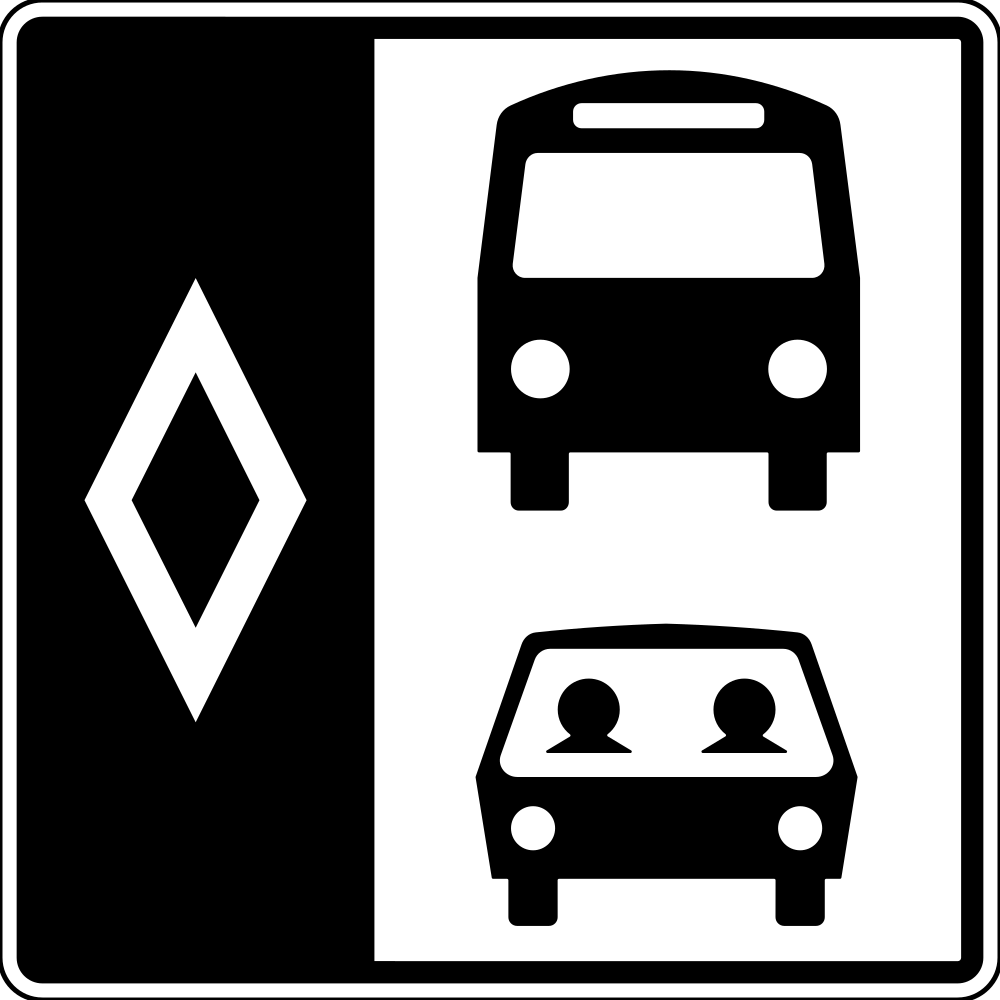
Who may use a high occupancy vehicle (HOV) lane like the one marked by this sign?
- A.Any vehicle during rush hour
- B.Buses and carpool vehicles carrying at least the number of people shown on the signsAnswer
- C.Only buses
- D.Trucks and slow-moving vehicles
Explanation: HOV lanes are reserved for buses and carpool vehicles; on some roads motorcycles, bicycles and taxis may use them too. Signs tell you where the lanes begin and end, when they operate and the minimum number of people who must be in the vehicle. Most HOV lanes operate 24 hours a day.
19 of 20 · Passing, lanes & freeways
Your vehicle carries enough people to use the HOV lane. Where should you enter and exit it?
- A.Anywhere, as long as you signal
- B.Only at intersections
- C.Across the solid lines when traffic is light
- D.Where broken lines mark a crossing pointAnswer
Explanation: Enter and exit an HOV lane only where broken lines show a crossing point, and take care: traffic in these lanes sometimes travels faster than regular traffic, so make sure there is enough room.
20 of 20 · Passing, lanes & freeways
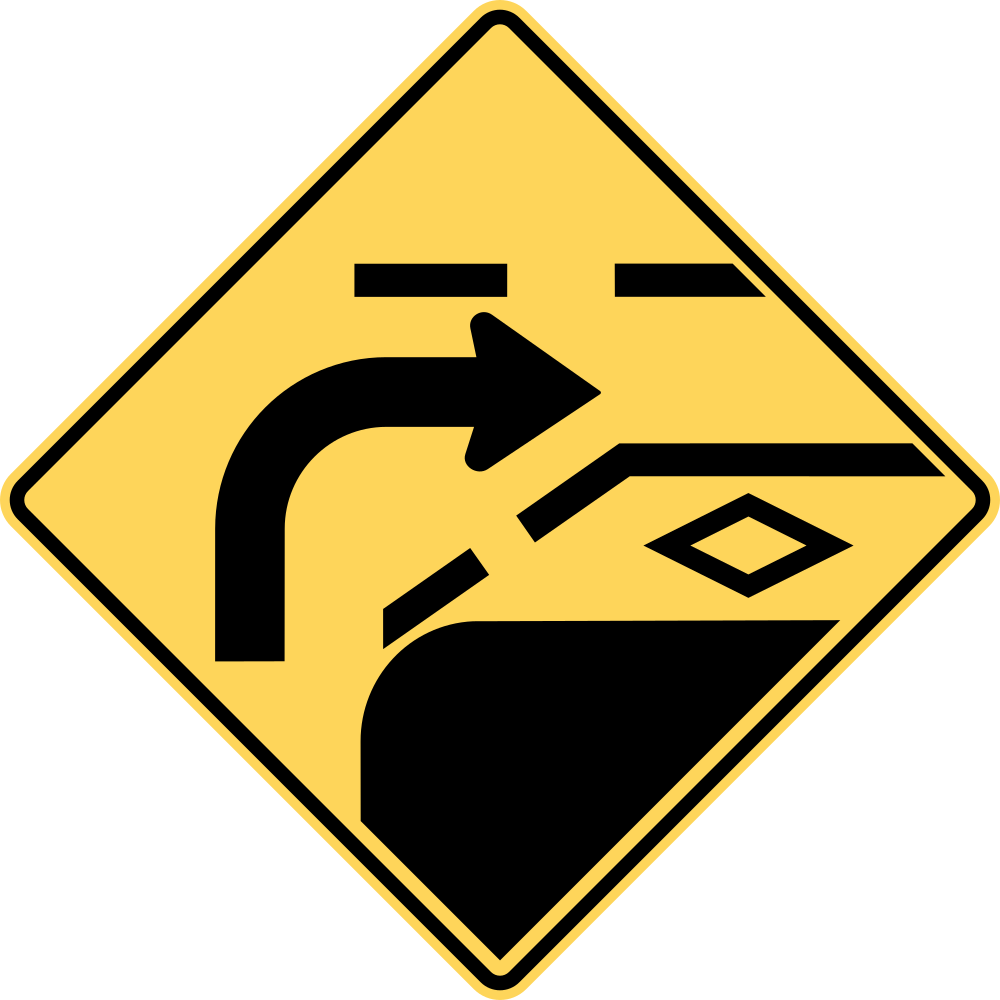
This sign warns that the street you are turning onto has a reserved lane, and you are not entitled to use it. Which lane should you turn into?
- A.Into the reserved lane, then move out when it is safe
- B.Into the lane next to the reserved laneAnswer
- C.Into any lane, as long as you signal
- D.Into the far-left lane only
Explanation: Turn into the lane next to the reserved lane, unless you are entitled to drive in the reserved lane and want to use it. To turn right off a street with a reserved lane, move into it only where permitted and when safe.