Practice session
Right-of-way, intersections and turning
Loading…
Every question on this page
The whole pool, with the answer and the explanation for each one. Practise first, then read through anything you were unsure of.
Show all 40 questions with answers
1 of 40 · Right-of-way & intersections
Two vehicles reach an uncontrolled intersection (no signs or lights) at the same time. Who must yield?
- A.The vehicle on the right yields to the vehicle on the left
- B.The vehicle on the left yields to the vehicle on the rightAnswer
- C.The larger vehicle goes first
- D.The faster vehicle goes first
Explanation: At an uncontrolled intersection, slow down, scan and yield to any vehicle that got there before you. If two vehicles arrive at the same time, the one on the left must yield to the one on the right.
2 of 40 · Right-of-way & intersections
You approach an unmarked T-intersection with no signs or lights. How should you treat it?
- A.Like any other uncontrolled intersectionAnswer
- B.Traffic on the stem of the T must always yield, whoever arrives first
- C.As an all-way stop where every vehicle must stop
- D.The vehicle turning left always goes first
Explanation: The guide says to treat an unmarked T-intersection the same way as any other uncontrolled intersection: slow down, yield to vehicles that arrived first, and if you arrive together, the vehicle on the left yields to the one on the right.
3 of 40 · Right-of-way & intersections
At a four-way stop, which vehicle should go first?
- A.The vehicle on the busier road
- B.The vehicle turning right
- C.The first vehicle to arrive and come to a complete stopAnswer
- D.The vehicle on the left
Explanation: When there are stop signs at all corners, the first vehicle to arrive and come to a complete stop should go first. Every driver must stop fully before taking a turn.
4 of 40 · Right-of-way & intersections
You and another vehicle stop at a four-way stop at the same time. The other vehicle is on your right. What should happen?
- A.You go first, because you are on the left
- B.The other vehicle should go firstAnswer
- C.Whoever signals first goes first
- D.Both vehicles go at the same time
Explanation: If two vehicles arrive at a four-way stop at the same time, the one on the right should go first. If you are ever unsure who has the right-of-way, yielding is always the safer choice.
5 of 40 · Right-of-way & intersections
At a four-way stop, you and an oncoming vehicle arrive at about the same time. You want to turn left; the other driver is going straight. Who goes first?
- A.You do, because left turns take longer
- B.Whichever driver is on the right
- C.Both may go at once
- D.The driver going straight throughAnswer
Explanation: When two vehicles face each other at a four-way stop and arrive at about the same time, the one making a left turn must yield to the one going straight through.
6 of 40 · Right-of-way & intersections
You stop at a stop sign. The cross street has no stop sign. Who has the right-of-way?
- A.Traffic on the through streetAnswer
- B.You do, because you have already stopped
- C.Whichever vehicle is on the right
- D.Whichever vehicle is going faster
Explanation: At a two-way stop, the street without stop signs is the through street, and its traffic has the right-of-way. After stopping, wait for a safe gap before going through or turning.
7 of 40 · Right-of-way & intersections
Two vehicles are stopped facing each other at a two-way stop. One driver wants to turn left, the other to go straight. Who must yield?
- A.The driver going straight
- B.Whichever driver is on the right
- C.The left-turning driver, unless already in the intersection and turningAnswer
- D.No one has to yield — both may go
Explanation: The driver turning left must yield to the other vehicle. The only exception is when the left-turning vehicle is already in the intersection and has started the turn; then the other vehicle must yield.
8 of 40 · Right-of-way & intersections
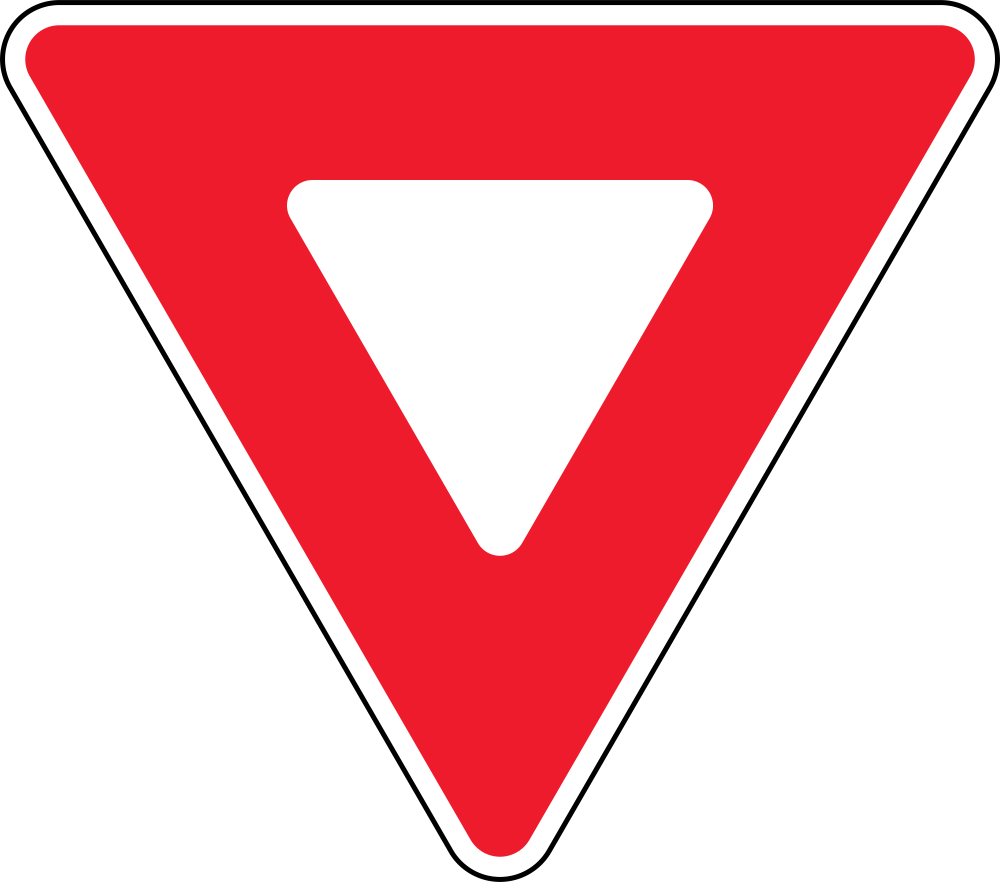
You reach this sign and vehicles are coming along the through road. What must you do?
- A.Keep your speed and merge — through traffic must make room
- B.Stop only if a pedestrian is waiting
- C.Sound your horn and enter
- D.Slow down, stop if necessary, and wait for a safe gapAnswer
Explanation: A yield sign gives traffic on the through road the right-of-way. When there is traffic, slow down, stop if you need to, and wait for a safe gap. Only when the through road is clear may you enter without stopping.
9 of 40 · Right-of-way & intersections
You are turning left on a steady green light (no arrow), and there is oncoming traffic. What must you do?
- A.Turn quickly before the oncoming cars arrive
- B.Go first — left-turning drivers have priority on a green light
- C.Yield to oncoming traffic and wait for a safe gapAnswer
- D.Wait behind the stop line until the light turns red
Explanation: On a steady green light, a driver turning left must yield to oncoming traffic and wait for a safe gap before turning. Green means go only if the intersection is clear and it is safe.
10 of 40 · Right-of-way & intersections
You are going straight through an intersection on a green light. An oncoming vehicle is already in the intersection, turning left. What should you do?
- A.Yield to the turning vehicleAnswer
- B.Continue — through traffic always has the right-of-way
- C.Speed up to clear the intersection first
- D.Sound your horn and keep going
Explanation: If you intend to go straight through and a vehicle is already in the intersection turning left, you must yield to it. Right-of-way goes to the vehicle that is already committed to the turn.
11 of 40 · Right-of-way & intersections
You are in the intersection waiting to turn left when the light turns yellow. What should you do?
- A.Back up out of the intersection
- B.Stay where you are until the next green light
- C.Complete your turn, watching for oncoming drivers trying to beat the redAnswer
- D.Turn right instead
Explanation: If you are already in the intersection waiting to turn left when the light turns yellow, you are legally allowed to complete your turn. Watch carefully for oncoming drivers trying to beat the red light.
12 of 40 · Right-of-way & intersections
You come to an intersection where the traffic lights have stopped working. How should you treat it?
- A.As an uncontrolled intersection — no need to stop
- B.As a four-way stopAnswer
- C.The busier road keeps the right-of-way
- D.Go through slowly without stopping
Explanation: When traffic lights go out, or all four lights start flashing, treat the intersection like a four-way stop: come to a complete stop and take turns.
13 of 40 · Right-of-way & intersections
Your light is flashing green, as shown. What is controlling traffic on the side street?
- A.A flashing yellow light
- B.A green light as well
- C.A stop signAnswer
- D.Nothing — it is uncontrolled
Explanation: A flashing green light marks a pedestrian-controlled intersection. Side-street traffic faces a stop sign and may pull out when it looks clear, and a pedestrian can change your light to yellow and then red — so go only if the intersection is clear.
14 of 40 · Right-of-way & intersections
At an intersection with no marked crosswalk, a pedestrian starts crossing near your half of the road. What must you do?
- A.Continue — without painted lines, the pedestrian must wait
- B.Yield — pedestrians at intersections have the right-of-way even without a marked crosswalkAnswer
- C.Yield only if there is a traffic light
- D.Sound your horn to warn them
Explanation: You must yield to pedestrians at intersections: those near your half of the road have the right-of-way even when there is no marked crosswalk. You must also yield in marked crosswalks, when turning, and when entering a road from a driveway or alley.
15 of 40 · Right-of-way & intersections
A pedestrian steps into the road in the middle of a block, away from any crosswalk. Which statement is true?
- A.You may keep going, because the pedestrian is crossing in the wrong place
- B.You should stop and wave the pedestrian across
- C.Only pedestrians in marked crosswalks need to be avoided
- D.It is always the driver's responsibility to avoid hitting a pedestrianAnswer
Explanation: Wherever a pedestrian is crossing, it is always the driver's responsibility to avoid hitting them, so be prepared to stop. But don't invite people to cross between intersections: drivers behind you or in other lanes may not expect it.
16 of 40 · Right-of-way & intersections
A person with a white cane is at the curb and raises the cane. What does this mean?
- A.It is your signal to stop and give the person the right-of-wayAnswer
- B.The person is waiting for traffic to clear and will not cross
- C.The person is asking for directions
- D.You should honk so the person knows where you are
Explanation: A visually impaired person often raises their cane when unsure about crossing safely. That is your signal to stop and give them the right-of-way. Don't startle them or a guide dog by revving your engine or honking.
17 of 40 · Right-of-way & intersections
You are driving out of a parking lot onto a street, across a sidewalk. What should you do?
- A.Stop at the edge of the road, past the sidewalk
- B.Drive out slowly; traffic on the road must let you in
- C.Stop before the sidewalk, then pull out when there is a safe gap in trafficAnswer
- D.Sound your horn and pull out
Explanation: When pulling out of a driveway, alley or parking lot, stop before the sidewalk or any area where pedestrians may be walking. Then pull out carefully, yielding to traffic on the road and waiting for a safe gap.
18 of 40 · Right-of-way & intersections
At an intersection there is a marked crosswalk but no stop line. Where should you stop?
- A.Just before the crosswalkAnswer
- B.On the crosswalk, so you can see better
- C.Past the crosswalk, just before the intersection
- D.Wherever the car ahead of you stopped last time
Explanation: Stop just before a stop line if there is one. With a crosswalk but no stop line, stop just before the crosswalk; an unmarked crosswalk counts too. With no line, crosswalk or sidewalk, stop just before you enter the intersection.
19 of 40 · Right-of-way & intersections
An ambulance with flashing lights and siren is coming up behind you. What should you usually do?
- A.Speed up to stay ahead of it
- B.Pull over to the right and stopAnswer
- C.Stop immediately where you are, even in an intersection
- D.Keep driving at the same speed
Explanation: Emergency vehicles using flashing lights and sirens always have the right-of-way. Usually the best thing to do is pull over to the right and stop, signalling so the driver knows you have seen them. Never stop in an intersection.
20 of 40 · Right-of-way & intersections
An emergency vehicle with lights and siren is approaching as you reach a roundabout. What should you do?
- A.Enter quickly and stop inside the roundabout to let it pass
- B.Keep circling until it has gone by
- C.Stop before entering — or, if already in it, exit and then stopAnswer
- D.Pull onto the central island
Explanation: Avoid blocking a traffic circle or roundabout when an emergency vehicle is approaching. Stop for it before you enter, or, if you're already inside, exit and then stop to let it pass.
21 of 40 · Right-of-way & intersections
When you enter a roundabout, whom must you yield to?
- A.No one — entering traffic has the right-of-way
- B.Only large trucks and buses
- C.Only vehicles entering from your right
- D.Traffic already in the roundaboutAnswer
Explanation: Slow down as you approach, yield to pedestrians in the crosswalk before the roundabout, and then yield to any traffic already in the roundabout. Travel counter-clockwise and do not change lanes inside it.
22 of 40 · Right-of-way & intersections
You and another vehicle arrive at a residential traffic circle at the same time. The other vehicle is on your right. What should you do?
- A.Go first, since you are on the left
- B.Yield to the vehicle on your rightAnswer
- C.The driver going straight goes first
- D.Both enter at once, keeping to the right
Explanation: In a traffic circle, yield to any traffic already in the circle. If another vehicle arrives at the same time as you, yield to the vehicle on your right. Then go around the circle to the right (counter-clockwise).
23 of 40 · Right-of-way & intersections
A traffic control person is directing traffic at an intersection and signals you to stop. What must you do?
- A.Continue if your traffic light is green
- B.Continue if no other traffic is coming
- C.Slow down but keep moving
- D.Stop and follow the person's directionsAnswer
Explanation: If a traffic control person is directing traffic, you must follow that person's directions. Watch for them at intersections and in construction zones.
24 of 40 · Right-of-way & intersections
Which statement about having the right-of-way is true?
- A.If you have the right-of-way, you may proceed even if a crash is likely
- B.Even with the right-of-way, you must still do all you can to avoid a crashAnswer
- C.Right-of-way rules apply only at traffic lights
- D.The right-of-way always belongs to the larger vehicle
Explanation: Right-of-way rules decide who must yield, but you can't always count on others to follow them. Even when you have the right-of-way, it's still your responsibility to do all you can to avoid a crash; if in doubt, yield.
25 of 40 · Turning & signalling
When should you signal?
- A.Only when other vehicles are close by
- B.Only for turns at intersections
- C.When turning, changing lanes, parking, or moving toward or away from the side of the roadAnswer
- D.Only on highways
Explanation: Signals let other road users know what you intend to do. Signal when you are preparing to turn left or right, change lanes, park, or move toward or away from the side of the road — and legally, you must signal when you change lanes.
26 of 40 · Turning & signalling
You plan to turn right at the next intersection, but there are several driveways before it. When should you turn on your signal?
- A.As soon as you decide to turn, even a block away
- B.Once you are close enough that others can see exactly where you plan to turnAnswer
- C.Only after you have started turning
- D.There is no need to signal a right turn
Explanation: Signal well ahead, but not so early that others think you are turning into a driveway. Wait until you are close enough that people can see exactly where you plan to turn, and check that the signal cancels after the turn.
27 of 40 · Turning & signalling
You are pulling out from a line of parked cars, and your turn signal may be hard to see. What should you do?
- A.Use a hand signal in addition to your turn signalAnswer
- B.Sound your horn instead of signalling
- C.Turn on your hazard lights
- D.Pull out quickly without signalling
Explanation: When an automatic turn signal is hard to see, such as when you pull out from a line of parked vehicles, use a hand signal as well as the turn signal.
28 of 40 · Turning & signalling
You are making a right turn at an intersection. Which lanes should you use?
- A.Start in the left lane to give yourself room
- B.Start in the right lane and swing wide into the far lane
- C.Any lane, as long as you signal
- D.Start in the right lane and turn into the right lane of the cross streetAnswer
Explanation: To turn right, move into the right lane and turn into the right lane of the cross street. At some intersections, road markings allow a right turn from a centre lane; follow them when they are there.
29 of 40 · Turning & signalling
You are turning left from a multi-lane two-way road onto another two-way road. How should you do it?
- A.From the centre lane, in a smooth arc into the centre lane of the cross streetAnswer
- B.From the right lane into the left lane of the cross street
- C.From the centre lane into the curb lane of the cross street
- D.Cut the corner to finish the turn quickly
Explanation: Turning left from a two-way road onto a two-way road, move into the centre lane (the lane next to the centre line) and drive in a smooth arc into the centre lane of the cross street. Getting into the correct lane before and after a turn is called lane tracking.
30 of 40 · Turning & signalling
You are turning left from a one-way street onto a two-way street. Which lanes should you use?
- A.From the right lane into the centre lane
- B.From the left lane into the far-right lane
- C.From the left lane into the centre laneAnswer
- D.From any lane into any lane
Explanation: Turning left from a one-way road onto a two-way road, turn from the left lane of the one-way road into the centre lane (the lane next to the centre line) of the two-way road.
31 of 40 · Turning & signalling
You are turning left from a two-way street onto a one-way street. Which lane should you turn into?
- A.The right lane of the one-way street
- B.The left lane of the one-way streetAnswer
- C.Whichever lane has the least traffic
- D.The middle lane of the one-way street
Explanation: Turning left from a two-way road onto a one-way road, turn from the centre lane of the two-way road into the left lane of the one-way road.
32 of 40 · Turning & signalling
You are stopped at a steady red light and want to turn left onto a one-way street. No sign prohibits it. What may you do?
- A.Nothing — left turns on a red light are never allowed
- B.Turn without stopping if no one is coming
- C.Turn only if the driver behind you honks
- D.After stopping, turn once the intersection is clear of vehicles, cyclists and pedestriansAnswer
Explanation: A steady red light means a complete stop. After stopping and making sure the intersection is clear of vehicles, cyclists and pedestrians, you may turn right, or turn left onto a one-way street — unless a sign prohibits turns on a red light.
33 of 40 · Turning & signalling
The advance green arrow on the regular traffic lights goes off, and only the regular green light remains. You are still waiting to turn left. What now?
- A.You must wait for the next green arrow
- B.You may still turn left, but must yield to pedestrians and oncoming trafficAnswer
- C.You may turn left, and oncoming traffic must stop for you
- D.You must go straight instead
Explanation: While the flashing green arrow shows, through traffic faces a red light and your turn is protected. Once the arrow turns off and only the regular green light is on, you may still turn left, but you must yield the right-of-way to pedestrians and oncoming traffic.
34 of 40 · Turning & signalling
A road has a two-way left-turn lane in the centre. Which statement is true?
- A.Only traffic from your direction may use it
- B.It may be used as a passing lane
- C.Drivers from both directions use it to turn left, so watch for oncoming vehicles in itAnswer
- D.You may drive in it for several blocks to skip traffic
Explanation: A two-way left-turn lane lets left-turning drivers from either direction wait without holding up traffic — handy for turning into a driveway mid-block. Vehicles coming the other way use the same lane, so make sure there is enough space before you enter it.
35 of 40 · Turning & signalling
You want to turn left into a driveway in the middle of a block, across a solid double yellow line. Is this allowed in B.C.?
- A.No — a solid double yellow line may never be crossed
- B.Yes, if you do it carefully and safely, without impeding traffic, and no sign prohibits itAnswer
- C.Only at night when traffic is light
- D.Only if you first drive past and make a U-turn
Explanation: You may turn left in the middle of a block — including over a solid double yellow line — if you do it carefully and safely, don't impede other traffic, and no sign prohibits the turn. Passing across that line is a different matter: a double solid yellow line means no passing.
36 of 40 · Turning & signalling
Where is a U-turn illegal?
- A.On a quiet residential street with a clear view both ways
- B.At an intersection where there is a traffic lightAnswer
- C.At an intersection without a traffic light, outside a business district
- D.In a cul-de-sac designed for turning around
Explanation: U-turns are illegal at an intersection with a traffic light, on a curve, where they would interfere with traffic, where a sign or municipal by-law prohibits them, near the crest of a hill, and in a business district except at an intersection without a traffic light. Consider going around the block instead.
37 of 40 · Turning & signalling
A U-turn is illegal on or near the crest of a hill where other traffic cannot see you within what distance?
- A.50 metres
- B.100 metres
- C.150 metresAnswer
- D.300 metres
Explanation: A U-turn is illegal on or near the crest of a hill where other traffic cannot see you within 150 metres, and on a curve. Oncoming drivers would come upon your turning vehicle with no warning.
38 of 40 · Turning & signalling
What should you do before and while backing out of a driveway?
- A.Rely on your back-up camera
- B.Check only your rear-view mirror
- C.Do a 360-degree check, then turn your body to look out the rear window while backingAnswer
- D.Sound the horn and reverse quickly
Explanation: Before backing up, do a 360-degree vision check using shoulder checks and mirror checks, then turn your body to look out the rear window as you back. Cameras and detectors do not replace looking; children, pets, cyclists and people in wheelchairs are easy to miss.
39 of 40 · Turning & signalling
Which of these manoeuvres is illegal?
- A.Backing into a parking stall
- B.Backing up into an intersection or over a crosswalkAnswer
- C.Backing into a driveway to make a two-point turn
- D.Backing out of your own driveway after a full check
Explanation: It is illegal to back up into an intersection or over a crosswalk. If you stop too far forward or miss your turn, stay put or carry on and find a safe place to turn around.
40 of 40 · Turning & signalling
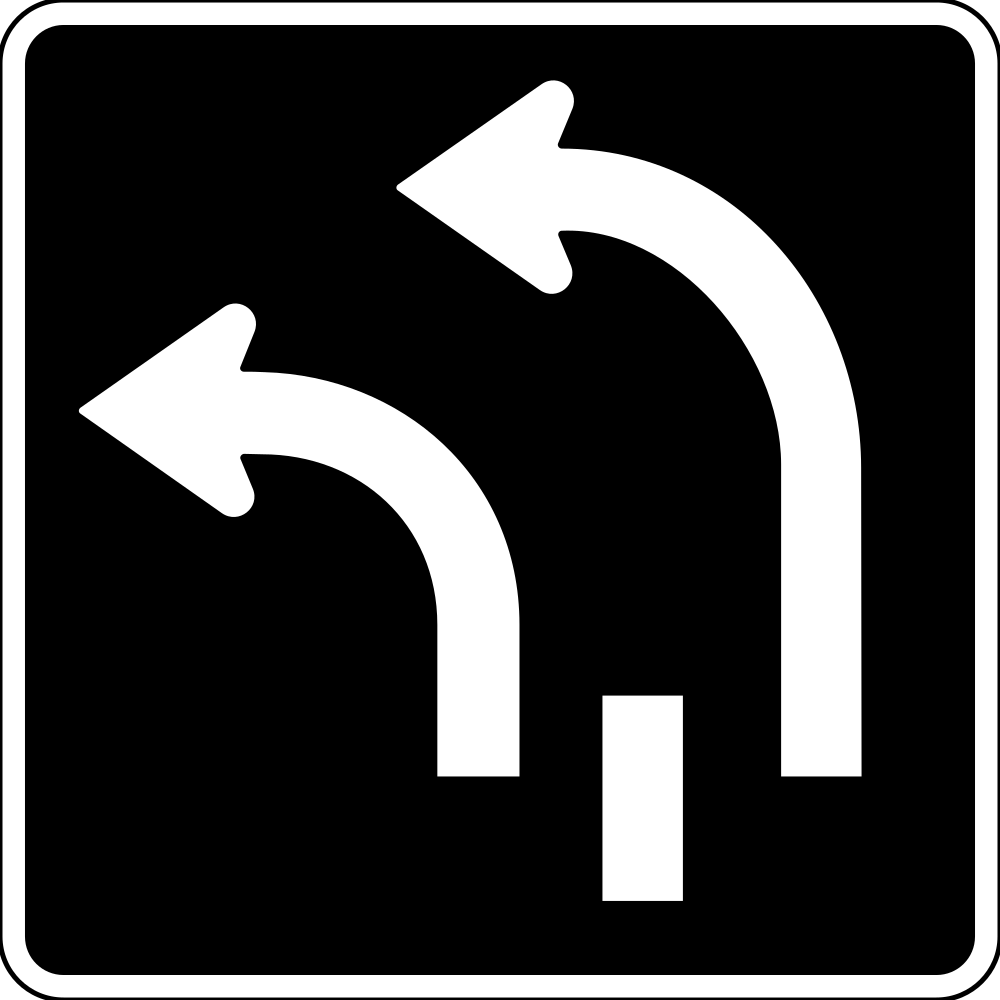
This sign is posted before an intersection. You are turning left from the lane next to the far-left lane. Which lane should you turn into?
- A.The far-left lane of the cross street
- B.The lane next to the far-left lane of the cross streetAnswer
- C.Any lane, as long as you signal
- D.The far-right lane of the cross street
Explanation: When two lanes turn left together, keep to your own lane through the turn. From the far-left lane, turn into the far-left lane; from the lane next to it, turn into the lane next to the far-left lane.