Practice session
Rules of the road
Loading…
Every question on this page
The whole pool, with the answer and the explanation for each one. Practise first, then read through anything you were unsure of.
Show all 200 questions with answers
1 of 200 · Getting your licence
What is the minimum age to take the ICBC knowledge test and get a learner's (L) licence?
- A.14 years old
- B.15 years old
- C.16 years oldAnswer
- D.18 years old
Explanation: You must be at least 16 years old to take the knowledge test. If you are under 19, a parent or legal guardian must also sign a consent form.
2 of 200 · Getting your licence
The knowledge test has 50 multiple-choice questions. How many must you answer correctly to pass?
- A.35
- B.40Answer
- C.45
- D.48
Explanation: To pass, you need 40 correct answers out of the 50 multiple-choice questions. Studying Learn to Drive Smart and taking the practice tests gives you a good chance of passing.
3 of 200 · Getting your licence
You do not pass the knowledge test on your first try. According to ICBC, when can you take it again?
- A.After 30 days, at no extra cost
- B.After 1 day; a fee applies each time you take the testAnswer
- C.Only after completing a driver training course
- D.Only after your next birthday
Explanation: If you don't pass, you can take the knowledge test again after one day. There is a fee each time you take the test, so it pays to prepare well.
4 of 200 · Getting your licence
About what share of the knowledge-test questions are about road signs?
- A.None — signs are tested separately
- B.About half
- C.Almost 1 in 5Answer
- D.Almost 9 in 10
Explanation: Almost 1 in 5 knowledge-test questions is about road signs, so learn every sign in the guide before you take the test.
5 of 200 · Getting your licence
You are 17 and applying for your learner's licence in person. What else do you need?
- A.A letter from your school
- B.A parent or legal guardian's signed and witnessed consent form, or the parent or guardian with youAnswer
- C.Proof that you completed a driver training course
- D.Nothing extra — consent is only needed under 16
Explanation: Applicants under 19 need a signed and witnessed parent or legal guardian consent form, or can bring the parent or legal guardian with them.
6 of 200 · Getting your licence
How long must you have your learner's licence before you can take the Class 7 road test?
- A.At least 6 months
- B.At least 24 months
- C.There is no minimum time
- D.At least 12 months, without a driving prohibitionAnswer
Explanation: You can take the Class 7 road test for your N once you have had your L for at least 12 months and stayed prohibition-free. There's no rush — take it when you feel ready.
7 of 200 · Getting your licence
How long is a learner's licence valid, and what happens if it expires?
- A.2 years; to get a new one you must re-take the knowledge testAnswer
- B.5 years; it renews automatically
- C.2 years; you must also start the 12-month learner period again
- D.1 year; you must then take the road test right away
Explanation: A learner's licence stays valid for two years. If it expires you must re-take the knowledge test, but you won't have to wait any extra time before your road test.
8 of 200 · Getting your licence
Who may supervise a learner driver?
- A.Anyone 19 or older with a full licence, sitting anywhere in the vehicle
- B.A novice (N) driver who is at least 21
- C.Someone 25 or older with a valid Class 1, 2, 3, 4 or 5 licence, sitting in the front passenger seatAnswer
- D.Any parent or guardian, whatever licence they hold
Explanation: A qualified supervisor is 25 or older, holds a valid Class 1, 2, 3, 4 or 5 licence and sits beside you in the front passenger seat.
9 of 200 · Getting your licence
You are driving on your L with your supervisor beside you. How many other passengers may you carry?
- A.None
- B.Only 1Answer
- C.2
- D.As many as there are seatbelts
Explanation: A learner may carry only one passenger in addition to the supervisor, who must be 25 or older.
10 of 200 · Getting your licence
A learner wants to drive at 1 a.m. with a qualified supervisor beside them. Is this allowed?
- A.Yes, because a supervisor is present
- B.Yes, but only on highways
- C.Yes, if there are no other passengers
- D.No — learners may not drive between midnight and 5 a.m.Answer
Explanation: Learners have restricted hours: no driving between midnight and 5 a.m. Having a supervisor in the car does not change this restriction.
11 of 200 · Getting your licence
As a learner driver, when may you use a cellphone while driving?
- A.Only hands-free, through Bluetooth
- B.Only to make an emergency call to 911Answer
- C.Only for GPS directions
- D.Only if your supervisor holds the phone for you
Explanation: L drivers may not use any electronic device while driving — hand-held or hands-free. That rules out Bluetooth, earbuds, programming a GPS and selecting music. The only exception is an emergency call to 911.
12 of 200 · Getting your licence
You have your N. May you talk on the phone through a hands-free Bluetooth system while driving?
- A.Yes — hands-free use is allowed once you have your N
- B.Yes, but only on highways
- C.No — N drivers may not use hand-held or hands-free devicesAnswer
Explanation: Novice drivers, like learners, may not use hand-held or hands-free cellphones or other electronic devices. Bluetooth, wired headsets and earbuds are all included; only an emergency call to 911 is allowed.
13 of 200 · Getting your licence
You are a learner stopped at a red light. May you pick up your phone to choose a song?
- A.Yes, because the vehicle is not moving
- B.No — the rule applies even when you are stopped at a red light or in bumper-to-bumper trafficAnswer
- C.Yes, if you put it down before the light turns green
Explanation: The electronic-device law applies even when you are stopped at a red light or in bumper-to-bumper traffic. Selecting music from your phone is specifically listed as not allowed for learners.
14 of 200 · Getting your licence
Where must a learner display the L sign?
- A.On the back of the vehicle, whenever the learner is drivingAnswer
- B.On the front windshield
- C.Only when driving on highways
- D.It only needs to be kept in the glove box
Explanation: Your red, magnetic L sign must always be displayed on the back of your car while you are driving, so drivers behind you know you are a learner. A home-made sign is not allowed; a lost one is replaced free at any driver licensing office.
15 of 200 · Getting your licence
You pass the knowledge test online. What must you still do before you may drive as a learner?
- A.Nothing — the confirmation email is your licence
- B.Take the same test again in person
- C.Visit a driver licensing office, pass a vision screening test and get your licenceAnswer
- D.Wait until a road test is booked for you
Explanation: Passing online does not mean you are licensed or allowed to drive. You still have to visit a driver licensing office, pass a vision screening test and get your licence. Your online result is valid for one year.
16 of 200 · Getting your licence
What is the rule on alcohol and drugs for learner and novice drivers?
- A.The same limit as fully licensed drivers
- B.Any amount, as long as you do not feel impaired
- C.No alcohol, but small amounts of cannabis are allowed
- D.Zero — no alcohol or drugs in your blood when you driveAnswer
Explanation: Drivers in the Graduated Licensing Program must have zero alcohol and zero drugs in their blood whenever they drive — not even one drink. Breaking this restriction brings fines and other penalties.
17 of 200 · Getting your licence
You have your N and want to drive 2 friends (not family members) to school, with no supervisor. Is this allowed?
- A.Yes — novice drivers have no passenger limit
- B.Yes, if everyone wears a seatbelt
- C.No — without a qualified supervisor you may carry only 1 passenger who is not immediate familyAnswer
- D.Yes, but only in daylight
Explanation: A novice driver may carry only one passenger, not counting immediate family, unless accompanied by a supervisor aged 25 or older with a valid Class 1, 2, 3, 4 or 5 licence.
18 of 200 · Getting your licence
What sign must a novice driver display?
- A.No sign — only learners need one
- B.The red L sign, until the full licence
- C.An N sign on the front windshield
- D.A green, magnetic N sign on the back of the vehicleAnswer
Explanation: In the novice stage a magnetic green N sign replaces your red L. It works the same way: it must be displayed on the back of your car whenever you drive.
19 of 200 · Getting your licence
Which test must you pass to move from a learner's licence to a novice (N) licence?
- A.The Class 7 road testAnswer
- B.The Class 5 road test
- C.A second knowledge test
- D.A driving record assessment only
Explanation: Learners get their N by passing the Class 7 road test, which checks that you can drive safely on your own. Know what is required of N drivers before you take it.
20 of 200 · Getting your licence
You don't pass the Class 7 road test on your first try. When can you take it again?
- A.After 1 day
- B.After 14 daysAnswer
- C.After 6 months
- D.After 12 months
Explanation: After a first failed road test you can retake it after 14 days; after a second, 30 days; after a third or more, 60 days. There is a fee each time you take the test.
21 of 200 · Getting your licence
You are 20, hold an N and did not take an approved GLP course. How much safe driving must you show before upgrading to a Class 5 licence?
- A.At least 12 months
- B.At least 18 months
- C.At least 24 monthsAnswer
- D.At least 36 months
Explanation: Novice drivers under 25 need at least 24 months of safe driving, or 18 months if they completed an approved GLP course as a learner. Drivers 25 or older need at least 12 months.
22 of 200 · Getting your licence
Starting October 19, 2026, what replaces the second road test for Class 7 novice drivers with a clean driving record?
- A.A second knowledge test
- B.A Driving Record Assessment, followed by a 12-month restriction periodAnswer
- C.Nothing — the N becomes a full licence automatically
- D.A classroom defensive-driving exam
Explanation: From October 19, 2026, eligible Class 7 drivers upgrade through a Driving Record Assessment instead of a second road test: they must show a record of safe driving, then serve a 12-month restriction period.
23 of 200 · Right-of-way & intersections
Two vehicles reach an uncontrolled intersection (no signs or lights) at the same time. Who must yield?
- A.The vehicle on the right yields to the vehicle on the left
- B.The vehicle on the left yields to the vehicle on the rightAnswer
- C.The larger vehicle goes first
- D.The faster vehicle goes first
Explanation: At an uncontrolled intersection, slow down, scan and yield to any vehicle that got there before you. If two vehicles arrive at the same time, the one on the left must yield to the one on the right.
24 of 200 · Right-of-way & intersections
You approach an unmarked T-intersection with no signs or lights. How should you treat it?
- A.Like any other uncontrolled intersectionAnswer
- B.Traffic on the stem of the T must always yield, whoever arrives first
- C.As an all-way stop where every vehicle must stop
- D.The vehicle turning left always goes first
Explanation: The guide says to treat an unmarked T-intersection the same way as any other uncontrolled intersection: slow down, yield to vehicles that arrived first, and if you arrive together, the vehicle on the left yields to the one on the right.
25 of 200 · Right-of-way & intersections
At a four-way stop, which vehicle should go first?
- A.The vehicle on the busier road
- B.The vehicle turning right
- C.The first vehicle to arrive and come to a complete stopAnswer
- D.The vehicle on the left
Explanation: When there are stop signs at all corners, the first vehicle to arrive and come to a complete stop should go first. Every driver must stop fully before taking a turn.
26 of 200 · Right-of-way & intersections
You and another vehicle stop at a four-way stop at the same time. The other vehicle is on your right. What should happen?
- A.You go first, because you are on the left
- B.The other vehicle should go firstAnswer
- C.Whoever signals first goes first
- D.Both vehicles go at the same time
Explanation: If two vehicles arrive at a four-way stop at the same time, the one on the right should go first. If you are ever unsure who has the right-of-way, yielding is always the safer choice.
27 of 200 · Right-of-way & intersections
At a four-way stop, you and an oncoming vehicle arrive at about the same time. You want to turn left; the other driver is going straight. Who goes first?
- A.You do, because left turns take longer
- B.Whichever driver is on the right
- C.Both may go at once
- D.The driver going straight throughAnswer
Explanation: When two vehicles face each other at a four-way stop and arrive at about the same time, the one making a left turn must yield to the one going straight through.
28 of 200 · Right-of-way & intersections
You stop at a stop sign. The cross street has no stop sign. Who has the right-of-way?
- A.Traffic on the through streetAnswer
- B.You do, because you have already stopped
- C.Whichever vehicle is on the right
- D.Whichever vehicle is going faster
Explanation: At a two-way stop, the street without stop signs is the through street, and its traffic has the right-of-way. After stopping, wait for a safe gap before going through or turning.
29 of 200 · Right-of-way & intersections
Two vehicles are stopped facing each other at a two-way stop. One driver wants to turn left, the other to go straight. Who must yield?
- A.The driver going straight
- B.Whichever driver is on the right
- C.The left-turning driver, unless already in the intersection and turningAnswer
- D.No one has to yield — both may go
Explanation: The driver turning left must yield to the other vehicle. The only exception is when the left-turning vehicle is already in the intersection and has started the turn; then the other vehicle must yield.
30 of 200 · Right-of-way & intersections
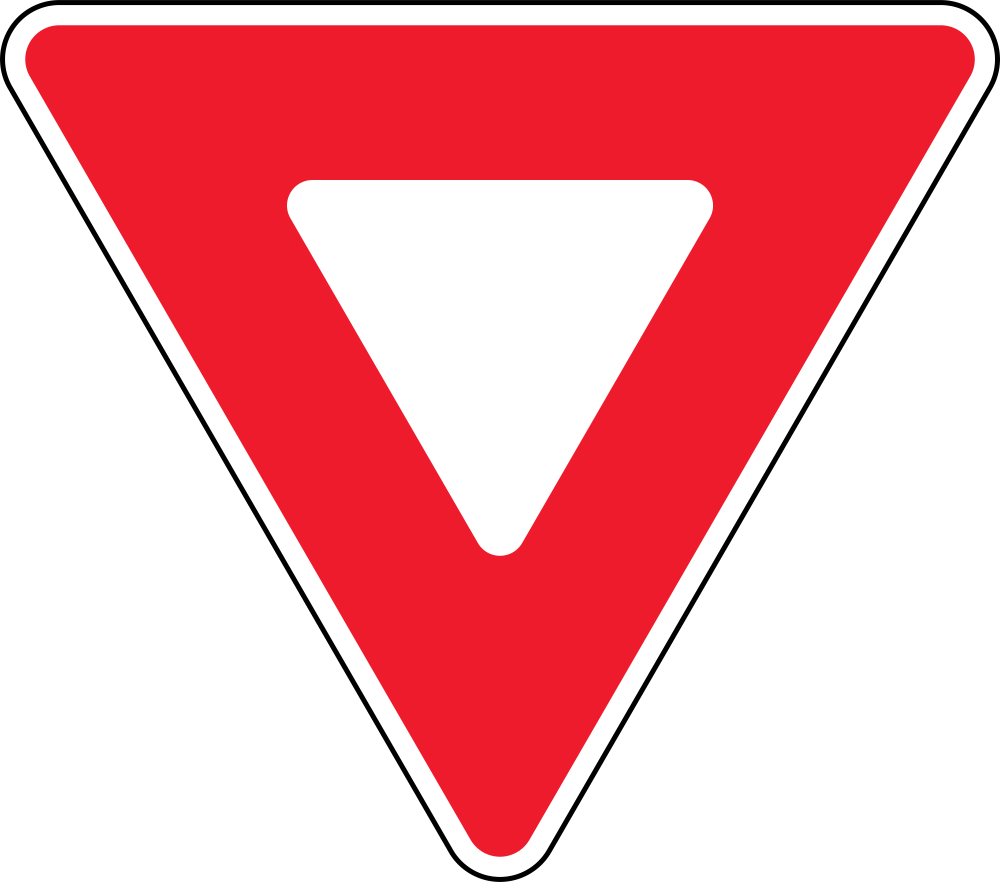
You reach this sign and vehicles are coming along the through road. What must you do?
- A.Keep your speed and merge — through traffic must make room
- B.Stop only if a pedestrian is waiting
- C.Sound your horn and enter
- D.Slow down, stop if necessary, and wait for a safe gapAnswer
Explanation: A yield sign gives traffic on the through road the right-of-way. When there is traffic, slow down, stop if you need to, and wait for a safe gap. Only when the through road is clear may you enter without stopping.
31 of 200 · Right-of-way & intersections
You are turning left on a steady green light (no arrow), and there is oncoming traffic. What must you do?
- A.Turn quickly before the oncoming cars arrive
- B.Go first — left-turning drivers have priority on a green light
- C.Yield to oncoming traffic and wait for a safe gapAnswer
- D.Wait behind the stop line until the light turns red
Explanation: On a steady green light, a driver turning left must yield to oncoming traffic and wait for a safe gap before turning. Green means go only if the intersection is clear and it is safe.
32 of 200 · Right-of-way & intersections
You are going straight through an intersection on a green light. An oncoming vehicle is already in the intersection, turning left. What should you do?
- A.Yield to the turning vehicleAnswer
- B.Continue — through traffic always has the right-of-way
- C.Speed up to clear the intersection first
- D.Sound your horn and keep going
Explanation: If you intend to go straight through and a vehicle is already in the intersection turning left, you must yield to it. Right-of-way goes to the vehicle that is already committed to the turn.
33 of 200 · Right-of-way & intersections
You are in the intersection waiting to turn left when the light turns yellow. What should you do?
- A.Back up out of the intersection
- B.Stay where you are until the next green light
- C.Complete your turn, watching for oncoming drivers trying to beat the redAnswer
- D.Turn right instead
Explanation: If you are already in the intersection waiting to turn left when the light turns yellow, you are legally allowed to complete your turn. Watch carefully for oncoming drivers trying to beat the red light.
34 of 200 · Right-of-way & intersections
You come to an intersection where the traffic lights have stopped working. How should you treat it?
- A.As an uncontrolled intersection — no need to stop
- B.As a four-way stopAnswer
- C.The busier road keeps the right-of-way
- D.Go through slowly without stopping
Explanation: When traffic lights go out, or all four lights start flashing, treat the intersection like a four-way stop: come to a complete stop and take turns.
35 of 200 · Right-of-way & intersections
Your light is flashing green, as shown. What is controlling traffic on the side street?
- A.A flashing yellow light
- B.A green light as well
- C.A stop signAnswer
- D.Nothing — it is uncontrolled
Explanation: A flashing green light marks a pedestrian-controlled intersection. Side-street traffic faces a stop sign and may pull out when it looks clear, and a pedestrian can change your light to yellow and then red — so go only if the intersection is clear.
36 of 200 · Right-of-way & intersections
At an intersection with no marked crosswalk, a pedestrian starts crossing near your half of the road. What must you do?
- A.Continue — without painted lines, the pedestrian must wait
- B.Yield — pedestrians at intersections have the right-of-way even without a marked crosswalkAnswer
- C.Yield only if there is a traffic light
- D.Sound your horn to warn them
Explanation: You must yield to pedestrians at intersections: those near your half of the road have the right-of-way even when there is no marked crosswalk. You must also yield in marked crosswalks, when turning, and when entering a road from a driveway or alley.
37 of 200 · Right-of-way & intersections
A pedestrian steps into the road in the middle of a block, away from any crosswalk. Which statement is true?
- A.You may keep going, because the pedestrian is crossing in the wrong place
- B.You should stop and wave the pedestrian across
- C.Only pedestrians in marked crosswalks need to be avoided
- D.It is always the driver's responsibility to avoid hitting a pedestrianAnswer
Explanation: Wherever a pedestrian is crossing, it is always the driver's responsibility to avoid hitting them, so be prepared to stop. But don't invite people to cross between intersections: drivers behind you or in other lanes may not expect it.
38 of 200 · Right-of-way & intersections
A person with a white cane is at the curb and raises the cane. What does this mean?
- A.It is your signal to stop and give the person the right-of-wayAnswer
- B.The person is waiting for traffic to clear and will not cross
- C.The person is asking for directions
- D.You should honk so the person knows where you are
Explanation: A visually impaired person often raises their cane when unsure about crossing safely. That is your signal to stop and give them the right-of-way. Don't startle them or a guide dog by revving your engine or honking.
39 of 200 · Right-of-way & intersections
You are driving out of a parking lot onto a street, across a sidewalk. What should you do?
- A.Stop at the edge of the road, past the sidewalk
- B.Drive out slowly; traffic on the road must let you in
- C.Stop before the sidewalk, then pull out when there is a safe gap in trafficAnswer
- D.Sound your horn and pull out
Explanation: When pulling out of a driveway, alley or parking lot, stop before the sidewalk or any area where pedestrians may be walking. Then pull out carefully, yielding to traffic on the road and waiting for a safe gap.
40 of 200 · Right-of-way & intersections
At an intersection there is a marked crosswalk but no stop line. Where should you stop?
- A.Just before the crosswalkAnswer
- B.On the crosswalk, so you can see better
- C.Past the crosswalk, just before the intersection
- D.Wherever the car ahead of you stopped last time
Explanation: Stop just before a stop line if there is one. With a crosswalk but no stop line, stop just before the crosswalk; an unmarked crosswalk counts too. With no line, crosswalk or sidewalk, stop just before you enter the intersection.
41 of 200 · Right-of-way & intersections
An ambulance with flashing lights and siren is coming up behind you. What should you usually do?
- A.Speed up to stay ahead of it
- B.Pull over to the right and stopAnswer
- C.Stop immediately where you are, even in an intersection
- D.Keep driving at the same speed
Explanation: Emergency vehicles using flashing lights and sirens always have the right-of-way. Usually the best thing to do is pull over to the right and stop, signalling so the driver knows you have seen them. Never stop in an intersection.
42 of 200 · Right-of-way & intersections
An emergency vehicle with lights and siren is approaching as you reach a roundabout. What should you do?
- A.Enter quickly and stop inside the roundabout to let it pass
- B.Keep circling until it has gone by
- C.Stop before entering — or, if already in it, exit and then stopAnswer
- D.Pull onto the central island
Explanation: Avoid blocking a traffic circle or roundabout when an emergency vehicle is approaching. Stop for it before you enter, or, if you're already inside, exit and then stop to let it pass.
43 of 200 · Right-of-way & intersections
When you enter a roundabout, whom must you yield to?
- A.No one — entering traffic has the right-of-way
- B.Only large trucks and buses
- C.Only vehicles entering from your right
- D.Traffic already in the roundaboutAnswer
Explanation: Slow down as you approach, yield to pedestrians in the crosswalk before the roundabout, and then yield to any traffic already in the roundabout. Travel counter-clockwise and do not change lanes inside it.
44 of 200 · Right-of-way & intersections
You and another vehicle arrive at a residential traffic circle at the same time. The other vehicle is on your right. What should you do?
- A.Go first, since you are on the left
- B.Yield to the vehicle on your rightAnswer
- C.The driver going straight goes first
- D.Both enter at once, keeping to the right
Explanation: In a traffic circle, yield to any traffic already in the circle. If another vehicle arrives at the same time as you, yield to the vehicle on your right. Then go around the circle to the right (counter-clockwise).
45 of 200 · Right-of-way & intersections
A traffic control person is directing traffic at an intersection and signals you to stop. What must you do?
- A.Continue if your traffic light is green
- B.Continue if no other traffic is coming
- C.Slow down but keep moving
- D.Stop and follow the person's directionsAnswer
Explanation: If a traffic control person is directing traffic, you must follow that person's directions. Watch for them at intersections and in construction zones.
46 of 200 · Right-of-way & intersections
Which statement about having the right-of-way is true?
- A.If you have the right-of-way, you may proceed even if a crash is likely
- B.Even with the right-of-way, you must still do all you can to avoid a crashAnswer
- C.Right-of-way rules apply only at traffic lights
- D.The right-of-way always belongs to the larger vehicle
Explanation: Right-of-way rules decide who must yield, but you can't always count on others to follow them. Even when you have the right-of-way, it's still your responsibility to do all you can to avoid a crash; if in doubt, yield.
47 of 200 · Turning & signalling
When should you signal?
- A.Only when other vehicles are close by
- B.Only for turns at intersections
- C.When turning, changing lanes, parking, or moving toward or away from the side of the roadAnswer
- D.Only on highways
Explanation: Signals let other road users know what you intend to do. Signal when you are preparing to turn left or right, change lanes, park, or move toward or away from the side of the road — and legally, you must signal when you change lanes.
48 of 200 · Turning & signalling
You plan to turn right at the next intersection, but there are several driveways before it. When should you turn on your signal?
- A.As soon as you decide to turn, even a block away
- B.Once you are close enough that others can see exactly where you plan to turnAnswer
- C.Only after you have started turning
- D.There is no need to signal a right turn
Explanation: Signal well ahead, but not so early that others think you are turning into a driveway. Wait until you are close enough that people can see exactly where you plan to turn, and check that the signal cancels after the turn.
49 of 200 · Turning & signalling
You are pulling out from a line of parked cars, and your turn signal may be hard to see. What should you do?
- A.Use a hand signal in addition to your turn signalAnswer
- B.Sound your horn instead of signalling
- C.Turn on your hazard lights
- D.Pull out quickly without signalling
Explanation: When an automatic turn signal is hard to see, such as when you pull out from a line of parked vehicles, use a hand signal as well as the turn signal.
50 of 200 · Turning & signalling
You are making a right turn at an intersection. Which lanes should you use?
- A.Start in the left lane to give yourself room
- B.Start in the right lane and swing wide into the far lane
- C.Any lane, as long as you signal
- D.Start in the right lane and turn into the right lane of the cross streetAnswer
Explanation: To turn right, move into the right lane and turn into the right lane of the cross street. At some intersections, road markings allow a right turn from a centre lane; follow them when they are there.
51 of 200 · Turning & signalling
You are turning left from a multi-lane two-way road onto another two-way road. How should you do it?
- A.From the centre lane, in a smooth arc into the centre lane of the cross streetAnswer
- B.From the right lane into the left lane of the cross street
- C.From the centre lane into the curb lane of the cross street
- D.Cut the corner to finish the turn quickly
Explanation: Turning left from a two-way road onto a two-way road, move into the centre lane (the lane next to the centre line) and drive in a smooth arc into the centre lane of the cross street. Getting into the correct lane before and after a turn is called lane tracking.
52 of 200 · Turning & signalling
You are turning left from a one-way street onto a two-way street. Which lanes should you use?
- A.From the right lane into the centre lane
- B.From the left lane into the far-right lane
- C.From the left lane into the centre laneAnswer
- D.From any lane into any lane
Explanation: Turning left from a one-way road onto a two-way road, turn from the left lane of the one-way road into the centre lane (the lane next to the centre line) of the two-way road.
53 of 200 · Turning & signalling
You are turning left from a two-way street onto a one-way street. Which lane should you turn into?
- A.The right lane of the one-way street
- B.The left lane of the one-way streetAnswer
- C.Whichever lane has the least traffic
- D.The middle lane of the one-way street
Explanation: Turning left from a two-way road onto a one-way road, turn from the centre lane of the two-way road into the left lane of the one-way road.
54 of 200 · Turning & signalling
You are stopped at a steady red light and want to turn left onto a one-way street. No sign prohibits it. What may you do?
- A.Nothing — left turns on a red light are never allowed
- B.Turn without stopping if no one is coming
- C.Turn only if the driver behind you honks
- D.After stopping, turn once the intersection is clear of vehicles, cyclists and pedestriansAnswer
Explanation: A steady red light means a complete stop. After stopping and making sure the intersection is clear of vehicles, cyclists and pedestrians, you may turn right, or turn left onto a one-way street — unless a sign prohibits turns on a red light.
55 of 200 · Turning & signalling
The advance green arrow on the regular traffic lights goes off, and only the regular green light remains. You are still waiting to turn left. What now?
- A.You must wait for the next green arrow
- B.You may still turn left, but must yield to pedestrians and oncoming trafficAnswer
- C.You may turn left, and oncoming traffic must stop for you
- D.You must go straight instead
Explanation: While the flashing green arrow shows, through traffic faces a red light and your turn is protected. Once the arrow turns off and only the regular green light is on, you may still turn left, but you must yield the right-of-way to pedestrians and oncoming traffic.
56 of 200 · Turning & signalling
A road has a two-way left-turn lane in the centre. Which statement is true?
- A.Only traffic from your direction may use it
- B.It may be used as a passing lane
- C.Drivers from both directions use it to turn left, so watch for oncoming vehicles in itAnswer
- D.You may drive in it for several blocks to skip traffic
Explanation: A two-way left-turn lane lets left-turning drivers from either direction wait without holding up traffic — handy for turning into a driveway mid-block. Vehicles coming the other way use the same lane, so make sure there is enough space before you enter it.
57 of 200 · Turning & signalling
You want to turn left into a driveway in the middle of a block, across a solid double yellow line. Is this allowed in B.C.?
- A.No — a solid double yellow line may never be crossed
- B.Yes, if you do it carefully and safely, without impeding traffic, and no sign prohibits itAnswer
- C.Only at night when traffic is light
- D.Only if you first drive past and make a U-turn
Explanation: You may turn left in the middle of a block — including over a solid double yellow line — if you do it carefully and safely, don't impede other traffic, and no sign prohibits the turn. Passing across that line is a different matter: a double solid yellow line means no passing.
58 of 200 · Turning & signalling
Where is a U-turn illegal?
- A.On a quiet residential street with a clear view both ways
- B.At an intersection where there is a traffic lightAnswer
- C.At an intersection without a traffic light, outside a business district
- D.In a cul-de-sac designed for turning around
Explanation: U-turns are illegal at an intersection with a traffic light, on a curve, where they would interfere with traffic, where a sign or municipal by-law prohibits them, near the crest of a hill, and in a business district except at an intersection without a traffic light. Consider going around the block instead.
59 of 200 · Turning & signalling
A U-turn is illegal on or near the crest of a hill where other traffic cannot see you within what distance?
- A.50 metres
- B.100 metres
- C.150 metresAnswer
- D.300 metres
Explanation: A U-turn is illegal on or near the crest of a hill where other traffic cannot see you within 150 metres, and on a curve. Oncoming drivers would come upon your turning vehicle with no warning.
60 of 200 · Turning & signalling
What should you do before and while backing out of a driveway?
- A.Rely on your back-up camera
- B.Check only your rear-view mirror
- C.Do a 360-degree check, then turn your body to look out the rear window while backingAnswer
- D.Sound the horn and reverse quickly
Explanation: Before backing up, do a 360-degree vision check using shoulder checks and mirror checks, then turn your body to look out the rear window as you back. Cameras and detectors do not replace looking; children, pets, cyclists and people in wheelchairs are easy to miss.
61 of 200 · Turning & signalling
Which of these manoeuvres is illegal?
- A.Backing into a parking stall
- B.Backing up into an intersection or over a crosswalkAnswer
- C.Backing into a driveway to make a two-point turn
- D.Backing out of your own driveway after a full check
Explanation: It is illegal to back up into an intersection or over a crosswalk. If you stop too far forward or miss your turn, stay put or carry on and find a safe place to turn around.
62 of 200 · Turning & signalling
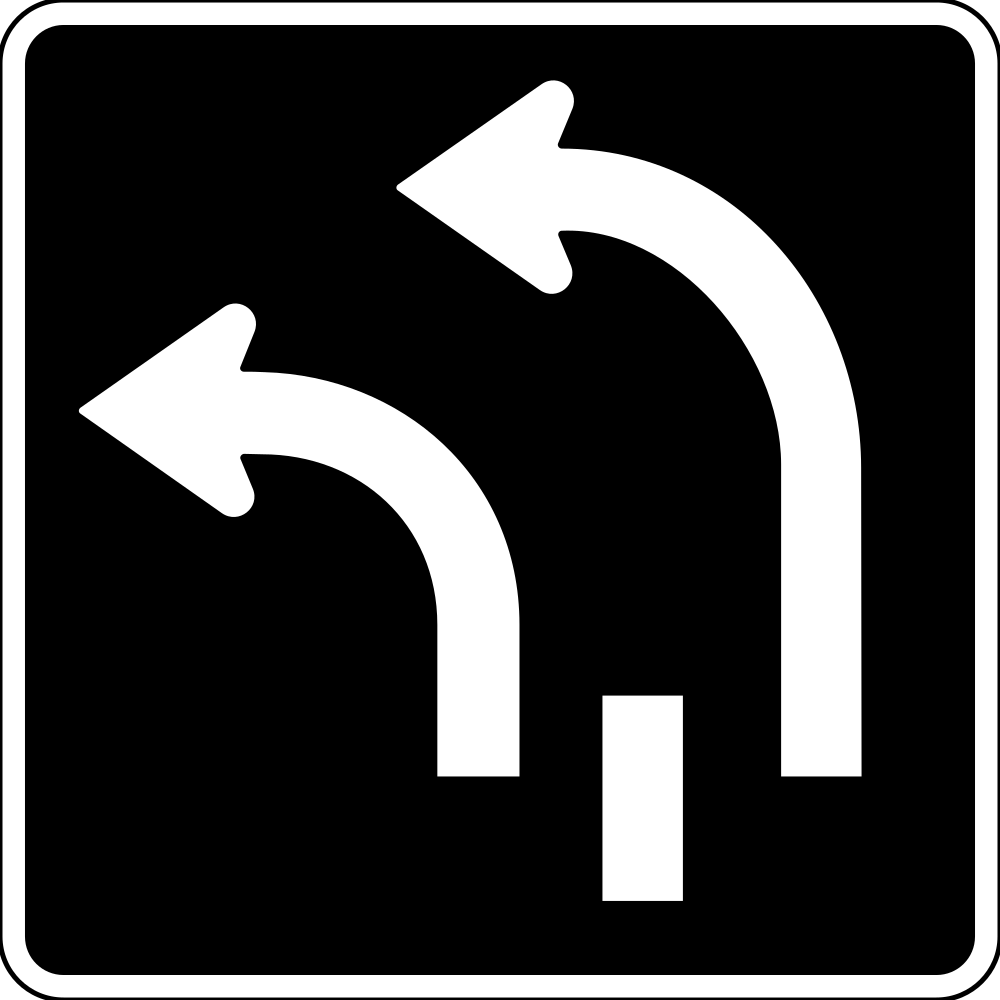
This sign is posted before an intersection. You are turning left from the lane next to the far-left lane. Which lane should you turn into?
- A.The far-left lane of the cross street
- B.The lane next to the far-left lane of the cross streetAnswer
- C.Any lane, as long as you signal
- D.The far-right lane of the cross street
Explanation: When two lanes turn left together, keep to your own lane through the turn. From the far-left lane, turn into the far-left lane; from the lane next to it, turn into the lane next to the far-left lane.
63 of 200 · Speed limits
Unless a sign says otherwise, what is the speed limit within cities and towns in B.C.?
- A.30 km/h
- B.40 km/h
- C.50 km/hAnswer
- D.60 km/h
Explanation: Where no sign says otherwise, the speed limit is 50 km/h within cities and towns. Posted signs always take priority over this default.
64 of 200 · Speed limits
You are driving on a highway outside any city or town and have seen no speed limit sign. What is the limit?
- A.70 km/h
- B.80 km/hAnswer
- C.90 km/h
- D.100 km/h
Explanation: Unless a sign tells you otherwise, the speed limit outside cities and towns is 80 km/h. Remember it is a maximum for ideal conditions, not a target.
65 of 200 · Speed limits
Unless a sign says otherwise, what is the maximum speed in a lane or alleyway within a municipality?
- A.10 km/h
- B.20 km/hAnswer
- C.30 km/h
- D.50 km/h
Explanation: The maximum speed in a lane or alleyway within a municipality is 20 km/h unless otherwise posted. Lanes are narrow, and people and vehicles can appear from garages and yards.
66 of 200 · Speed limits
The posted limit is 80 km/h, but it is raining heavily and visibility is poor. What should you do?
- A.Drive at 80 km/h — the posted limit is always a safe speed
- B.Choose a slower speed; the posted speed is the maximum for ideal conditions onlyAnswer
- C.Drive a little over 80 km/h to get off the road sooner
- D.Turn on your hazard lights and keep to the limit
Explanation: The posted speed is the maximum for ideal conditions only. When roads are slippery or visibility is limited, choose a slower speed that suits the conditions.
67 of 200 · Speed limits
Which statement about choosing your speed is true?
- A.The slowest speed is always the safest
- B.You must always drive exactly at the posted limit
- C.Driving much slower than surrounding traffic can be risky, because other drivers may try to pass youAnswer
- D.Speed only matters on highways
Explanation: Speeding is risky, but the safest speed isn't always the slowest. If you drive much slower than surrounding traffic, frustrated drivers may try to pass you. Aim for a speed that is appropriate for the conditions.
68 of 200 · Speed limits
This school zone sign has a 30 km/h tab and no hours. When does the 30 km/h limit apply?
- A.From 8 a.m. to 5 p.m. on school daysAnswer
- B.24 hours a day, every day
- C.Every day from dawn to dusk
- D.Only when children are visible
Explanation: When the tab under a school zone sign shows only the speed limit, that limit is in effect from 8 a.m. to 5 p.m. on school days. If the tab also shows hours, those hours apply instead.
69 of 200 · Speed limits
How do you know you have reached the end of a 30 km/h school zone?
- A.You pass the next intersection
- B.You can no longer see the school
- C.You have driven 500 metres past the sign
- D.You reach the back of the school zone sign on the other side of the streetAnswer
Explanation: The school zone ends when you reach the back of the school zone sign on the other side of the street. Until then, keep to 30 km/h while the limit is in effect.
70 of 200 · Speed limits
When does the 30 km/h limit shown on this playground zone sign apply?
- A.From 8 a.m. to 5 p.m. on school days
- B.Every day from dawn to duskAnswer
- C.Only when children are visible
- D.Only on weekends and holidays
Explanation: A playground zone has a 30 km/h limit in effect every day from dawn to dusk — weekends and holidays included. Do not confuse it with school zone hours.
71 of 200 · Speed limits
Near a school, a crossing supervisor signals you to stop. What must you do?
- A.Obey only while the school zone limit is in effect
- B.Treat it as advice and go if no children are crossing
- C.Obey — you must obey school patrols and crossing supervisors at all timesAnswer
- D.Slow down but keep moving
Explanation: When children may be arriving at school, leaving or taking their lunch hour, look well ahead for school patrols and crossing supervisors. You must obey them at all times.
72 of 200 · Speed limits
In good weather and road conditions, what is the minimum following distance behind the vehicle ahead?
- A.1 second
- B.2 secondsAnswer
- C.5 seconds
- D.1 car length
Explanation: Leave at least 2 seconds of space in front in good weather and road conditions. Tailgating is a major cause of crashes: if the vehicle ahead stops suddenly, you have no time to stop safely.
73 of 200 · Speed limits
You are driving on a high-speed road in good weather. What following distance should you keep?
- A.1 second
- B.2 seconds
- C.3 secondsAnswer
- D.6 seconds
Explanation: Increase your following distance from 2 seconds to 3 seconds on high-speed roads. The faster you go, the more distance you cover before you can react and stop.
74 of 200 · Speed limits
It is snowing and the road is slippery. What following distance should you keep?
- A.2 seconds
- B.3 seconds
- C.4 secondsAnswer
- D.1 second
Explanation: Increase your following distance to 4 seconds in bad weather conditions or on uneven or slippery roads, where it takes longer to stop.
75 of 200 · Speed limits
You are following a motorcycle. What following distance should you allow?
- A.At least 3 secondsAnswer
- B.At least 1 second
- C.Half the distance you would leave behind a car
- D.No special distance — motorcycles are faster than cars
Explanation: Allow at least 3 seconds behind a motorcycle, which can stop very quickly, or behind a large vehicle that could block your view of the road ahead.
76 of 200 · Speed limits
How can you check your following distance?
- A.Count the car lengths between you and the vehicle ahead
- B.Pick a fixed object; when the vehicle ahead passes it, count seconds until you reach itAnswer
- C.Watch the brake lights of the vehicle ahead
- D.Check your speedometer
Explanation: Pick an object ahead that will not move. When the vehicle in front passes it, count “one thousand and one, one thousand and two…”. If you reach the object as you say “three”, you are keeping a three-second following distance.
77 of 200 · Speed limits
You see a hazard ahead. About how long passes before your vehicle even begins to slow down?
- A.Almost no time — braking is instant
- B.About 5 seconds
- C.About three-quarters of a second to see and think, plus another three-quarters of a second to actAnswer
- D.About 10 seconds
Explanation: It takes about three-quarters of a second to see-think and another three-quarters of a second of do (getting your foot onto the brake). Only then does the vehicle begin to slow — which is why you need enough space in front.
78 of 200 · Speed limits
What is “total stopping distance”?
- A.The distance your vehicle travels after you press the brake
- B.The distance between you and the vehicle ahead
- C.The length of the skid marks after a hard stop
- D.The distance from the moment you notice a hazard until your vehicle stopsAnswer
Explanation: Total stopping distance runs from the moment you notice a hazard until the moment your vehicle stops: the see, think and do time plus the braking itself. Braking distance depends on your speed, your vehicle and the road conditions.
79 of 200 · Speed limits
Another driver is tailgating you. What is a good way to respond?
- A.Brake sharply to warn them
- B.Slow down slightly to increase your space in front, or let them passAnswer
- C.Speed up to get away from them
- D.Move closer to the vehicle in front
Explanation: You can't control the space behind you, but you can slow down slightly to increase your space in front, so any stop can be more gradual. You can also move into another lane or pull over and let the tailgater pass.
80 of 200 · Speed limits
A yellow sign warns of a sharp curve ahead. What is the best way to handle the curve?
- A.Keep your speed and brake firmly in the middle of the curve
- B.Slow down before the curve and avoid braking in itAnswer
- C.Speed up into the curve for better grip
- D.Shift to neutral and coast through
Explanation: Slow down before you enter a curve, to a speed that lets you go through without braking. Braking in the curve can make you skid; as you reach the middle, straighten the wheels and accelerate gently to leave the curve.
81 of 200 · Passing, lanes & freeways
On a multi-lane highway, which lane should you normally travel in?
- A.The far-left lane
- B.One of the right-hand lanesAnswer
- C.Whichever lane has the fewest vehicles
- D.It makes no difference
Explanation: On a multi-lane highway, travel in one of the right-hand lanes. This matters most if you are driving more slowly than other vehicles or signs tell you to keep out of the left lane.
82 of 200 · Passing, lanes & freeways
You are driving exactly at the speed limit in the left lane of a multi-lane highway. Which statement is true?
- A.Because you are at the limit, you may stay in the left lane as long as you like
- B.Faster drivers must wait behind you
- C.Staying in the left lane can lead others to pass on the right, which may be less safeAnswer
- D.You must speed up to match faster traffic
Explanation: Driving at the speed limit doesn't mean you should stay in the left lane. Doing so may cause other drivers to pass on the right, which may not be as safe as passing on the left.
83 of 200 · Passing, lanes & freeways
On a freeway with more than 2 lanes in each direction, which lane should you drive in?
- A.The left lane
- B.The centre lane or a right-hand laneAnswer
- C.The shoulder when traffic is slow
- D.Any lane, changing often to keep moving
Explanation: On a freeway with more than 2 lanes in each direction, drive in the centre lane or a right-hand lane. That leaves the left lane for higher-speed traffic and passing vehicles.
84 of 200 · Passing, lanes & freeways
When may you pass another vehicle on the right?
- A.Whenever the vehicle ahead is going slower than the limit
- B.Whenever there is a paved shoulder
- C.Never — passing on the right is always illegal
- D.Only on a roadway with 2 or more lanes, or when a driver ahead is turning leftAnswer
Explanation: You may pass on the right only on a roadway that has 2 or more lanes, or if a driver ahead is turning left — and never by using the shoulder. Pass on the left only when it is safe and lane markings permit.
85 of 200 · Passing, lanes & freeways
You are passing a slow truck on a highway posted at 100 km/h. May you go over 100 km/h to finish the pass sooner?
- A.Yes, briefly exceeding the limit is allowed when passing
- B.No — keep within the speed limit when passingAnswer
- C.Yes, by up to 20 km/h
- D.Yes, if the truck speeds up
Explanation: The speed limit still applies while you pass. Before passing, make sure you can do it safely and legally, within the limit and where the pavement markings allow it.
86 of 200 · Passing, lanes & freeways
Another driver is passing you. What should you do?
- A.Speed up so the pass ends sooner
- B.Move toward the centre line to discourage the pass
- C.Don't speed up; slow down if needed to make room for them to get back into your laneAnswer
- D.Flash your high beams to warn them
Explanation: It's illegal to speed up while someone is trying to pass you. Help the other driver get back into your lane by slowing down and making room.
87 of 200 · Passing, lanes & freeways
You want to move into the next lane, and a cyclist is already travelling in it. Who has the right-of-way?
- A.You do, because you are the larger vehicle
- B.You do, as long as you signalled first
- C.Whoever is going faster
- D.The cyclist — the vehicle already in the lane has the right-of-wayAnswer
Explanation: If you move into another vehicle's lane, that vehicle has the right-of-way — whether it's a car, a motorcycle or a bicycle. Other traffic shouldn't have to change direction or slow down for you.
88 of 200 · Passing, lanes & freeways
The centre marking is a solid yellow line beside a broken yellow line, and the solid line is on your side. May you pass?
- A.Yes, whenever it is safe
- B.No — you may pass only when the broken line is on your sideAnswer
- C.Yes, if the vehicle ahead is below the limit
- D.Only by passing on the right
Explanation: Where a broken yellow line runs beside a solid one, you may pass only when it is safe and the broken line is on your side. With the solid line on your side, do not pass.
89 of 200 · Passing, lanes & freeways
What does a double solid yellow centre line mean?
- A.Passing is allowed with extra caution
- B.The lane is reversible
- C.No passing allowedAnswer
- D.Passing is allowed when safe
Explanation: A double solid yellow line means no passing is allowed in either direction. Yellow lines divide traffic moving in opposite directions, so the traffic on the other side is coming toward you.
90 of 200 · Passing, lanes & freeways
In B.C., what does a single solid yellow centre line mean?
- A.No passing under any circumstances
- B.Passing is allowed with extra cautionAnswer
- C.The road is one-way
- D.Parking is not allowed
Explanation: In B.C., a single solid yellow line means passing is allowed, but with extra caution. Do not confuse it with a double solid yellow line, which means no passing.
91 of 200 · Passing, lanes & freeways
What does a solid white line between two lanes going in the same direction mean?
- A.Do not change lanesAnswer
- B.Lane changes are allowed when safe
- C.Traffic on the other side is coming toward you
- D.Passing is allowed with extra caution
Explanation: White lines separate lanes of traffic moving in the same direction. A solid white line means do not change lanes; a broken white line means you may change lanes when it is safe.
92 of 200 · Passing, lanes & freeways
Which statement about changing lanes at an intersection is true?
- A.Don't do it — you could confuse other drivers and cause a crashAnswer
- B.It's fine as long as you signal first
- C.It's allowed whenever the light is green
- D.It's the best place to change lanes, because traffic is slow
Explanation: Don't change lanes at an intersection: you could confuse other drivers and cause a crash. Get into the lane you need before you reach the intersection.
93 of 200 · Passing, lanes & freeways
A sign warns that a highway passing lane is about to end. Which statement is true?
- A.Vehicles in the right lane must stop to let others merge
- B.Vehicles in the right lane and the passing lane must merge before the passing lane endsAnswer
- C.Only drivers in the passing lane need to adjust
- D.The passing lane continues as a shoulder you may drive on
Explanation: Passing lanes let slower vehicles keep right so faster vehicles can pass safely on the left. Keep right unless you are passing, and when the lane is about to end, vehicles in both lanes must merge before it ends.
94 of 200 · Passing, lanes & freeways
You are driving next to a lane that ends ahead, and a driver in that lane needs to merge. What should you do?
- A.Speed up to close the gap
- B.Keep your speed — merging drivers must wait
- C.Help by adjusting your speed or changing lanesAnswer
- D.Stop in your lane to let them in
Explanation: If you are in a lane that ends, adjust your speed within the limit and wait for a safe gap. If you are driving next to a lane that ends, help the merging traffic by adjusting your speed or changing lanes.
95 of 200 · Passing, lanes & freeways
At a freeway entrance, what is the acceleration lane for?
- A.Stopping to wait for a gap
- B.Slowing down before you merge
- C.Matching your speed to the speed of traffic on the freewayAnswer
- D.Passing slow vehicles on the ramp
Explanation: The acceleration lane, divided from the freeway by a solid white line, is where you match your speed to freeway traffic. Then use the merging area, beside a broken white line, to find a safe gap. Avoid stopping in either — you could be rear-ended.
96 of 200 · Passing, lanes & freeways
How should you leave a freeway?
- A.Slow down on the freeway before you reach the exit lane
- B.Signal, keep your speed until you are in the exit lane, then slow down graduallyAnswer
- C.Brake hard as you cross into the exit lane
- D.Cross several lanes at the last moment
Explanation: Plan ahead so you can move to the right lane in plenty of time. Signal your intention, maintain your speed until you enter the exit lane, and then slow down gradually for the lower speed limits ahead.
97 of 200 · Passing, lanes & freeways
You are in the right lane of a freeway, and a driver is trying to merge from an entrance lane. How can you help?
- A.Move into the left lane if it is safe, or adjust your speed to leave a gapAnswer
- B.Speed up so they can merge behind you
- C.Stay beside them so they know where you are
- D.Sound your horn
Explanation: It's not always easy for merging drivers to find a safe gap. Help them by pulling into the left lane if it is safe, or by adjusting your speed to leave a large enough gap for them to move into.
98 of 200 · Passing, lanes & freeways
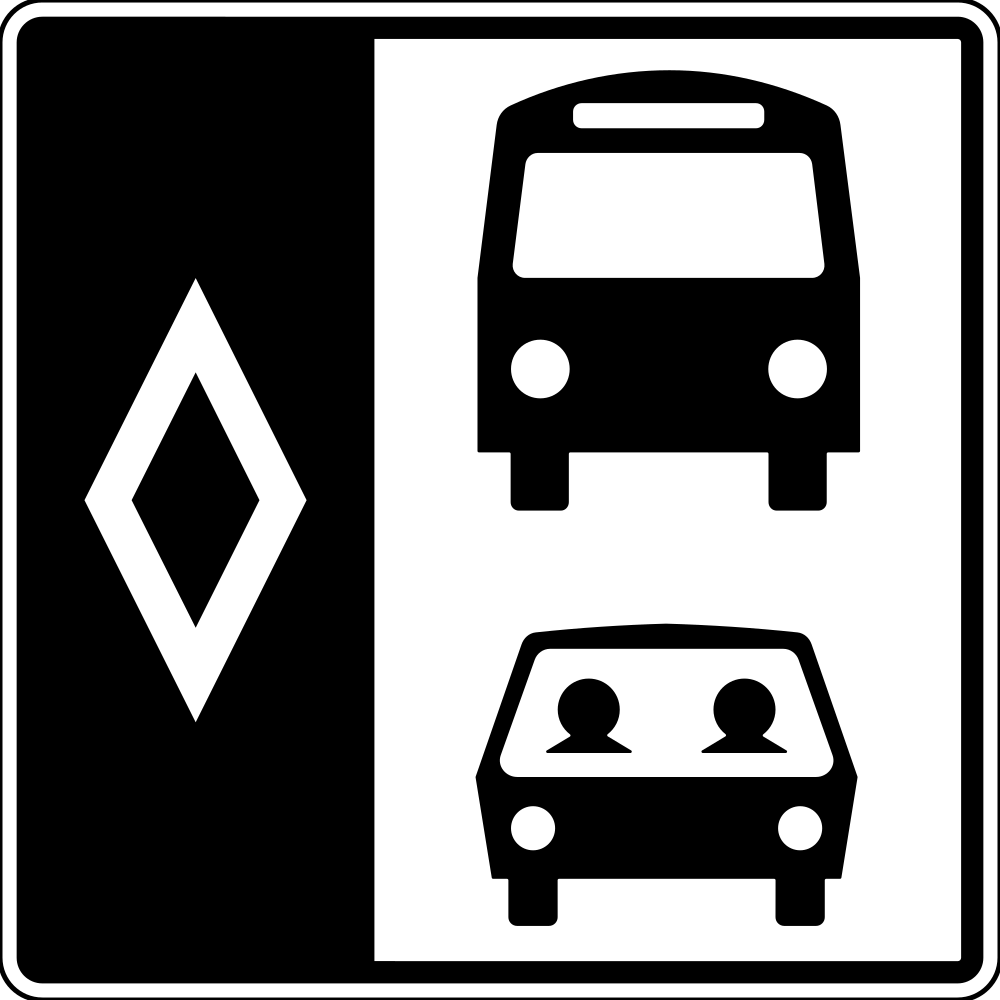
Who may use a high occupancy vehicle (HOV) lane like the one marked by this sign?
- A.Any vehicle during rush hour
- B.Buses and carpool vehicles carrying at least the number of people shown on the signsAnswer
- C.Only buses
- D.Trucks and slow-moving vehicles
Explanation: HOV lanes are reserved for buses and carpool vehicles; on some roads motorcycles, bicycles and taxis may use them too. Signs tell you where the lanes begin and end, when they operate and the minimum number of people who must be in the vehicle. Most HOV lanes operate 24 hours a day.
99 of 200 · Passing, lanes & freeways
Your vehicle carries enough people to use the HOV lane. Where should you enter and exit it?
- A.Anywhere, as long as you signal
- B.Only at intersections
- C.Across the solid lines when traffic is light
- D.Where broken lines mark a crossing pointAnswer
Explanation: Enter and exit an HOV lane only where broken lines show a crossing point, and take care: traffic in these lanes sometimes travels faster than regular traffic, so make sure there is enough room.
100 of 200 · Passing, lanes & freeways
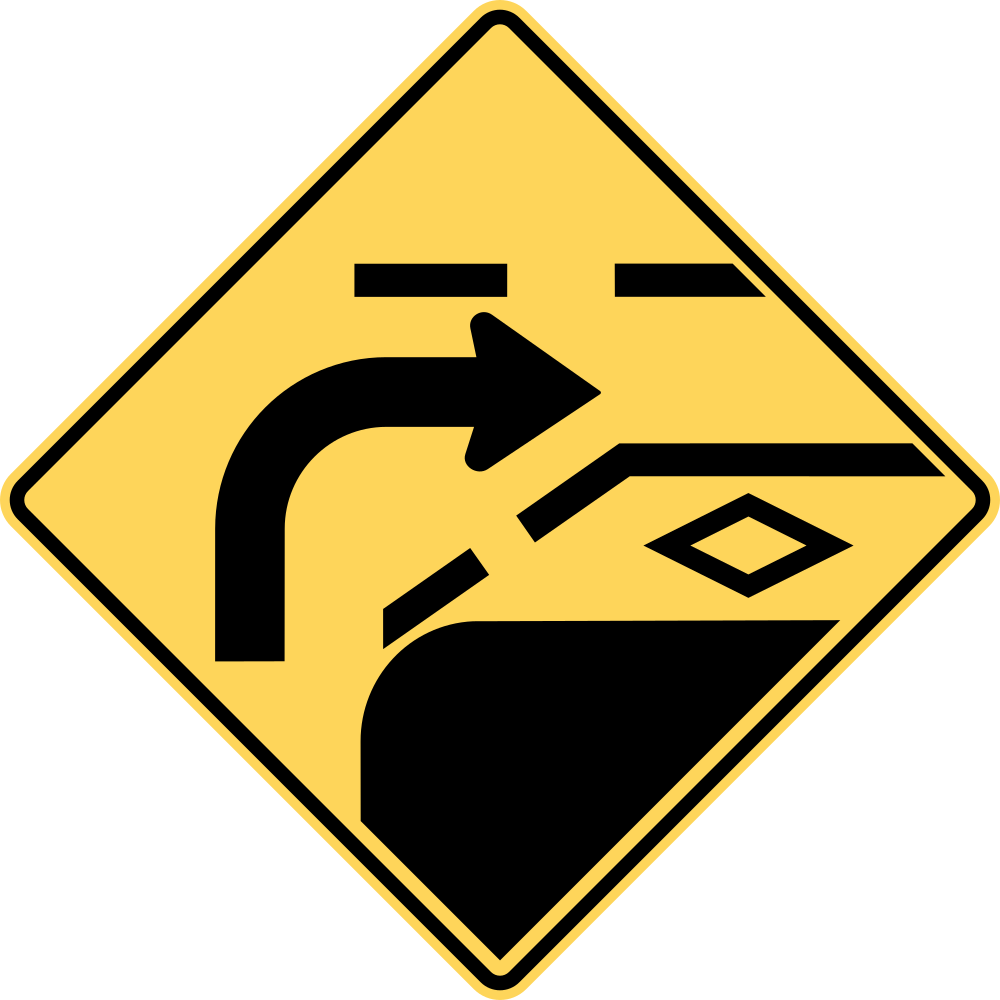
This sign warns that the street you are turning onto has a reserved lane, and you are not entitled to use it. Which lane should you turn into?
- A.Into the reserved lane, then move out when it is safe
- B.Into the lane next to the reserved laneAnswer
- C.Into any lane, as long as you signal
- D.Into the far-left lane only
Explanation: Turn into the lane next to the reserved lane, unless you are entitled to drive in the reserved lane and want to use it. To turn right off a street with a reserved lane, move into it only where permitted and when safe.
101 of 200 · Parking & stopping
Within what distance of a fire hydrant is it illegal to park?
- A.5 metresAnswer
- B.3 metres
- C.10 metres
- D.15 metres
Explanation: You must not park within 5 metres of a fire hydrant. The distance is measured from the point at the curb beside the hydrant, and it keeps the hydrant clear for fire crews.
102 of 200 · Parking & stopping
How close to a crosswalk or an intersection may you legally park?
- A.No closer than 6 metresAnswer
- B.No closer than 2 metres
- C.No closer than 20 metres
- D.Right up to the edge, if the curb is not painted
Explanation: Parking within 6 metres of a crosswalk or an intersection is illegal. A parked vehicle that close hides pedestrians from drivers, and drivers from pedestrians.
103 of 200 · Parking & stopping
You want to park on a street near a stop sign. What does the law require?
- A.Park no closer than 6 metres to the signAnswer
- B.You may park right beside the sign if you stay in the vehicle
- C.Park no closer than 1 metre to the sign
- D.Stop signs do not affect where you may park
Explanation: It is illegal to park within 6 metres of a stop sign or a traffic light. A parked vehicle there could block other drivers’ view of the sign or signal.
104 of 200 · Parking & stopping
How far from the nearest rail of a railway crossing must you be before you may park?
- A.More than 15 metresAnswer
- B.More than 5 metres
- C.More than 6 metres
- D.More than 50 metres
Explanation: Parking within 15 metres of the nearest rail of a railway crossing is illegal. Vehicles parked near the tracks block the view of approaching trains.
105 of 200 · Parking & stopping
Even where no sign says so, in which of these places is it illegal to park?
- A.On a bridge or in a highway tunnelAnswer
- B.Beside an unpainted curb on a quiet residential street
- C.In a marked stall of a shopping-centre parking lot
- D.On a street at night when there is little traffic
Explanation: Bridges and highway tunnels are on the list of places where parking is always illegal. A stopped vehicle there has no escape room and blocks traffic that cannot easily go around it.
106 of 200 · Parking & stopping
The curb beside an empty space is painted yellow. What does this tell you?
- A.You must not park thereAnswer
- B.You may park there only at night
- C.You may park there if your hazard lights are on
- D.Parking is free there
Explanation: A curb painted yellow or red means no parking, just as a sign prohibiting parking does. Signs, curb markings and common sense tell you whether you may park.
107 of 200 · Parking & stopping
When you park parallel to the curb, how close to it should your vehicle be?
- A.Within 30 centimetresAnswer
- B.Within 1 metre
- C.At least 60 centimetres away
- D.Any distance, as long as the vehicle is parallel
Explanation: Park parallel to the curb and within 30 centimetres of it. Parking farther out narrows the lane for passing traffic.
108 of 200 · Parking & stopping
You park facing uphill beside a regular curb. Which way should you turn your front wheels?
- A.To the left, away from the curbAnswer
- B.To the right, toward the curb
- C.Straight ahead
- D.It does not matter if the parking brake is set
Explanation: Uphill with a curb, turn the wheels to the left. If the vehicle rolls back, the rear of the front tire catches against the curb instead of rolling into traffic.
109 of 200 · Parking & stopping
You park facing downhill. Which way should you turn your front wheels?
- A.To the right, whether or not there is a curbAnswer
- B.To the left, whether or not there is a curb
- C.To the right only if there is no curb
- D.Straight ahead
Explanation: Facing downhill, turn the wheels to the right with or without a curb. If the vehicle starts to roll, it moves toward the curb or the edge of the road, away from traffic.
110 of 200 · Parking & stopping
You park facing uphill beside a low, rolling (mountable) curb. Which way should you turn the wheels?
- A.To the rightAnswer
- B.To the left, as for any curb
- C.Straight ahead
- D.Toward the centre line
Explanation: A rolling or mountable curb is not high enough to stop a vehicle from rolling back into traffic, so treat it like no curb and turn the wheels to the right.
111 of 200 · Parking & stopping
You park a standard-transmission vehicle facing downhill. Besides setting the parking brake, which gear should you leave it in?
- A.ReverseAnswer
- B.First gear
- C.Neutral
- D.The highest gear
Explanation: Leave a standard transmission in reverse when facing downhill, and in first gear when facing uphill or on a level surface. The gear works against the direction the vehicle would roll. An automatic goes in “park”.
112 of 200 · Parking & stopping
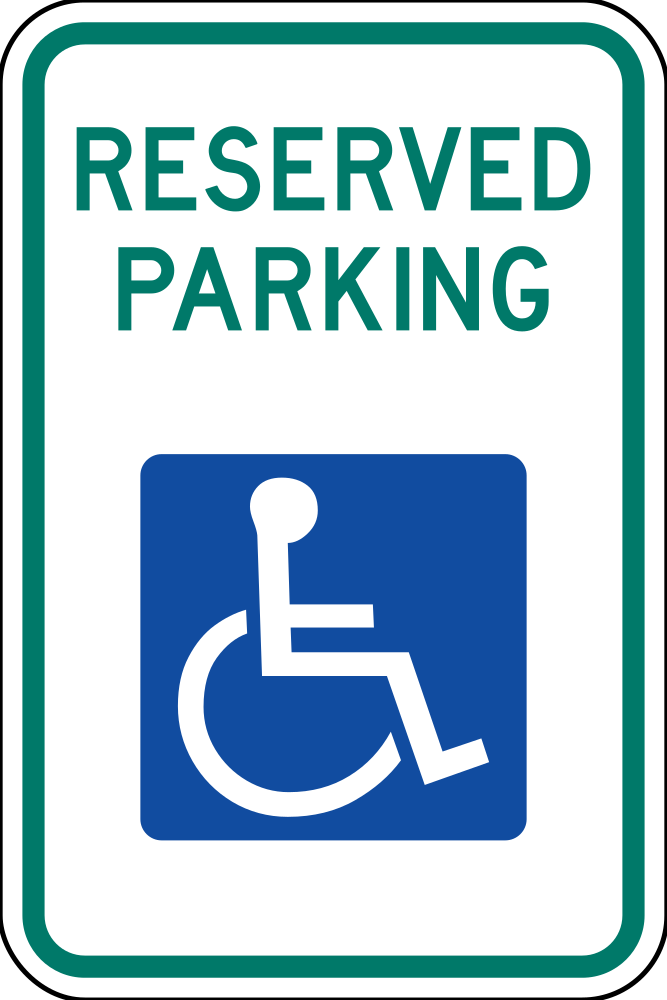
When may you park in a space marked with this sign?
- A.Only when a disabled person parking permit is displayed and a person with a disability is travelling in the vehicleAnswer
- B.Whenever a permit is displayed, even if the permit holder is not with you
- C.For a quick stop, as long as you stay with the vehicle
- D.After business hours, when the space is empty
Explanation: A space for people with disabilities may be used only when the permit is displayed in the windshield and the vehicle is carrying a person with a disability. The permit alone is not enough.
113 of 200 · Parking & stopping
You have parked on a busy street. What should you do before you open your door to get out?
- A.Check your mirror and do a shoulder check for cyclists and other vehiclesAnswer
- B.Open the door a little and let traffic steer around it
- C.Turn on your hazard lights; then no check is needed
- D.Signal left so traffic knows you are getting out
Explanation: A cyclist or another vehicle could be coming up beside you. Check the mirror and do a shoulder check before opening the door — drivers swinging doors open without checking are a common cause of crashes with cyclists.
114 of 200 · Parking & stopping
You are about to pull away from a parked position on the right side of the road. What should you check?
- A.Your left mirror, plus a shoulder check to the leftAnswer
- B.Your right mirror only
- C.Nothing — traffic must let a parked vehicle pull out
- D.Only the rear-view mirror, since a shoulder check is for highways
Explanation: When pulling away from the right side of the road, check your left mirror for vehicles coming from behind, then shoulder check the blind spot — a cyclist could be hidden there.
115 of 200 · Sharing the road
You are approaching a school bus from the front on a road with several lanes. Its red lights at the top are flashing alternately. What must you do?
- A.Stop — vehicles in all lanes must stop, from either directionAnswer
- B.Slow down and pass carefully, because you are coming from the front
- C.Stop only if you are in the lane next to the bus
- D.Stop only if you see children crossing
Explanation: Alternating flashing red lights at the top of a school bus mean every vehicle must stop — whether it is approaching from the front or the rear, and in every lane. Children may cross in front of or behind the bus.
116 of 200 · Sharing the road
The amber lights at the top of a school bus ahead start flashing alternately. What do they warn you of?
- A.The driver is preparing to stopAnswer
- B.The children have finished crossing
- C.The bus is about to pull away, so you may pass it now
- D.The bus has broken down
Explanation: Alternating flashing amber lights mean the school bus driver is getting ready to stop. Slow down and be prepared to stop, because the red lights will come on next.
117 of 200 · Sharing the road
You have stopped for a school bus with flashing red lights. When may you start moving again?
- A.When the bus moves on, or the driver turns off the lights and pulls in the stop signAnswer
- B.As soon as the children you saw reach the sidewalk
- C.When the vehicle behind you sounds its horn
- D.After the bus driver waves at you, even with the red lights still flashing
Explanation: Stay stopped until the bus moves on, or until the driver shows it is safe by turning off the flashing lights and pulling in the stop sign. A child you cannot see may still be crossing.
118 of 200 · Sharing the road
An ambulance with its siren and flashing lights is coming up behind you on a two-way street. What is usually the best thing to do?
- A.Pull over to the right and stopAnswer
- B.Speed up to stay ahead of it
- C.Stop right where you are, even in an intersection
- D.Keep going at the same speed and let it find a way around you
Explanation: Emergency vehicles using lights and sirens always have the right-of-way. Clear a path by pulling over to the right and stopping — but never stop in an intersection. Signal so the driver knows you have seen the vehicle.
119 of 200 · Sharing the road
You are driving on a divided highway. A police car with lights and siren is approaching on the other side of the median. What does the rule say?
- A.You may not need to stop, as long as it could not possibly cross onto your sideAnswer
- B.You must stop in your lane until it has passed
- C.You must pull over to the left shoulder
- D.You must speed up to clear the area
Explanation: Normally all traffic in both directions must stop for an emergency vehicle. The exception is a divided highway where the vehicle is on the other side of the median — make sure it would be impossible for it to move onto your side.
120 of 200 · Sharing the road
You are following a fire truck. How far back must you stay?
- A.At least 150 metresAnswer
- B.At least 50 metres
- C.At least 2 seconds
- D.At least 500 metres
Explanation: When you follow a fire truck you must stay back at least 150 metres, so you do not get in the way when it stops or turns and firefighters have room to work.
121 of 200 · Sharing the road
A fire hose is stretched across the road in front of you. What does the law say?
- A.You must not drive over itAnswer
- B.You may drive over it slowly
- C.You may drive over it if no firefighter is nearby
- D.You may drive over it if the hose looks empty
Explanation: It is illegal to drive over a fire hose. Driving over it can damage it or cut the water supply firefighters depend on — find another way or wait.
122 of 200 · Sharing the road
The speed limit is 90 km/h. A tow truck is stopped on the shoulder with its lights flashing. What is the fastest you may drive past it?
- A.70 km/hAnswer
- B.40 km/h
- C.80 km/h
- D.90 km/h, the posted limit
Explanation: Where the speed limit is 80 km/h or more, you must drive no faster than 70 km/h when passing a stopped vehicle with flashing lights, such as a tow truck, police car or highway maintenance vehicle.
123 of 200 · Sharing the road
On a street signed at 60 km/h, a utility truck is stopped at the side with yellow lights flashing. What is the fastest you may drive past it?
- A.40 km/hAnswer
- B.50 km/h
- C.60 km/h, the posted limit
- D.20 km/h
Explanation: Where the speed limit is less than 80 km/h, you must drive no faster than 40 km/h past a stopped vehicle displaying flashing lights. The rule covers utility workers, tow trucks, garbage collectors and many others.
124 of 200 · Sharing the road
You are in the lane nearest to a police car stopped at the roadside with its lights flashing. Besides slowing down, what must you do?
- A.Change lanes, if it is safe to do soAnswer
- B.Stop beside it until the officer waves you on
- C.Sound your horn to warn the officer
- D.Nothing more — slowing down is all that is required
Explanation: If you are in the lane next to a stopped vehicle with flashing lights, you must also move over to another lane when it is safe. Failing to slow down or change lanes can bring a traffic violation and penalty points.
125 of 200 · Sharing the road
A transit bus is signalling and showing a yield-to-bus sign as it leaves a bus stop. On which roads must you let it pull out?
- A.On all roads where the speed limit is 60 km/h or lowerAnswer
- B.Only on roads where the speed limit is 30 km/h
- C.Only where there is a bus lane
- D.Never — the bus must wait for a gap like any other vehicle
Explanation: On roads with a speed limit of 60 km/h or lower, you must let a signalling bus with a yield-to-bus sign move out from the curb lane or a stop. Change lanes if there is room, or slow down.
126 of 200 · Sharing the road
How much space should you leave beside a cyclist when you pass?
- A.As much as possible — at least one metre, and more at higher speedAnswer
- B.Just enough for your mirror to clear the handlebars
- C.About 30 centimetres
- D.None — cyclists must pull onto the shoulder to let you pass
Explanation: When passing pedestrians, cyclists or other vehicles, give as much room as you can — at least one metre, and more if you are going faster. Many crashes with cyclists are side-swipes.
127 of 200 · Sharing the road
On a narrow two-lane road with a single solid yellow centre line, you come up behind a cyclist. What does B.C. law allow?
- A.You may cross the line to pass the cyclist, provided you can do it safelyAnswer
- B.You may never cross a solid yellow line, so you must stay behind
- C.You may squeeze past within your own lane
- D.Sound your horn so the cyclist moves onto the shoulder
Explanation: You are allowed to cross a single solid yellow line to pass a cyclist, as long as you can do it safely. On a narrow road, wait for a clear, straight stretch so you can pull out and give the cyclist room.
128 of 200 · Sharing the road
A cyclist ahead of you extends the right arm straight out. What is the cyclist telling you?
- A.The cyclist is going to turn rightAnswer
- B.The cyclist is going to turn left
- C.The cyclist is going to stop
- D.The cyclist wants you to pass on the right
Explanation: Cyclists may signal a right turn by holding the right arm straight out. Learn the hand signals cyclists use so you can predict their next move and give them room.
129 of 200 · Sharing the road
A person with a white cane at the curb raises the cane. What should you do?
- A.Stop and give the person the right-of-wayAnswer
- B.Sound your horn so the person knows where you are
- C.Keep going — the person is waving you through
- D.Rev your engine so the person can hear your vehicle
Explanation: A visually impaired person often raises the cane when unsure about crossing safely. That is your signal to stop and let them cross. Do not startle them or a guide dog by racing the engine or honking.
130 of 200 · Sharing the road
You are turning at an intersection that has no marked crosswalk. A pedestrian is crossing near your half of the road. Who has the right-of-way?
- A.The pedestrian — no marked crosswalk is neededAnswer
- B.You do, because there is no marked crosswalk
- C.Whoever reached the intersection first
- D.You do, as long as your light is green
Explanation: At intersections, pedestrians near your half of the road have the right-of-way even when there is no marked crosswalk, and you must also yield to them when turning. It is always the driver’s responsibility to avoid hitting a pedestrian.
131 of 200 · Sharing the road
Which statement about sharing a lane with a motorcycle is correct?
- A.Never do it — a motorcycle needs the whole laneAnswer
- B.It is fine if the rider keeps to one side of the lane
- C.It is allowed in slow, heavy traffic
- D.It is allowed if the rider waves you alongside
Explanation: Never try to share a lane with a motorcycle: it needs the whole lane to travel safely. Riders often use the left part of the lane simply to be more visible, not to invite you in.
132 of 200 · Sharing the road
You are following a large truck. How can you tell you are not in the driver’s blind spot behind it?
- A.You can see both of the truck’s side mirrorsAnswer
- B.You can see the truck’s brake lights
- C.You are close enough to read its licence plate
- D.Your headlights are on
Explanation: Large vehicles have big blind spots behind and beside them. If you can see both mirrors of the truck or bus ahead, the driver has a chance of seeing you; staying farther back also widens your own view of the road ahead.
133 of 200 · Sharing the road
A large truck ahead of you may be about to turn right. Where should you avoid being?
- A.On its right side, between the truck and the curbAnswer
- B.Well behind it, where you can see both mirrors
- C.In the lane to its left, well back
- D.Stopped behind the stop line
Explanation: Big vehicles need a lot of room to turn. When a truck turns right it may swing wide first, and a car on its right can be squeezed between the truck and the curb.
134 of 200 · Sharing the road
The lights are flashing at a railway crossing ahead. Where should you stop?
- A.No closer than 5 metres and no farther than 15 metres from the nearest railAnswer
- B.Right at the edge of the nearest rail
- C.At least 30 metres from the nearest rail
- D.Between the two sets of tracks, if there is room
Explanation: Stop no closer than 5 metres and no farther than 15 metres from the nearest rail. Trains always have the right of way; wait until it is safe, and watch for a second train on another track.
135 of 200 · Sharing the road
Your vehicle is stuck on a railway track. After getting everyone out, what should you do?
- A.Move quickly at least 30 metres away from the track, then phone for helpAnswer
- B.Stand beside the vehicle and wave at the train
- C.Try to push the vehicle off the track together
- D.Get back in and keep trying to start the engine
Explanation: Get everyone out and move quickly at least 30 metres away from the track to avoid flying debris. Then call the number on the back of the railway crossing sign, or 911 or the local police, and report the location.
136 of 200 · Sharing the road
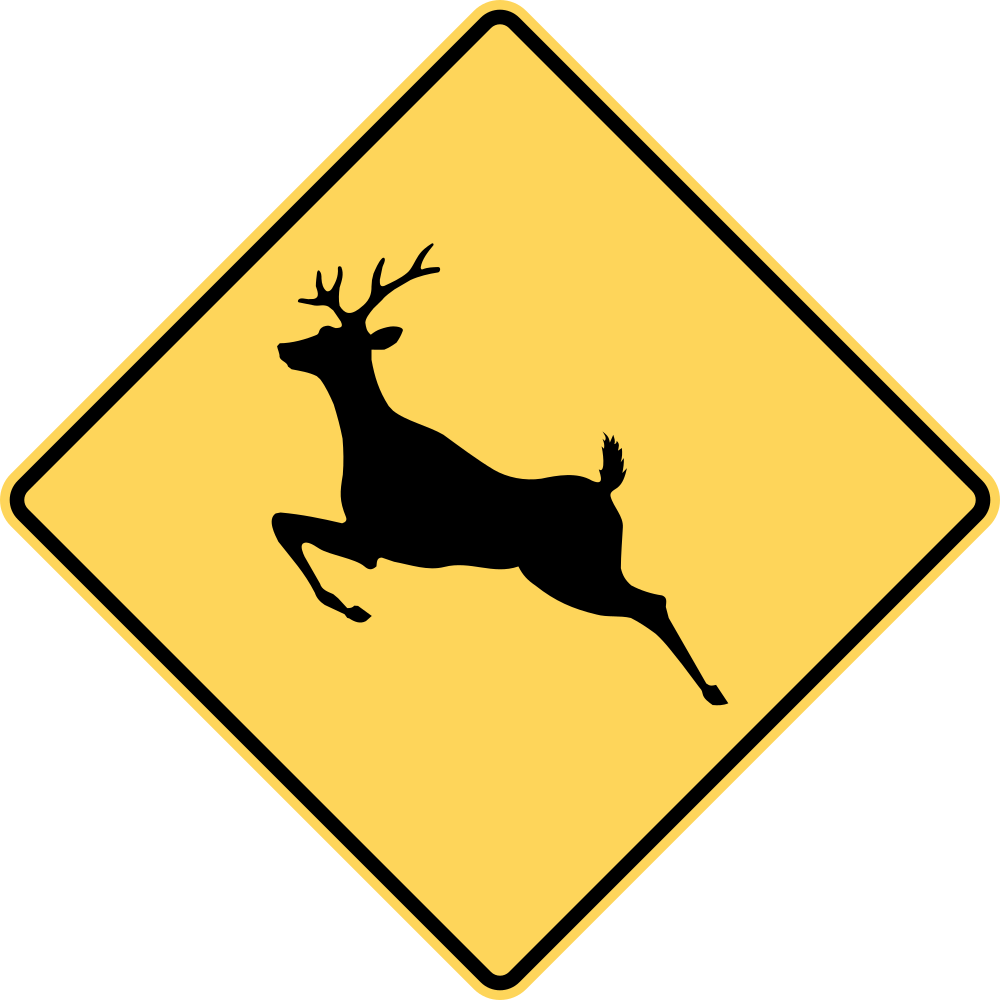
You are driving through the area this sign marks. At which times should you be most cautious?
- A.At dusk and dawnAnswer
- B.Only in the middle of the day
- C.Only in winter
- D.Only when you can already see an animal
Explanation: Animals move around to feed at dusk and dawn, and they are harder to see then. Slow down in marked areas, scan the sides of the road, and remember that wild animals often move in herds — where there is one, there may be more.
137 of 200 · Safe driving
In good weather and road conditions, what is the minimum following distance you should keep?
- A.At least 2 secondsAnswer
- B.At least 1 second
- C.Half a second
- D.One car length at any speed
Explanation: Keep at least 2 seconds of space in front in good conditions. It takes time to see a hazard and react before the brakes even begin to work, so a gap measured in seconds grows with your speed.
138 of 200 · Safe driving
It is raining heavily and the road is slippery. What following distance should you increase to?
- A.4 secondsAnswer
- B.2 seconds
- C.3 seconds
- D.1 second
Explanation: Increase your following distance to 4 seconds in bad weather or on uneven or slippery roads. Stopping takes longer when the tires have less grip.
139 of 200 · Safe driving
You are following another vehicle on an unpaved road where dust and gravel are in the air. What following distance is a good idea?
- A.At least 3 secondsAnswer
- B.At least 1 second
- C.Close enough to stay in the vehicle’s tire tracks
- D.The same as on a paved road: 2 seconds
Explanation: Keep at least 3 seconds of following distance on an unpaved road where dust or gravel may be in the air. The same applies behind a large vehicle or a motorcycle, and when someone is following close behind you.
140 of 200 · Safe driving
Your car has automatic daytime running lights. May you drive at night with only those lights on?
- A.No — it is illegal to drive at night with daytime running lights or parking lights instead of headlightsAnswer
- B.Yes, on well-lit city streets
- C.Yes, if you also turn on the parking lights
- D.Yes, until 1 hour after sunset
Explanation: Daytime running lights are not headlights and do not turn on the tail lights, so drivers behind cannot see you. At night you must use your headlights; driving with only parking lights or daytime running lights is illegal.
141 of 200 · Safe driving
A driver is tailgating you. What is a good way to protect yourself?
- A.Slow down slightly to increase the space in front of youAnswer
- B.Tap your brakes hard to warn the driver
- C.Speed up to get away from the driver
- D.Move closer to the vehicle in front so the tailgater cannot cut in
Explanation: You cannot control the space behind you, but you can add space in front. Slowing down slightly lets you stop more gradually if you have to, so the tailgater is less likely to hit you. You could also change lanes or pull over and let the driver pass.
142 of 200 · Safe driving
How far ahead should you scan the road as you drive?
- A.At least 12 seconds aheadAnswer
- B.About 2 seconds ahead
- C.Just past the front of your hood
- D.Only as far as the vehicle directly in front
Explanation: New drivers tend to look just in front of the vehicle and miss hazards farther away. Scan at least 12 seconds ahead — about one to two blocks in the city and half a kilometre on the highway — so you have time to prepare.
143 of 200 · Safe driving
While driving, how often should you glance at each of your mirrors?
- A.About every 5 to 8 secondsAnswer
- B.About once a minute
- C.Only when you change lanes
- D.Only when you are backing up
Explanation: Keep your eyes moving: look well ahead, scan from side to side and check your mirrors, completing the cycle every 5 to 8 seconds. That way you always know what is happening behind and beside you.
144 of 200 · Safe driving
Your vehicle has a blind spot detector and a back-up camera. Do you still need to do shoulder checks?
- A.Yes — these devices do not replace turning your head to lookAnswer
- B.No — the detector covers the blind spots
- C.Only when the detector is switched off
- D.Only at night
Explanation: Blind spot detectors and cameras can help, but they do not replace a shoulder check or looking behind. Whenever you change direction or road position, turn your head to make sure the blind spot on that side is clear.
145 of 200 · Safe driving
During which period must you drive with your headlights on?
- A.From 30 minutes after sunset until 30 minutes before sunriseAnswer
- B.Only from sunset to sunrise
- C.From 1 hour after sunset until 1 hour before sunrise
- D.Only where there are no street lights
Explanation: You must use your headlights from 30 minutes after sunset until 30 minutes before sunrise. They help you see, and they help other road users see you.
146 of 200 · Safe driving
When must you switch from high beams to low beams?
- A.Within 150 metres of another vehicle, whether meeting or following itAnswer
- B.Only within 50 metres of an oncoming vehicle
- C.Only when you are following another vehicle
- D.Only when the other driver flashes their lights at you
Explanation: You must dim your high beams when you are within 150 metres of another vehicle, both when meeting it and when following it. Most people misjudge distance at night, so dim early.
147 of 200 · Safe driving
It is daytime, but fog has come in. When does the law require you to turn on your headlights?
- A.When visibility is reduced to less than 150 metresAnswer
- B.Only when visibility is less than 10 metres
- C.Never during the day
- D.Only on highways
Explanation: Headlights are also required whenever visibility drops below 150 metres, for example in fog or heavy rain — day or night. Use low beams in these conditions.
148 of 200 · Safe driving
Which lights should you use when driving in rain, snow or fog?
- A.Low beam headlightsAnswer
- B.High beam headlights, to see farther
- C.Parking lights only
- D.Hazard lights while moving
Explanation: Use low beams in rain, snow and fog. High beams reflect off the water droplets or snowflakes back into your eyes and make it harder to see.
149 of 200 · Safe driving
What does it mean to “overdrive your headlights”?
- A.Driving so fast that you cannot stop within the distance your headlights light upAnswer
- B.Using high beams when other vehicles are near
- C.Leaving your headlights on after parking
- D.Driving with headlights that are aimed too high
Explanation: You overdrive your headlights when you go too fast to stop within the distance they light up — at night or in fog, rain or snow. It is especially dangerous on a curve. Slow down so you can always stop within the distance you can see.
150 of 200 · Safe driving
On a wet highway your steering suddenly feels very light — your tires are hydroplaning. What should you do?
- A.Ease off the accelerator and keep driving straight; do not brakeAnswer
- B.Brake hard until the tires grip again
- C.Steer sharply toward the shoulder
- D.Accelerate to push through the water
Explanation: Hydroplaning means the tires are floating on a film of water, so steering and braking do not work. Decelerate and drive straight — never brake. To prevent it, check tire tread and pressure and slow down in heavy rain.
151 of 200 · Safe driving
On a cold day near freezing, which part of the road is likely to ice up before the rest?
- A.Bridges and overpassesAnswer
- B.Sunny, open stretches of highway
- C.Roads through tunnels
- D.Freshly paved roads
Explanation: Bridges and overpasses tend to form ice before other road surfaces. Be suspicious of asphalt that looks shiny and black — it may be black ice — and remember that shaded areas and intersections can stay icy too.
152 of 200 · Safe driving
On a long trip that takes more than one day, when is tiredness most likely to affect you?
- A.On the second dayAnswer
- B.In the first hour of the first day
- C.Only if you drive after midnight
- D.Never, if you drink coffee
Explanation: Fatigue is one of the leading causes of crashes, and on a long trip it is most likely to catch up with you on the second day. Start out well rested, take breaks, and do not drive too far at one time.
153 of 200 · Safe driving
After a long time on an unchanging highway, you become unaware of your surroundings. What is this called, and how can you help prevent it?
- A.Highway hypnosis — turn off the cruise control and keep scanning systematicallyAnswer
- B.Highway hypnosis — set the cruise control so you can relax
- C.Tunnel vision — stare at the centre of the lane
- D.Road rage — drive faster to reach your destination sooner
Explanation: This is highway hypnosis. You can help avoid it by turning off the cruise control, scanning systematically and using strategies to stay awake, such as taking breaks and keeping fresh air in the car.
154 of 200 · Safe driving
According to the studies cited in the driver’s guide, drivers talking on a cellphone lose about how much of what is going on around them visually?
- A.About 50 per centAnswer
- B.About 5 per cent
- C.Almost nothing, if they use a hands-free phone
- D.About 10 per cent
Explanation: Drivers talking on a cellphone lose about 50 per cent of what is going on around them visually. Even when you are stopped at an intersection or slowed in traffic, you are still driving — leave your phone alone.
155 of 200 · Safe driving
What lowers the amount of alcohol in your blood?
- A.Only timeAnswer
- B.Drinking strong coffee
- C.Taking a cold shower
- D.Eating a large meal
Explanation: Only time can sober you up or lower your blood alcohol content. Food, coffee, cold showers and exercise do not speed up how fast your body gets rid of alcohol.
156 of 200 · Safe driving
According to Transport Canada, about how long does it take the body to go from a blood alcohol content of .08 back to zero?
- A.About 6 hoursAnswer
- B.About 1 hour
- C.About 2 hours
- D.About 30 minutes, if you eat something
Explanation: Transport Canada states that at a BAC of .08 it takes about 6 hours for the body to process the alcohol and return to zero. Someone who drank late at night may still be impaired the next morning.
157 of 200 · Safe driving
You have taken a medication and had one small drink. What should you know about the combination?
- A.Many drugs greatly increase impairment even with small amounts of alcoholAnswer
- B.A small drink cancels out the drowsiness from the medication
- C.Only illegal drugs react with alcohol
- D.Over-the-counter medicines never affect driving
Explanation: Many drugs, including some medications, greatly increase impairment when combined with even small amounts of alcohol. If there is any doubt about your ability to drive safely, leave the driving to someone else.
158 of 200 · Safe driving
The label on a cold medicine you have taken says it may cause drowsiness or dizziness. What should you do?
- A.Do not drive — take the bus or get someone else to driveAnswer
- B.Drive, but open a window to stay alert
- C.Drive only on short trips close to home
- D.Drink coffee to cancel the effect, then drive
Explanation: Over-the-counter medicines can make you drowsy and slow your reaction time, and the effects can last for hours. If the label warns of drowsiness or dizziness, do not drive — take the bus or ask a friend to drive you.
159 of 200 · Emergencies & collisions
You drive over black ice and the rear of your vehicle starts to skid to the right. What should you do?
- A.Ease off the accelerator and look and steer smoothly where you want to go, without brakingAnswer
- B.Brake hard and hold the wheel straight
- C.Steer sharply to the left, away from the skid
- D.Accelerate to pull the vehicle out of the skid
Explanation: In a skid, ease off the accelerator and look and steer smoothly in the direction you want to go — here, to the right. Do not brake; it makes the skid worse. If the rear then swings the other way from overcorrecting, steer smoothly that way until you regain control.
160 of 200 · Emergencies & collisions
Your vehicle has anti-lock brakes (ABS). How should you brake in an emergency stop?
- A.Press down hard and hold the pedal until you stop, without pumpingAnswer
- B.Pump the brake pedal quickly
- C.Press gently, then release when you hear noise
- D.Use only the parking brake
Explanation: With ABS, press down hard on the brake pedal and hold it until you stop, and steer where you want to go. Do not pump — that turns the system off. Noise or shudder from the brakes is normal.
161 of 200 · Emergencies & collisions
You press the brake pedal and your brakes do not work. What should you try?
- A.Pump the brakes hard and fast, and gear down to the lowest gearAnswer
- B.Turn off the ignition right away
- C.Yank the parking brake on as hard as you can
- D.Shift into reverse
Explanation: Pumping the brakes hard and fast may build up enough braking action to stop. Gear down so the engine helps slow you, apply the parking brake gently and gradually, look for an escape route, and warn others with your hazard lights or horn.
162 of 200 · Emergencies & collisions
Your engine dies while you are driving a car with power steering. Why should you not turn the ignition off?
- A.The steering will lockAnswer
- B.The airbags will go off
- C.The engine will be damaged
- D.The hazard lights will stop working
Explanation: With power or power-assisted steering you can still steer after the engine stops; it just takes more effort. Turning the ignition off would lock the steering. Signal, steer to the edge of the road and turn on your hazard lights.
163 of 200 · Emergencies & collisions
Your gas pedal sticks while you are driving at highway speed. What should you do?
- A.Brake, shift to neutral, and steer to a safe place off the roadAnswer
- B.Reach down with your hand to free the pedal
- C.Turn the engine off and restart it while moving
- D.Shift into reverse
Explanation: Apply the brake, look for an escape path, and shift to neutral to disconnect the engine from the wheels. Once stopped, turn off the engine and call for help. Never reach down with your hand to free the pedal — you could lose control.
164 of 200 · Emergencies & collisions
A front tire blows out while you are on the highway. What should you do?
- A.Grip the wheel firmly, ease off the accelerator and do not brake suddenlyAnswer
- B.Brake hard right away
- C.Let go of the wheel so the vehicle straightens itself
- D.Accelerate to keep the vehicle stable
Explanation: A front blowout pulls the vehicle toward the flat tire. Keep a firm grip, ease off the accelerator and slow down gradually — braking suddenly risks losing steering control. Brake gently once you have slowed, then signal and pull off the road when it is safe.
165 of 200 · Emergencies & collisions
Your headlights suddenly go out at night. What should you try first?
- A.Turn the light switch on and off quicklyAnswer
- B.Keep driving slowly with the parking lights on
- C.Stop immediately in your lane
- D.Follow the tail lights of the vehicle ahead to the next exit
Explanation: Try turning the light switch on and off quickly. If the headlights stay off, turn on the hazard lights, slow down, pull off the road and get help — driving at night without headlights is dangerous and illegal.
166 of 200 · Emergencies & collisions
Your hood flies up while you are driving and blocks your view. What should you do?
- A.Look through the gap below the hood or out the side window, take your foot off the accelerator and steer to the side of the roadAnswer
- B.Brake as hard as you can right away
- C.Keep going at the same speed until the next exit
- D.Reach out of the window to push the hood down
Explanation: Do not panic. Look through the crack below the hood or out your open window in the direction you are travelling, take your foot off the accelerator, turn on the hazard lights, pump the brakes to warn drivers behind you, and steer to the side of the road.
167 of 200 · Emergencies & collisions
A large elk steps into your path and you cannot stop in time. What does the guide advise?
- A.Brake firmly, steer to strike the animal at an angle, and let up on the brake just before impactAnswer
- B.Slam on the brakes and hold them until you hit it
- C.Swerve sharply into the oncoming lane
- D.Speed up so the animal jumps out of the way
Explanation: If the animal is large and you cannot stop, brake firmly and steer to hit it at an angle. Letting up on the brake just before impact makes the front of the vehicle rise, reducing the chance the animal comes through the windshield.
168 of 200 · Emergencies & collisions
A car is coming straight at you in your lane. To avoid a head-on collision, which way should you steer?
- A.To the rightAnswer
- B.To the left, into the empty oncoming lane
- C.Straight ahead, braking as hard as possible
- D.Whichever way the other driver is looking
Explanation: Avoid a head-on collision at all costs by steering to the side — to the right, not the left, because the oncoming driver may also steer to their right. Slow down as much as possible and use the horn to alert the other driver.
169 of 200 · Emergencies & collisions
You are involved in a crash. What are you legally required to do?
- A.Remain at the scene and give all reasonable assistanceAnswer
- B.Leave if your vehicle can still be driven, and report it later
- C.Admit fault so the insurance claim goes faster
- D.Stay only if someone is visibly injured
Explanation: If you are involved in a crash, or other drivers crash because of something you did, you must remain at the scene, give all reasonable assistance (calling emergency services if needed), and exchange information. Avoid discussing who is at fault.
170 of 200 · Emergencies & collisions
After a crash, which information must you exchange with the other driver and anyone whose property was damaged?
- A.Your name and address, the registered owner’s name and address, the licence plate number and insurance informationAnswer
- B.Only your phone number
- C.Nothing — only the police may collect this information
- D.A written statement of who caused the crash
Explanation: You must exchange your name and address, the name and address of the vehicle’s registered owner, the licence plate number and insurance information — and give the same to the police or a witness if asked. Then notify your insurance company right away.
171 of 200 · Demerit points, alcohol & penalties
How long do traffic tickets and penalty points stay on your B.C. driving record?
- A.5 yearsAnswer
- B.1 year
- C.2 years
- D.10 years
Explanation: Tickets and penalty points stay on your driving record for 5 years. The Driver Penalty Point premium is worked out separately, on the points you collect in each 12-month assessment period, and you pay it only once for those points.
172 of 200 · Demerit points, alcohol & penalties
During a 12-month assessment period, how many penalty points must you collect before ICBC bills you a Driver Penalty Point (DPP) premium?
- A.More than 3 pointsAnswer
- B.Any points at all — even 1
- C.At least 10 points
- D.More than 20 points
Explanation: If you collect more than 3 penalty points in the 12-month assessment period, you pay a DPP premium; 0 to 3 points costs nothing. The premium rises with the number of points, so every extra ticket costs more.
173 of 200 · Demerit points, alcohol & penalties
You received a traffic ticket and think the penalty points are unfair. How can you dispute the points?
- A.Only by disputing the ticket itselfAnswer
- B.Pay the ticket first, then ask ICBC to remove the points
- C.Wait for your DPP premium bill and dispute the points then
- D.Ask any driver licensing office to cancel just the points
Explanation: Paying a traffic ticket means you accept both the guilt and the penalty points that come with it. The only way to challenge the points is to dispute the ticket you received — so decide before you pay.
174 of 200 · Demerit points, alcohol & penalties
You receive a Driver Penalty Point premium bill, but you do not own or insure a vehicle. Which statement is true?
- A.You must still pay it — the premium is billed even if you don’t own or insure a vehicleAnswer
- B.It is cancelled, because you have no Autoplan policy
- C.It is charged only when you next buy Autoplan insurance
- D.You can ignore it until you renew your licence
Explanation: The DPP premium is separate from Autoplan insurance premiums, so it is billed whether or not you own or insure a vehicle. You have 30 days from the invoice date to pay it.
175 of 200 · Demerit points, alcohol & penalties
Which of these can eliminate a Driver Penalty Point premium altogether?
- A.Giving up your driver’s licence for 1 year from your birthdayAnswer
- B.Paying the fines on your tickets early
- C.Insuring a vehicle with Autoplan
- D.Moving to a new address in B.C.
Explanation: If you give up your driver’s licence for 1 year from your birthday, the DPP premium can be eliminated; giving it up for at least 30 days in the billing period can reduce it. A suspension or prohibition of 60 days or more also qualifies for a reduction — but remember there are fees to reinstate your licence.
176 of 200 · Demerit points, alcohol & penalties
You are a fully licensed driver, no longer in graduated licensing. Which of these is illegal while you are driving?
- A.Manually programming your GPSAnswer
- B.Asking a passenger to read and answer your texts
- C.Pulling over and stopping before you use your phone
- D.Turning your phone off and putting it out of sight
Explanation: Every B.C. driver, not just those in graduated licensing, is banned from using hand-held electronic devices while driving: you may not operate, view or hold a phone, send or read texts or emails, hold a music or gaming device, or manually program or adjust a GPS. The ban applies even when you are stopped at a red light. A designated texter, or pulling over to stop, are the safe alternatives.
177 of 200 · Demerit points, alcohol & penalties
You have your N and receive 1 ticket for using an electronic device while driving. What can happen besides the fine and points?
- A.Your driving record will be reviewed, and you may face a driving prohibitionAnswer
- B.Nothing more — action starts only after a third device ticket
- C.You must retake the knowledge test
- D.Nothing more — GLP drivers are treated exactly like fully licensed drivers
Explanation: Penalties are stricter in graduated licensing. L and N drivers may not use any electronic device, even hands-free, except to call 9-1-1 to report an emergency — and a GLP driver who gets just 1 device ticket has their driving record reviewed and may be prohibited from driving.
178 of 200 · Demerit points, alcohol & penalties
What is special about traffic fines in a construction zone?
- A.They are doubledAnswer
- B.They are the same as on any other road
- C.Only a warning is given, as long as no worker is hurt
- D.They are halved if you pay on the spot
Explanation: Traffic fines are double in construction zones. Slow down, obey the construction zone speed limit — posted limits there apply 24 hours a day — and follow the directions of traffic control persons.
179 of 200 · Demerit points, alcohol & penalties
You pass a tow truck stopped at the roadside with its lights flashing, but you neither slow down nor change lanes. What may this result in?
- A.A traffic violation and penalty pointsAnswer
- B.Nothing, as long as you stayed under the posted limit
- C.Nothing — the rule covers only police, fire and ambulance vehicles
- D.A warning letter only; points apply only to GLP drivers
Explanation: The slow-down-and-move-over rule covers every vehicle allowed to show flashing yellow, red, white or blue lights, including tow trucks and highway maintenance and utility crews. Slow to 70 km/h where the limit is 80 km/h or more, or to 40 km/h where it is under 80 km/h, and change lanes if you are in the nearest lane and it is safe. Failing to do so may bring a traffic violation and penalty points.
180 of 200 · Demerit points, alcohol & penalties
A police officer believes alcohol has affected your ability to drive, but your blood alcohol content (BAC) is not over .08. Can you be prohibited from driving?
- A.Yes — you do not need a BAC over .08 to be prohibitedAnswer
- B.No — only a BAC over .08 can lead to a prohibition
- C.No — only refusing a breath test can lead to a prohibition
- D.Only if you are a learner or novice driver
Explanation: You may be prohibited whenever a police officer considers your ability to drive affected by alcohol or drugs — you do not need a BAC over .08, or a blood drug concentration of 2 nanograms or more of THC. Even a first offence can add up to $600 to over $4,000 in penalties, plus time off the road.
181 of 200 · Demerit points, alcohol & penalties
Police can impound the vehicle you are driving for excessive speeding. What counts as excessive speeding?
- A.Driving 40 km/h or more over the posted limitAnswer
- B.Driving 10 km/h or more over the posted limit
- C.Driving 20 km/h or more over the posted limit
- D.Any speeding at all in a school zone
Explanation: Excessive speeding means driving 40 km/h or more over the posted speed limit. Like street racing, stunt driving and driving while prohibited, it lets police impound the vehicle on the spot — and 1 or more excessive speeding convictions also make you pay a Driver Risk Premium.
182 of 200 · Demerit points, alcohol & penalties
Police impound the car you were driving because you were caught street racing. For how long can it be impounded?
- A.7 days, which can rise to 30 or 60 days for repeat offendersAnswer
- B.24 hours
- C.Until the next business day
- D.1 year, for every offender
Explanation: Police can immediately impound the vehicle for 7 days, escalating to 30 or 60 days for repeat offenders, and the owner must pay the towing and storage fees to get it back. Owners are responsible for making sure only licensed drivers use their vehicles.
183 of 200 · Demerit points, alcohol & penalties
You receive a driving prohibition while you are in the learner stage. How does it affect your time as a learner?
- A.Your learner stage is extended — no time counts toward the novice stage until you have served the prohibition and your licence is reinstatedAnswer
- B.It has no effect — your time as a learner keeps counting
- C.You move straight to the novice stage when the prohibition ends
- D.Your learner time counts double once the prohibition ends
Explanation: A prohibition in the learner stage stretches that stage out: you build no time toward the novice stage until the prohibition is served and your licence reinstated. In the novice stage it is harsher still — the clock is reset to zero and you lose the time you had built up.
184 of 200 · Demerit points, alcohol & penalties
Under RoadSafetyBC’s Driver Improvement Program, what usually happens to a driver who keeps committing driving offences?
- A.A warning letter, then probation, then a driving prohibition if the offences continueAnswer
- B.Nothing, as long as every ticket is paid
- C.A lifetime prohibition after the second ticket
- D.The offences are removed from the record after each warning
Explanation: RoadSafetyBC reviews every offence added to a driving record, case by case. A driver who keeps offending may get a warning letter, then be placed on probation, then be prohibited if there are more offences during probation. Someone who piles up offences quickly can be prohibited without any warning, and the threshold is stricter for drivers in graduated licensing.
185 of 200 · Demerit points, alcohol & penalties
What can happen if you are caught driving while you are prohibited from driving?
- A.Your vehicle can be impounded, and you may face fines or a jail termAnswer
- B.Your prohibition simply starts over, with no other penalty
- C.You receive a warning letter only
- D.Nothing, if you were driving your own vehicle
Explanation: A prohibition makes it illegal for you to drive for a set time. Driving anyway can get your vehicle impounded and bring fines or a jail term. Even after a prohibition ends, there is a $250 fee to have your licence reinstated.
186 of 200 · Demerit points, alcohol & penalties
A police officer stops a driver who is impaired by drugs, not alcohol. Which roadside prohibition covers drivers impaired by alcohol, drugs or both?
- A.The 24-hour roadside prohibitionAnswer
- B.None — roadside prohibitions apply only to alcohol
- C.The immediate roadside prohibition, which applies only to drugs
- D.An unlicensed driver prohibition
Explanation: The 24-hour roadside prohibition can be issued to drivers impaired by alcohol, drugs or both. The immediate roadside prohibition — 3, 7, 30 or 90 days — is issued at the roadside to alcohol-impaired drivers, and criminal charges may be laid separately.
187 of 200 · Seat belts & vehicle safety
How should you adjust your seatbelt?
- A.Snug over your chest and low over your hipsAnswer
- B.With the shoulder strap under your arm for comfort
- C.Loose across your stomach so you can move freely
- D.With the seat reclined so the belt presses less
Explanation: The belt should fit snugly over your chest and low over your hips. Never wear the shoulder strap under your arm or behind your back, or wear the belt with a reclined seat: a belt over the wrong part of the body can cause serious internal injuries in a crash. Wearing a seatbelt is the law in B.C.
188 of 200 · Seat belts & vehicle safety
You are driving with 3 passengers. Who is responsible for making sure they are all properly secured with seatbelts or child restraints?
- A.You, the driverAnswer
- B.Each passenger, whatever their age
- C.The vehicle’s registered owner, even if they are not in the car
- D.Only the parents of any child passengers
Explanation: As the driver, it is your responsibility to make sure every passenger is properly secured with a seatbelt or a child restraint system. Refuse to move until everyone is buckled up — and if a child is not in the right child safety seat, you may be ticketed and fined.
189 of 200 · Seat belts & vehicle safety
When is it illegal to smoke in a motor vehicle in B.C.?
- A.Whenever any passenger under 16 is in the vehicleAnswer
- B.Only while the vehicle is moving
- C.Only when the windows are closed
- D.Never — smoking is always legal in a private vehicle
Explanation: The guide states the rule without conditions: it is illegal to smoke in any motor vehicle while any passenger under 16 is aboard. Children are especially vulnerable to second-hand smoke in the small, enclosed space of a car.
190 of 200 · Seat belts & vehicle safety
Your car has an airbag in the steering wheel. How far from the steering wheel should you position your seat?
- A.At least 25 cmAnswer
- B.About 5 cm, so you can reach the pedals easily
- C.As close as you can comfortably sit
- D.It does not matter, because the airbag adjusts to you
Explanation: Sit at least 25 cm from the steering wheel. That leaves room for the airbag to inflate and protects you from being hurt by it. Airbags do not replace seatbelts — always buckle up as well.
191 of 200 · Seat belts & vehicle safety
Where must you never install a rear-facing infant seat?
- A.In a passenger seat with an active frontal airbagAnswer
- B.In the centre of the back seat
- C.In the back seat, behind the driver
- D.In the back seat, behind the front passenger
Explanation: Never put a rear-facing infant or child seat in a passenger seat with an active frontal airbag: if the airbag inflates, the child could be killed or seriously injured. Rear-facing seats belong in the back seat, ideally in the centre-rear position.
192 of 200 · Seat belts & vehicle safety
By law, a baby must ride in a rear-facing child seat until at least which age and weight?
- A.1 year old and 9 kgAnswer
- B.3 months old and 5 kg
- C.6 months old and 7 kg
- D.Until the baby can sit up alone, whatever the weight
Explanation: Stage 1 is a rear-facing seat, from birth until at least 1 year old and 9 kg, placed in the back seat. These are minimums: keep a child rear-facing as long as possible, within the seat maker’s height and weight limits.
193 of 200 · Seat belts & vehicle safety
A child has moved up to a booster seat. Until when is the booster seat required?
- A.Until at least 9 years old or 145 cm tall, whichever comes firstAnswer
- B.Until the child weighs 18 kg
- C.Until the child starts school
- D.Until the child turns 16
Explanation: A booster seat is for a child over 18 kg and is required until at least 9 years old or 145 cm, whichever comes first. It raises the child so the adult seatbelt sits across the bony structures of the chest and pelvis.
194 of 200 · Seat belts & vehicle safety
The only free seat in the back has a lap belt but no shoulder belt. May a child use a booster seat there?
- A.No — a booster seat must be used with a lap/shoulder belt, never with a lap belt onlyAnswer
- B.Yes — a lap belt holds a booster seat just as well
- C.Yes, as long as the trip is short
- D.Yes, if the child is over 18 kg
Explanation: A booster seat works only with a lap/shoulder seatbelt: it positions the adult belt across the child’s chest and pelvis. Do not use a booster with a lap belt alone. Buckle up even on short trips, since most injuries and deaths happen close to home.
195 of 200 · Seat belts & vehicle safety
Up to what age does the driver’s guide recommend keeping children in the back seat?
- A.12 years of ageAnswer
- B.6 years of age
- C.9 years of age
- D.16 years of age
Explanation: It is recommended that children ride in the back seat until 12 years of age. Once a child uses the seatbelt alone, the lap belt should sit low over the pelvic bones, the shoulder belt over the shoulder and snug across the chest, and the seat should be upright.
196 of 200 · Seat belts & vehicle safety
How should you adjust your head restraint?
- A.With the top at least level with the top of your head, as close to the back of your head as possibleAnswer
- B.As low as it goes, so it does not block your view behind
- C.Level with your neck, and well away from your head
- D.It does not matter, as long as your seatbelt is on
Explanation: Set the top of the head restraint at least level with the top of your head, and as close to the back of your head as possible — you may need to adjust the seat back to do it. A close head restraint can be twice as effective at preventing whiplash as one set too far back.
197 of 200 · Seat belts & vehicle safety
Where should you look up the correct inflation pressure for your tires?
- A.In the owner’s manual or on the sticker on the driver’s doorAnswer
- B.On the side of the tire
- C.Nowhere — any pressure is fine if the tire does not look flat
- D.Nowhere — inflate each tire until it feels hard
Explanation: Check tire pressure when the tires are cold, using the level given in the owner’s manual or on the sticker on the driver’s door — not the numbers on the side of the tire. Properly inflated tires increase your vehicle’s traction, and under-inflated tires burn more fuel.
198 of 200 · Seat belts & vehicle safety
You have put on a space-saver spare tire. What is the fastest you should ever drive on it?
- A.80 km/hAnswer
- B.50 km/h
- C.100 km/h
- D.The posted limit, as with any other tire
Explanation: Never drive faster than 80 km/h on a space-saver spare. Its correct air pressure is marked on its side, so keep it at that pressure while it is stored.
199 of 200 · Seat belts & vehicle safety
Your car’s side mirrors are convex. What should you keep in mind?
- A.They show a wider view but make things look smaller and farther away than they areAnswer
- B.They make vehicles look closer than they really are
- C.They remove the blind spots, so shoulder checks are not needed
- D.They show objects at exactly their true size and distance
Explanation: Convex mirrors give a wider field of view, but they make other vehicles look smaller and farther away than they really are, so check how accurate your mirrors are. Mirrors only reduce blind spots — you still need shoulder checks.
200 of 200 · Seat belts & vehicle safety
While preparing your vehicle for winter, why is it important to check the exhaust system?
- A.A leak can let carbon monoxide collect inside the car when the windows and vents are closedAnswer
- B.A leak makes the engine start faster in cold weather
- C.Exhaust leaks affect only the vehicle’s noise, not safety
- D.A leak lowers fuel consumption, so it should be left alone
Explanation: Any exhaust leak is extremely dangerous in winter, because carbon monoxide can build up inside the car when the windows and vents are closed. Other winter checks: make sure the battery is in good condition, switch to winter-grade oil and fluids, and install 4 snow tires.