1.Seatbelts
- Wearing a seatbelt is the law in B.C. — you can be fined for not wearing one — and it significantly reduces your chance of serious injury or death in a crash. 1 out of every 4 people killed in car crashes was not wearing a seatbelt.
- Adjust the belt so it fits snugly over your chest and low over your hips. Never wear the shoulder strap under your arm or behind your back, and never wear it with a reclined seat — a belt over the wrong part of the body can cause serious internal injuries in a collision.
- Pregnant women should keep the lap belt snug and below the baby.
- The lap belt holds you down and the shoulder belt holds you back, so you stop when the vehicle stops instead of continuing forward into the dashboard, the windshield or something outside the car. A belt also helps prevent you from being ejected and keeps you supported behind the wheel and in control.
- Buckle up even on short trips: most injuries and deaths occur close to home.
- As the driver you are responsible for making sure every passenger is properly secured with a seatbelt or child restraint. Refuse to move until everyone is buckled up. In the guide's example a passenger who refused a seatbelt was fined $167, but had that passenger been under 16, the driver would have received the fine.
- It is also illegal to smoke in any motor vehicle when a passenger under 16 is aboard: children are especially vulnerable to second-hand smoke in a small enclosed space.
Official source: You and your vehicle ↗ · You in the drivers seat ↗ · Personal strategies ↗ · Your licence ↗
2.Child restraints: the 4 stages
- Every year in B.C. an average of 1,300 children under age 9 are injured and 3 are killed in motor vehicle crashes. A correctly used child safety seat reduces the risk of death by 71 per cent and the risk of serious injury by 67 per cent.
- Use a child safety seat approved to the Canadian Motor Vehicle Safety Standards (CMVSS). It is the driver's responsibility to make sure children are in the right seat, and you can be ticketed and fined for failing to do so.
- Stage 1 is a rear-facing seat, from birth until the child is at least 1 year old and 9 kg. Put it in the back seat, centre-rear, keep the child rear-facing as long as possible, and never put it on a front seat with an active airbag.
- Stage 2 is a forward-facing seat with a tether, for a child over 1 year old and over 9 kg, up to at least 18 kg. It goes in the back seat and must always be used with the tether strap; the child may stay rear-facing if the manufacturer's weight limits allow.
- Stage 3 is a booster seat for a child over 18 kg, required until at least 9 years old or 145 cm, whichever comes first. A booster raises the child so the adult seatbelt sits across the bony chest and pelvis; it must be used with a lap/shoulder belt — never with a lap belt only.
- Stage 4 is the seatbelt alone. Keep children in the back seat until 12 years of age, with the lap belt low over the pelvic bones and the shoulder belt over the shoulder and snug across the chest — never under the arm or behind the back — and the seat upright, because a deeply reclined seat can let a passenger slide out from under the belt.
- These are legal minimums: it is fine to keep a child in a stage longer, as long as you stay within the manufacturer's maximum height and weight for the seat.
| Stage | Child | Where and how |
|---|---|---|
| Stage 1 — rear-facing | Birth until at least 1 year old and 9 kg | Back seat, centre-rear; rear-facing as long as possible; never on a front seat with an active airbag |
| Stage 2 — forward-facing with tether | Over 1 year old and over 9 kg, up to at least 18 kg | Back seat; always with the tether strap; may stay rear-facing within the manufacturer's weight limits |
| Stage 3 — booster seat | Over 18 kg, until at least 9 years old or 145 cm, whichever comes first | Back seat; lap/shoulder belt only — never a lap belt alone |
| Stage 4 — seatbelt only | Back seat recommended until 12 years of age | Lap belt low over the pelvic bones, shoulder belt over the shoulder and snug across the chest; seat upright |
Official source: You and your vehicle ↗
3.Airbags and head restraints
- All new vehicles have airbags. They inflate and then deflate in less than the blink of an eye to soften the shock of a collision, and can be mounted in front of and beside the driver and front-seat passenger.
- Position your seat so you are at least 25 cm from the steering wheel. That leaves room for the airbag to inflate and protects you from being injured by it.
- Airbags do not replace seatbelts: always wear your seatbelt even if the vehicle has airbags, and check the owner's manual for the airbag instructions and precautions for your vehicle.
- Never place a rear-facing infant or child seat in a passenger seat with an active frontal airbag — a child in that seat could be killed or seriously injured if the airbag inflates. If you ever need to deactivate an airbag, you must contact Transport Canada.
- If the airbag warning light comes on while you are driving, there may be a fault in the airbag system — have it checked by a mechanic. For a road test, an airbag, brake or ABS warning light that stays on is a reason the vehicle is refused.
- Head restraints help prevent whiplash — a snapping injury to the neck, head or shoulders. Adjust yours so the top is at least level with the top of your head and as close to the back of your head as possible; a close head restraint can be twice as effective at preventing injury as one set too far back.
- Just over 70 per cent of people injured in collisions report a soft tissue injury such as whiplash, and a study found 53 per cent of drivers had head restraints adjusted so badly they would not protect them in a rear-end collision.
Official source: You and your vehicle ↗ · Your licence ↗
4.Adjusting your seat, mirrors and controls
- Before you start the engine, always adjust your seat, head restraint and mirrors so you can comfortably reach the controls and see clearly around you. Never adjust the seat or the steering wheel while the vehicle is moving.
- Sit upright, never reclined, with the small of your back pushed into the seat. Your right foot should reach the floor behind the brake pedal with a slight bend in your leg, your arms should stay slightly bent on the steering wheel, and you should be able to reach every control.
- Rest your left foot on the space to the left of the brake or clutch pedal. Use your right foot for both the brake and the accelerator, and your left foot only for the clutch.
- Adjust the rear-view mirror so you can see as much as possible behind you, and the side-view mirrors to reduce the blind spots — the areas beside the vehicle you cannot see in the mirrors — as much as possible. Usually only a slight part of the side of your vehicle should be visible.
- Some cars have convex mirrors: they give a wider field of view but make things look smaller and farther away than they really are, so check how accurate your mirrors are.
- Get to know the hand controls of every vehicle you drive before you set off, checking the owner's manual if needed. If the steering wheel is adjustable, set it before you begin to drive, and never turn the ignition to the lock position while the vehicle is moving — the steering could lock.
- The Class 7 road test starts with these basics: before you move off, the examiner checks that you know where the controls are, use your seatbelt, and have adjusted the seat, mirrors and head restraints for maximum safety.
Official source: You and your vehicle ↗ · Your licence ↗
5.Pre-trip and periodic checks
- Even in a hurry, always check that your vehicle is safe before you drive. The pre-trip check takes little time, soon becomes a habit and helps prevent a breakdown.
- Walk around first: are the areas in front of and behind the vehicle clear of obstacles, is the ground free of fluid and oil patches, is the glass clean front and back, are the tires in good condition with plenty of tread and no cuts or bulges, and are the lights, turn signals and rear lights clean and working?
- Then inside: are the seat, head restraints and seatbelts adjusted, are the rear-view and side mirrors set to reduce blind spots, are the wipers and washers working properly, is there enough fuel, and are the brakes working well?
- Check your planning as well as your vehicle: know your route, using a map if necessary, and allow a few extra minutes so you are not driving in a hurry.
- Every few weeks — more often the more you drive — do a more thorough periodic check: engine oil level and cleanliness, radiator coolant, washer fluid, brake fluid, power steering and other fluid levels, parking brake adjustment, hoses for cracks or leaks, belts, all lights including brake and backup lights, wipers, fuel, and tire pressure and condition.
- Watch the warning lights: a brake light that comes on while you use the foot brake, an ABS light that stays on after starting, or a check engine light all point to a possible fault — have the vehicle checked by a mechanic. The oil pressure light shows pressure, not how much oil is in the engine.
- Loose objects inside the vehicle are dangerous if you have to stop suddenly — remove them or store them in the trunk. Keep the inside tidy and the lights and windows clean, and know how to work the heater, defroster and wipers so you can keep the windows clear.
Official source: You and your vehicle ↗ · Your licence ↗
6.Tires and winter preparation
- Tires are key safety equipment: keep them inflated to the recommended pressure, check that the tread is not too worn, and replace any tire that shows bumps, bulges, cuts, cracks or exposed belts. Properly inflated tires increase your traction.
- Check tire pressure when the tires are cold, using the level in the owner's manual or on the sticker on the driver's door — not the numbers on the side of the tire. A low tire pressure warning light means one or more tires are low.
- Use only tires that match your vehicle's specifications and make sure all 4 are similar so they work together. Rotate them regularly for even wear, and avoid sudden starts and stops, which shorten tire life.
- Keep the spare at its required pressure. A space-saver spare has its correct pressure marked on its side, you must never drive faster than 80 km/h on one, and temporary spares are not accepted on a road test.
- Prepare for winter: make sure the battery is in good condition, check the exhaust system because a leak can let carbon monoxide collect in the car when the windows and vents are closed, and replace the oil and other fluids with winter-grade products.
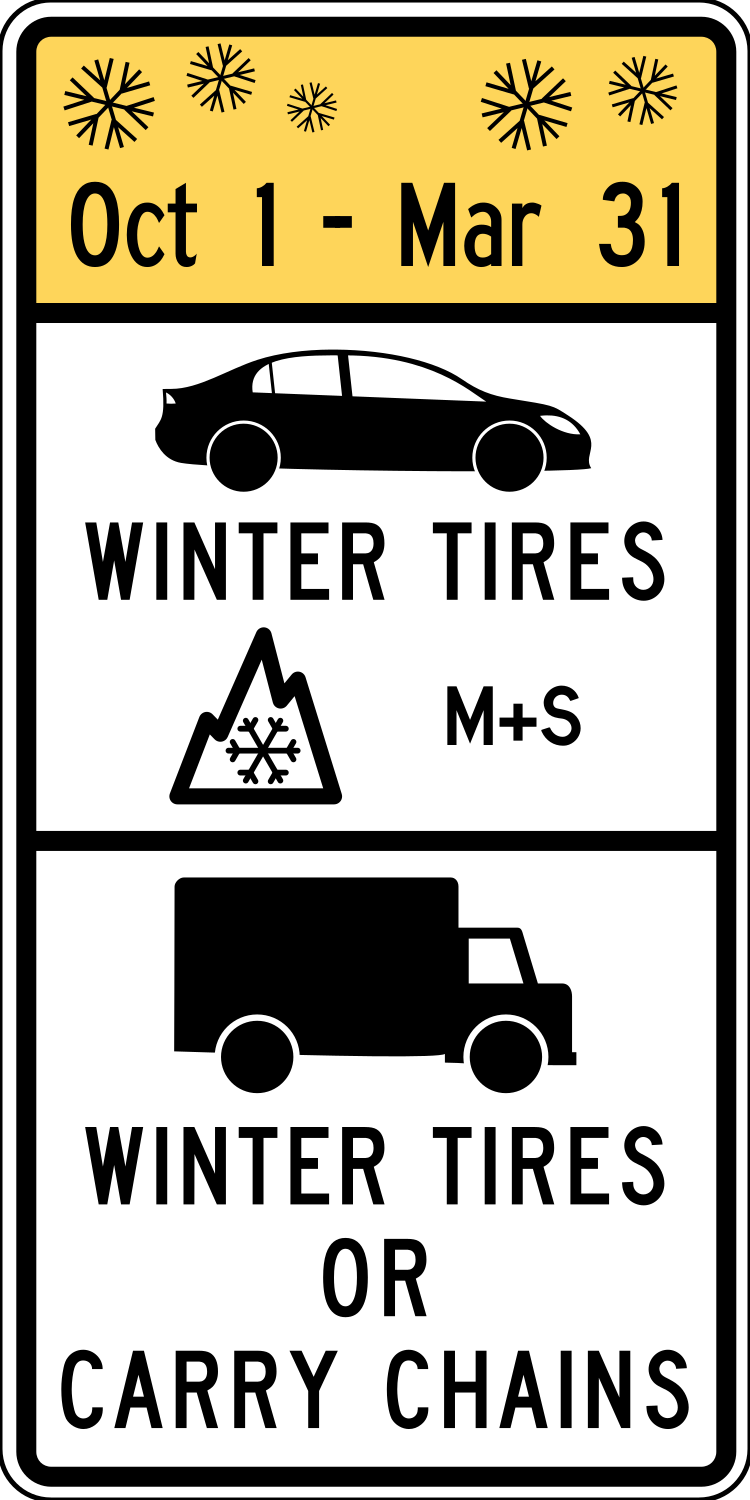
- Install 4 snow tires to improve handling and control on slippery roads. Chains are a good idea on icy roads — practise mounting them before you need them — and in extremely bad conditions it may be safer to park than to keep driving.
- For a road test, unsafe tires are a reason the vehicle is refused: they must be in good condition, have plenty of tread and be properly inflated.
Signs in this section
Official source: You and your vehicle ↗ · Your licence ↗
7.Lights, signals and the horn
- The first position of the light switch turns on the tail lights, parking lights, side-marker lights, dashboard lights and licence plate light; the second position turns on the headlights.
- Use high beams only on unlit roads at night when no vehicle is approaching or ahead of you; the high beam indicator on the dash is usually blue. You must dim your high beams within 150 metres of another vehicle, whether meeting or following it.
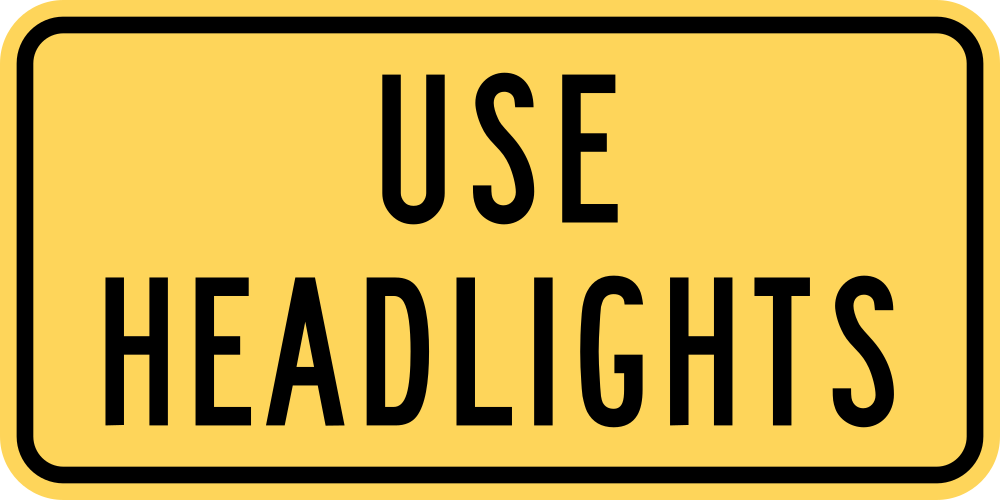
- You must use your headlights from 30 minutes after sunset until 30 minutes before sunrise, and whenever visibility drops below 150 metres, for example in fog or heavy rain. It is illegal to drive at night on parking lights or daytime running lights alone.
- Parking lights are for when you are stopped and want the vehicle to be visible — never use them while moving; put the headlights on instead. Vehicles made after 1991 have daytime running lights that make you easier to see by day, but they do not turn on the tail lights, so never rely on them at night or in low visibility. If your car has no daytime running lights, drive with the low beams on during the day.
- The turn signal lever tells other road users you intend to change direction or position, and the indicator on the dash shows when a signal is on. The hazard light switch flashes both signals at once to warn others you may have stopped for an emergency.
- Your horn is an important way to warn other road users — use it wisely. Keep the wipers in top condition and know how to turn on the washer so you always have a clear view in rain and snow; for a road test, brake lights, signal lights or headlights that do not work, or badly cracked or missing lenses, get the vehicle refused.
Signs in this section
Official source: You and your vehicle ↗ · Emergency strategies ↗ · Your licence ↗
8.Licence, insurance and driving green
- Always carry your driver's licence when you drive, and keep it current: tell ICBC if you change your name or address, and update the address within 10 days of moving. Never lend your licence, use one that is not valid, or alter it.
- You must also make sure the vehicle you drive has a valid, current licence plate and adequate insurance. Every B.C. motorist carries at least ICBC's Basic Autoplan coverage: a minimum amount of liability insurance plus insurance to help if they are in a crash causing injury or death.
- As a learner, be listed as a driver on your supervisor's insurance policy — and on the policy of every vehicle you practise in. If you crash while unlisted, the owner could face an Unlisted Driver Accident Premium, and if you drive your parents' vehicle they may need to adjust their Autoplan insurance with a broker.
- For a road test, bring your current licence, primary and secondary ID, and a safe vehicle with its registration and insurance papers — and make sure the insurance actually covers you to drive it. B.C.-licensed passenger cars must display 2 licence plates, front and rear, and a valid insurance decal.
- Cars and trucks use over half the world's yearly oil supply, and exhaust emissions are a leading cause of climate change, urban smog and acid rain. Good safe-driving habits can cut your fuel consumption by as much as 30 per cent while reducing wear and emissions.
- To burn less fuel: walk, cycle, carpool or take transit when you can; avoid jackrabbit starts and stops and keep to the posted speed or below; combine errands into one trip and drive to the farthest destination first; turn the engine off if you will be stopped for more than 60 seconds; check tire pressure at least monthly; remove unneeded weight and roof racks; and skip the air conditioning under 50 km/h.
- To cut emissions, keep your vehicle tuned up, change the oil regularly using the right grade and fix any leaks, keep the air filter clean, and make sure the air conditioning does not leak. Never pour motor oil, gas, antifreeze or battery acid down a drain — take them to a recycling location.
Official source: Your licence ↗ · Get your l ↗ · What to take ↗ · You and your vehicle ↗