1.Where parking is illegal
- Park only where it is safe and legal: signs, curb markings and common sense tell you whether you may. Park where you are not blocking traffic and where others can clearly see you — parking where you should not makes you a hazard and can bring a fine or a tow.
- It is illegal to park on a sidewalk or boulevard, or across the entrance to any driveway, back lane or intersection.
- Keep 5 metres clear of a fire hydrant, measured from the point on the curb beside the hydrant.
- Keep 6 metres clear of a crosswalk or an intersection, and 6 metres clear of a stop sign or a traffic light.
- Keep 15 metres clear of the nearest rail of a railway crossing, and never park in a bicycle lane, on a bridge or in a highway tunnel.
- Do not park where your vehicle hides a traffic sign from view, where a sign prohibits parking, or where the curb is painted yellow or red.
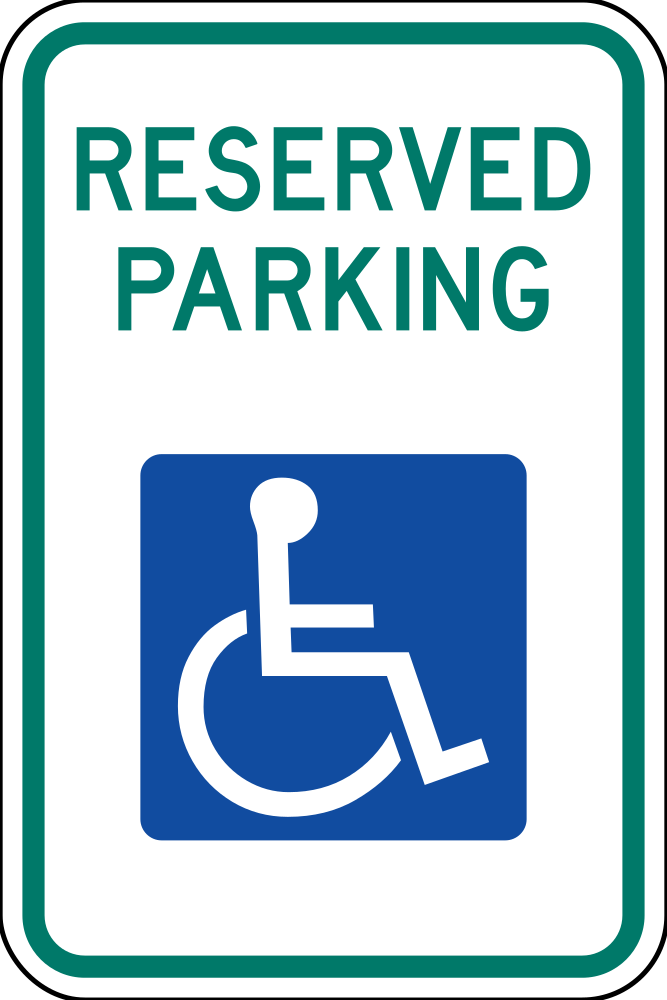
- A space for people with disabilities may be used only if you display a disabled person parking permit in your windshield and your vehicle is carrying a person with a disability.
| Do not park within | Of |
|---|---|
| 5 m | A fire hydrant (measured from the curb beside it) |
| 6 m | A crosswalk |
| 6 m | An intersection |
| 6 m | A stop sign |
| 6 m | A traffic light |
| 15 m | The nearest rail of a railway crossing |
Signs in this section
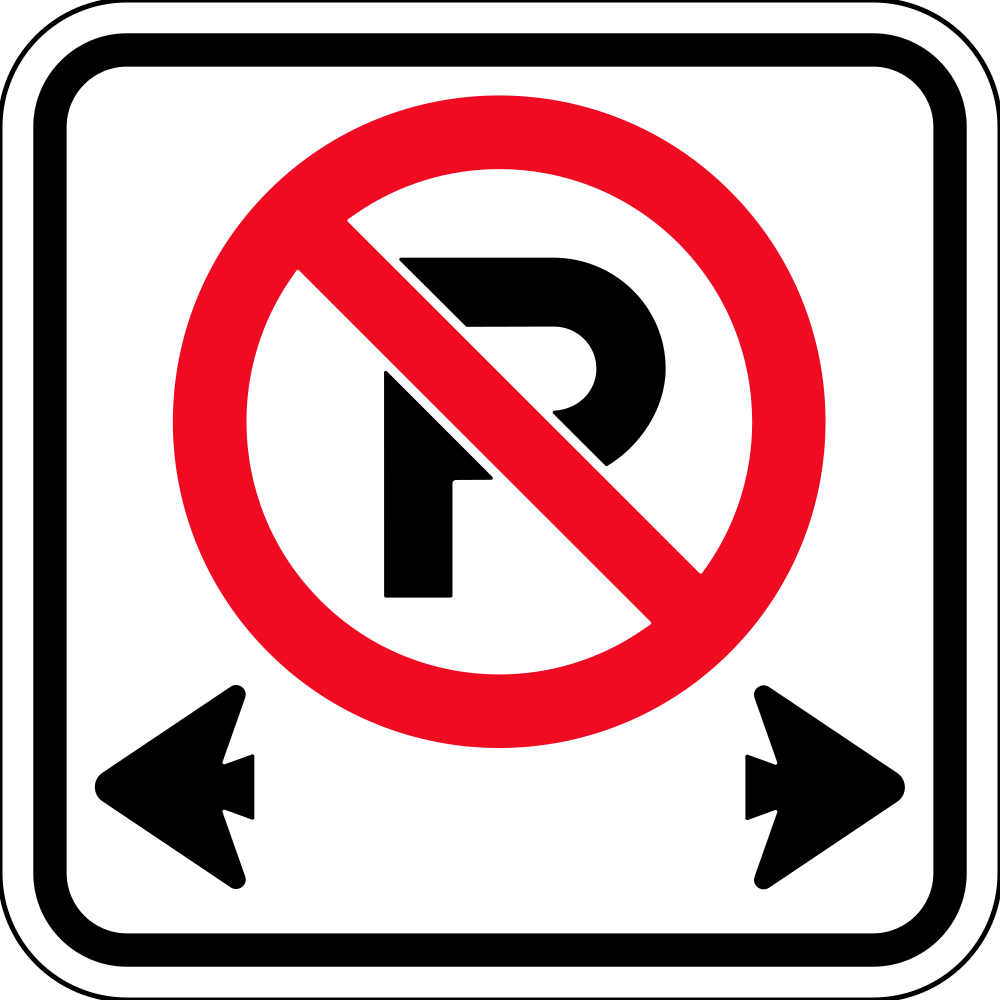
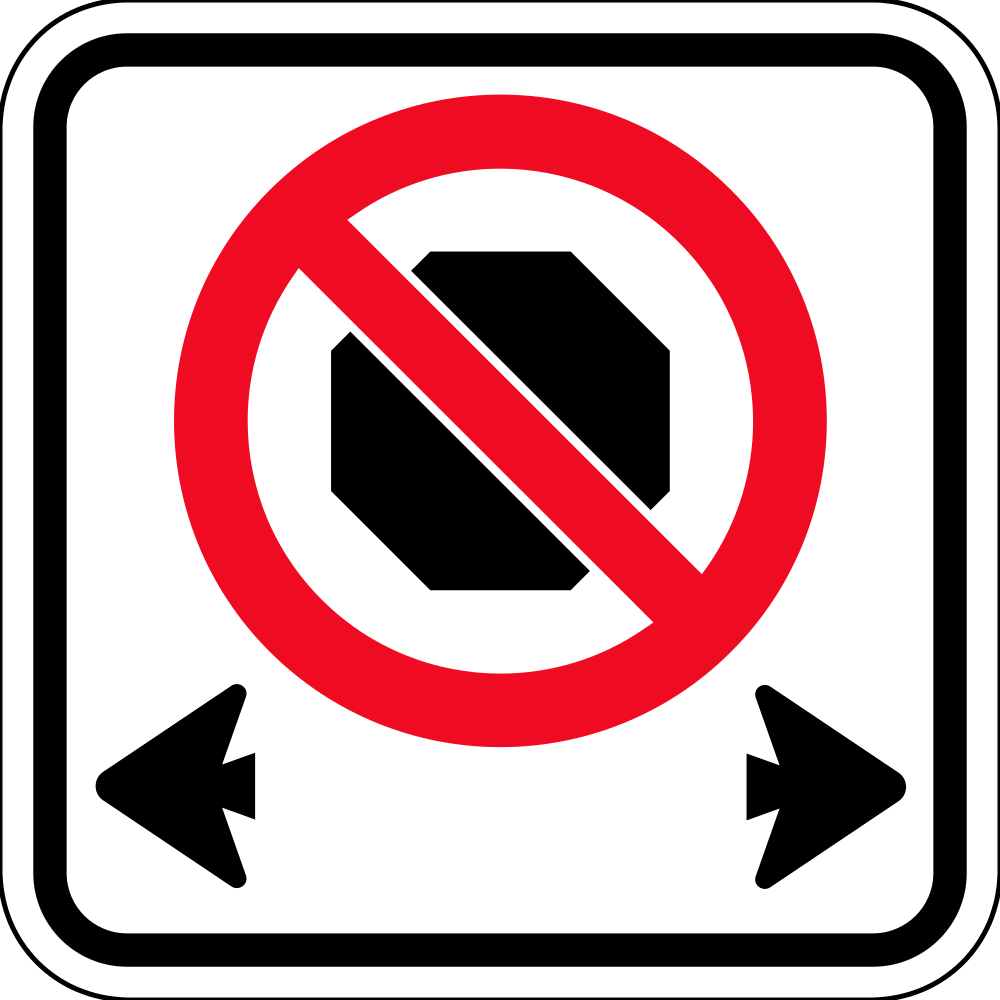
Official source: Rules of the road ↗
2.Parking signs and painted curbs
- Parking signs tell you where and when you may park. Park illegally and you may be fined, towed, or both.
- A "no parking" sign means do not park here at all. A sign with posted times means parking is not allowed during those times, and a time-limited parking sign lets you park only for the stated period during the posted times.
- A "no stopping" sign forbids stopping at all between it and the next no-stopping sign; another version applies only during the posted times.
- The disabled parking sign reserves the space for vehicles that display the disabled parking sign and are carrying a person with disabilities.
- Curb markings count too: it is illegal to park where the curb is painted yellow or red, just as where a sign prohibits parking.
- Parking signs are regulatory signs, and some show an action that is not permitted. It is an offence under the B.C. Motor Vehicle Act to disregard them.
Signs in this section
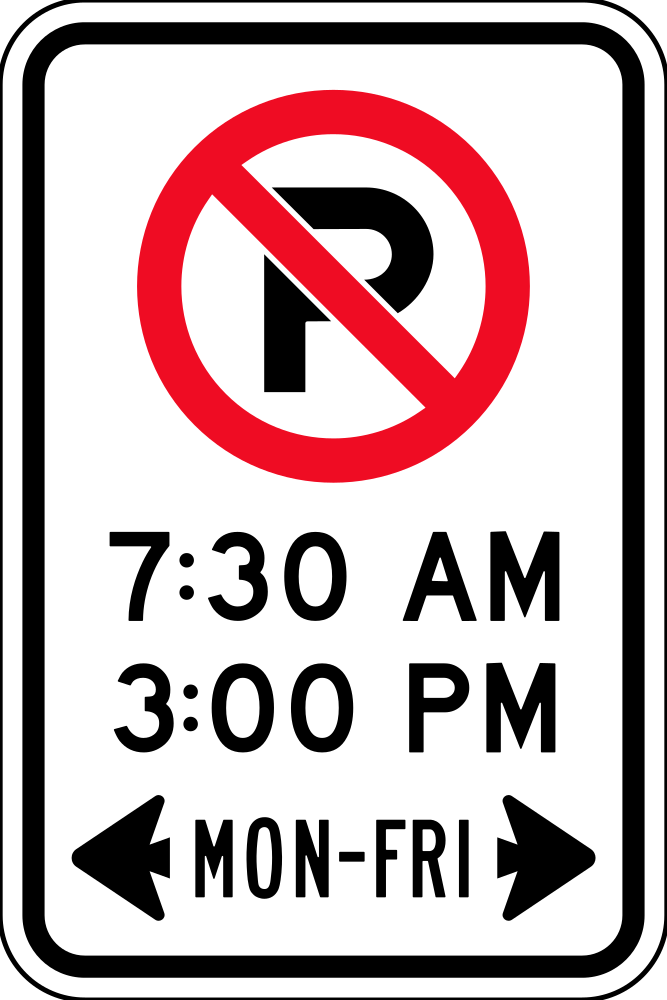
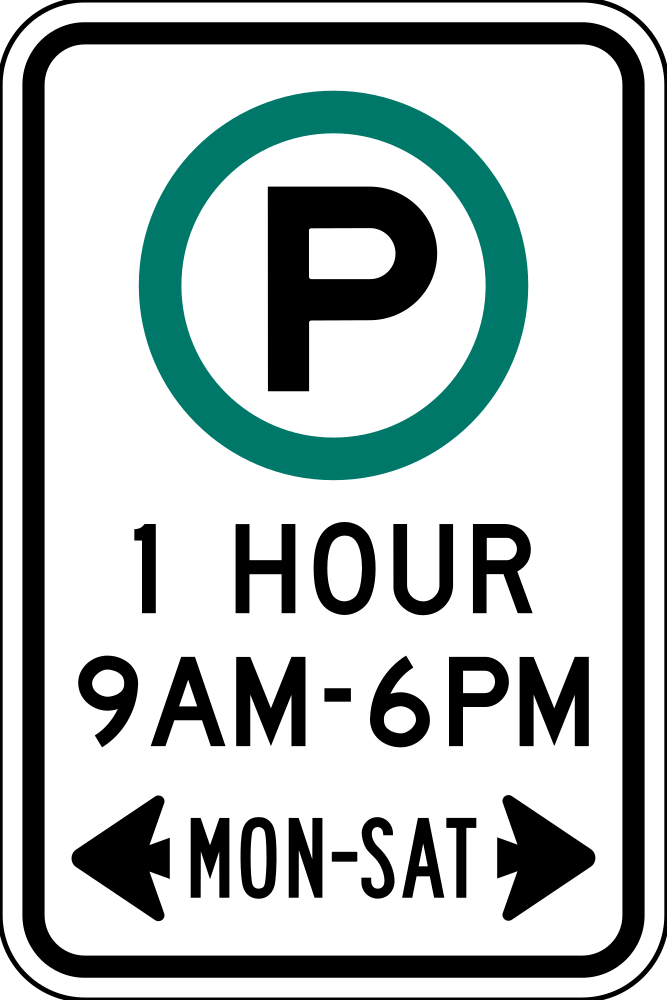
Official source: Signs signals and road markings ↗ · Rules of the road ↗
3.Parking on a hill
- When you park on a hill, turn the wheels so that the vehicle cannot roll into traffic.
- Turn the wheels to the right when you face uphill without a curb, and whenever you face downhill, with or without a curb.
- Turn the wheels to the left only when you face uphill with a curb, so the curb catches the tire if the vehicle rolls back.
- A rolling or mountable curb is not high enough to stop the vehicle rolling back into traffic, so when you park uphill beside one, turn the wheels to the right instead.
- Set the parking brake and leave the vehicle in gear: an automatic transmission in "park"; a standard transmission in "reverse" when facing downhill and in "first" when facing uphill or on level ground.
- The parking brake keeps the vehicle from moving when it is parked. Apply it fully when you park and release it fully before you move; it is also called the emergency brake because it can slow the vehicle if the foot brake fails.
Official source: Rules of the road ↗ · You and your vehicle ↗
4.Parking at the curb and in a stall
- When you park at the side of the road, park parallel to the curb and within 30 centimetres of it.
- In a parking stall it is usually safest to back in so you will not have to back out. Better still, if two empty stalls face each other with no barrier between them, drive through the first into the second so your vehicle faces forward.
- The same goes for driveways: back into driveways and parking spots whenever you can so that you drive out facing forward, where you can see.
- Before you back up, do a 360-degree vision check: shoulder checks and mirror checks all around, then turn your body to look out the rear window as you reverse. Children, pets, pedestrians, cyclists and people in wheelchairs are easy to miss, and if you have been stopped for a while, walk around the back of the vehicle first.
- If visibility is limited, give a quick warning tap on the horn before you start to back up. In a parking lot, watch for backup lights: they warn you to slow down and show where a space is about to open.
- It is illegal to back up into an intersection or over a crosswalk.
- Practise every kind of parking: the Class 7 road test may include parking on a hill, angle parking, parallel parking and stall parking, both driving forward and backing in.
Official source: Rules of the road ↗ · See think do ↗ · Your licence ↗
5.Pulling out of a parked position
- You must signal whenever you move toward or away from the side of the road. When you pull away from the roadside into a lane, the vehicles already in that lane have the right-of-way, so make sure you are not cutting anyone off.
- Watch carefully for smaller traffic — bicycles and motorcycles — which may be approaching faster than you think.
- Check your mirrors and do a shoulder check before you pull out from the side of the road, and again before you pull over to it. Pulling away from the right side, check your left mirror to make sure no vehicle is coming up from behind.
- Cyclists are narrow and easily hidden in your blind spot, so shoulder check before you pull away from the curb or move to the right.
- When you pull out from a line of parked vehicles, your turn signal may be hard for others to see, so use a hand signal as well.
- Read "vehicle language" as you drive past parked cars: a parked vehicle with its wheels turned out may be about to pull into traffic, and a child could step out from between parked cars or a door could swing open.
Official source: Rules of the road ↗ · See think do ↗ · Sharing the road ↗
6.Before you open a door
- Do a mirror check and a shoulder check before you open your door to get out — a cyclist or another vehicle could be coming up beside you.
- Drivers swinging their doors open without checking is one of the most common causes of crashes involving cyclists. Cyclists, like pedestrians, are vulnerable — check your side mirror as well as your shoulder.
- A door opening suddenly is a surprise for a cyclist, who may swerve or fall into the path of a passing vehicle. Anything unpredictable is a hazard.
- When you are the one driving past parked cars in the curb lane, stay well away from side hazards such as car doors that might open.
- Before you drive off, make sure every door is properly closed; the door ajar warning light tells you when one is not.
Official source: See think do ↗ · Sharing the road ↗ · You and your vehicle ↗