1.Speed limits and choosing a speed
- Unless a sign says otherwise, the limit is 50 km/h within cities and towns and 80 km/h outside them. In a lane or alleyway within a municipality the maximum is 20 km/h unless a different limit is posted.
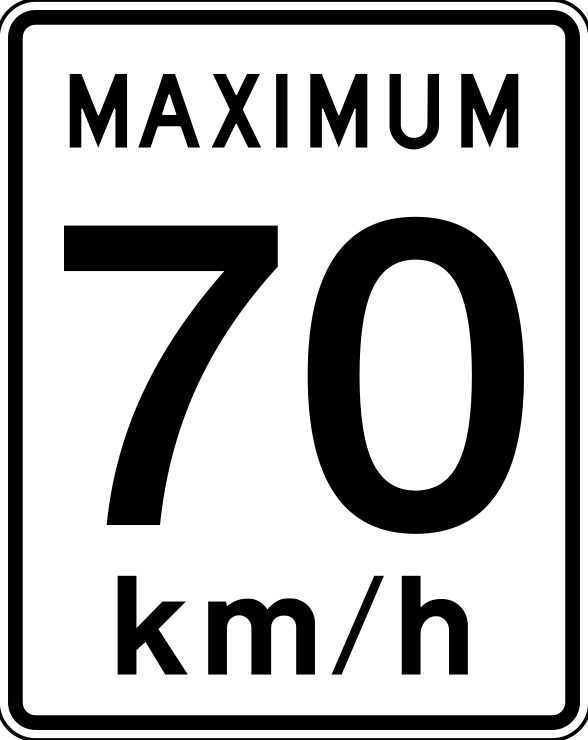
- A speed limit sign shows the maximum legal speed when the road is bare and dry and visibility is good. The posted speed is the maximum for ideal conditions only, never a target.
- Choose a slower speed whenever conditions are not ideal, such as when the road is slippery or visibility is limited. Never overdrive your ability to see: you must always be able to stop within the distance you can see.
- The safest speed is not always the slowest. Driving much slower than the surrounding traffic frustrates other drivers and tempts them to pass you. Good speed control means a steady, appropriate speed for the conditions.
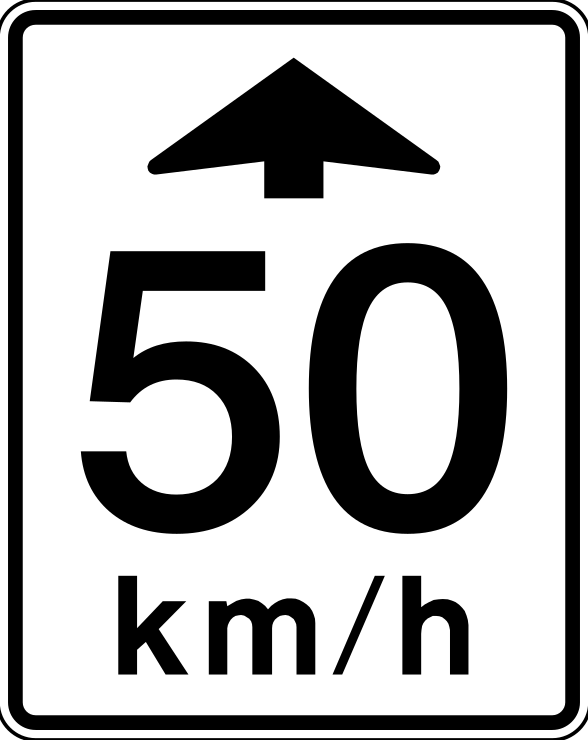
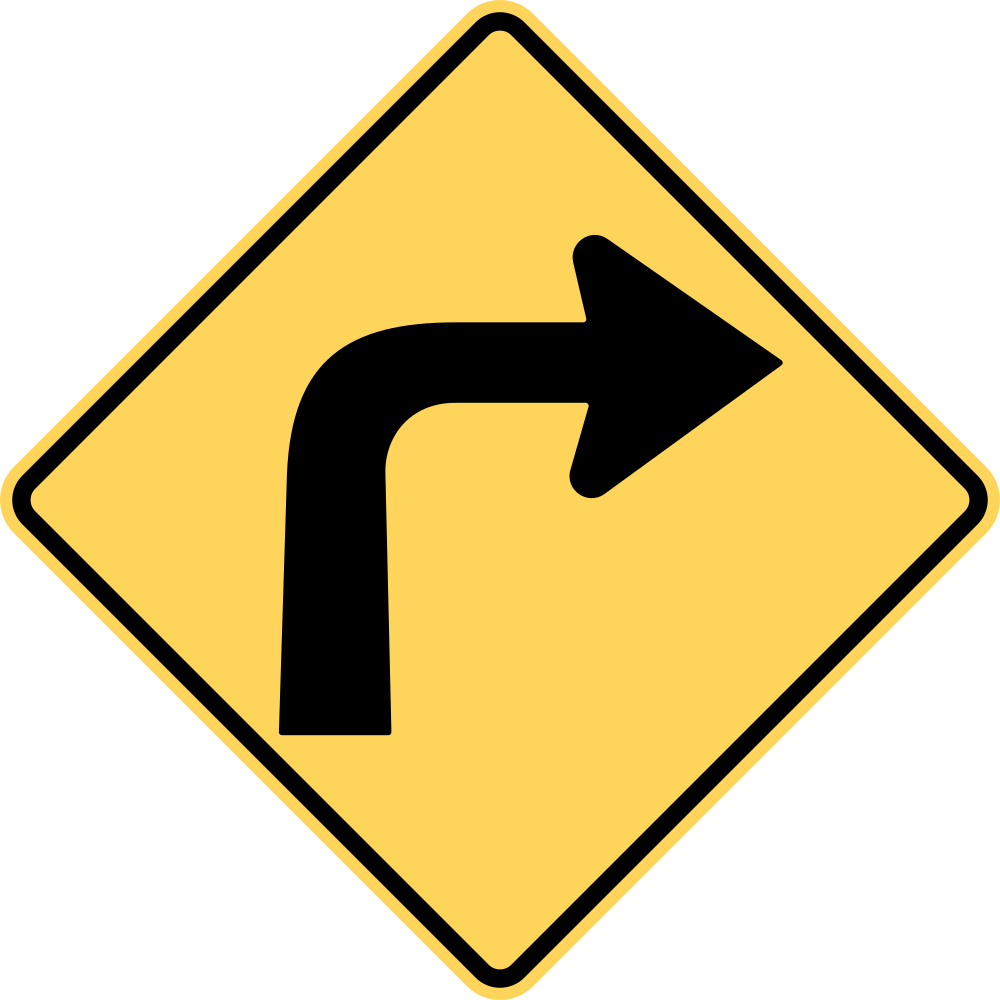
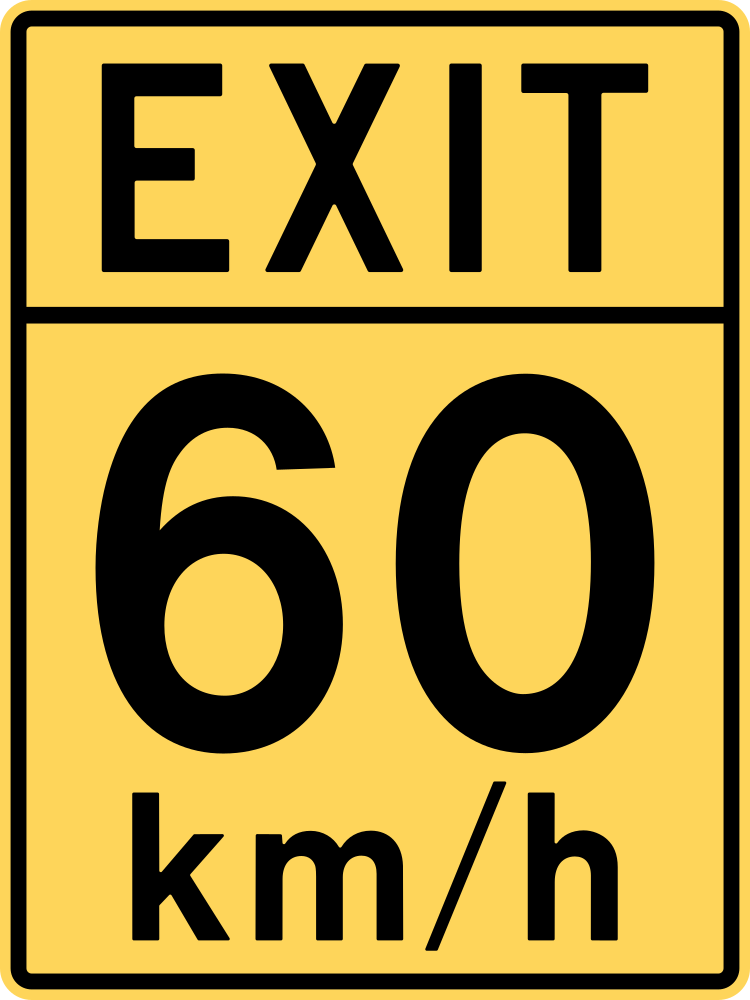
- A "speed limit ahead" sign warns that a lower limit is coming. The yellow warning signs for a sharp curve and for a highway or freeway exit show an advisory speed to slow down to.
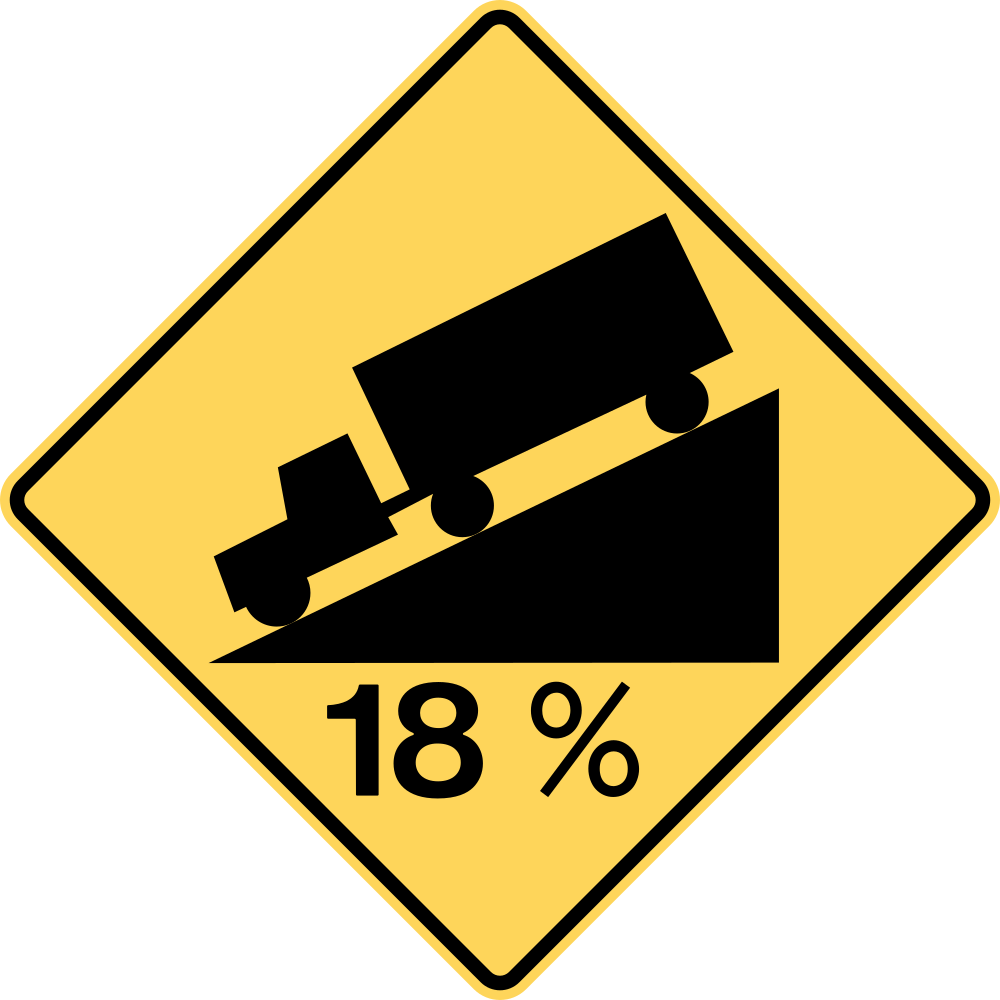
- Slow down before a curve so you can go through it without braking. The faster you go, the stronger inertia pushes you toward the outside of the curve, and going downhill your vehicle needs a longer distance to stop.
- Speed kills: in B.C. in 2014, speed was a factor in about 27 per cent of all reported fatal collisions.
Signs in this section
Official source: See think do ↗ · Signs signals and road markings ↗
2.School and playground zones
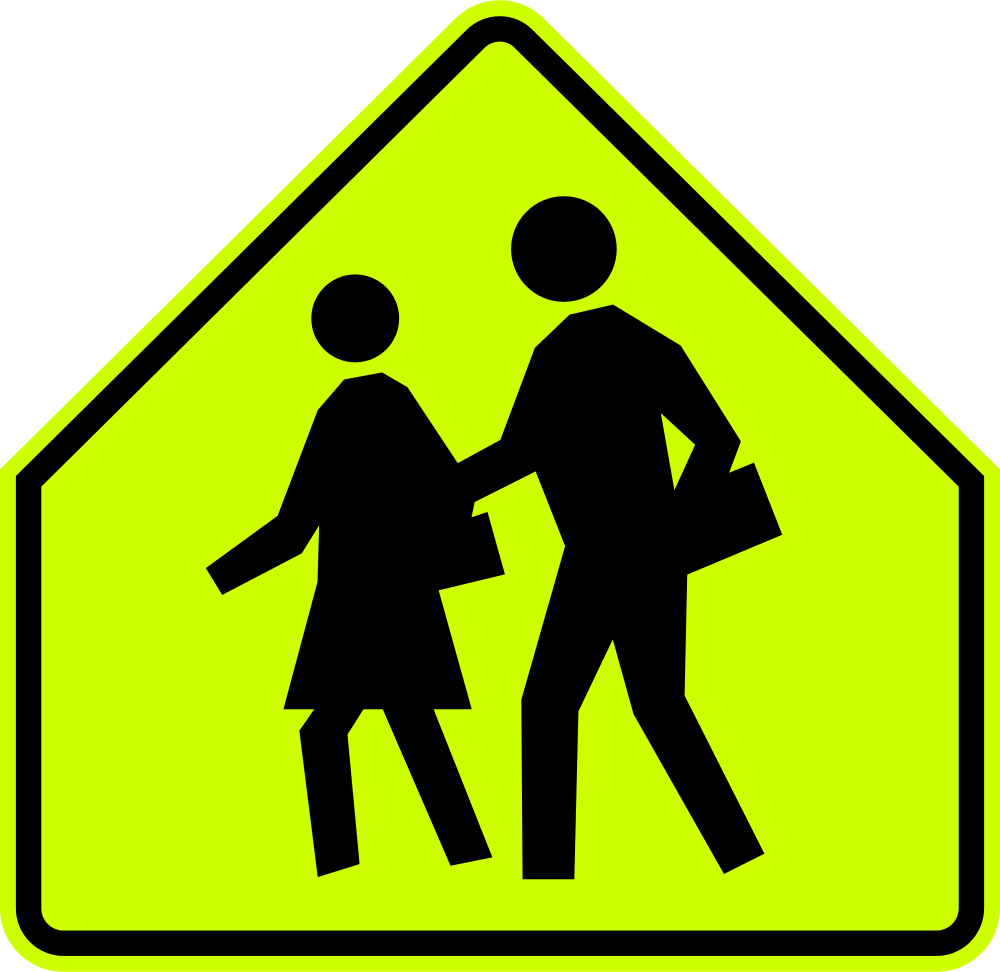
- When a school zone sign has a tab showing only a 30 km/h limit, that limit is in effect from 8 a.m. to 5 p.m. on school days. If the tab also shows hours, the limit applies during the hours shown.
- A school zone sign with a 50 km/h tab means 50 km/h from 8 a.m. to 5 p.m. on school days when children are on the roadway or shoulder.
- A school zone sign with no speed tab tells you to reduce speed when children are present. School zone signs are fluorescent yellow-green so they stand out.
- The 30 km/h school zone ends when you reach the back of the school zone sign posted on the other side of the street for oncoming traffic.
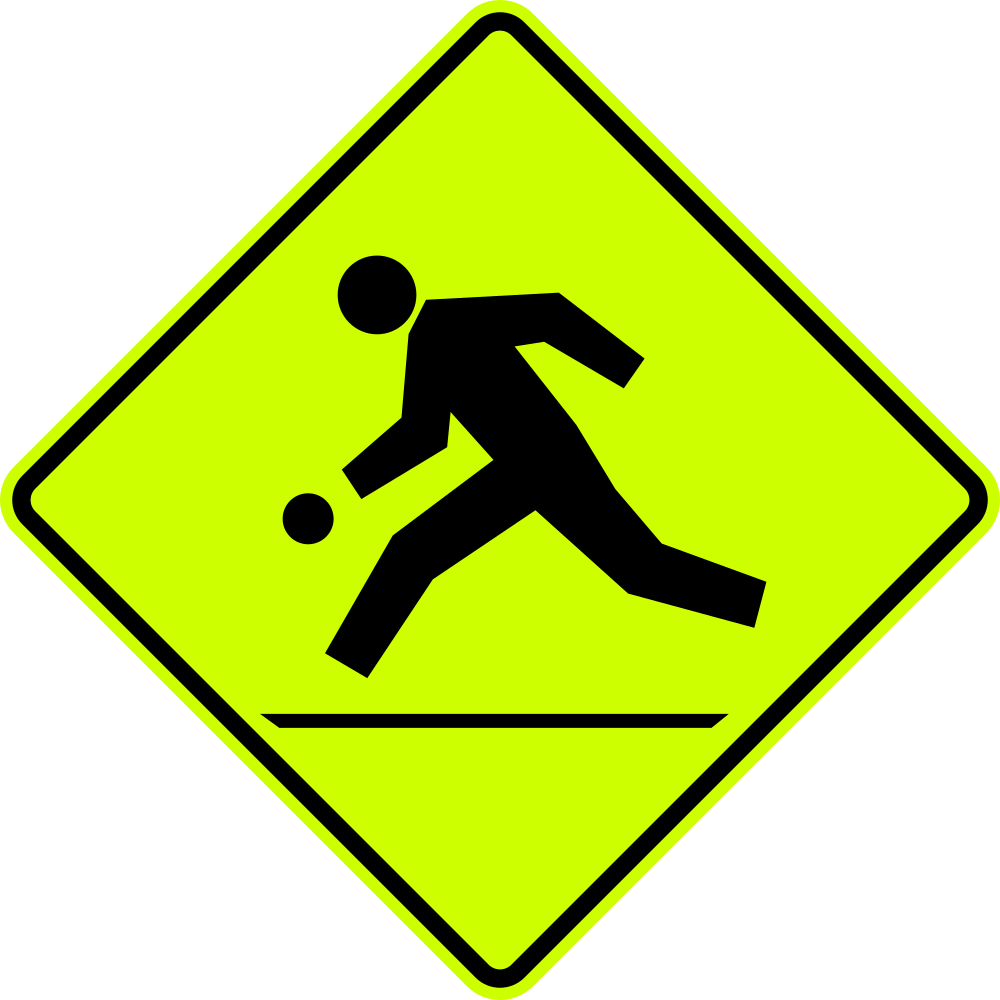
- In a playground zone the 30 km/h limit is in effect every day from dawn to dusk, not just on school days. A "playground nearby" sign means be prepared to slow down.
- Small children are harder to see than adults and less predictable. Near a school when children may be arriving, leaving or on their lunch hour, look well ahead for school patrols and crossing supervisors — you must obey them at all times.
Signs in this section
Official source: Signs signals and road markings ↗ · Sharing the road ↗
3.Construction zones and stopped vehicles with flashing lights
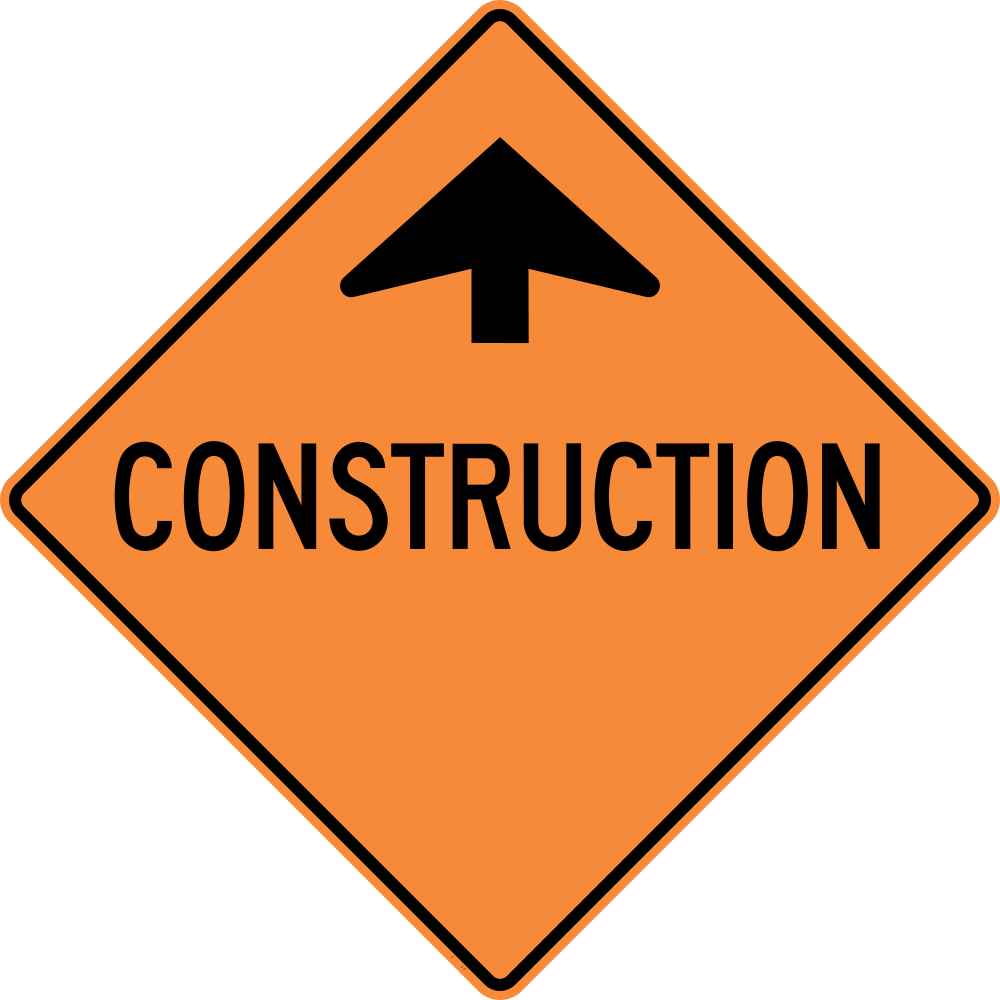
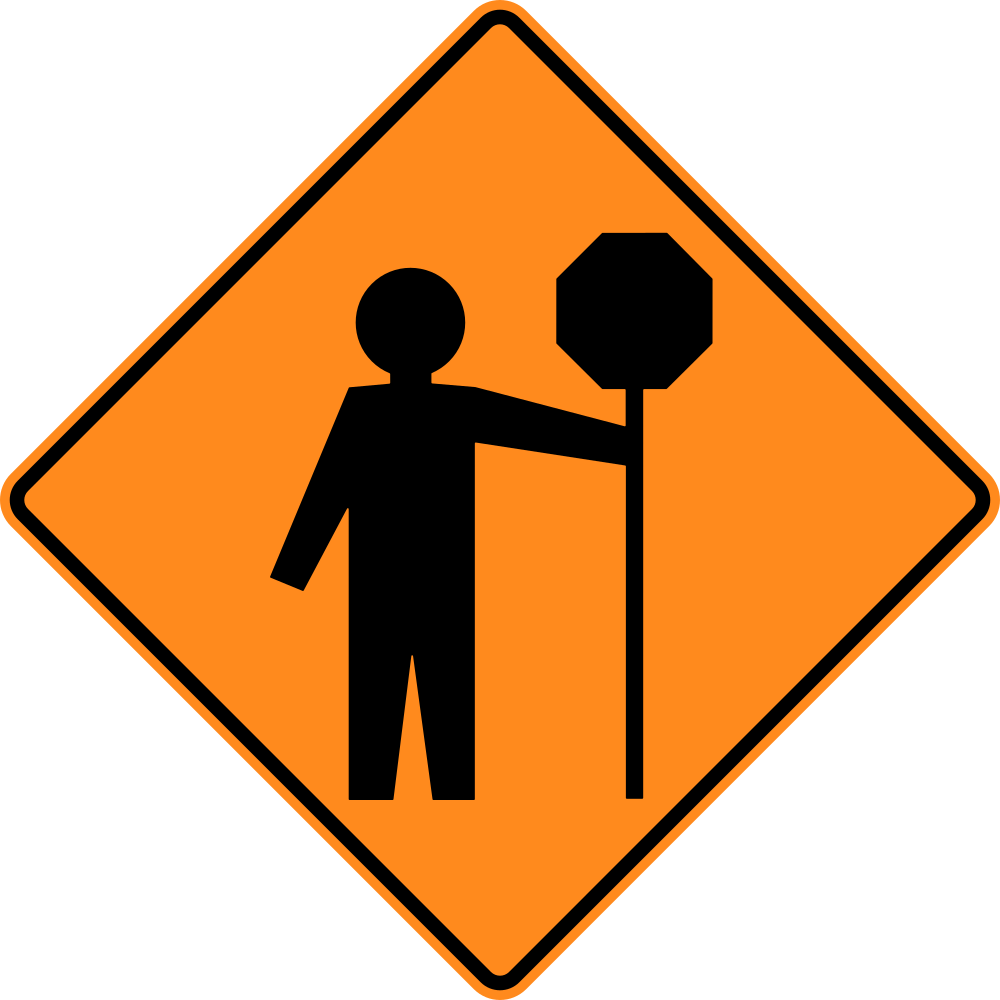
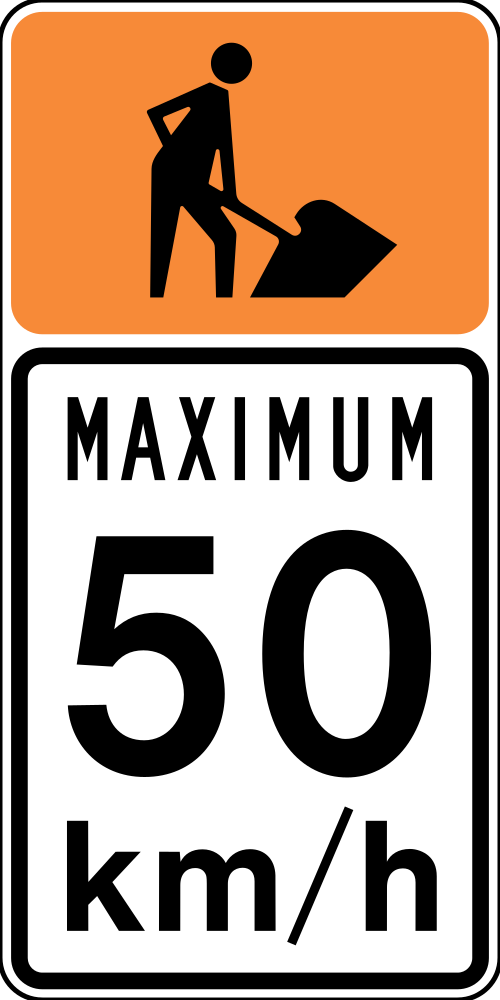
- You must obey traffic control persons and construction signs from the start to the end of the construction zone. A posted construction zone speed limit applies 24 hours a day.
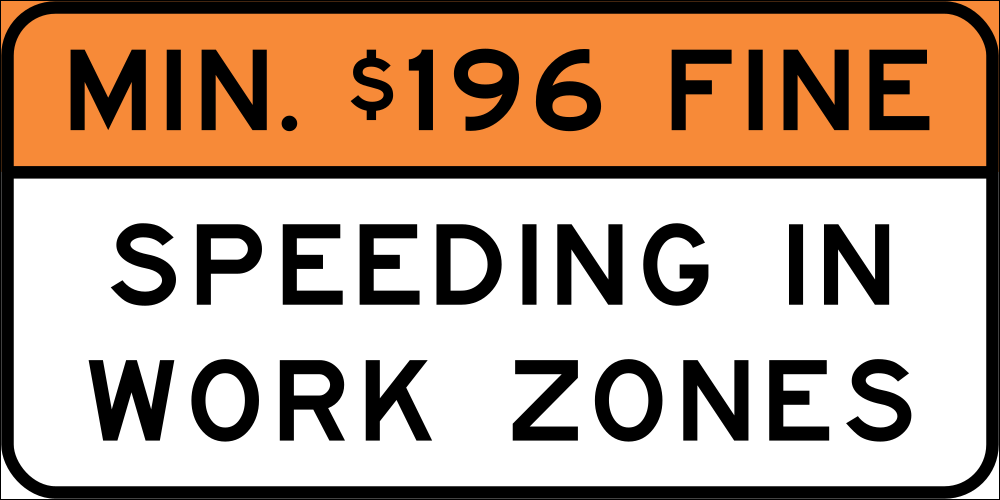
- Slow down: the surface may be uneven or unpaved, you must obey the construction zone speed limit, and traffic fines are double in construction zones.
- Construction zones often close lanes: merge to avoid a lane closure as soon as you can, avoid changing lanes inside the zone, and leave space between you and the crews and their equipment.
- Stop when a traffic control person or device directs you to; in some zones you wait for a pilot car to escort you through. If you are directed to stop, turn off the engine — idling for more than 10 seconds costs more than restarting.
- Road work also happens at night, so drive extra slowly through construction zones after dark. Not seeing workers does not mean they are not there.
- When you approach a stopped vehicle displaying flashing yellow, red, white or blue lights — police, fire, ambulance, tow truck, highway maintenance, utility and similar workers — you must slow to no more than 70 km/h where the limit is 80 km/h or more, and no more than 40 km/h where the limit is under 80 km/h. The rule does not apply on a divided highway when the vehicle is on the other side.
- If you are in the lane nearest the stopped vehicle with flashing lights, you must also change lanes when it is safe. Failing to slow down or move over can bring a traffic violation and penalty points.
Signs in this section
Official source: Sharing the road ↗
4.What speeding costs
- Speeding brings a fine and penalty points on your driving record. As a new driver in the Graduated Licensing Program your record is watched closely: a single ticket can bring a warning letter, probation or a driving prohibition, and the threshold for intervention is stricter than for other drivers.
- The guide's example fines: speeding 1 to 20 km/h over the limit is $138 and 3 penalty points; the same offence in a school zone is $196 and 3 points. Fines include the 15 per cent victim surcharge levy, and most are reduced by $25 if paid within 30 days.
- Passing without a clear view is an offence too: the guide's example is a $109 fine and 3 penalty points.
- Excessive speeding means 40 km/h or more over the posted limit. Police can immediately impound the vehicle for 7 days, rising to 30 or 60 days for repeat offenders, and the owner pays the towing and storage fees to get it back.
- One or more excessive speeding convictions also make you pay the Driver Risk Premium, which is assessed on your offences over a 3-year period.
- If you collect more than 3 penalty points during a 12-month assessment period, ICBC bills you a Driver Penalty Point premium every year — even if you own or insure no vehicle. Tickets and points stay on your driving record for 5 years.
- More points or more serious offences can bring a driving prohibition of 1 month to a year or more, and reinstating your licence after a prohibition costs a $250 fee.
Official source: Your licence ↗ · Driver penalty points ↗
5.Stopping distance and following distance
- Total stopping distance is how far you travel from the moment you see a hazard, decide to stop and put your foot on the brake until the vehicle stops. It takes about three-quarters of a second to see and think, and another three-quarters of a second to act, before the vehicle even begins to slow.
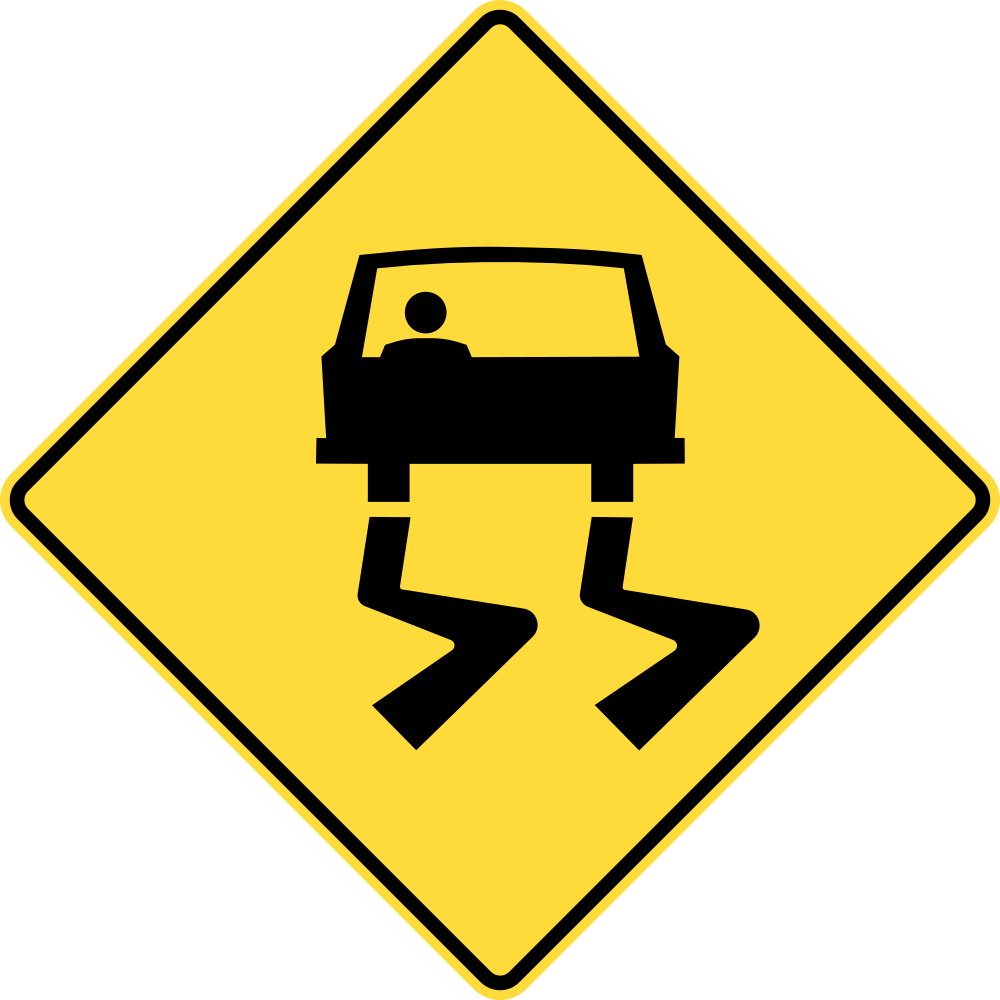
- Braking distance depends on your speed, your vehicle and the road conditions. Slippery or sandy surfaces, worn tires and under- or over-inflated tires all reduce traction, and a downhill grade lengthens the distance you need.
- Keep at least 2 seconds of space behind the vehicle ahead in good weather and road conditions. Increase it to 3 seconds on high-speed roads and to 4 seconds in bad weather or on uneven or slippery roads.
- Allow at least 3 seconds when you follow a large vehicle that blocks your view or a motorcycle that can stop very quickly, when someone is tailgating you, and on an unpaved road where dust or gravel hangs in the air.
- To measure the gap, pick a fixed object ahead. When the vehicle in front passes it, count "one thousand and one, one thousand and two, one thousand and three"; if you reach the object as you say three, you are keeping a 3-second following distance.
- Tailgating is a major cause of crashes: the vehicle ahead hides hazards, and if it stops suddenly you have no time to stop — and if you rear-end someone, you are held responsible. If you are being tailgated, slow slightly to open space in front, move to another lane, or pull over and let the tailgater pass.
- When you stop behind another vehicle at an intersection, leave about one car length so you have room to move, and more behind a large vehicle. When you spot a hazard ahead, take your foot off the accelerator and cover the brake so you can respond faster.
Signs in this section
Official source: See think do ↗
6.Passing and being passed
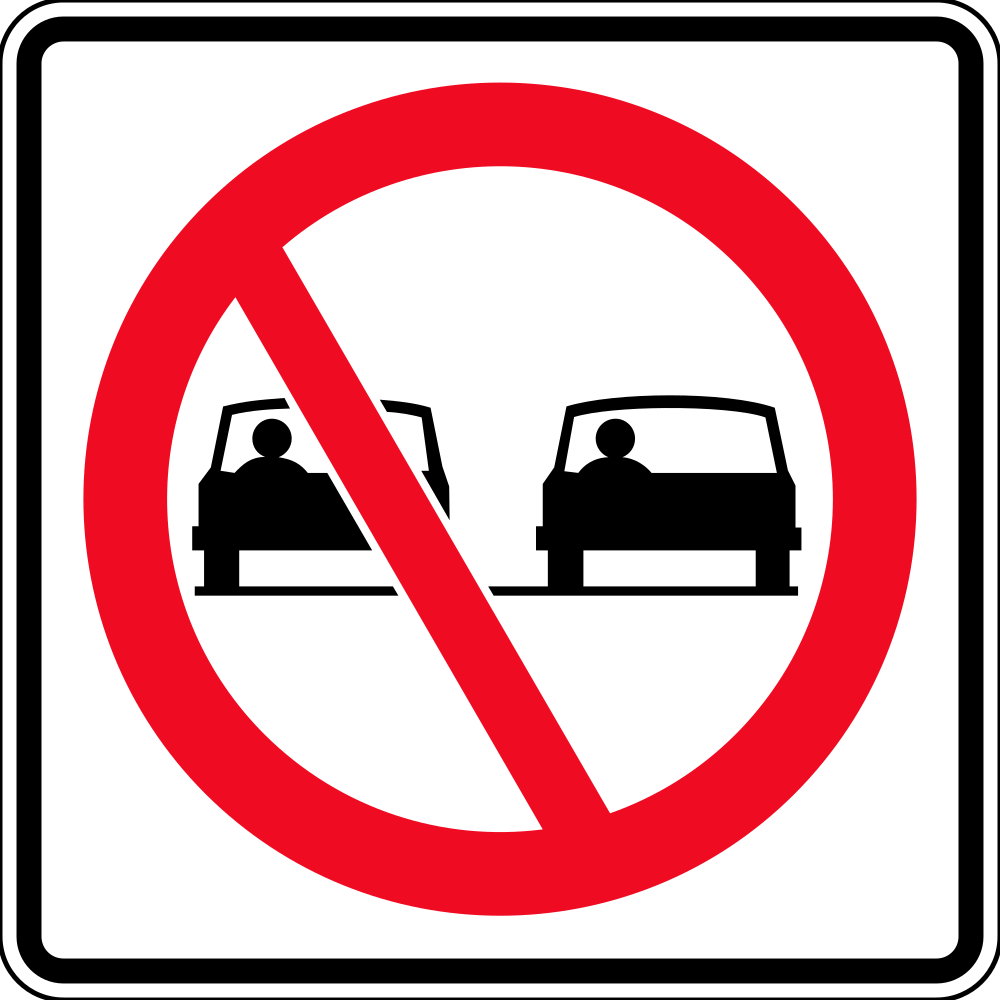
- Passing means moving into another lane — sometimes a lane of oncoming traffic — and back again. Any vehicle already in the lane you move into has the right-of-way, whether it is a car, a motorcycle or a bicycle, and other traffic should never have to change direction or slow down for you.
- Pass on the left only when it is safe and the lane markings permit, and keep within the speed limit while you pass. Pass on the right only on a roadway with 2 or more lanes in your direction, or when the driver ahead is turning left — and never use the shoulder to pass.
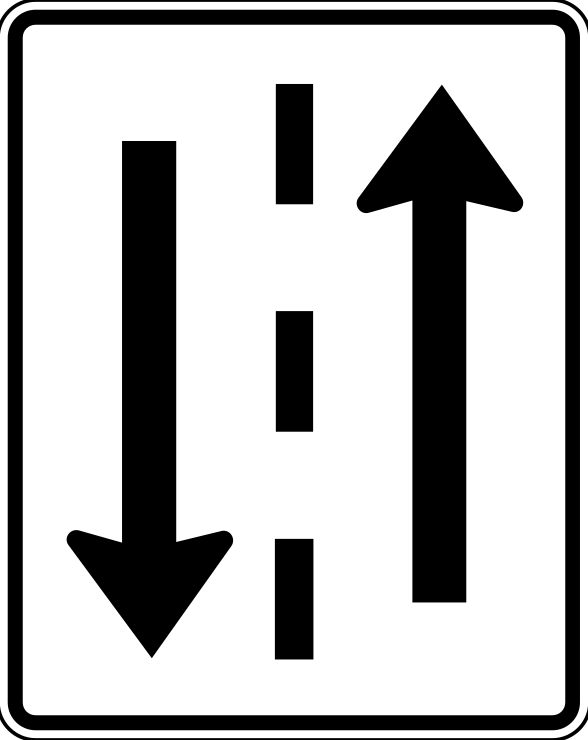
- Yellow lines separate opposing traffic and tell you whether you may pass: a broken line allows passing when safe; a broken line beside a solid one allows passing only when the broken line is on your side; a double solid line means no passing; and a single solid yellow line allows passing only with extra caution.
- Never pass when you are approaching the top of a hill — you cannot know what is on the other side. Passing on a curve marked with a double solid yellow line is just as dangerous, because hazards may be waiting just around the bend.
- Before you pass, check for oncoming cyclists and for cyclists ahead of the vehicle you are passing. Even pulling slightly into another lane to pass is a lane change, so mirror check, signal and shoulder check first.
- Do not pass a large vehicle unless you are sure you have enough space. Big vehicles take longer to slow down, so wait until you can see the truck's headlights in your rear-view mirror before you move back into the lane, and keep your speed up once you are there.
- When someone is passing you, do not speed up — it is illegal. Help the other driver get back into your lane by slowing down and making room.
Signs in this section
Official source: Rules of the road ↗ · Signs signals and road markings ↗ · See think do ↗ · Sharing the road ↗
7.Choosing a lane, changing lanes and reserved lanes
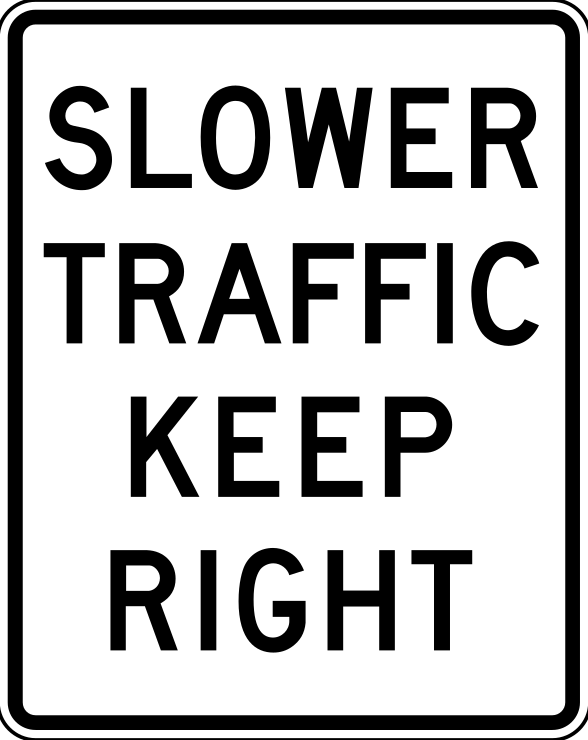
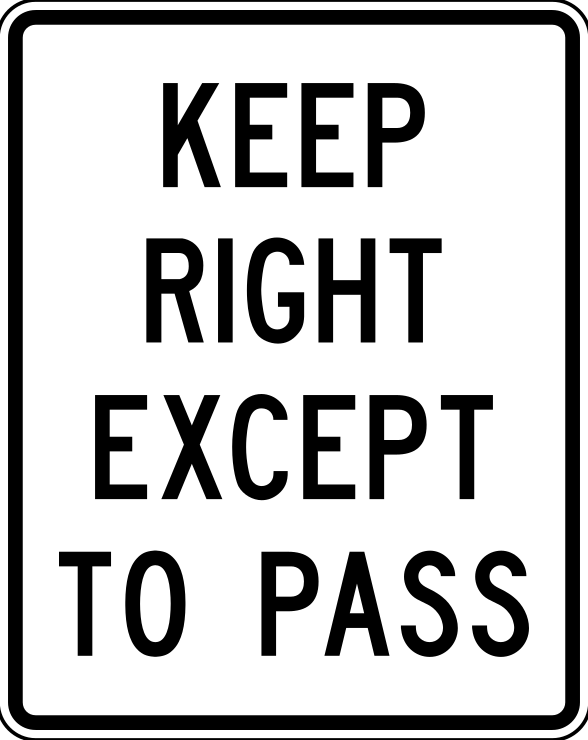
- Choose the lane that gives you the best view and takes you where you want to go. On a multi-lane highway travel in one of the right-hand lanes, especially if you are slower than other traffic or signs tell you to stay out of the left lane.
- Driving at the speed limit does not entitle you to stay in the left lane: it pushes others to pass on the right, which is less safe. On a freeway with more than 2 lanes in each direction, drive in the centre lane or a right-hand lane and leave the left lane for faster and passing traffic.
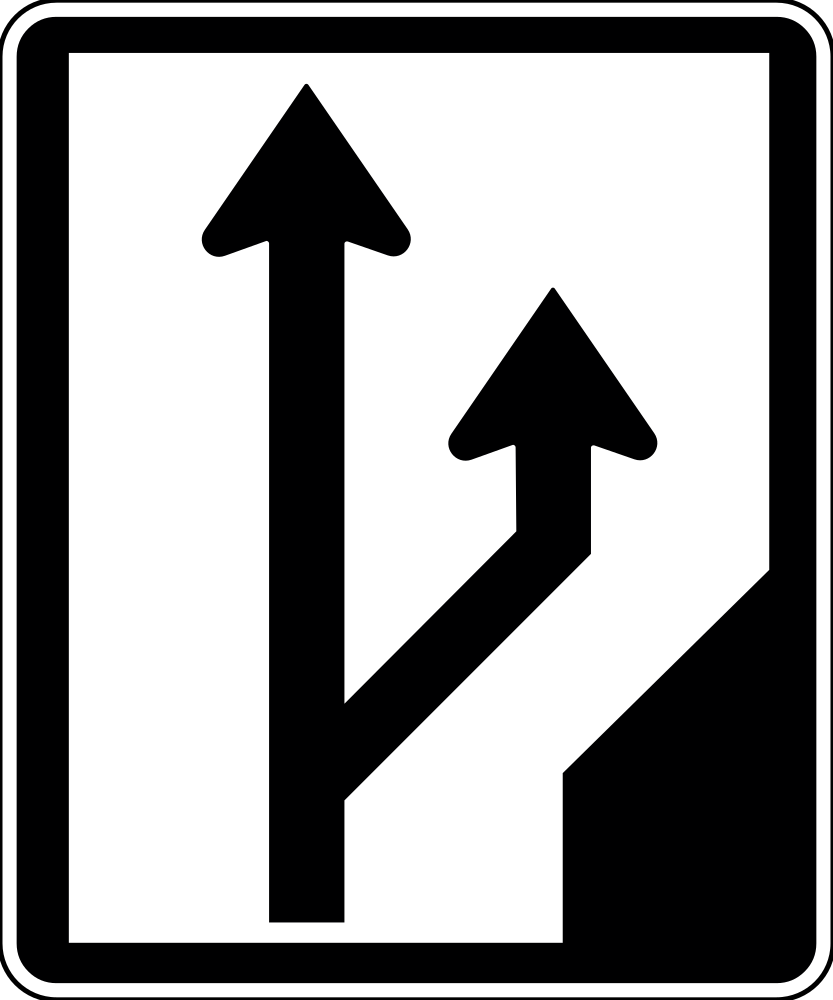
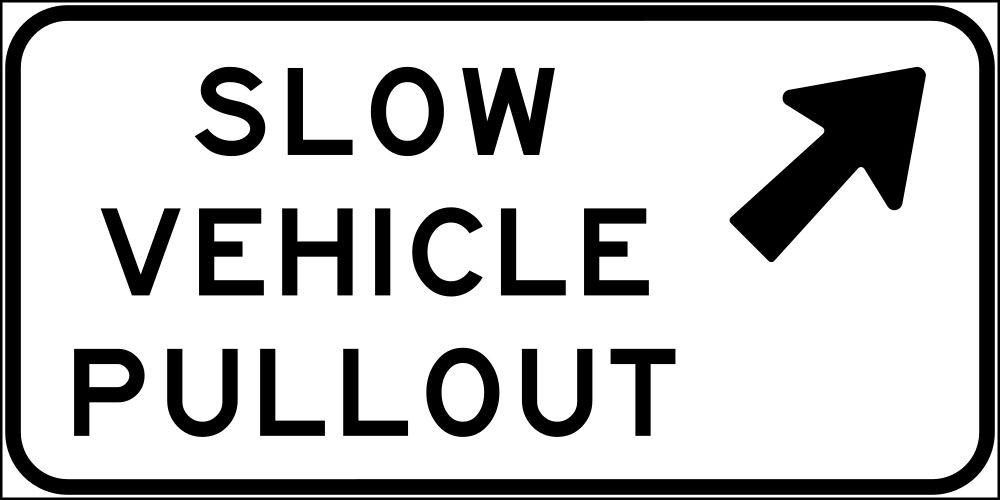
- Passing lanes on some highways let slower vehicles move right so faster ones can pass on the left: keep right unless you are passing, and vehicles in both lanes must merge before the passing lane ends. Where a pullout sign is posted, slow traffic delaying 5 vehicles must use the pullout.
- The law requires you to signal every lane change. Check your mirrors, then look at least 45 degrees over your shoulder in the direction you plan to move. The vehicles already in that lane have the right-of-way, so leave a gap large enough that no one has to slow down, and watch for bicycles and motorcycles approaching faster than they seem.
- White lines separate lanes going the same way: a solid white line means do not change lanes, a broken one means you may when it is safe. Never change lanes at an intersection — you could confuse other drivers and cause a crash.
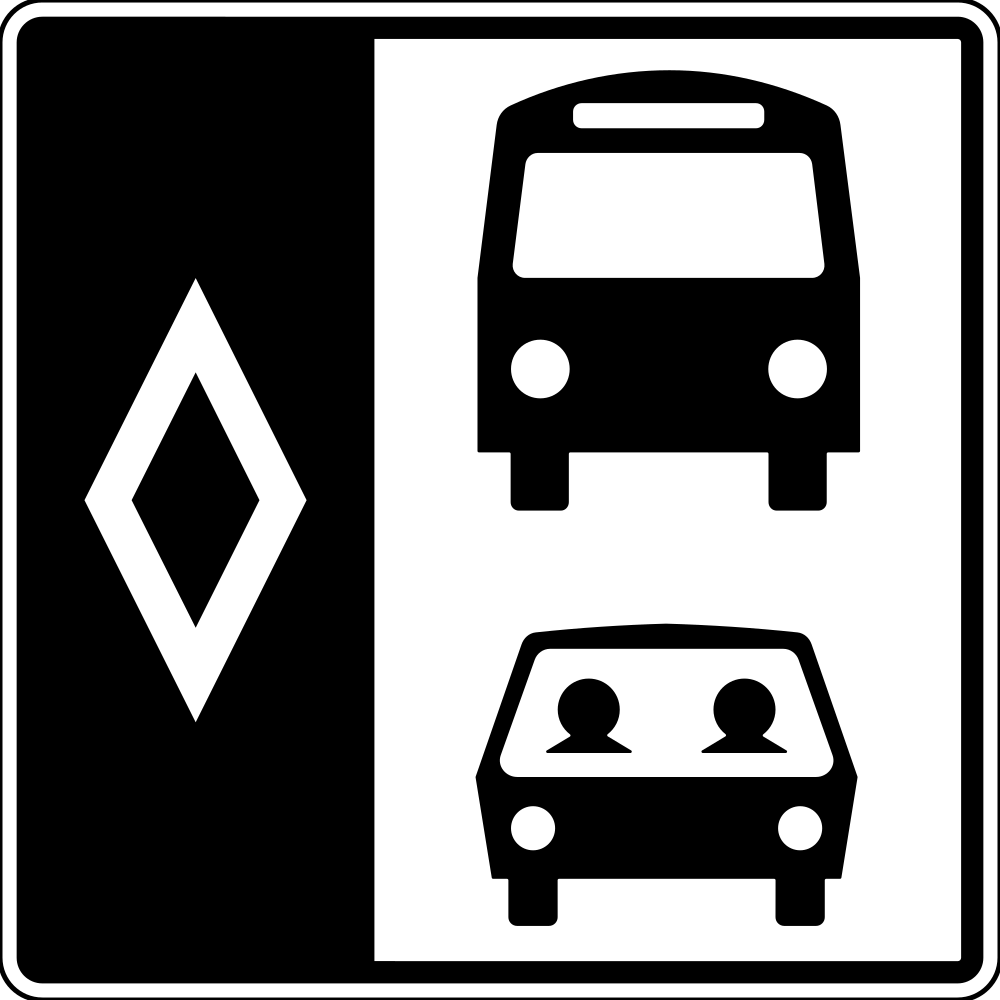
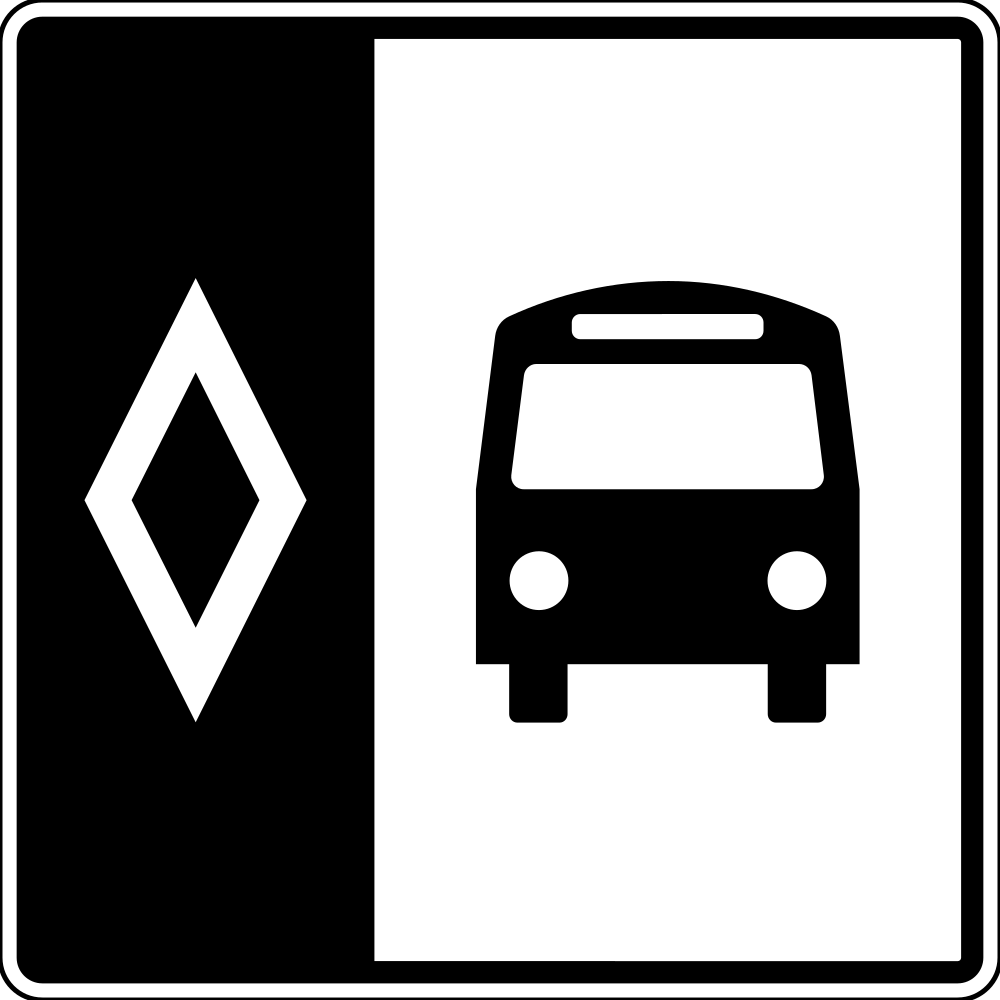
- HOV lanes are reserved for buses and carpools; motorcycles, bicycles and taxis may use them on some roads. Most operate 24 hours a day, some only at peak times, so read the signs: they say where the lane begins and ends, when it operates and the minimum number of people the vehicle must carry.
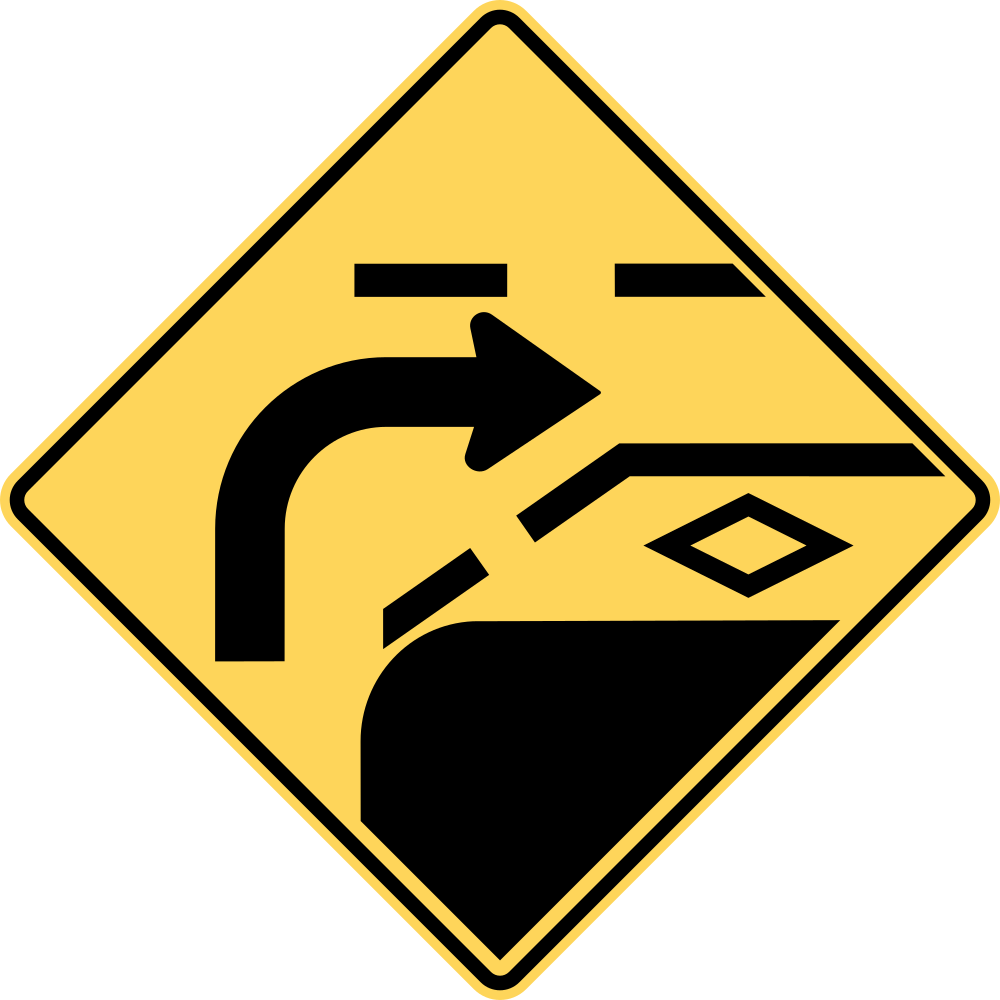
- Reserved lanes are marked with a white diamond. Enter or leave an HOV lane only where broken lines mark a crossing point, and take care — its traffic may be faster. Turning onto a street with a reserved lane, turn into the lane beside it unless you are entitled to use it. A bus lane (diamond plus a bus symbol) is for buses, sometimes cyclists, and vanpools of 6 or more people where a "Vanpool Permitted" tab is shown.
Signs in this section
Official source: Rules of the road ↗ · Signs signals and road markings ↗ · See think do ↗
8.Entering and leaving a freeway
- A freeway entrance has 3 parts: an entrance ramp, an acceleration lane and a merging area. Some entrances have ramp meters — a traffic light that limits how many vehicles may proceed along the ramp. While you are on the ramp, scan the freeway traffic for a safe gap.
- The acceleration lane is separated by a solid white line: use it to match your speed to the freeway traffic. The merging area is separated by a broken white line: use it to find a safe gap, signal your intention, and then move into traffic.
- Avoid stopping in the acceleration lane or merging area — you risk being rear-ended. Cycling is permitted on some freeways, so be careful not to cut in front of a cyclist as you merge.
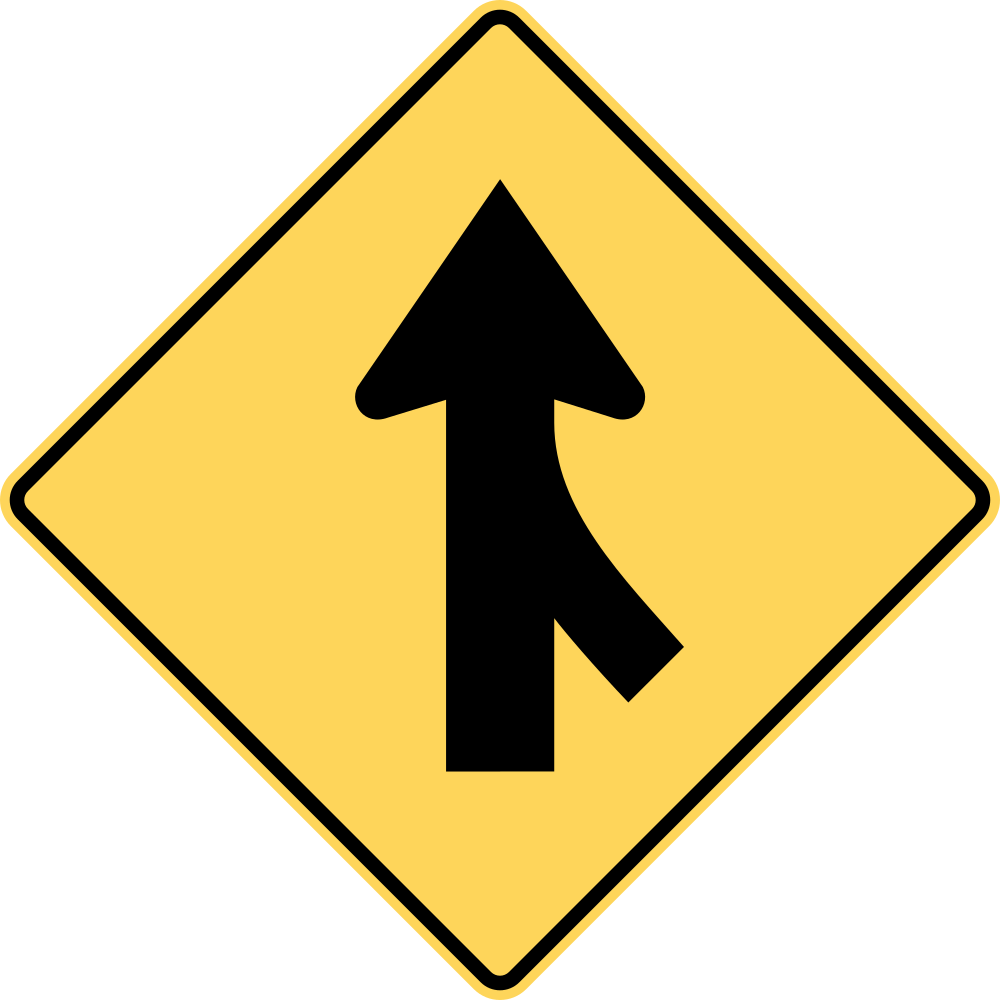
- When you drive in the right lane of a freeway, help others merge: pull into the left lane if it is safe, or adjust your speed to open a large enough gap. Likewise, if you are beside a lane that ends ahead, help the merging traffic by adjusting your speed or changing lanes.
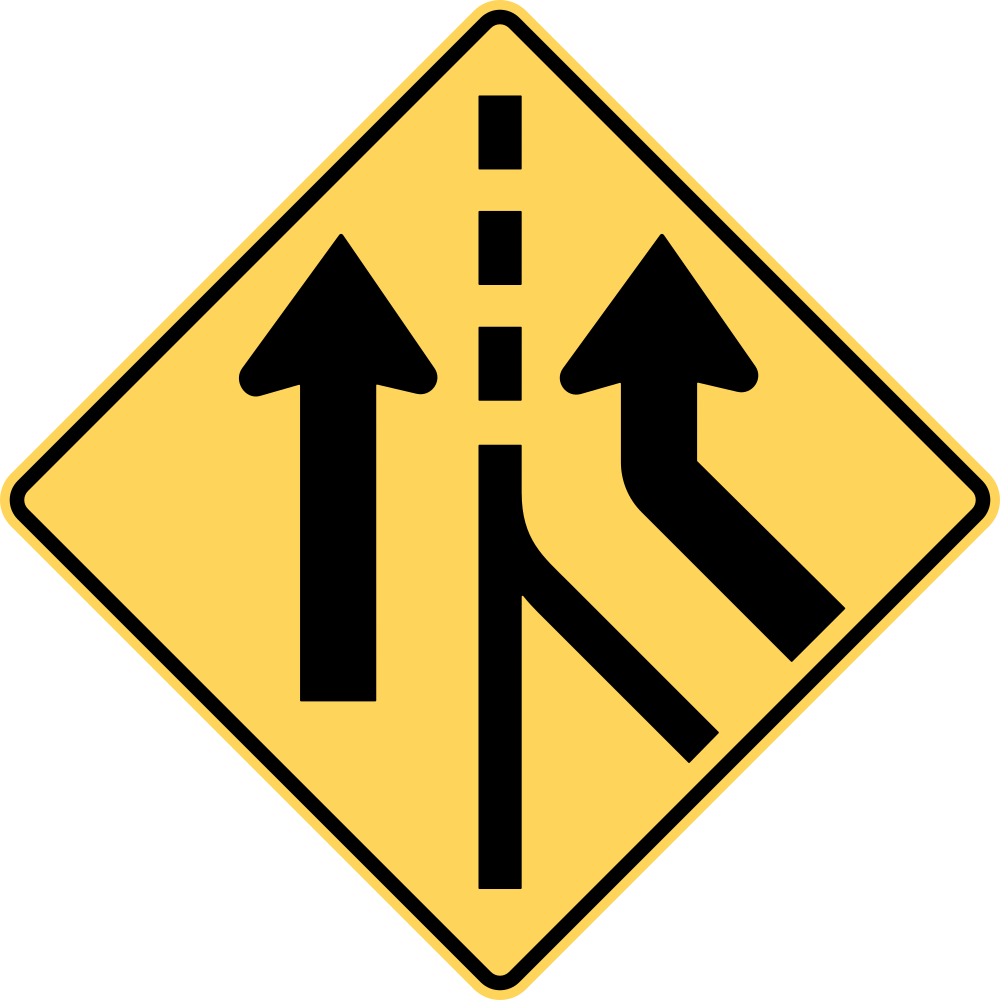
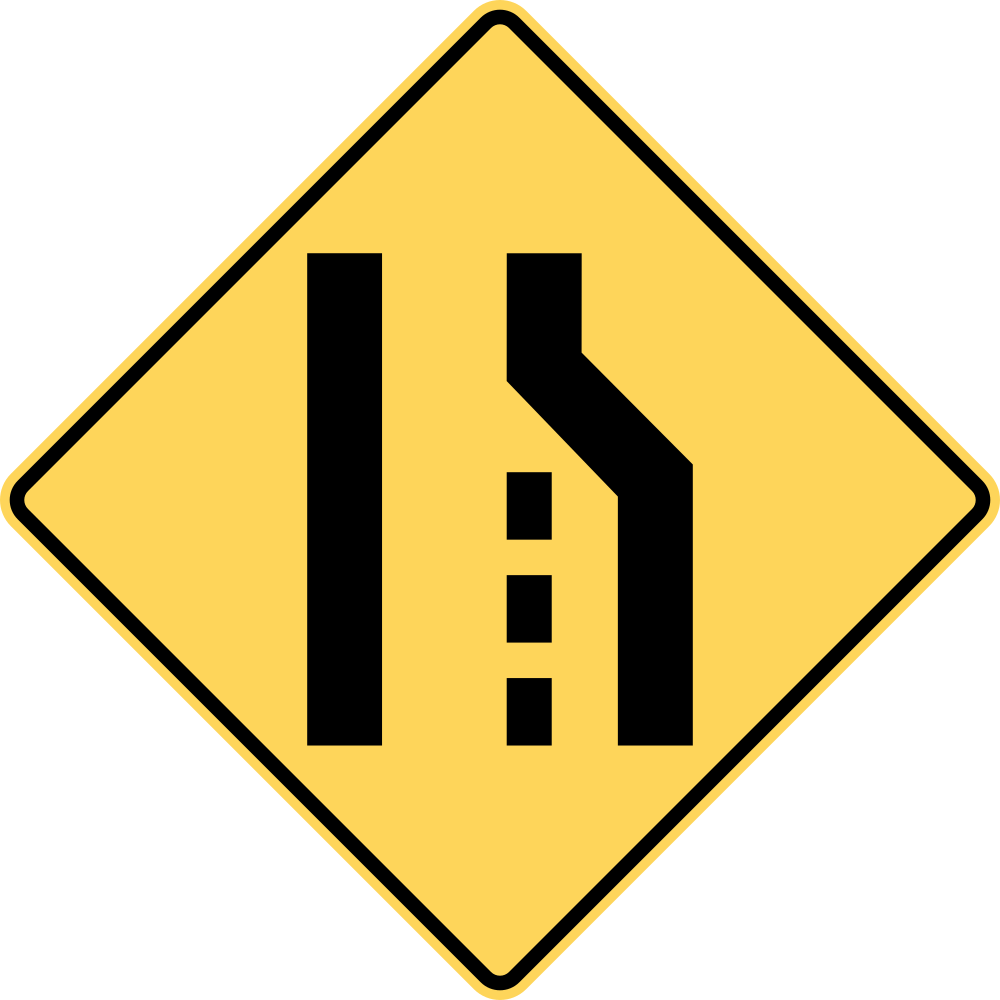
- A "right lane ends" sign tells you your lane will end soon. If you are in a lane that ends, change lanes: adjust your speed while keeping within the limit, and wait for a safe gap in the other lane.
- Most freeway exits are numbered, so check a map before your trip and move to the right lane in plenty of time. Signal, keep your speed until you are in the exit lane, then slow down gradually for the lower-limit roads ahead; an exit sign may show an advisory speed to slow to.
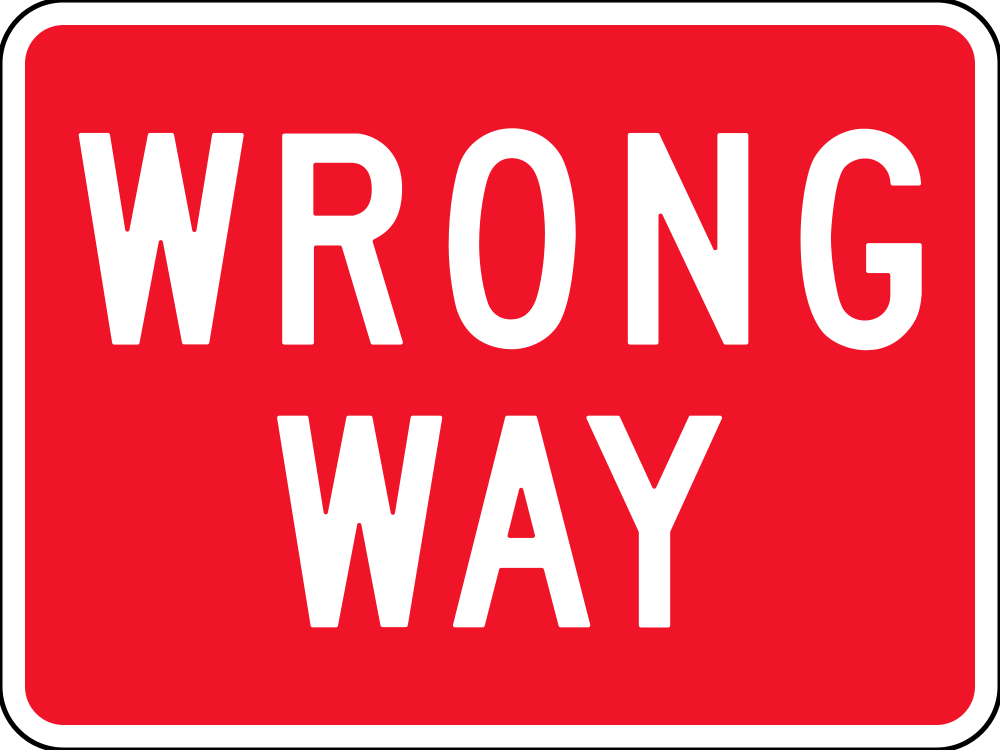
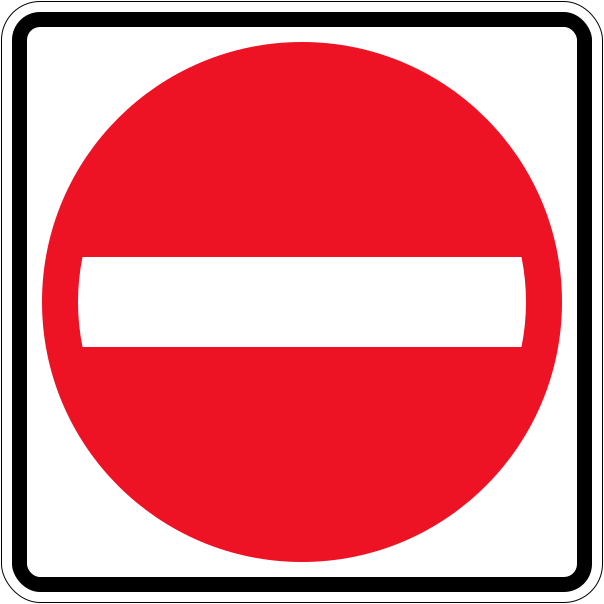
- A "wrong way" sign, usually mounted on exit ramps, tells you not to go that way, and a "do not enter" sign forbids entering the road. If you see either one ahead, you are about to drive against traffic.
Signs in this section
Official source: Rules of the road ↗ · Signs signals and road markings ↗