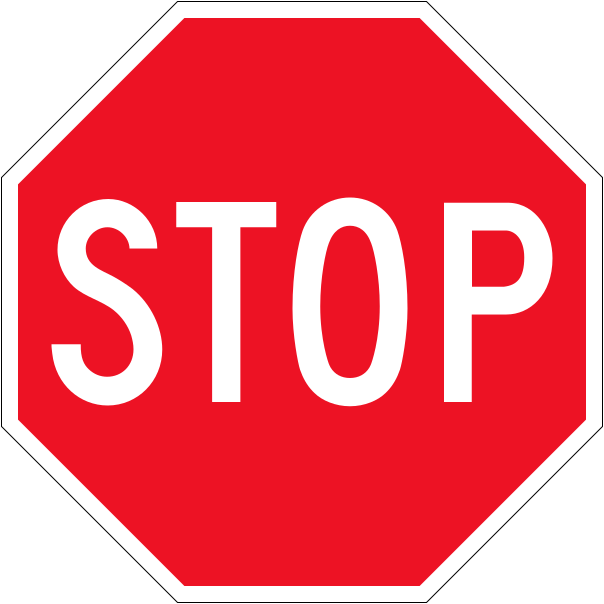
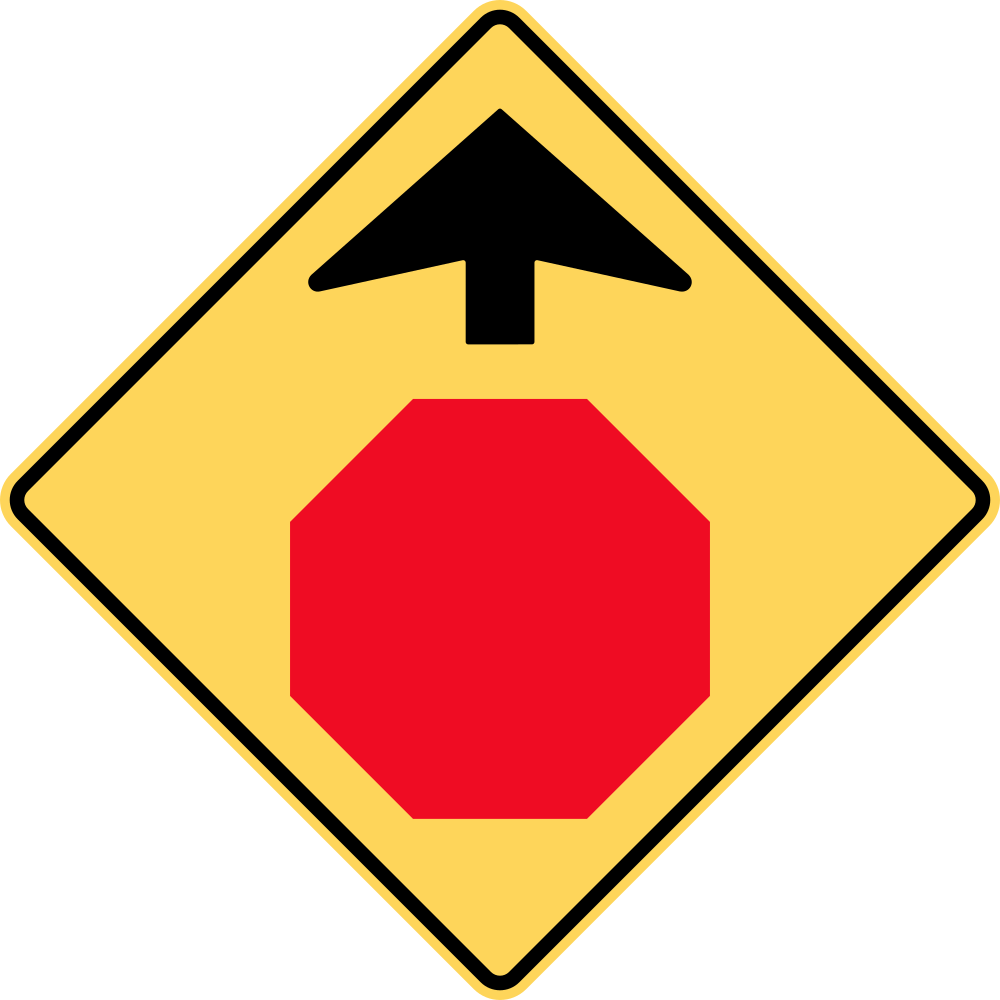
1.Stop signs: where to stop, two-way and four-way stops
- A stop sign always means a complete stop. Once you have stopped, check the intersection carefully — whether you go or wait depends on the type of intersection and the traffic around you.
- Stop just before the stop line. If there is a crosswalk but no stop line, stop just before the crosswalk; at an unmarked crosswalk, stop where you would if it were marked; with no stop line, crosswalk or sidewalk, stop just before you enter the intersection.
- At a two-way stop only one of the two streets has stop signs; the other is a through street, and its traffic has the right-of-way. Wait for a safe gap before you go through or turn.
- If two vehicles are stopped at a two-way stop and one wants to turn left, the left-turning driver yields — unless that vehicle is already in the intersection and has started the turn, in which case the other vehicle yields.
- At a four-way stop, the first vehicle to arrive and come to a complete stop goes first. If two vehicles arrive at the same time, the one on the right goes first.
- If two vehicles at a four-way stop face each other and arrive at about the same time, the one turning left yields to the one going straight through.
- A flashing red light works like a stop sign: come to a complete stop, then move into the intersection when it is clear and safe.
Signs in this section
Official source: Rules of the road ↗
2.Right-of-way: uncontrolled intersections, yield signs and left turns
- Right-of-way rules decide who must yield when more than one road user wants the same space. You cannot count on others to follow them, and even when you have the right-of-way it is still your responsibility to do all you can to avoid a crash.
- A controlled intersection has signs or traffic lights telling you what to do. An uncontrolled intersection has neither and is usually found where there is little traffic — which makes it dangerous, because drivers may not be expecting cross traffic or pedestrians.
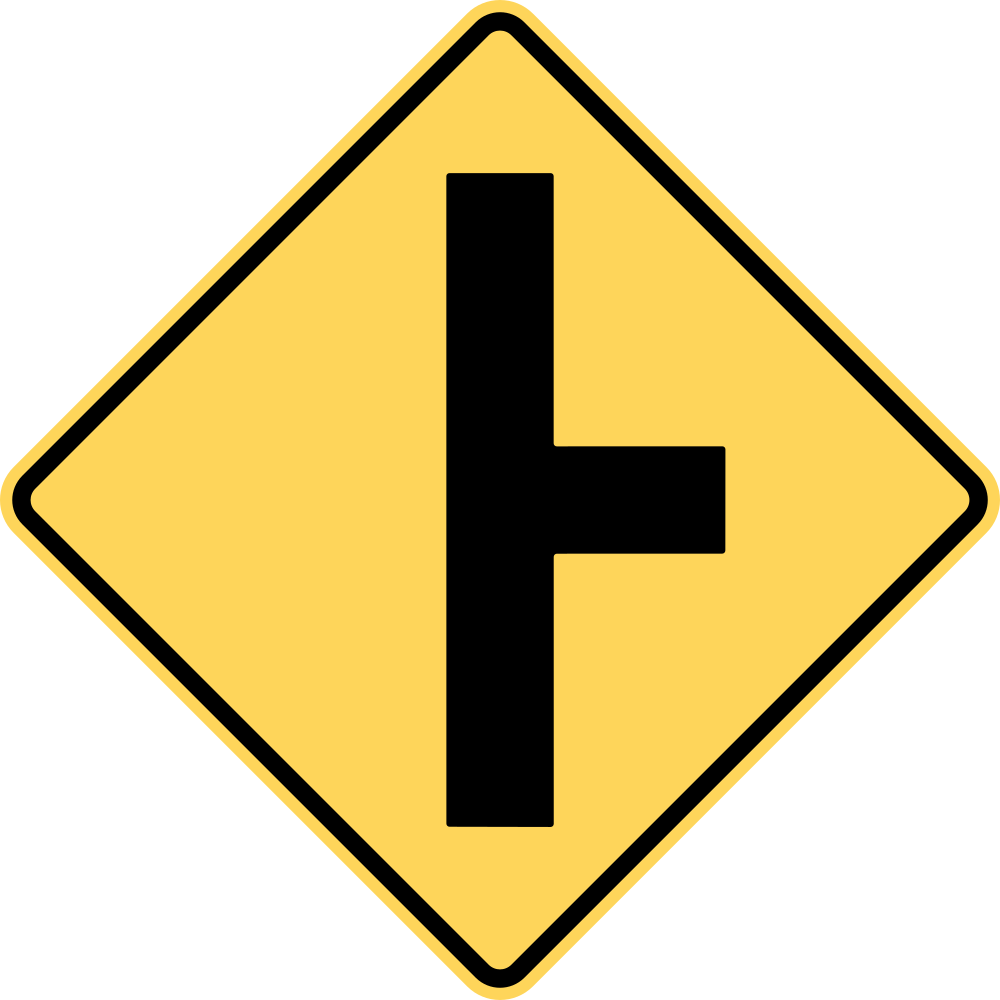
- Approaching an uncontrolled intersection, slow down and scan from left to right. Yield to a vehicle that arrived before you; if two vehicles arrive at the same time, the one on the left yields to the one on the right. Treat an unmarked T-intersection the same way.
- When you turn left across oncoming traffic, yield to vehicles in or near the intersection. If you are going straight and a vehicle is already in the intersection turning left, you must yield to it.
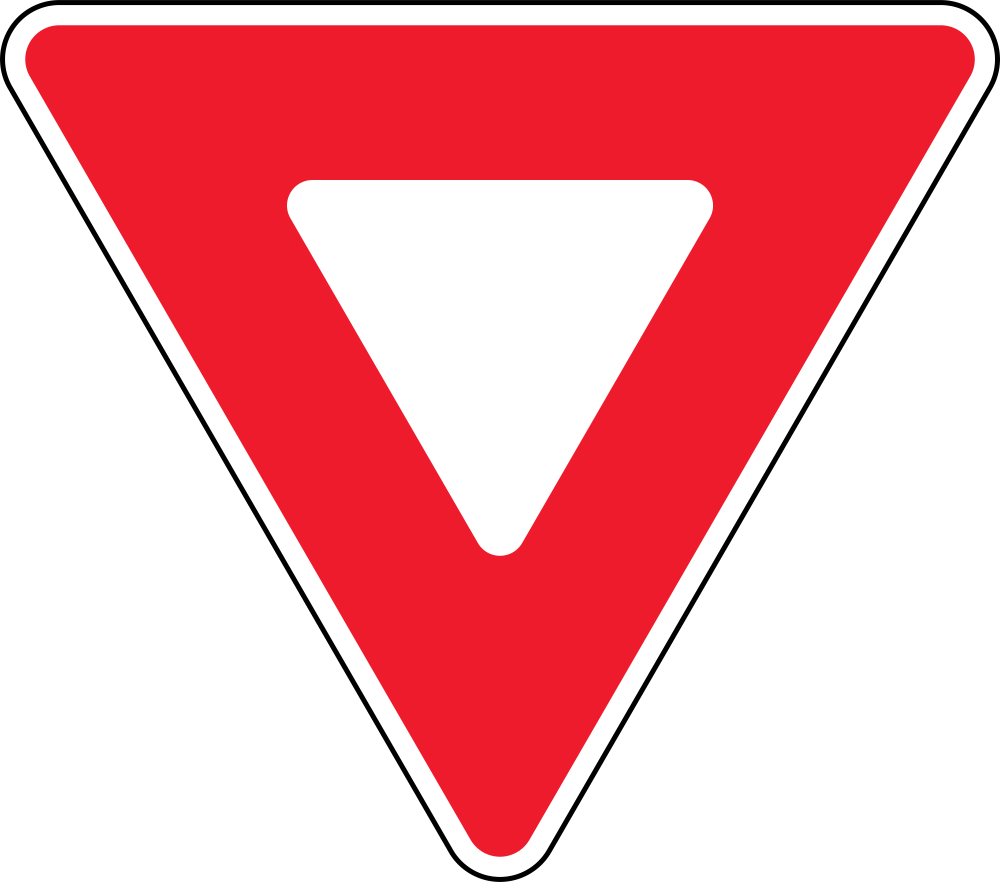
- A yield sign means traffic on the through road has the right-of-way. You may enter without stopping if no pedestrians, cyclists or vehicles are on the through road; otherwise slow down, stop if necessary, and wait for a safe gap.
- If there is any doubt about who has the right-of-way, or any chance of a crash, it is always better to yield to the other person.
- Judging a gap from a stop in ideal conditions, most vehicles need about 2 seconds per lane to go straight across, 5 seconds to turn right and reach 50 km/h, and 7 seconds to turn left and reach 50 km/h — then add 2 seconds for safety.
Signs in this section
Official source: Rules of the road ↗ · See think do ↗
3.Entering from a driveway, and yielding to pedestrians
- When you pull out of a driveway, alley or parking lot onto a road, stop before the sidewalk or any area where pedestrians may be walking, then pull out carefully, yielding to traffic on the road and waiting for a safe gap.
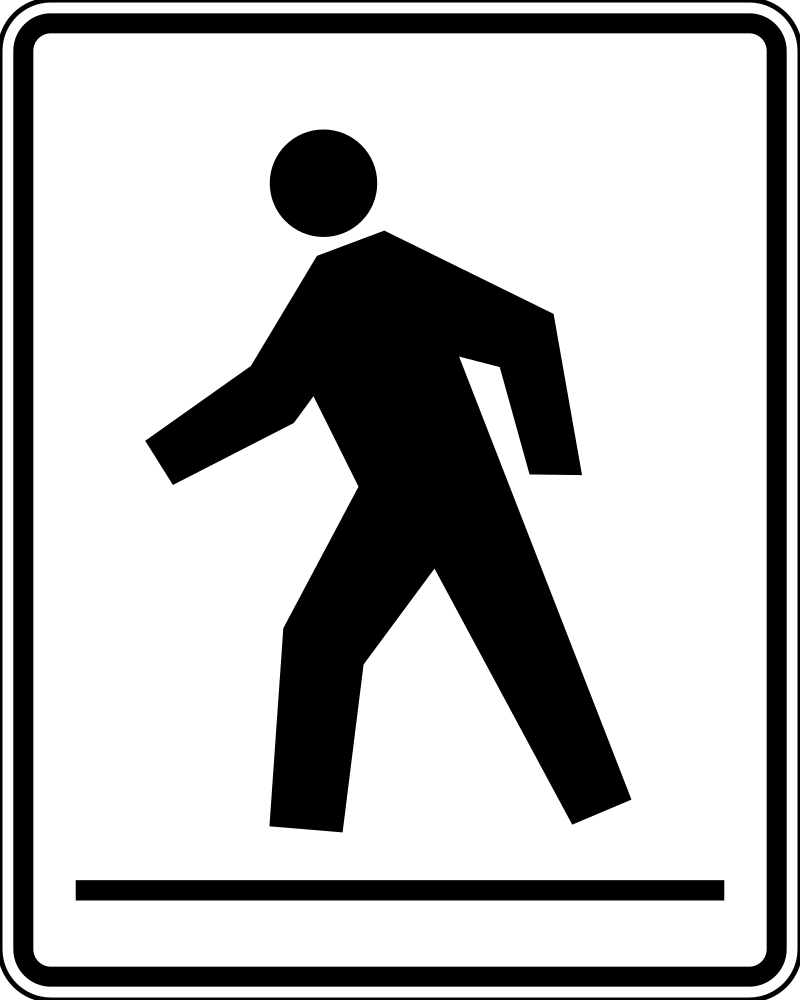
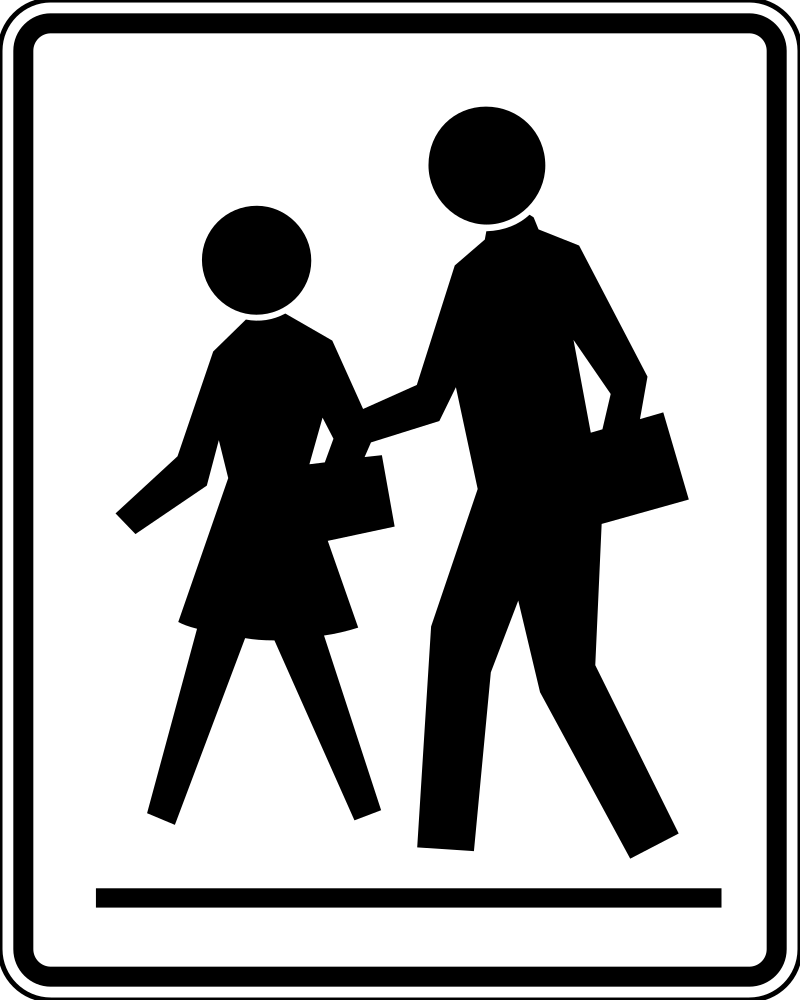
- You must yield to pedestrians in a marked crosswalk when they are close to your half of the road, and at intersections even where there is no marked crosswalk — a pedestrian near your half of the road still has the right-of-way.
- You must also yield to pedestrians whenever you turn and whenever you enter a road from a driveway or alley. It is always the driver's responsibility to avoid hitting a pedestrian.
- Do not pass a vehicle stopped at a crosswalk — it is illegal and unsafe. Do not enter a crosswalk until you have checked that it is empty, even on a green light, and watch for pedestrians on the cross street whenever you turn.
- A visually impaired pedestrian may carry a white cane or walk with a guide dog. When they raise the cane, that is your signal to stop and give them the right-of-way — and never startle them by racing your engine or honking.
- Always be ready to stop for a pedestrian about to step out in front of you, but do not stop mid-block to invite people to cross: the driver behind may not expect you to stop, and drivers in other lanes may not see the pedestrians and could hit them.
- Watch for people in motorized scooters or wheelchairs travelling along the edge of the road, especially when you are about to turn right.
Signs in this section
Official source: Rules of the road ↗ · Sharing the road ↗
4.Emergency vehicles
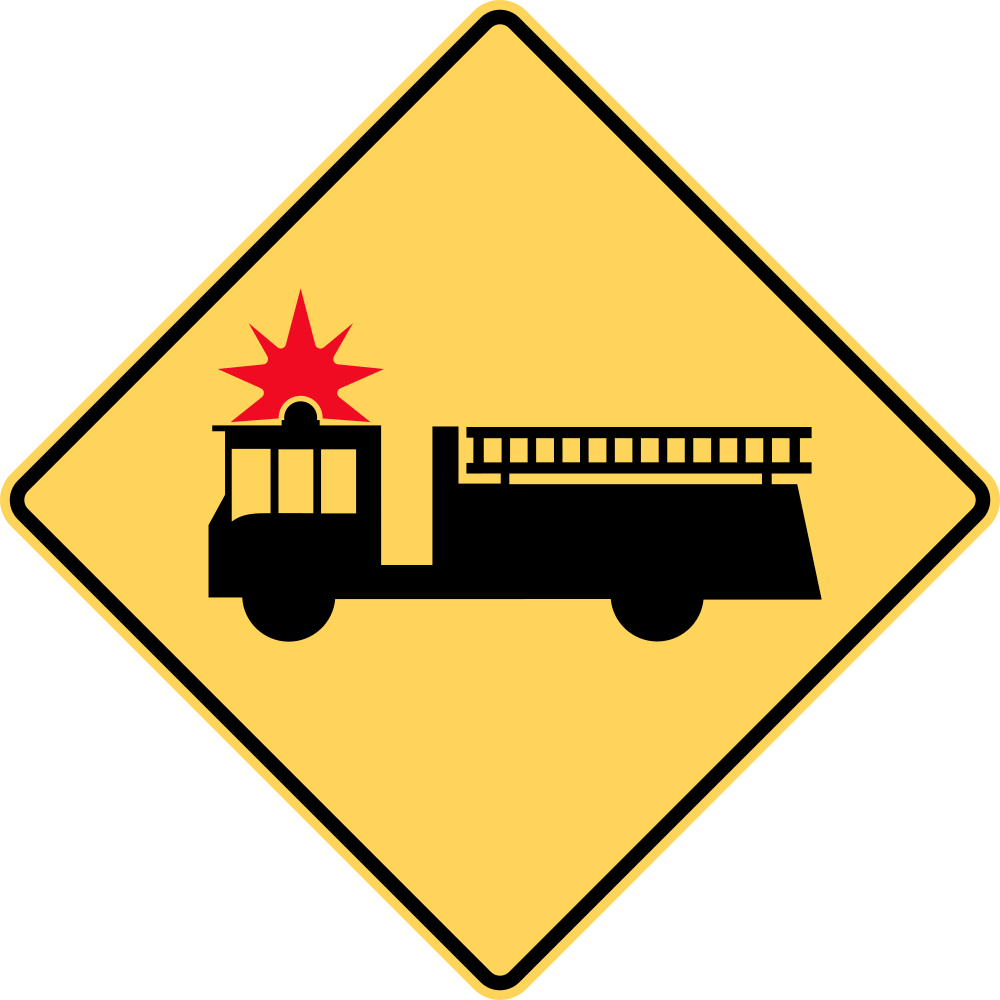
- Emergency vehicles — police cars, ambulances and fire trucks — displaying flashing lights and sirens always have the right-of-way. All traffic moving in both directions must stop.
- The one exception is a divided highway where the emergency vehicle is approaching on the other side of the median: you may not need to stop, but only if it would be impossible for the vehicle to move onto your side of the highway.
- Clear a path. Usually the best thing to do is pull over to the right and stop — or to the left if you are in the left lane of a divided highway or on a one-way street. Do not stop in an intersection.
- If you are stopped at an intersection and blocking the emergency vehicle's path, you may have to turn the corner to get out of the way. Use your turn signal to show the driver you have seen the vehicle and are pulling over.
- Never block a traffic circle or roundabout for an emergency vehicle: stop before you enter, or leave the circle and then stop to let it pass.
- When you follow a fire truck, stay back at least 150 metres, and never drive over a fire hose — it is illegal. Once one emergency vehicle has passed, keep watching and listening, because there may be others.
Signs in this section
Official source: Sharing the road ↗ · Rules of the road ↗
5.Traffic circles and roundabouts
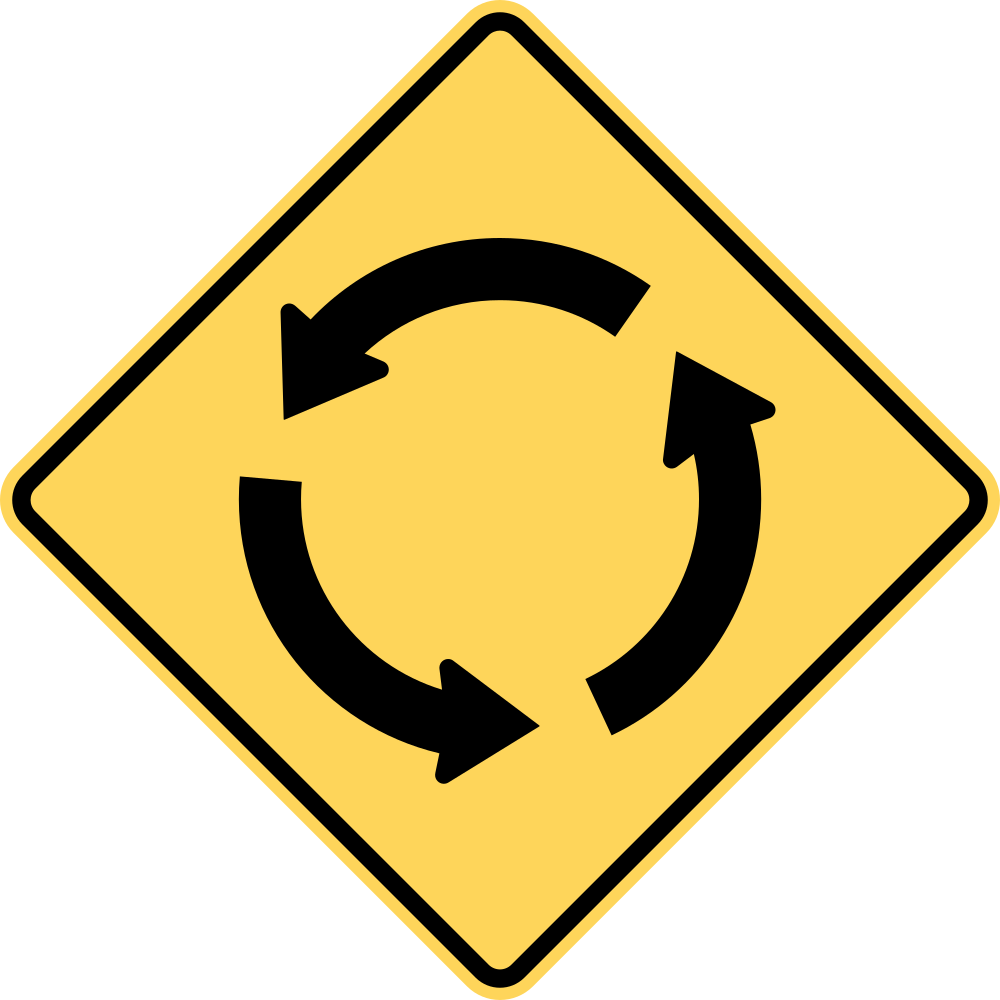
- Traffic circles are mostly found in residential neighbourhoods. Slow down as you approach and obey any posted Yield or Stop signs; if there are no signs, treat the circle as an uncontrolled intersection.
- Yield to any traffic already in the traffic circle. If another vehicle arrives at the same time as you, yield to the vehicle on your right. You turn right to enter, go around the circle to the right, and turn right again to leave.
- Roundabouts are larger than traffic circles and may have more than one lane. Know where you want to go before you enter and get into the correct lane: the left lane to turn left, the right lane to turn right, and either lane to go straight.
- Slow down on the approach, yield to pedestrians crossing or about to cross in the crosswalk before the roundabout, then yield to any traffic already in the roundabout.
- Go around the roundabout counter-clockwise and stay in your lane — do not change lanes inside it. If you entered in the left lane, stay in that lane and either go straight or turn left from it.
- Do not ride alongside trucks or buses in a roundabout: they may need more than their lane, and many roundabouts have a truck apron around the central island to help them get through.
- Signal right before you exit, and be prepared to yield to pedestrians in the crosswalk where you leave the roundabout.
Signs in this section
Official source: Rules of the road ↗
6.Turning: which lane to turn from and into
- Lane tracking means getting your vehicle into the correct lane before a turn and ending up in the correct lane when you complete it.
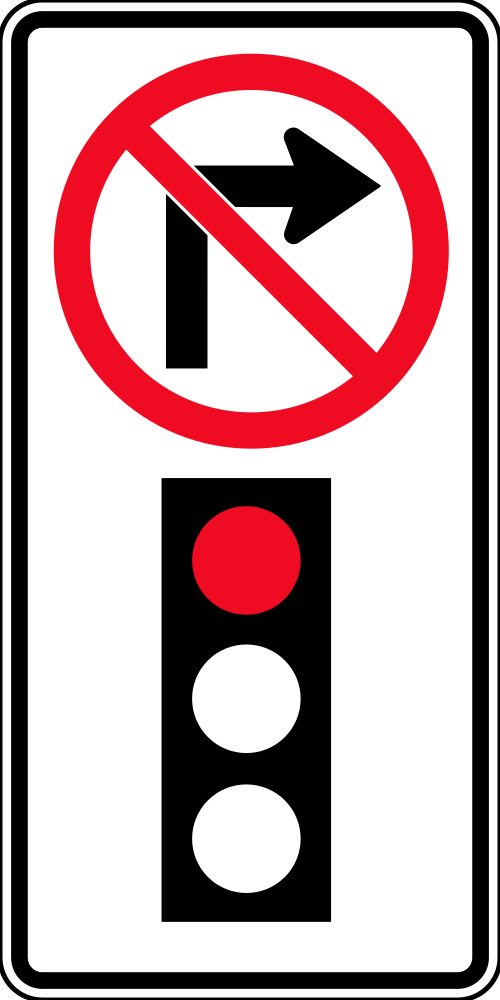
- To turn right, move into the right lane and turn into the right lane of the cross street. At some intersections road markings allow a right turn from a centre lane, and some have a special yield lane for right turns where you wait for a break in the traffic.
- Turning left from a two-way road onto a two-way road, move into the centre lane and drive in a smooth arc into the centre lane of the cross street.
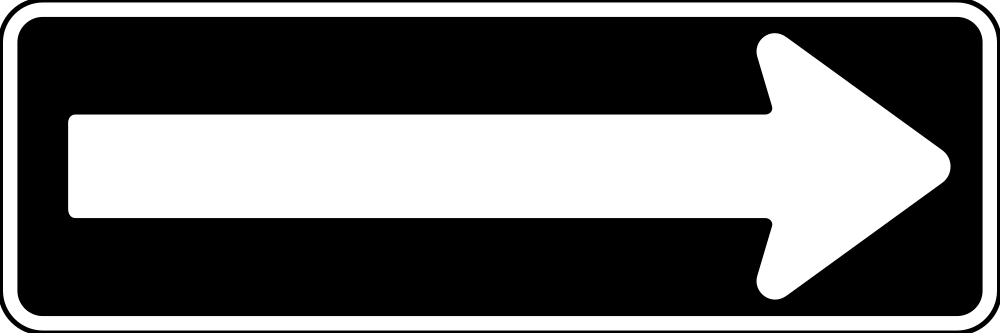
- From a one-way road onto a two-way road, turn from the left lane into the centre lane. From a two-way road onto a one-way road, turn from the centre lane into the left lane. From a one-way road onto a one-way road, turn from the left lane into the left lane.
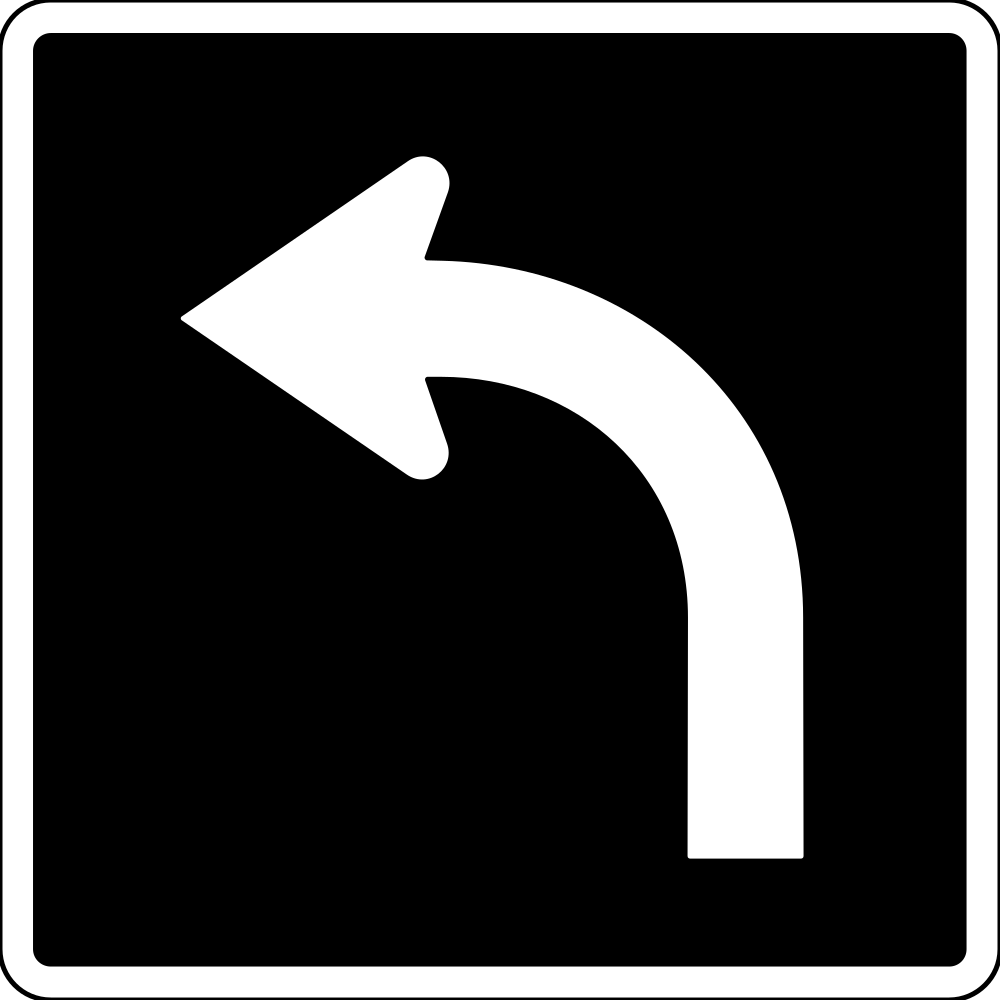
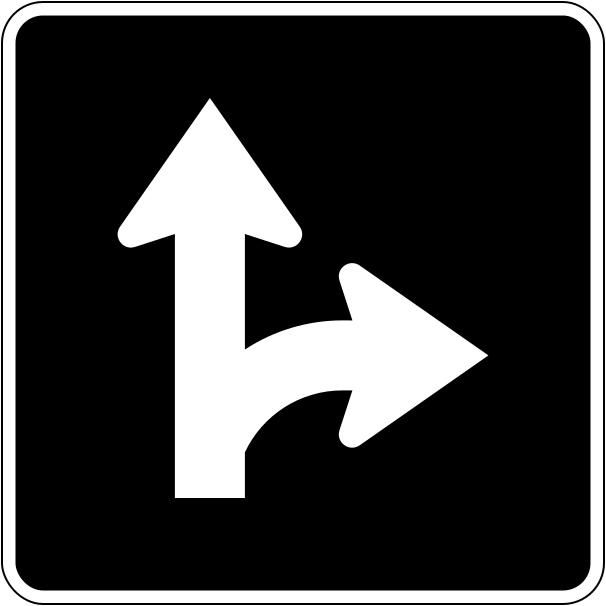
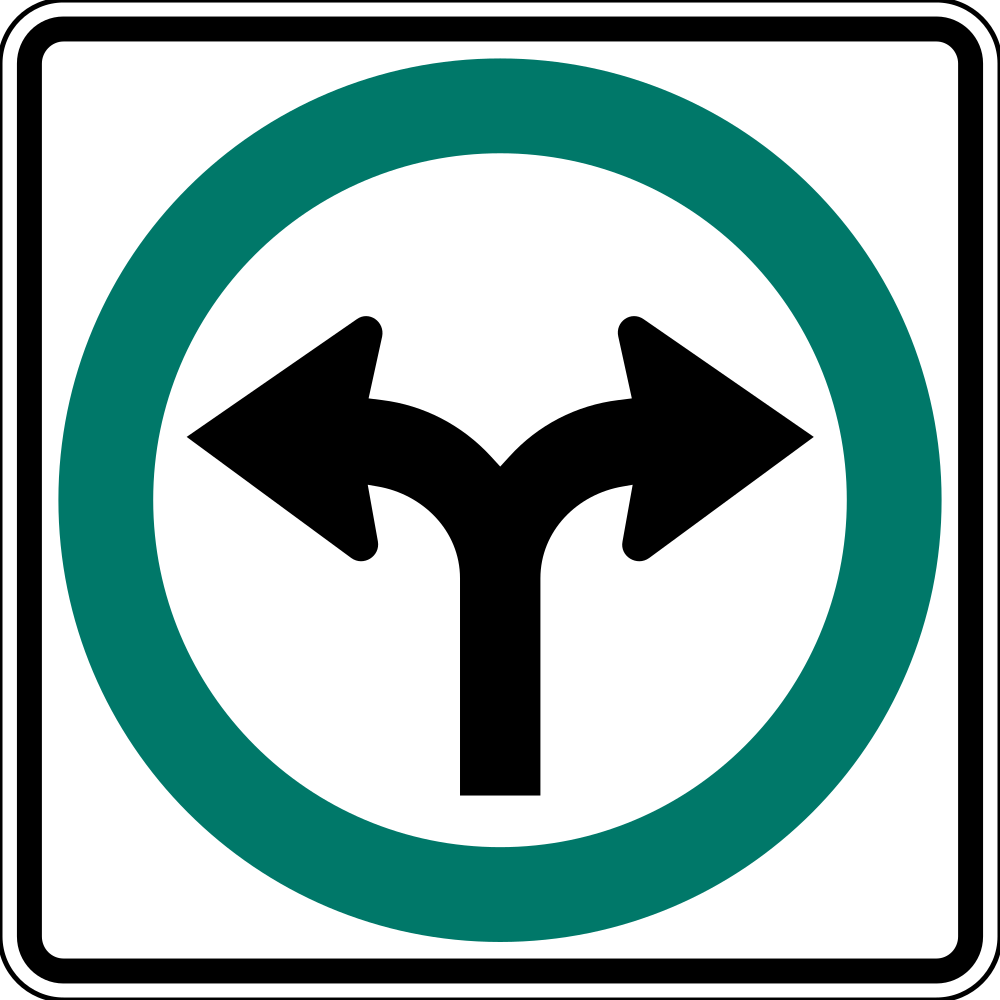
- Turning lanes let you wait for a safe gap without holding up through traffic. Check the signs and pavement markings as you approach every intersection so you are in the correct lane, and use a lane marked with left-turn arrows only if you are turning left.
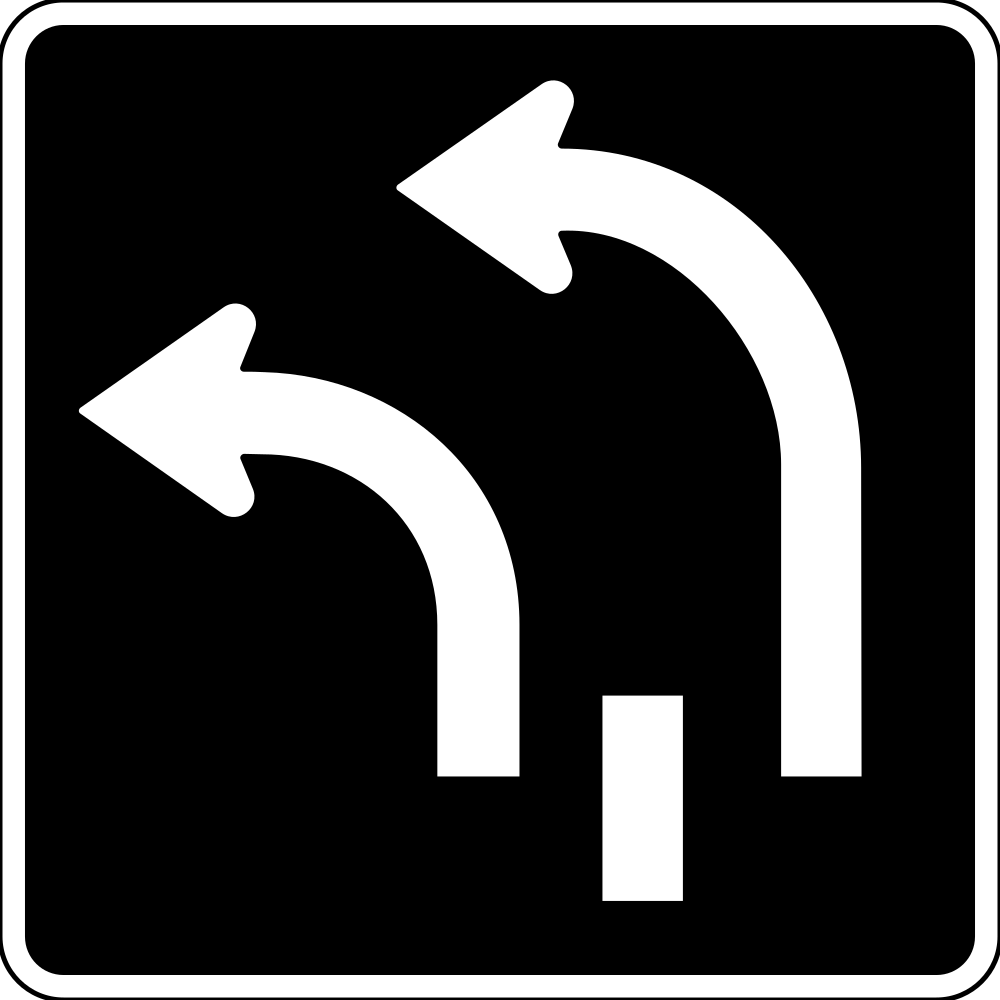
- Where two lanes turn left, a vehicle in the far-left lane turns into the far-left lane of the new road, and a vehicle in the next lane turns into the lane beside it.
- In a designated lane you must follow its arrows, and you may not move into or out of it while you are in the intersection. Never change lanes in an intersection — it confuses other drivers and can cause a crash.
Signs in this section
Official source: Rules of the road ↗ · Signs signals and road markings ↗
7.Signalling, hand signals and your lights
- Signals tell other traffic what you intend to do. Signal when you are preparing to turn left or right, change lanes, park, or move toward or away from the side of the road.
- You are legally required to signal when you change lanes — but signalling does not give you the right-of-way. The vehicles already in the lane you are moving into have it, so wait for a gap large enough that nobody has to slow down to avoid you.
- The turn signal lever switches the left- and right-turn signals on and off. Be timely — signal well ahead — but not so early that people think you are turning into an earlier driveway or lane, and make sure the signal has cancelled after the turn so it does not send the wrong message.
- When an automatic turn signal is hard to see, such as when you pull out from a line of parked vehicles, add a hand signal. The guide shows hand signals for a left turn, a right turn and a stop.
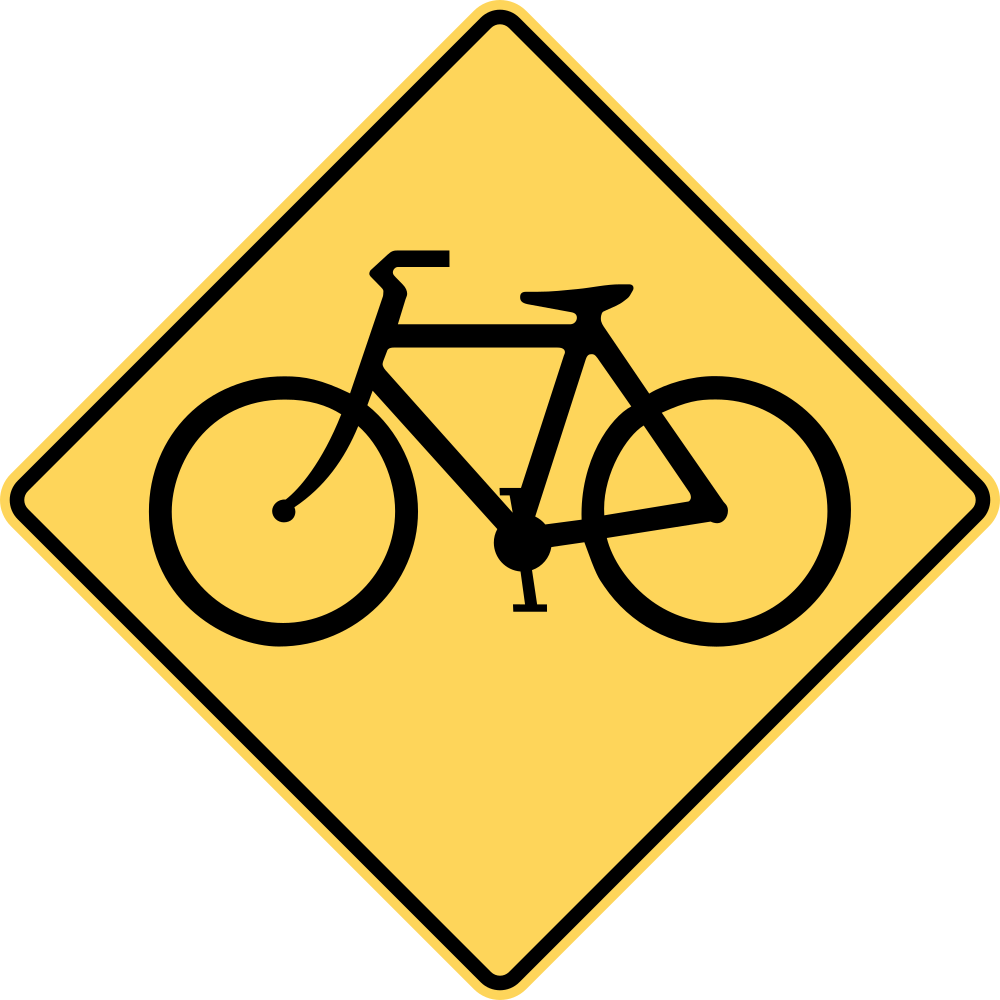
- Cyclists use hand signals too, and may use either of the two right-turn signals the guide shows — including extending the right arm straight out. Learn to recognise them.
- Your lights communicate as well: tapping the brake lightly activates the brake lights to warn drivers behind that you intend to slow down or stop, and backup lights show that a vehicle is in reverse and about to back up.
Signs in this section
Official source: Rules of the road ↗ · You and your vehicle ↗ · See think do ↗ · Sharing the road ↗
8.U-turns, turning around and backing up
- U-turns are risky and often illegal. You may not make one where it would interfere with other traffic, on a curve, or on or near the crest of a hill where other traffic cannot see you within 150 metres.
- U-turns are also illegal where a sign prohibits them, at any intersection with a traffic light, in a business district except at an intersection without a traffic light, and wherever a municipal by-law bans them. Consider driving around the block or on to a side road instead.
- You may turn left in the middle of a block — into a driveway, for example — even across a solid double yellow line, as long as you do it carefully and safely, do not impede other traffic and no sign prohibits it.
- A two-point turn: stop near the side of the road, back into a driveway, then drive out into the street in the opposite direction. A three-point turn: make a sharp left turn in the middle of the block, stop just before the curb, back up to your right, then drive off the other way. Both need a clear, safe road with no other traffic nearby.
- Before you back up, do a 360-degree vision check using your mirrors and shoulder checks, then turn your body to look out the rear window while you reverse. If you have been stopped for some time, walk around the back of the vehicle first to make sure the path is clear.
- It is illegal to back up into an intersection or over a crosswalk. Backing out of a driveway is where children, pets, pedestrians, cyclists and people in wheelchairs are easiest to miss, so back into driveways and parking spots where you can and drive out facing forward.
- A cul-de-sac is closed at one end and is designed so you can turn around without backing up. Slow down, keep to the right and watch for children playing and vehicles coming out of driveways.
Official source: Rules of the road ↗ · See think do ↗