1.Pedestrians: crosswalks, school zones and people who need extra care
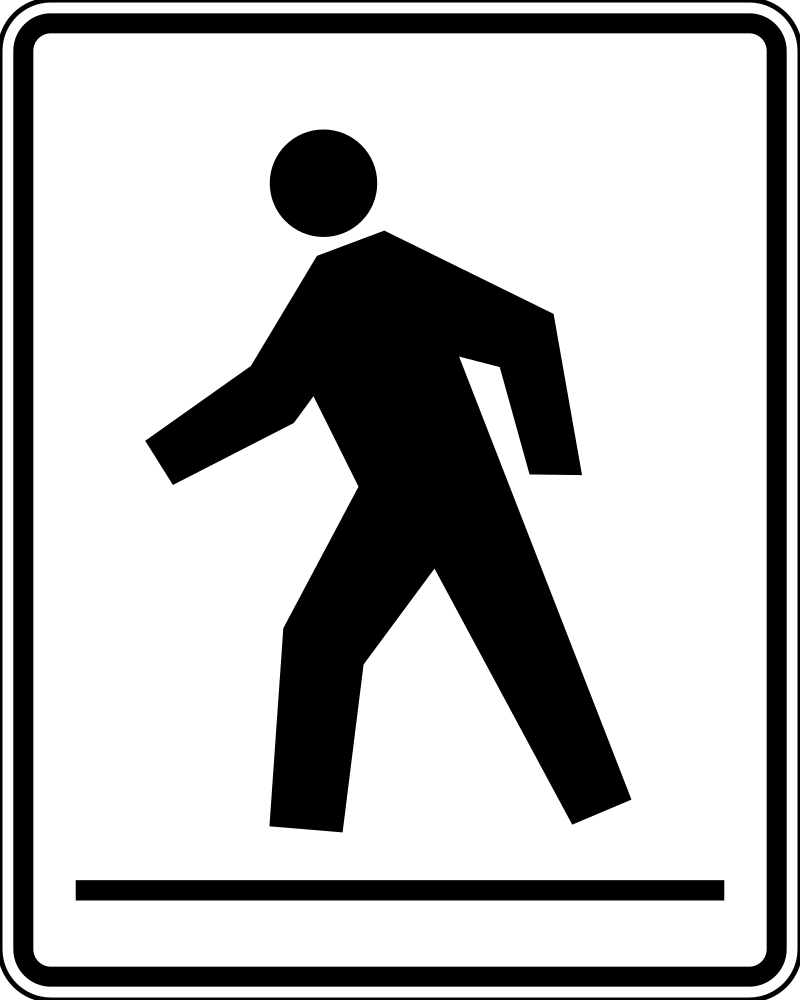
- Pedestrians are unpredictable and often hard to see, especially at night. Many do not realise how far a vehicle needs to stop and may step out without warning, so scan every crosswalk and intersection as you approach it.
- You must yield to pedestrians in a marked crosswalk when they are close to your half of the road, at intersections even where there is no marked crosswalk, whenever you turn, and when you enter a road from a driveway or alley. Avoiding a pedestrian is always the driver's responsibility.
- Never pass a vehicle stopped at a crosswalk — it is illegal and unsafe, because that driver may have stopped to let someone cross — and check that a crosswalk is empty before you enter it, even on a green light: the elderly, people with disabilities and parents with young children may still be in it.
- A crosswalk with a flashing green light is controlled by pedestrians. Someone standing near it has probably pressed the button and the light is about to change — slow down and be ready to stop.
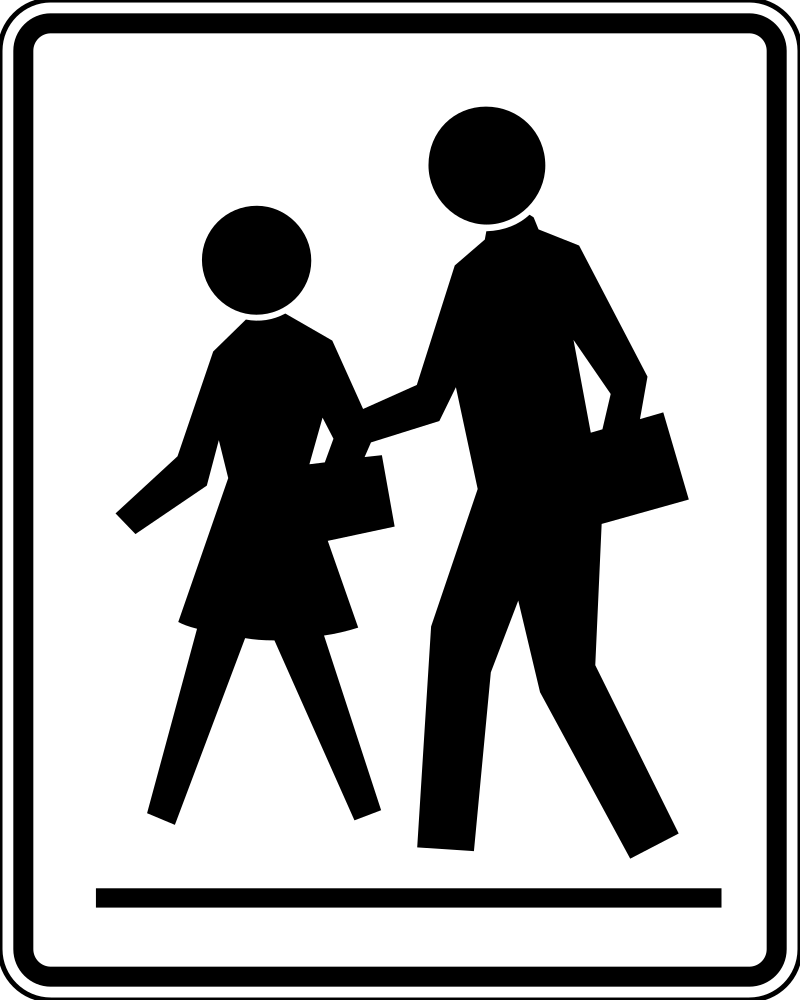
- In school and playground zones, small children are harder to see and less predictable. Look well ahead for school patrols and crossing supervisors — you must obey them at all times. A school zone sign posted at 30 km/h applies from 8 a.m. to 5 p.m. on school days, or the hours shown on the sign, and the zone ends when you reach the back of the school zone sign on the other side of the street.
- A visually impaired pedestrian may carry a white cane or walk with a guide dog, and will often raise the cane when unsure it is safe to cross. That raised cane is your signal to stop and give them the right-of-way — and never startle them or the dog by racing your engine or honking.
- Watch for people in motorized scooters or wheelchairs travelling along the side of the road, especially before a right turn. Before you back up, check around the car before getting in, then do a 360-degree vision check — it is easy to back into a child or a family pet.
Signs in this section
Official source: Sharing the road ↗
2.Cyclists and bicycle lanes
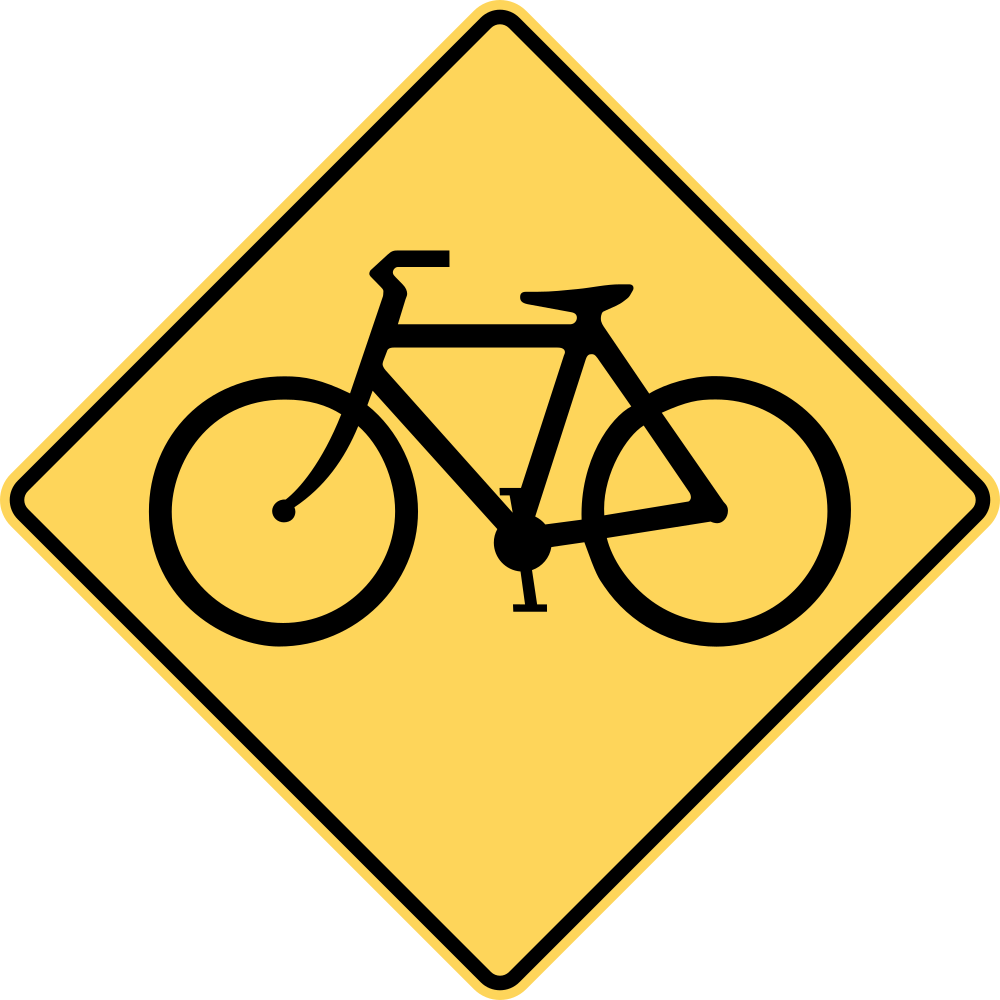
- Cyclists have the same rights and responsibilities as drivers and follow the same rules of the road. Yield to a cyclist as you would to any other vehicle, expect to meet one at any hour of the day or night, and take special care near children on bicycles, who may not know the rules or how much room a vehicle needs to stop.
- Bicycles and riders are narrow and easily hidden in your blind spot, so shoulder check before you open your door to get out, pull away from the curb or move to the right. Drivers swinging a door open without checking is one of the most common causes of crashes with cyclists.
- At intersections, shoulder check for bicycles before you turn right, check carefully for oncoming cyclists before you turn left, watch for a cyclist ahead waiting to turn left when you drive straight through, and remember that a cyclist riding along the through road may be approaching faster than you think.
- Cyclists do not always stay to the right: to turn left they move to the left lane, and in a narrow lane, or where there is glass or a pothole on the right, they have the right to move out toward the middle. Leave plenty of following distance so you can avoid a cyclist who falls — a wobbling rider is probably inexperienced and needs even more room.
- Side-swiping causes a significant number of cyclist crashes. Leave at least 1 metre of side margin when you pass, wait for a clear straight stretch on a narrow road, change lanes on a multi-lane road rather than crowd the cyclist, and remember you may cross a single solid yellow line to pass a cyclist if it is safe. Even pulling slightly into another lane is a lane change: mirror check, signal and shoulder check.
- Bicycle lanes are reserved for cyclists. Never drive, stop or park in one, and cross it only where the white line is broken or to turn into or out of a driveway — signal well ahead and yield to every cyclist whenever you must cross a bicycle lane.
- Learn cyclists' hand signals — a right turn may be shown by extending the right arm straight out — and make eye contact when you can, since a cyclist is probably trying to anticipate your next move. Do not honk at a cyclist unless you need to warn them: a loud horn can startle a rider into falling.
Signs in this section
Official source: Sharing the road ↗ · Rules of the road ↗
3.Motorcycle riders
- Motorcycle riders are vulnerable: they have no external frame, airbags or bumpers to protect them and are sometimes hard to see. More than half of all motorcycle crashes end in injury or death.
- A motorcycle's turn signals can be hard to see, so read the rider instead: a shoulder check or a leaning motorcycle usually means a lane change or a turn is coming.
- Look carefully for motorcycles at intersections. When you turn left, watch for oncoming motorcycles: they are hard to see at night, at dusk or in heavy traffic, and their speed is hard to judge — approaching motorcycles and bicycles are often travelling much faster than they appear. When you drive straight through, watch for an oncoming motorcycle that may be turning left.
- Never try to share a lane with a motorcycle — it needs the whole lane to travel safely — and allow plenty of space when you pass one, because your vehicle can throw dirt or water into the rider's face.
- Keep at least 3 seconds of following distance behind a motorcycle: it can stop very quickly, and the rider can skid and fall on a poor road surface, so you need room to stop safely.
- Make eye contact with riders whenever possible, and do not assume that a rider in the left part of the lane is about to turn left — motorcyclists often ride there simply to make themselves more visible.
Official source: Sharing the road ↗ · See think do ↗
4.Large trucks and buses
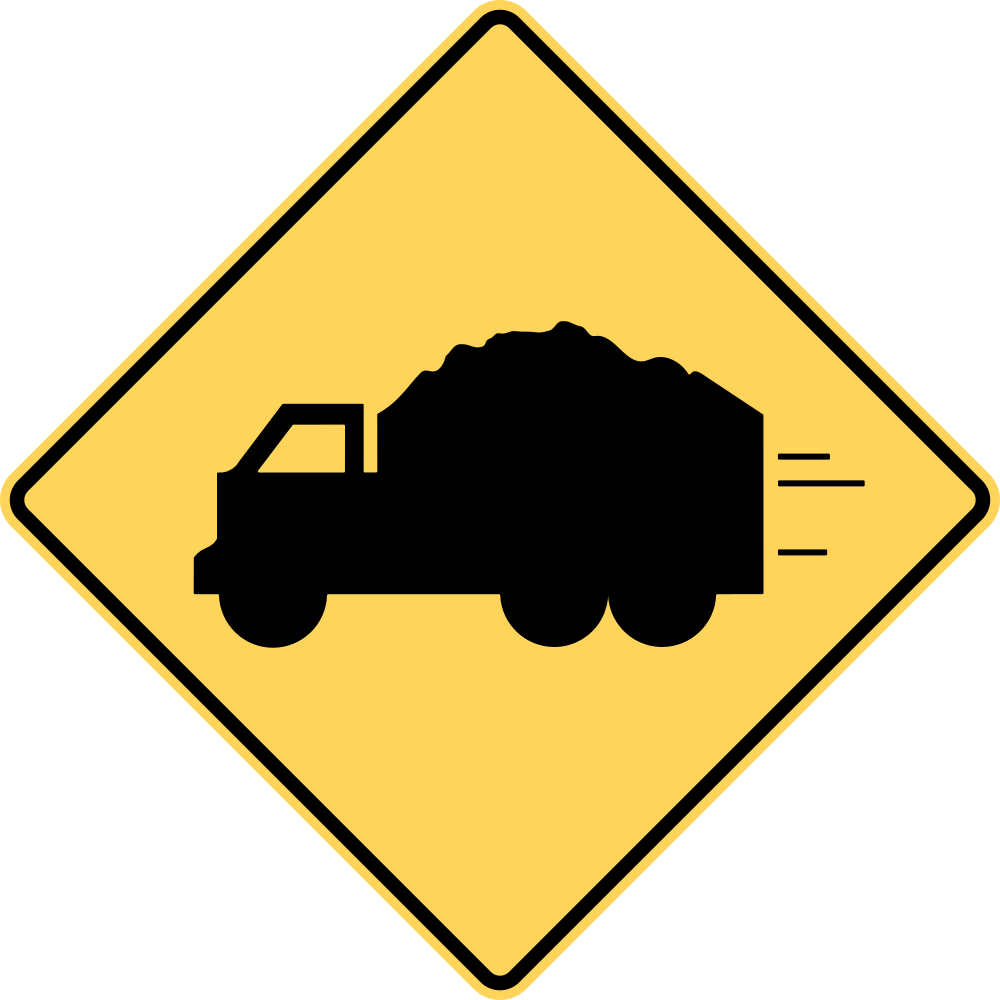
- Large vehicles operate very differently from cars, so give them lots of room. A big vehicle ahead hides hazards, and a longer following distance widens your view, keeps you clear of the dirt, water and rocks its tires throw up in the rain, and leaves room if it rolls back when stopped facing uphill.
- Large vehicles have big blind spots behind and beside them. Stay where the driver can see you — you should be able to see both of the truck's mirrors — and never try to sneak behind a truck that is backing into a loading bay or out of a driveway.
- Passing takes a lot of space: trucks are long and some pull 2 trailers, so do not pass unless you are sure you have room. Big vehicles take longer to slow down, so after passing or changing lanes in front of one, wait until you can see the truck's headlights in your rear-view mirror before you pull in, and keep your speed once you are there.
- A truck that starts slowing well before a red light needs all of that space to stop — never move into it or you could be rear-ended. Many large vehicles slow with engine retarders or gears rather than brakes, so the truck ahead may slow without its brake lights coming on: look ahead and listen for a change in engine noise. If you are ahead of a large vehicle, signal well before you slow, turn or stop.
- Big vehicles need a lot of room to turn. Avoid being on the right of one that might turn right — you could be squeezed between the truck and the curb — and keep your distance when a large vehicle turns onto your road, because the driver may have to cross the centre line or cut the corner to complete the turn.
- Big vehicles create turbulence that can push you away from them or pull you toward them when you pass or meet one: allow lots of space on the side and keep a firm grip on the wheel. Watch for a horn or beeper, four-way flashers or backup lights that mean a large vehicle is about to back up.
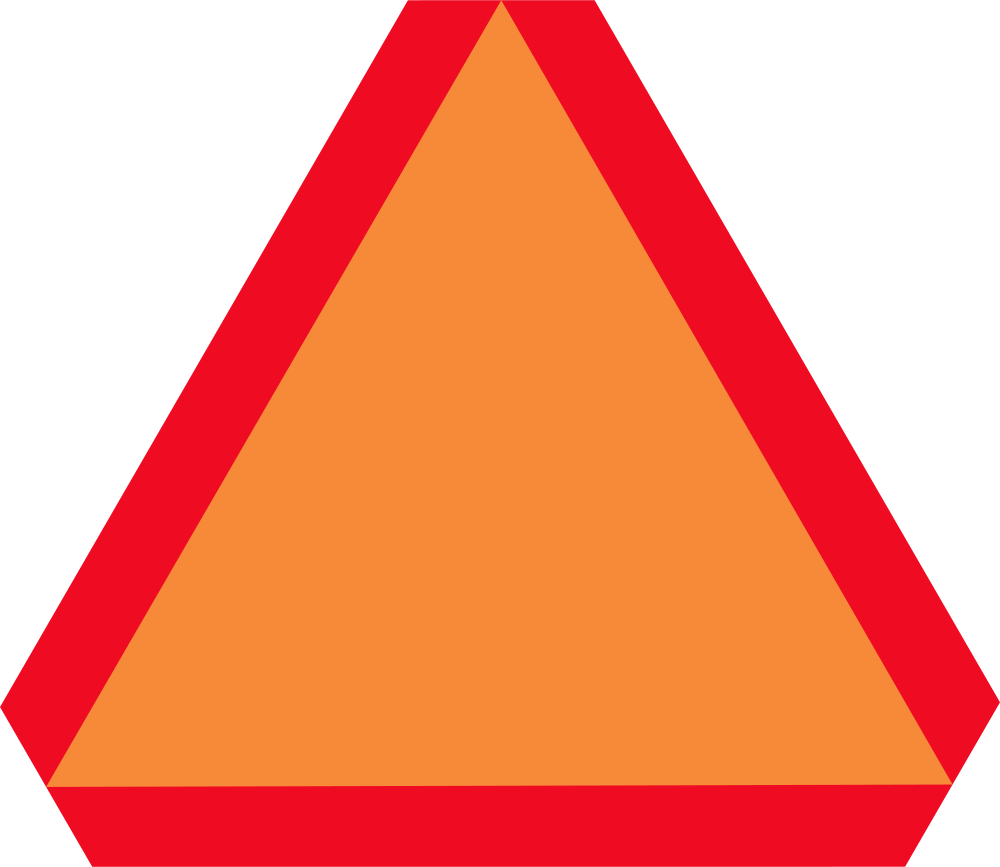
- A slow-moving vehicle sign on the back of a vehicle marks one that will be moving slowly: keep your distance and pass only when you are certain it is safe. A Wide Load, Long Load or Oversize Load sign on a truck or pilot car means an oversize load is being transported. Many of B.C.'s back roads are logging roads — turn on your headlights, be extra cautious at curves and hills, and always yield to logging trucks.
Signs in this section
Official source: Sharing the road ↗
5.School buses and public transit buses
- A school bus that has stopped to let children off shows lights at the top that flash alternately, and sometimes a swing-out stop sign. Before stopping, the driver may have switched on alternating flashing amber lights — your warning to slow down and get ready.
- When a school bus shows alternating flashing red lights at the top, you must stop, whether you are approaching it from the front or from the rear, and vehicles in all lanes must stop.
- Once you have stopped for a school bus, do not start moving again until the bus moves on, or until the driver signals that it is safe by turning off the lights and pulling in the stop sign.
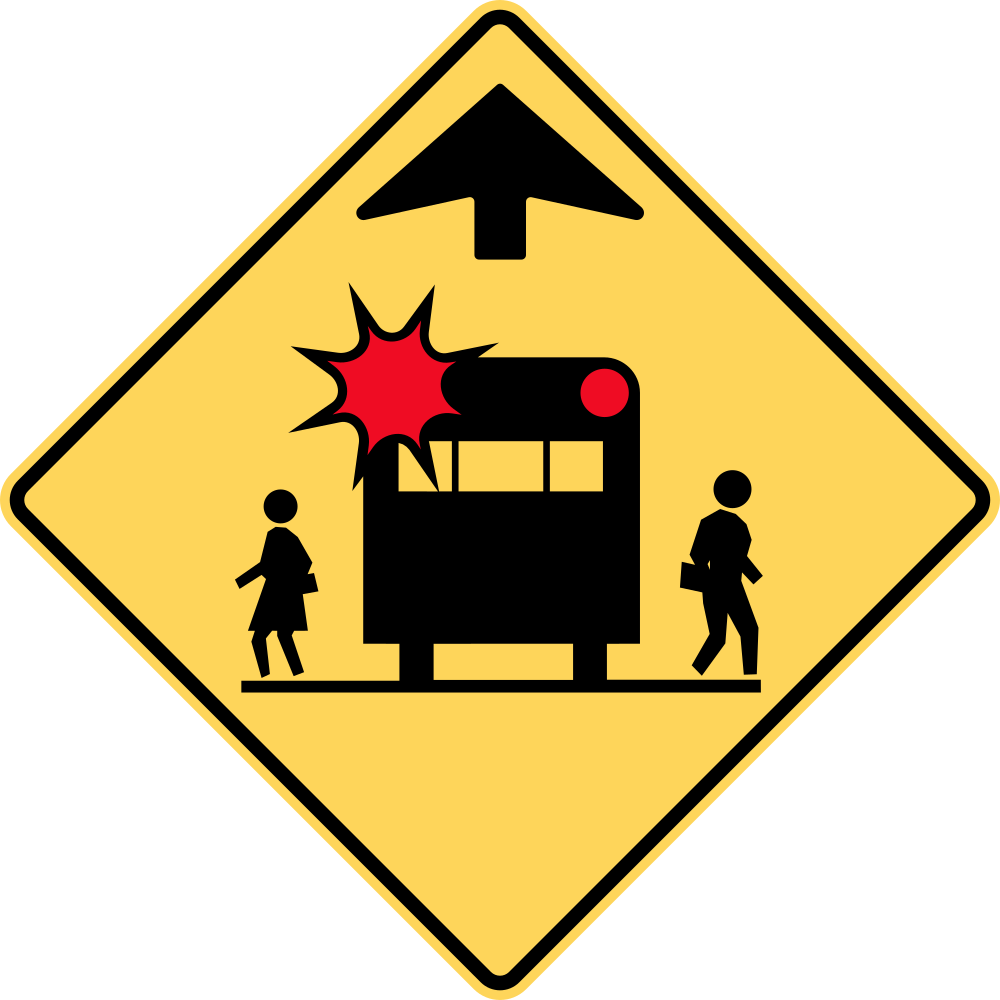
- A "School bus stop ahead" warning sign tells you a school bus stops on the road ahead: slow down, watch for children near the road, and be ready for a stopped bus with its lights flashing.
- A stopped transit bus can hide pedestrians about to cross, or be about to pull back into traffic. You must let a public transit bus that is signalling and displaying a yield-to-bus sign move out from the curb lane or a bus stop, on every road where the speed limit is 60 km/h or lower.
- To let a bus pull out, change lanes if there is space in the next lane, or slow down if you cannot change lanes safely.
Signs in this section
Official source: Sharing the road ↗ · Signs signals and road markings ↗
6.Emergency vehicles, stopped vehicles with flashing lights and construction zones
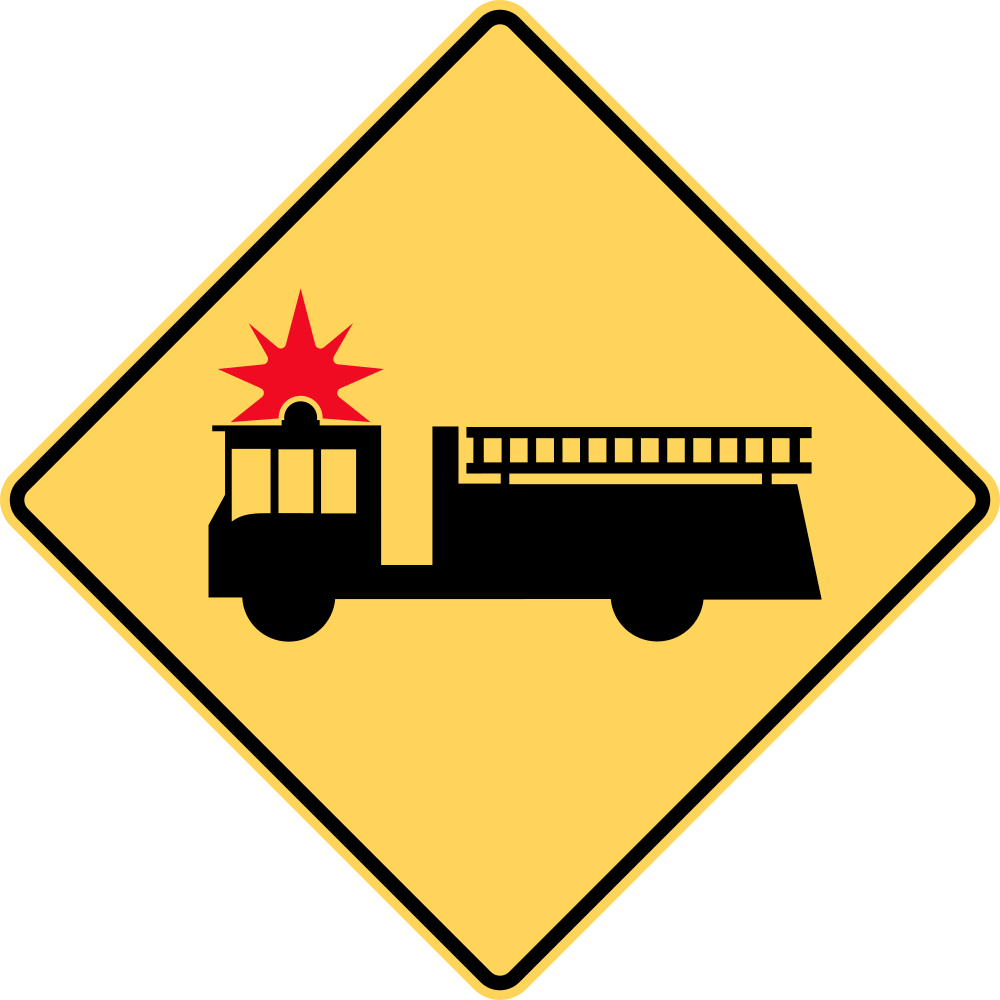
- Police cars, ambulances and fire trucks displaying flashing lights and sirens always have the right-of-way: all traffic moving in both directions must stop. The only exception is a divided highway where the emergency vehicle is on the other side of the median — and only if it would be impossible for it to move onto your side.
- Clear a path: usually pull over to the right and stop, or to the left if you are in the left lane of a divided highway or on a one-way street. Never stop in an intersection — if you are stopped at one and blocking the way, you may have to turn the corner to get clear. Use your turn signal to show the driver you have seen the vehicle, and after it passes keep watching and listening, because there may be others.
- When you follow a fire truck, you must stay back at least 150 metres, and it is illegal to drive over a fire hose.
- All traffic must slow down when approaching a stopped vehicle displaying flashing yellow, red, white or blue lights — police, fire, paramedics, tow trucks, highway maintenance and utility workers, commercial vehicle inspectors and others: drive no faster than 70 km/h where the speed limit is 80 km/h or more, and no faster than 40 km/h where the limit is less than 80 km/h. The rule does not apply on a divided highway when you approach from the opposite direction.
- If you are in the lane nearest the stopped vehicle with flashing lights, you must also change lanes when it is safe to do so. Failing to slow down and/or change lanes can bring a traffic violation and penalty points.
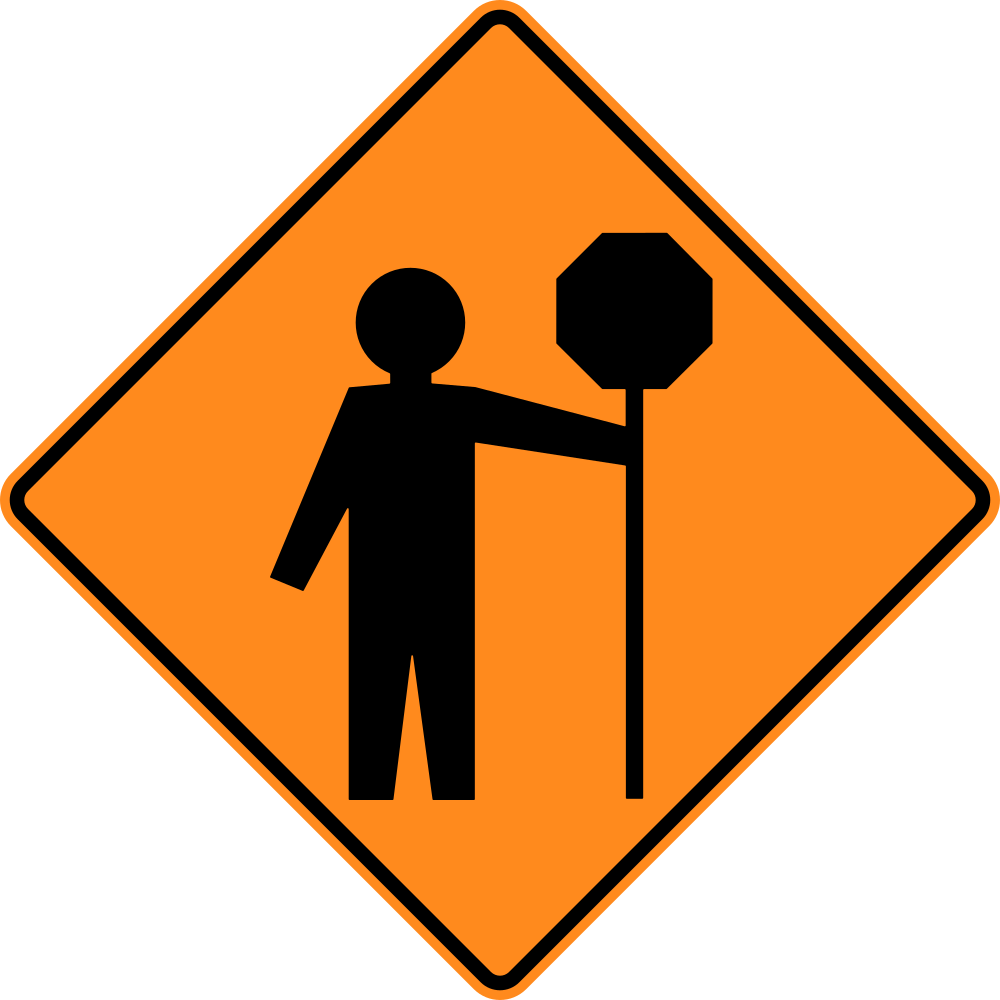
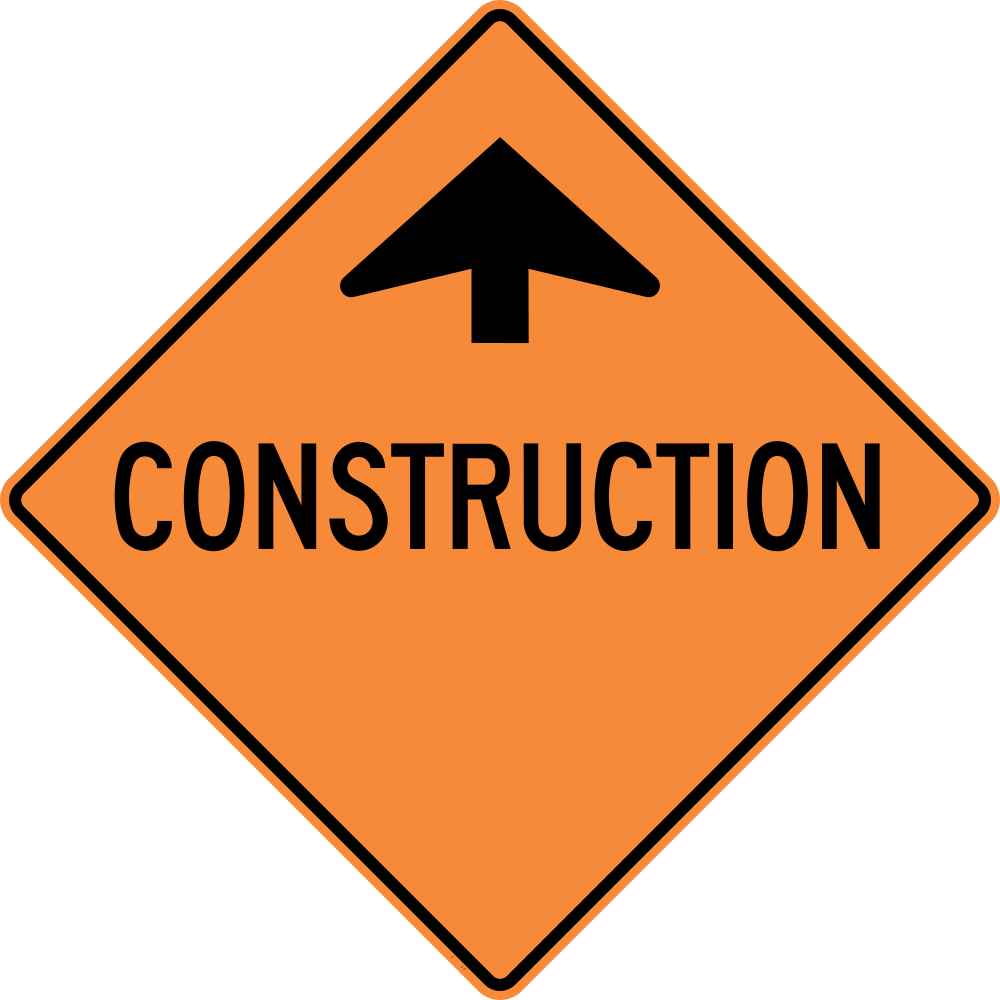
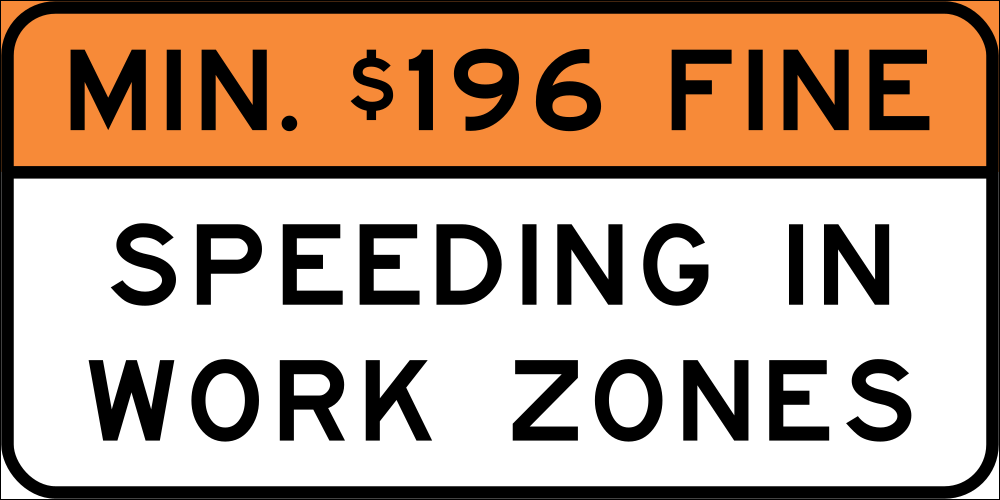
- In a construction zone you must obey traffic control persons and construction signs from the start of the zone to its end. Posted construction-zone speed limits apply 24 hours a day, and traffic fines are doubled there. Road work also happens at night, so drive extra slowly and expect workers and equipment even when you cannot see them.
- Merge early to avoid a lane closure, avoid changing lanes inside the zone, leave plenty of following distance and side space from crews and equipment, stop when a traffic control person or device tells you to, and wait for a pilot car where one escorts traffic through. If you are directed to stop, turn the engine off — idling for more than 10 seconds costs more than restarting.
Signs in this section
Official source: Sharing the road ↗
7.Railway crossings
- Trains always have the right-of-way and do not slow down for crossings. Most trains need about 2 kilometres to stop, so never try to beat one — and expect a train at any time, because they do not always keep to a schedule.
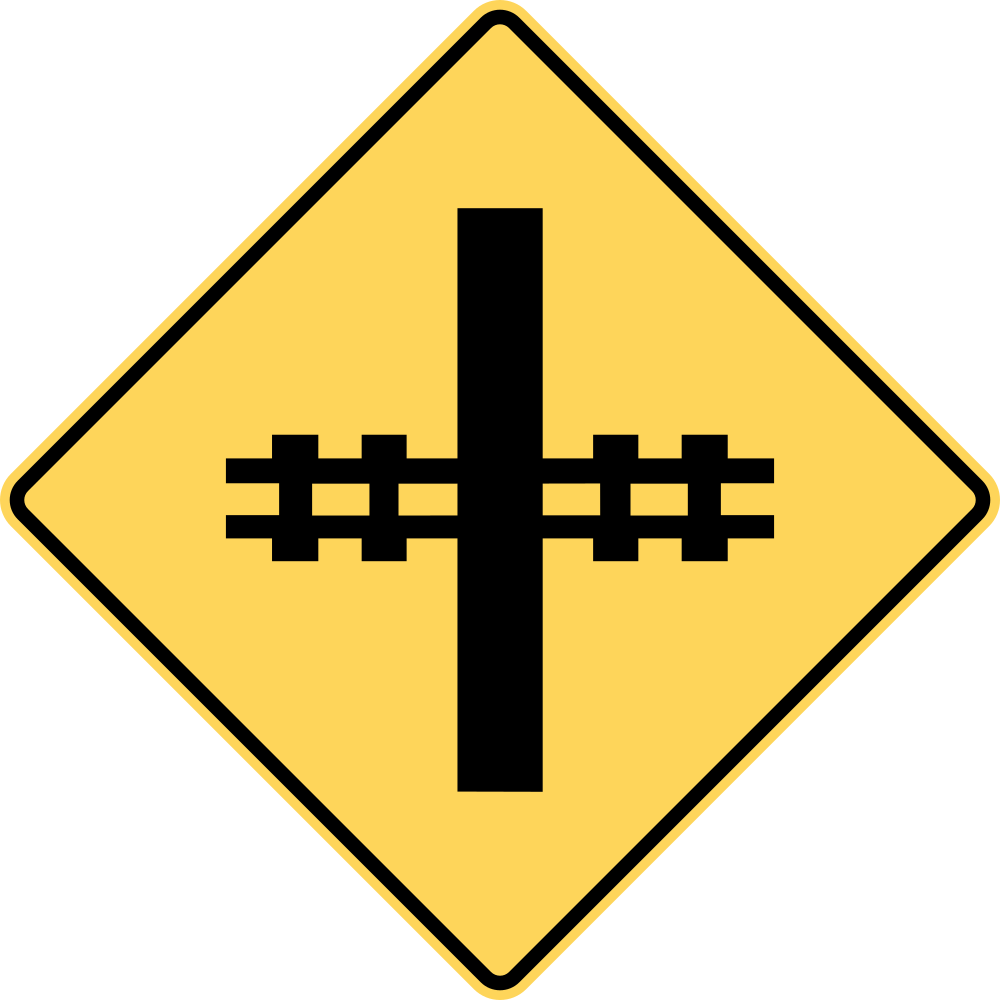
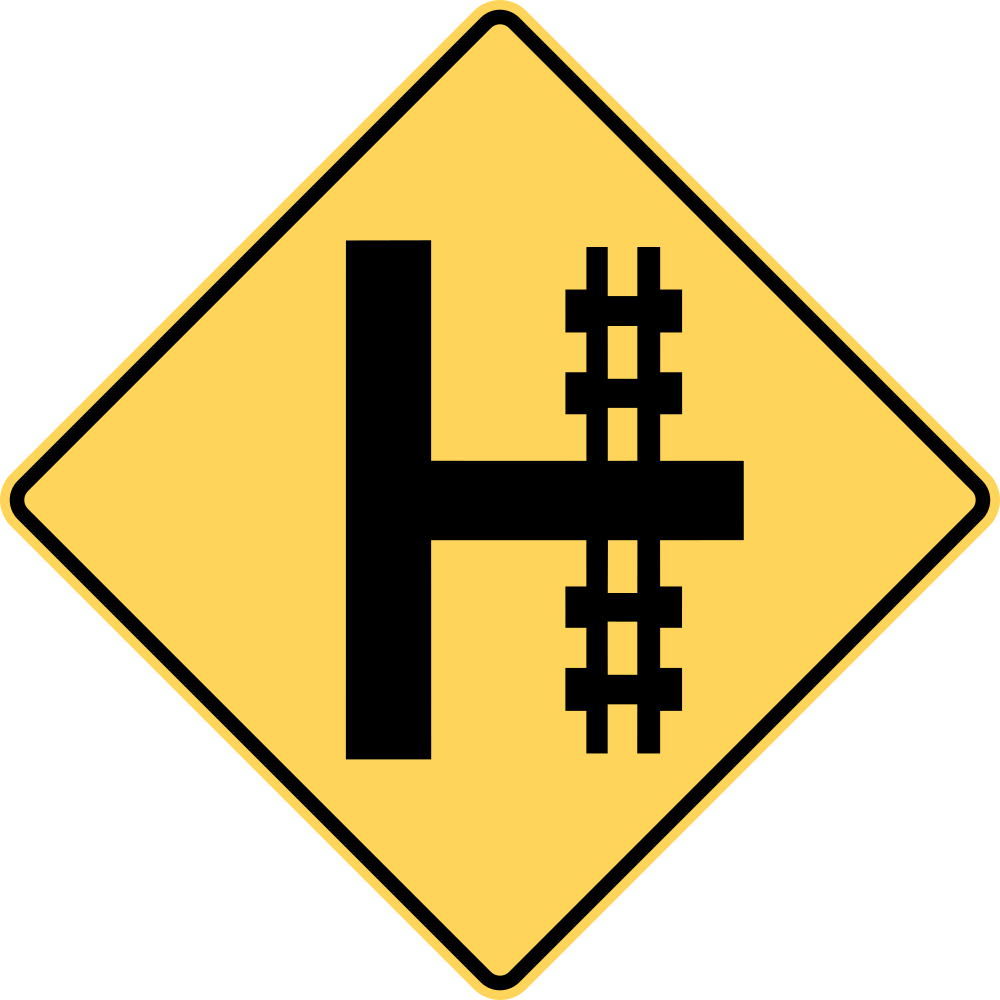
- Advance warning signs tell you to look, listen and slow down because you may have to stop; they are usually posted where you cannot yet see the crossing, and an advisory speed sign beneath one may show a safe speed below the posted limit. A painted "X" on the pavement may mark the approach, and some crossings have flashing lights, a bell and gates. Trains are not required to sound a whistle at every crossing.
- If a gate is down, stop and wait for it to go up before you cross. If red lights are flashing, stop and move across only when it is safe. Obey a flag person who tells you to stop, and if you hear or see a train approaching, stop and wait. Stop no closer than 5 metres and no farther than 15 metres from the nearest rail.
- Your eyes can mislead you: trains often seem slower than they really are, and passenger trains travel at up to 160 km/h in Canada. At night, half of all collisions between trains and cars are vehicles hitting the side of a train the driver did not see, so drive at a speed that lets you stop within the distance lit by your headlights.
- There is often more than one track. After one train passes, watch for a second one hidden behind it — not waiting for the second train is one of the main causes of car–train crashes. Cover your brake and leave extra room for motorcycle riders and cyclists, who may swerve to cross the tracks safely or slip on wet rails.
- Never get trapped on the tracks. In heavy traffic, or when there is a red light at an intersection just past the crossing, stop before the crossing unless there is room to clear it on the other side. With a standard transmission, change to a lower gear before you cross and never change gears on the crossing, because you could stall.
- If your vehicle is stuck on the track, get everyone out and move quickly at least 30 metres away to avoid flying debris. Then phone for help — the number on the back of the railway crossing sign, or 911 or the local police — and report the location written on the back of that sign.
Signs in this section

Official source: Sharing the road ↗
8.Animals, wildlife and horses
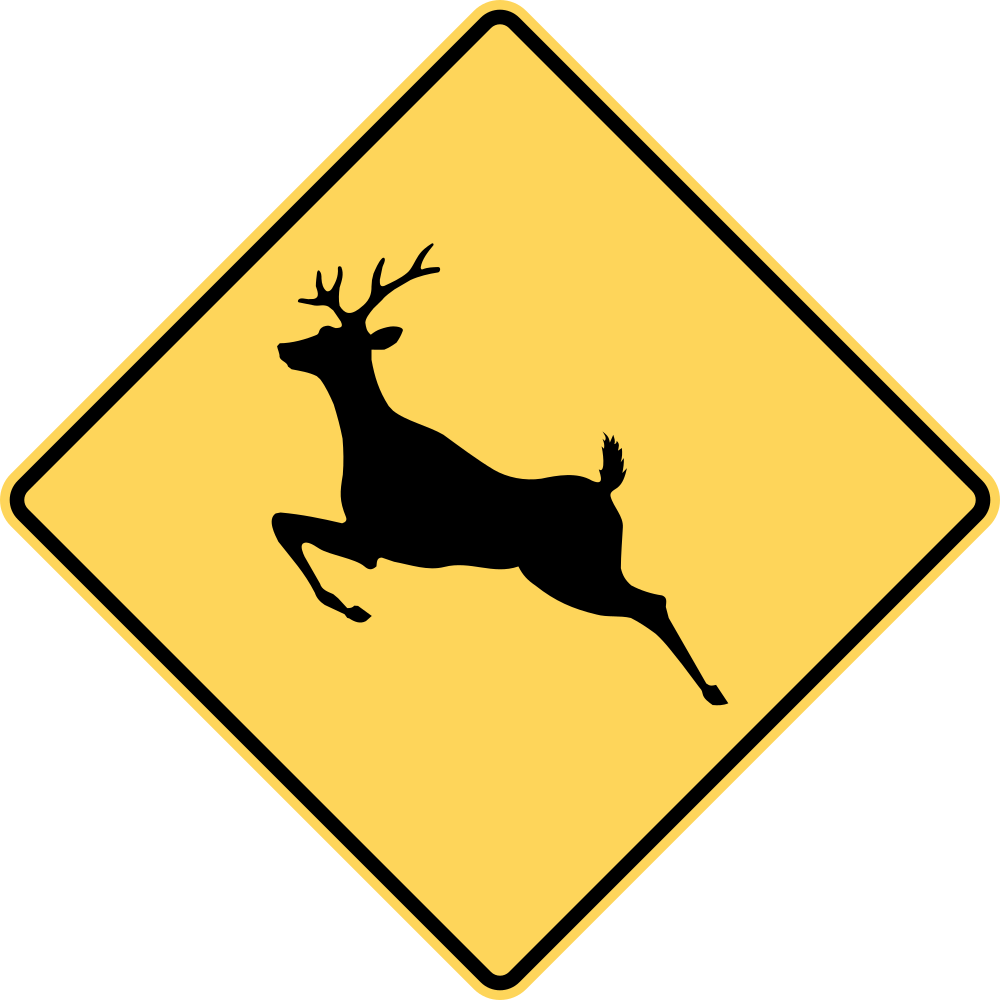
- Animals on the road are a major hazard in B.C., and hitting a large one can injure you and your passengers as well as the animal. Scan the sides of the road ahead, and slow down where animal crossing signs are posted in farming or wooded areas.
- Be extra cautious at dusk and dawn, when animals move around to feed and are harder to see. At night, sudden unusual spots of light on the road may be your headlights reflecting off an animal's eyes, and because wild animals often move in herds, one animal means there may be more.
- If an animal is in your path, check your rear-view mirror for traffic behind you, slow down but resist the urge to slam on the brakes — that could send your vehicle out of control — and leave a wide margin as you steer around it, because a frightened animal may run in any direction.
- If the animal is large and you cannot stop in time, brake firmly and steer to strike it at an angle, then let up on the brake just before impact: the front of the vehicle rises and the animal is less likely to come through the windshield.
- Horses may be ridden on most public roads. Horse riders and horse carriage operators have the same rights as motor vehicle operators and must obey the same rules.
- Horses are startled by sudden movement or noise, and the rider may not be able to control a frightened horse. Approach slowly, allow plenty of following distance, leave extra room and pass slowly and carefully, and avoid sounding your horn. If a rider is having trouble controlling the horse, stop and wait until it is back under control rather than risk passing.
Signs in this section
Official source: Emergency strategies ↗ · Sharing the road ↗