1.See–think–do: scanning, mirrors and blind spots
- See–think–do is the guide's driving strategy. See: scan for hazards and for the places where they could appear. Think: decide which hazards are the most dangerous, think quickly about possible solutions and choose the safest one. Do: carry out the manoeuvre that keeps you and others safe.
- Keep your eyes moving in a cycle: look well ahead, scan from one side of the road to the other for hazards, glance in your rear-view and side mirrors to keep track of what is behind you, then start again. Complete the whole cycle every 5 to 8 seconds.
- New drivers spend so much time looking at the road just in front of the car that they miss hazards further on. Scan at least 12 seconds ahead — 1 to 2 blocks in city driving, half a kilometre on the highway — and never overdrive your ability to see: you should always be able to stop within the distance you can see.
- Look in each mirror about every 5 to 8 seconds. Check the rear-view mirror before you slow down or stop, so you know whether the cars behind have room to stop, and use the side mirrors whenever you plan to change your road position: the left mirror before pulling away from the right side of the road, the right mirror before a lane change to the right.
- Even with your mirrors properly adjusted there are large areas you cannot see in them — blind spots — and the most dangerous ones are to the sides. Blind spot detectors and back-up cameras can help you spot hazards, but they do not replace turning your head for a shoulder check.
- Do a mirror check and a shoulder check — looking at least 45 degrees over the shoulder on the side you plan to move toward — whenever you pull out from or over to the side of the road, change lanes or turn left or right, and before you open your door to get out, because a cyclist or another vehicle could be coming up beside you.
- Before backing up, do a 360-degree vision check — shoulder checks and mirror checks all around, then turn your body to look out the rear window — and give a quick warning tap on the horn if visibility is limited. If the car has been stopped a while, walk around the back first, and better still, back into driveways and parking spots so you can drive out facing forward.
Official source: See think do ↗
2.Space margins and following distance
- Tailgating — following too closely — is a major cause of crashes. The vehicle ahead blocks your view of hazards, and if it stops suddenly you have no time to stop safely; if you rear-end it, you are held responsible for the crash.
- Keep at least 2 seconds of space in front in good weather and road conditions. To measure a 3-second gap on a highway, pick a fixed object ahead; when the vehicle in front passes it, count "one thousand and one, one thousand and two, one thousand and three" — if you reach the object as you say "three", you are keeping a 3-second following distance.
- Increase the gap to 3 seconds on high-speed roads, behind a large vehicle that blocks your view or a motorcycle that can stop very quickly, when a vehicle is following close behind you, and on an unpaved road where dust or gravel fills the air. Make it 4 seconds in bad weather or on uneven or slippery roads.
- You cannot control the space behind you the way you control the space in front. If someone is tailgating you, slow down slightly to widen the space ahead so that any stop can be gradual; you can also move into another lane, or pull over and let the tailgater pass.
- Keep at least 1 metre of clear space on each side of your vehicle, and when you pass pedestrians, cyclists or other vehicles allow as much room as possible — at least 1 metre, and more at higher speed. Widen your side margins further when visibility or road conditions are poor.
- Choose your lane position with care: on a two-lane road stay fairly close to the centre line so no one moves into your lane space, in the curb lane stay well away from car doors that might open, drive near the centre of most lanes, and keep out of other drivers' blind spots. On a multi-lane road the right lane is often the safest — away from oncoming traffic and less likely to attract a tailgater — and leave yourself an escape route.
- When you stop behind another vehicle at an intersection, leave about one car length between you so you have room to move if you need it, and leave more when you are stopped directly behind a large vehicle.
| Situation | Following distance |
|---|---|
| Good weather and road conditions | At least 2 seconds |
| High-speed roads | 3 seconds |
| Behind a large vehicle that blocks your view, or a motorcycle that can stop very quickly | At least 3 seconds |
| A vehicle following close behind you, or an unpaved road with dust or gravel in the air | At least 3 seconds |
| Bad weather, or uneven or slippery roads | 4 seconds |
Official source: See think do ↗
3.Speed, stopping distance and the physics of driving
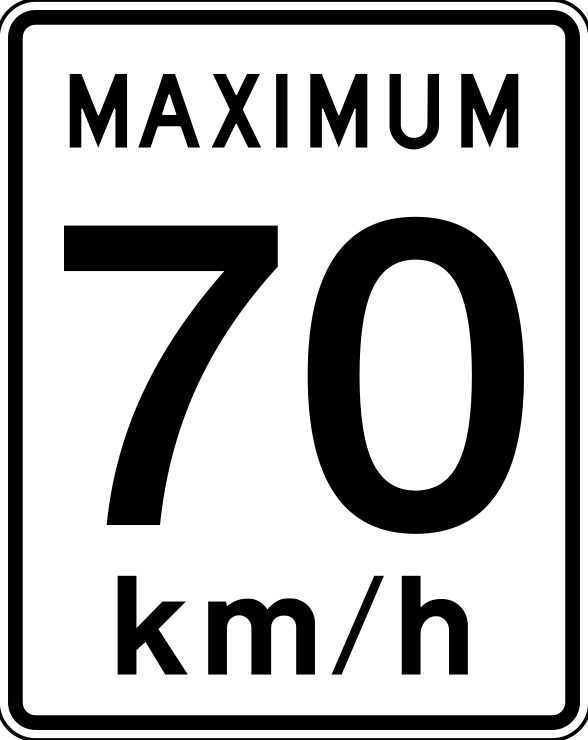
- The posted speed is the maximum for ideal conditions only; choose a slower speed when the road is slippery or visibility is limited. Unless a sign says otherwise, the limit is 50 km/h within cities and towns, 80 km/h outside them, and 20 km/h in a lane or alley within a municipality.
- Total stopping distance is how far you travel from the moment you see a hazard, decide to stop and put your foot on the brake until the vehicle stops. Seeing and thinking take about three-quarters of a second and doing takes another three-quarters of a second — only then does the vehicle even begin to slow — and the braking distance itself depends on your speed, your vehicle and the road conditions.
- When you see a hazard ahead, take your foot off the accelerator and cover the brake — rest your foot lightly on the pedal without pressing it — so the car slows slightly and you can respond faster if you must stop. Slow down smoothly for stop signs: racing up and braking hard is bad for your passengers and can get you rear-ended.
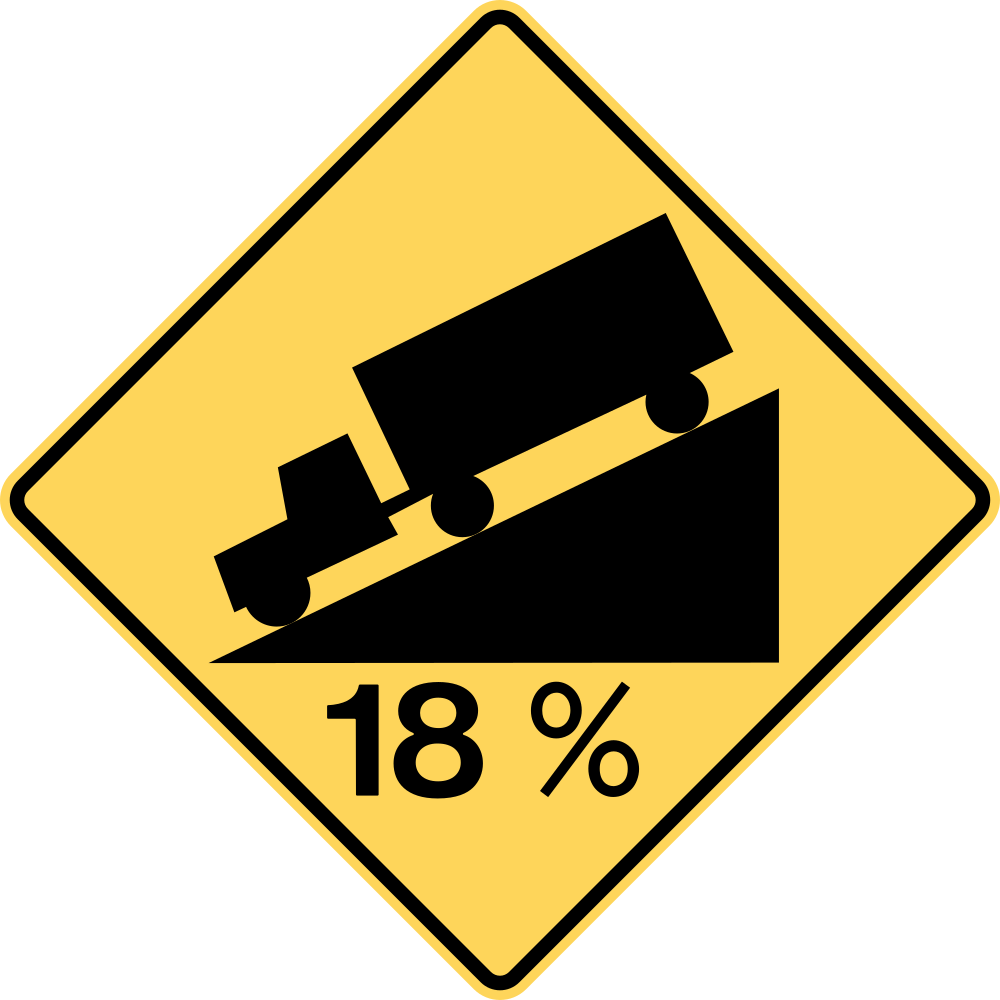
- Physics works against speed. Traction — the grip of your tires — drops on slippery or sandy surfaces and with worn, under- or over-inflated tires. Inertia keeps you moving in a straight line and grows with speed, and gravity makes a vehicle need a longer distance to stop when going downhill.
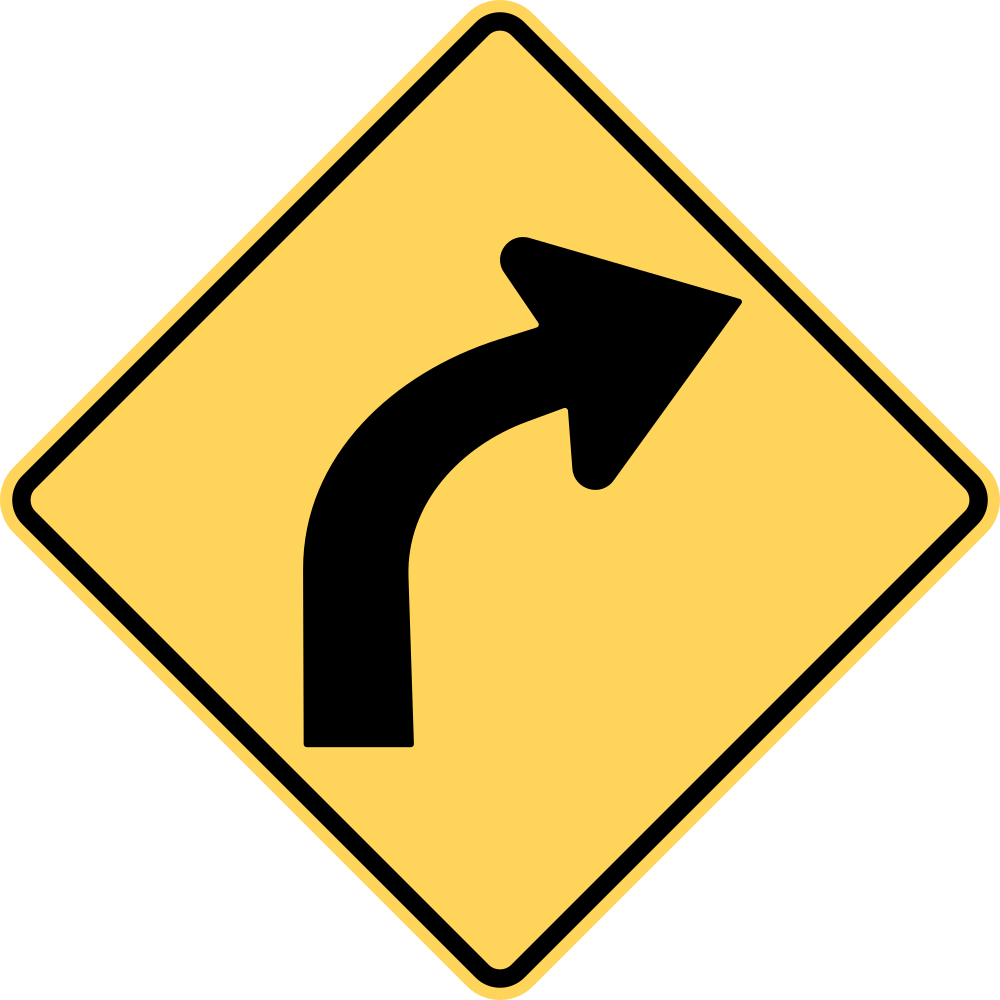
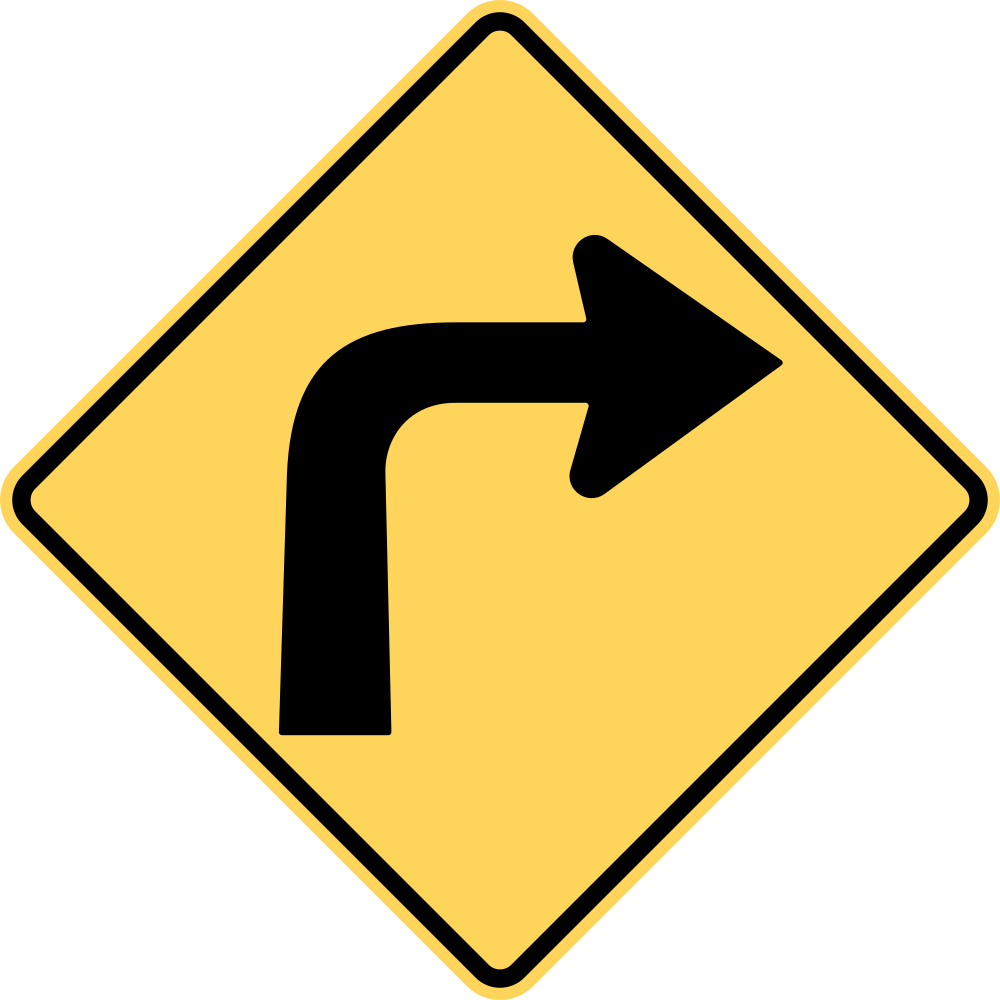
- Slow down before a curve to a speed that lets you get through it without braking, avoid braking in the curve, and from its middle begin to straighten the wheels and accelerate gently. If you start to lose traction in a curve, do not brake — ease off the accelerator and re-apply it gently once you regain grip. Vehicles with a high centre of gravity, such as some SUVs, pickup trucks and camper vans, are more likely to tip over on a curve taken too fast.
- Doubling your speed quadruples the force of impact. Hitting a solid object at 30 km/h is like being in a vehicle that falls from a one-storey building; at 60 km/h it is like falling from the roof of a four-storey building. That is why slowing down saves lives.
- With a standard transmission, it is illegal to coast downhill in neutral or with the clutch in — you must be in gear to control the vehicle safely. Extra weight also changes how a vehicle steers, especially on curves, so never overload it; the owner's manual gives the weight limit.
Signs in this section
Official source: See think do ↗ · Emergency strategies ↗
4.Night driving and headlights
- Driving at night limits your vision, makes you harder for others to see and makes distances harder to judge, so you need to be more alert. Low beam headlights light a path up to 30 metres ahead; high beams give you about 100 metres of light.
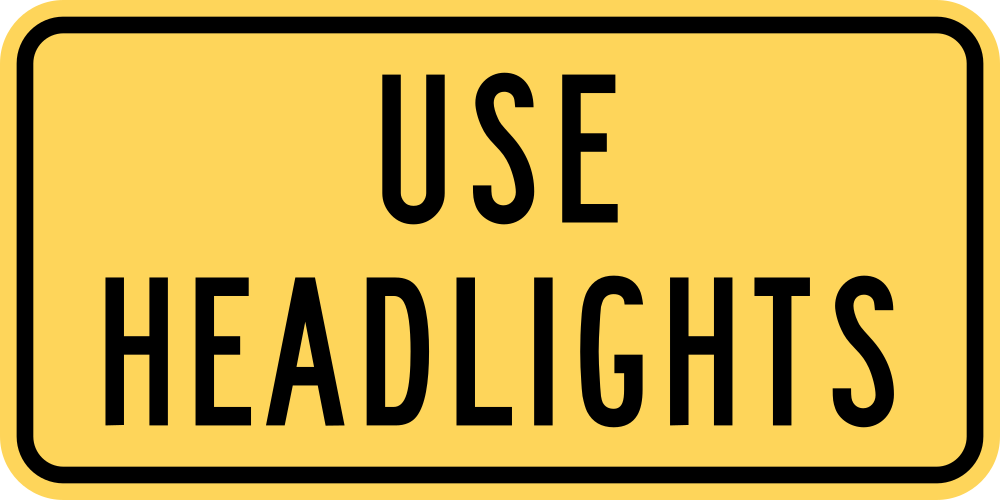
- You must use your headlights from 30 minutes after sunset until 30 minutes before sunrise, and also whenever visibility is reduced to less than 150 metres, for example in fog or heavy rain. Driving at night with only parking lights or daytime running lights is illegal.
- You must dim your high beams whenever you are within 150 metres of another vehicle, whether you are meeting it or following it; most people misjudge distance, so be courteous and dim early. Use high beams only on unlit roads at night when no vehicle is approaching or ahead of you, and use low beams in rain, snow and fog.
- Do not overdrive your headlights: if you go so fast that you cannot stop within the distance they light, you are overdriving them, and it is especially dangerous in a curve. At night, slow down, increase your following distance and keep your eyes moving for pedestrians, cyclists and animals.
- To beat glare, glance toward the right edge of the road as oncoming lights approach, set your rear-view mirror to its night position, adjust the outside mirrors so the body of your car is just outside your view, keep interior lights off and the instrument panel dim, and keep your windows and lights clean. Sing, talk out loud or stop for a coffee to stay alert.
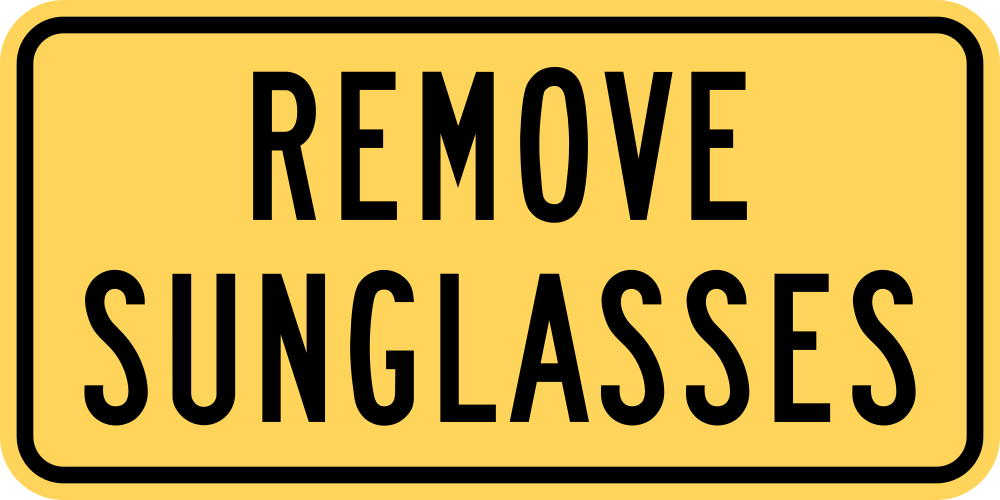
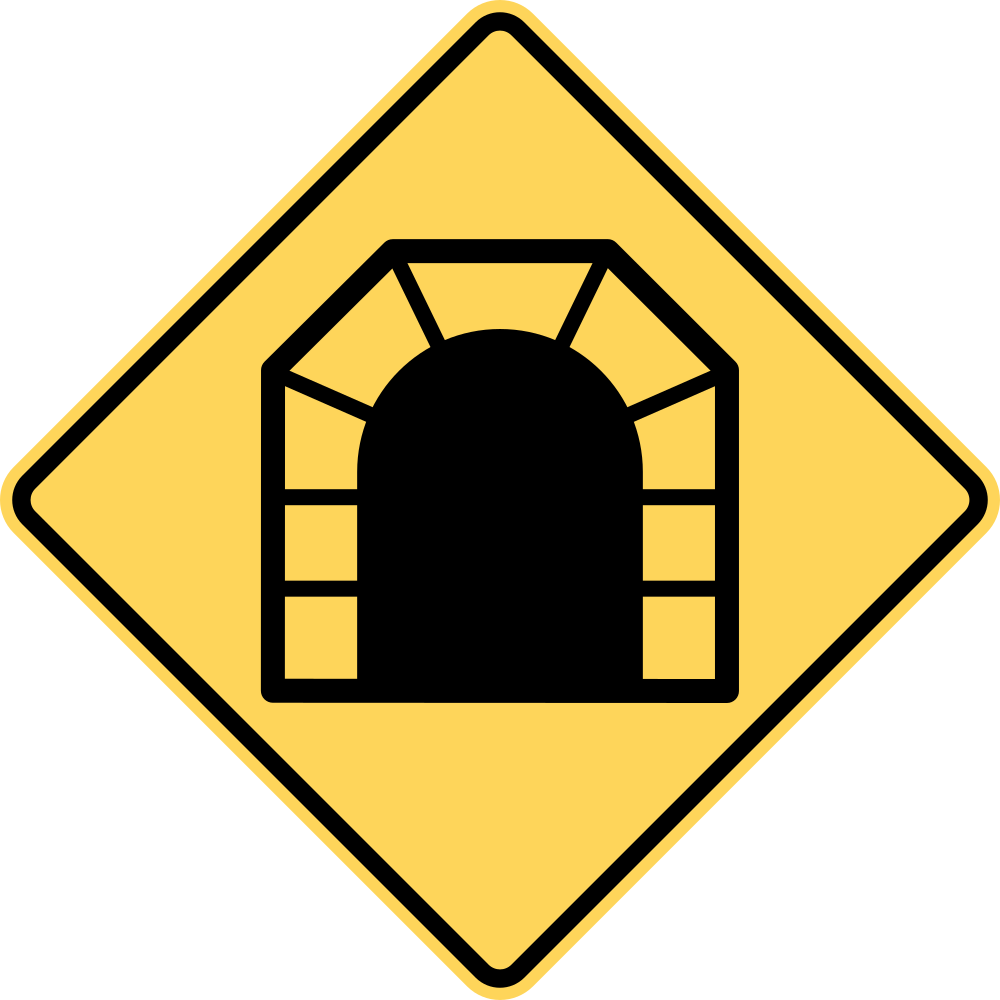
- Slow down before you enter a tunnel so your eyes can adjust to the lower light, and remove your sunglasses and turn on your headlights while driving through it. Fog lamps may be used in place of headlamps only when fog makes headlamps a disadvantage; never run both together when there is little fog or conditions are clear.
- If your headlights fail, turn the light switch off and on quickly; if they stay off, turn on the hazard lights, slow down, pull off the road and get help. Driving at night without headlights is dangerous and illegal.
Signs in this section
Official source: Emergency strategies ↗ · You and your vehicle ↗ · See think do ↗
5.Rain, fog, snow and ice
- Fog, rain and snow cut your visibility and weaken every step of see–think–do. When you cannot see far, slow down, keep extra space margins, scan more carefully, use low beam headlights, do not pass, run the defroster to keep the windows clear, and pull over somewhere safe if you need to wait for visibility to improve. Clear snow and ice off the vehicle before you set out.
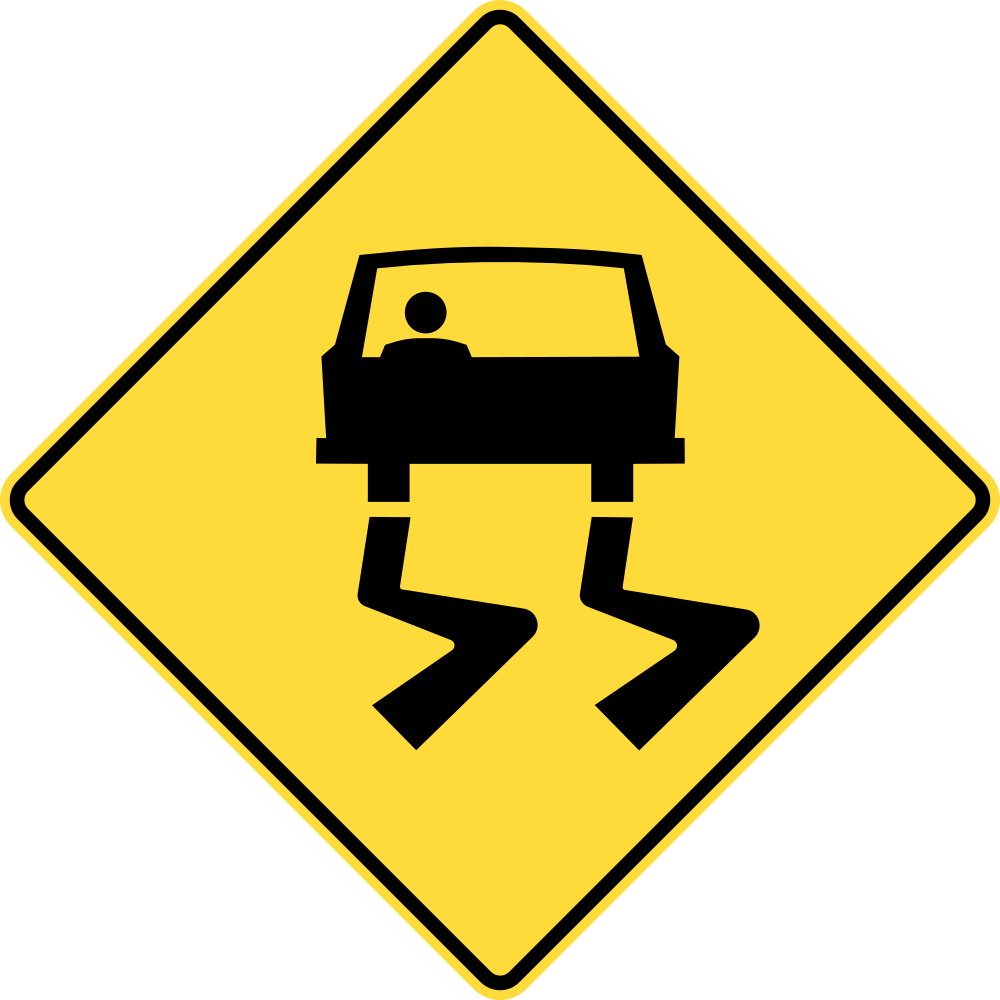
- Roads are most slippery at the start of a rainfall, when rain mixes with oil on the surface into a slick film that only continued rain washes away. On wet roads, slow down, leave more following distance, allow at least twice the normal braking distance, brake gently so the wheels do not lock, and never use cruise control in wet or slippery conditions. Deep water can stall or damage the engine, and moving water deeper than half a metre can carry a car away — turn back if you can, and if you must cross, go very slowly and dry the brakes afterward by applying them lightly.
- Hydroplaning is when the tires lose contact with the road and float on a film of water: you instantly lose steering and braking, and the steering suddenly feels very light. The faster you go the likelier it is, and low tire pressure or worn tread make it worse. Prevent it by checking tread and inflation, scanning ahead for large puddles and slowing in heavy rain; if it happens, ease off the accelerator and drive straight — never brake.
- Ice and snow make the wheels spin when you accelerate and lock when you brake, and you can easily lose steering. Temperatures near freezing are more dangerous than deep cold, because ice forms unexpectedly and may be invisible. Watch for black ice — asphalt that looks shiny and black instead of grey-white — and for shaded areas, bridges and overpasses, and intersections, which ice up first. Stopping on ice can take 10 times the normal braking distance.
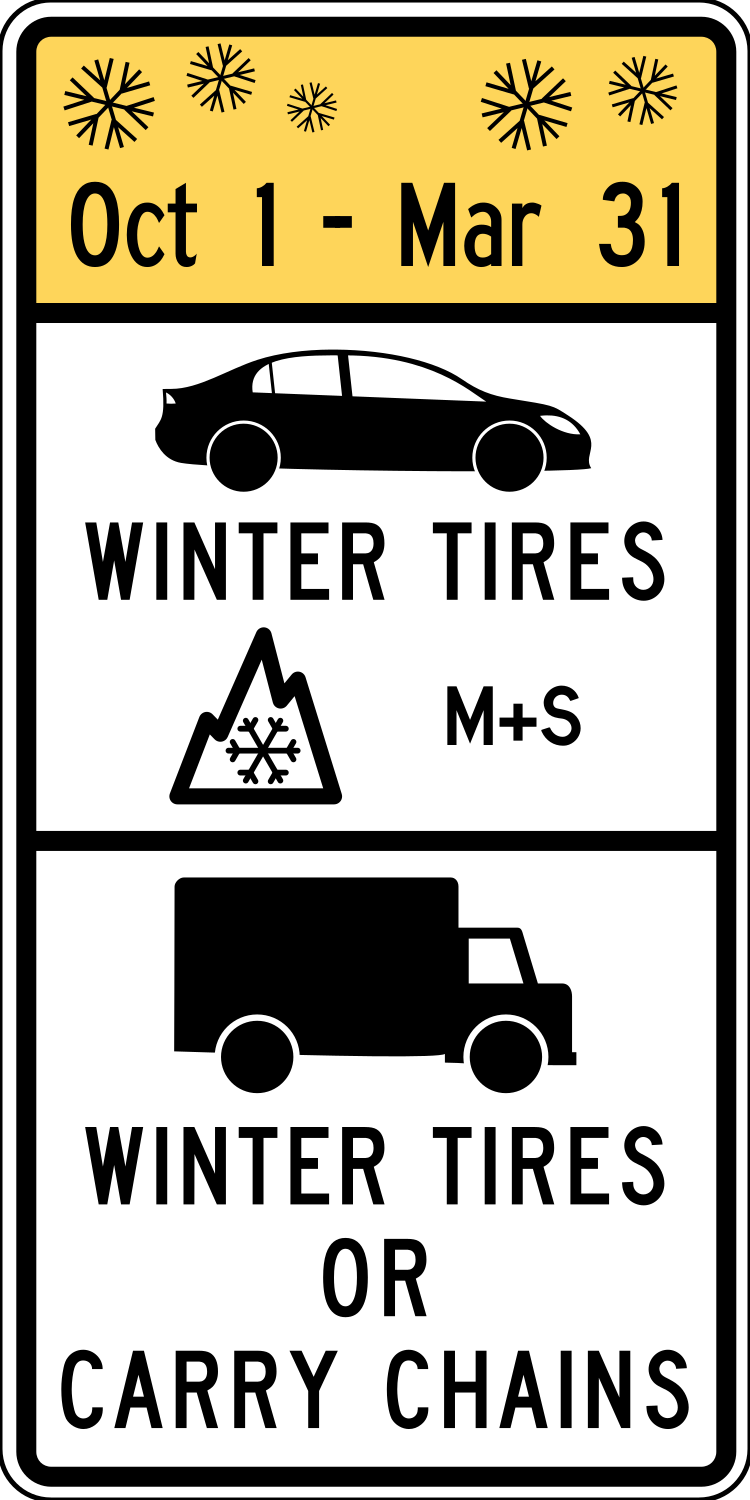
- Prepare for winter: check the forecast before you start out (staying home may be the wisest choice), use tires suitable for winter — snow tires and/or chains are a legal requirement on many B.C. roads during the winter — carry chains and know how to mount them, and carry sand or a piece of carpet in case you get stuck. Mount chains in a designated chain-up area, not on a hill. Before driving, scrape snow and frost from the windows and mirrors, clear the wipers and clean all the lights.
- On icy or snowy roads: slow down, accelerate gently, test your braking and steering carefully at very low speed, slow before curves and never brake in them, use a low gear down icy hills, do not use cruise control, allow extra space margins, avoid passing, and steer with gentle, smooth motions. If the wheels lock, ease off the brakes and re-apply them to keep steering control.
- If you are stranded in snow, stay with your vehicle unless you are absolutely sure you can reach help. Run the engine to warm the interior only about 5 minutes every hour, keep one window slightly open and check that the exhaust pipe is not blocked — carbon monoxide can cause dizziness, drowsiness and death — and make sure at least one person stays awake at all times.
Signs in this section
Official source: Emergency strategies ↗
6.Fatigue, distraction, electronic devices and emotions
- To be a safe driver you need to be healthy, rested and focused. About 80 per cent of driving information reaches you through your eyes, so wear your glasses or contact lenses if you need them, and keep your ears free to hear horns, sirens and train whistles — no loud stereo, and no cellphone or headphones while you drive.
- Even a mild illness like a cold or the flu can affect your alertness, and over-the-counter medicines can make you drowsy and slow your reaction time. Read the label before you drive; if it warns of drowsiness or dizziness, do not drive — take the bus or get a friend to drive you.
- Being tired is one of the leading causes of crashes: fatigue makes you scan inaccurately, slows your thinking and lengthens your reaction time. Start well rested, take breaks and walk around, avoid heavy meals, keep the heat moderate and a window open, and pull into a rest stop for a nap with the doors locked when you need one. On a long trip, be most careful on the second day, when tiredness is most likely to catch up with you.
- Driving for a long time on a highway that never changes can bring on highway hypnosis, where you stop noticing your surroundings; some roads have rumble strips to warn drivers who drift out of their lane. Avoid it by turning off the cruise control, scanning systematically and using your stay-awake strategies.
- All B.C. drivers are prohibited by law from using hand-held electronic devices while driving: you may not operate, view or hold a cellphone, send or read emails or texts, hold a music or gaming device, or manually program or adjust a GPS — even when stopped at a red light or in bumper-to-bumper traffic. GLP drivers may not use hands-free devices either, except to call 9-1-1 to report an emergency, and a single ticket brings a review of their driving record and possibly a driving prohibition.
- A driver talking on a cellphone loses about 50 per cent of what is going on around them visually, and you are still driving when you are stopped at an intersection or slowed in traffic. Leave the phone alone and turned off, let calls go to voicemail, pull over and stop before you use any device or deal with a distraction, or make a passenger your designated texter.
- Strong emotions — anger, anxiety, sadness — make you miss important information and think unclearly, and being in a hurry breeds anger. Allow plenty of time, choose a route that avoids crowded traffic, take a moment to calm down before you start, and if you cannot focus, do not get behind the wheel. Faced with an aggressive driver, give them room and the right-of-way, avoid eye contact and do not gesture back; if you feel threatened, drive to a police station or a busy public place, not home.
Official source: Personal strategies ↗
7.Skids, emergency braking and breakdowns
- Emergency braking means stopping as quickly as possible without locking the wheels — locked wheels cost you steering and can start a skid. With ABS, press the brake pedal hard and hold it until you stop, do not pump, and look and steer where you want to go. Without ABS, press hard but not enough to lock the wheels, and if you start to skid, quickly release the brake and press hard again. Practise these skills only in a safe place under an expert's supervision.
- ABS lets you brake and steer at the same time by automatically releasing the brakes to prevent locking, but it does not let you drive faster and does not always stop you sooner — on gravel the braking distance may even be longer. Do not be alarmed by brake noise or shudder; it is normal. Check your owner's manual for the correct technique.
- Skids happen whenever the tires lose grip, from a slippery surface or from changing speed or direction too suddenly, and poor driving skill is the main cause: slamming on the brakes, braking and steering at the same time, cornering too fast or accelerating suddenly. In slippery conditions, slow down.
- If the rear of the car skids to one side, ease off the accelerator and look and steer smoothly in the direction you want to go — do not brake, which makes it worse. If the rear then swings the other way because you over-corrected, stay off the accelerator and steer smoothly toward where you want to go again; repeat until you regain control, then continue with caution.
- When a front tire blows out, the vehicle pulls toward the flat tire, especially at speed; a rear blowout can start a skid. Keep a firm grip on the wheel, do not brake suddenly, ease off the accelerator and let the car slow gradually, steer where you want to go, then signal or turn on the hazard lights and pull off the road as soon as it is safe.
- If your brakes fail, do not panic: look for an escape route or something to slow you down, such as a side road or an open field, pump the brakes hard and fast, gear down to the lowest gear so the engine slows you, apply the parking brake gently and gradually while holding its release so you can let go if the car starts to skid, and warn other drivers with the hazard lights or the horn. If the engine dies, do not switch the ignition off, because the steering will lock.
- If the gas pedal sticks, never reach down with your hand to free it. Apply the brake, look for an escape path off the road, shift to neutral to disconnect the engine from the wheels — steering and braking get harder if the engine stops — and once you are stopped, turn off the engine, do not restart it, and call for help. If the engine fails, signal and steer to the edge of the road, avoiding bridges and tunnels, turn on the hazard lights, set out flares or a warning triangle in poor light, stay with the vehicle and never get into a stranger's car. If the vehicle catches fire, get everyone out at once and do not open the hood.
Official source: Emergency strategies ↗
8.Avoiding a collision, and what to do at a crash
- The best way to avoid collisions is see–think–do: stay alert, scan systematically, keep good space margins and travel at an appropriate speed. New drivers often panic or even freeze in an emergency, so give yourself time and space to react and rehearse as you drive — spot a possible hazard and ask yourself what you would do: brake, swerve or pull over?
- If a crash is unavoidable, reduce the impact: slow down as much as possible, try not to lock the brakes, steer for something that will cushion the car — bushes or a high snow bank rather than parked cars or trees — avoid a head-on collision at all costs by steering to the right (not the left, because the oncoming driver may also steer right), and use the horn to help the other driver regain alertness.
- If you come upon someone else's crash, park away from it where you will not obstruct traffic or emergency vehicles, warn other drivers (for example with warning triangles), call emergency services if needed, stay with injured people until help arrives, and let no one smoke or light matches near the scene because there could be a fuel leak. When you simply drive past a crash, do not slow down more than necessary — stay focused on your own driving.
- If you are involved in a crash, or other drivers crash because of something you did, you are legally required to remain at the scene and to give all reasonable assistance, including calling emergency services if you can and it is needed.
- You must exchange your name and address, the name and address of the vehicle's registered owner, the licence plate number and your insurance information with the other driver, with anyone who has been injured and with anyone whose property has been damaged — and give the same information to the police or a witness if they ask for it.
- The guide also suggests: move the vehicles off the road if it is safe, avoid discussing who is at fault, write down the names and addresses of all witnesses, exchange driver's licence numbers with the other drivers, draw a sketch or take photos of the scene noting the time, location and weather, and notify your insurance company right away. ICBC's "What to do after a crash" card, available from any Autoplan broker, makes it easier to record all of this at the scene.
Official source: Emergency strategies ↗ · See think do ↗