Practice session
Road signs
Loading…
Every question on this page
The whole pool, with the answer and the explanation for each one. Practise first, then read through anything you were unsure of.
Show all 100 questions with answers
1 of 100 · Regulatory signs
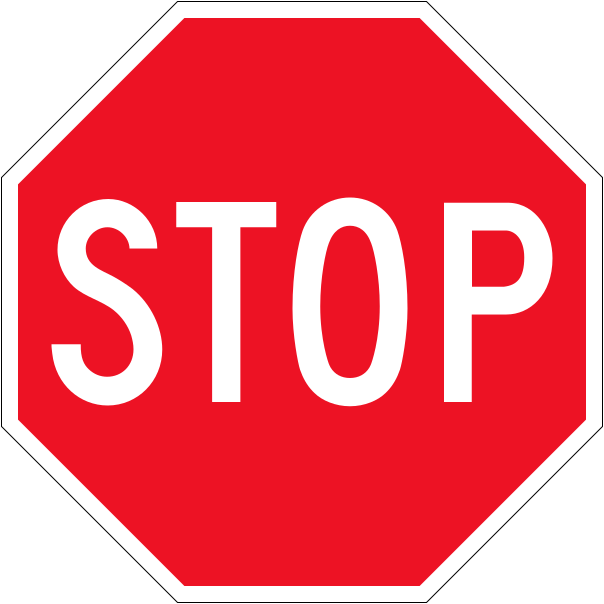
What does this sign require you to do?
- A.Come to a complete stop, then continue only when it is safeAnswer
- B.Slow down and stop only if another vehicle is coming
- C.Stop only when pedestrians are waiting to cross
- D.Yield to traffic on your right without stopping
Explanation: A stop sign always means a complete stop, even when the road looks empty. After stopping, check the intersection carefully and go only when it is safe.
2 of 100 · Regulatory signs
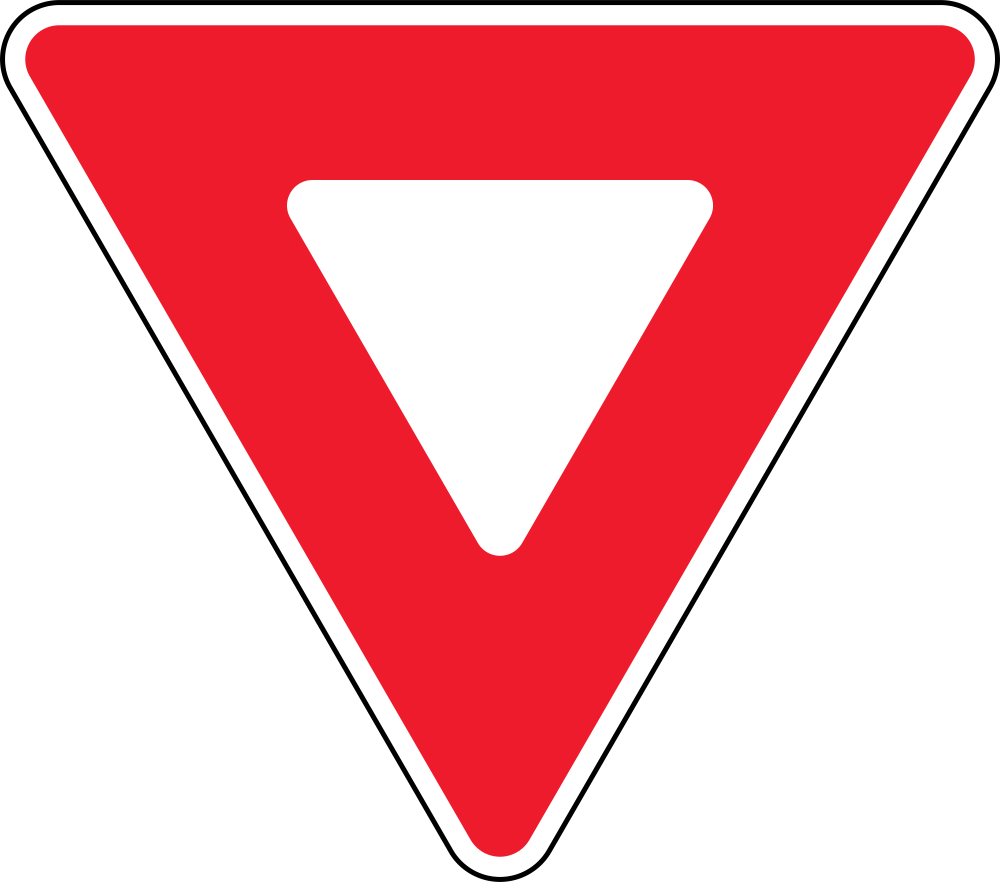
You reach this sign and there are no pedestrians, cyclists or vehicles on the through road. What may you do?
- A.Enter the intersection without stoppingAnswer
- B.You must still come to a complete stop first
- C.Wait for a green light before entering
- D.Sound your horn, then proceed
Explanation: A yield sign means traffic on the through road has the right-of-way. Slow down, stop if necessary and wait for a safe gap when there is traffic; if the way is clear you may go without stopping.
3 of 100 · Regulatory signs
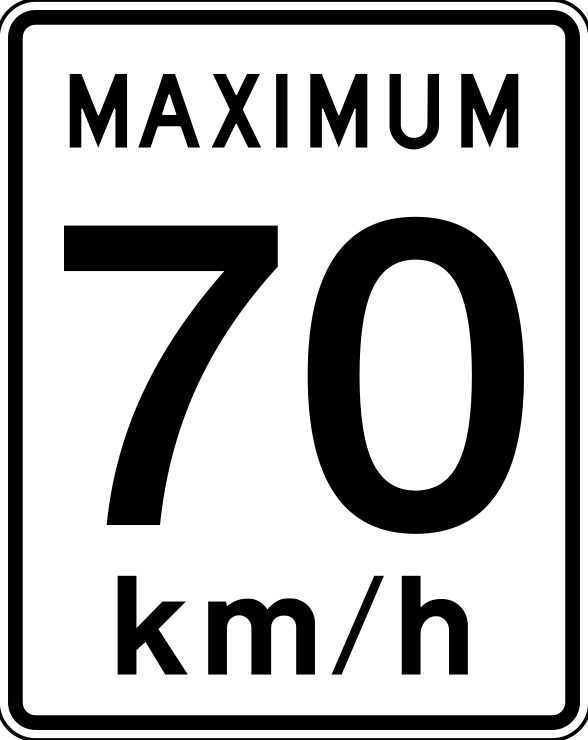
Under what conditions is the number on this sign the speed you may drive?
- A.When the road is bare and dry and visibility is goodAnswer
- B.In all weather, including snow and fog
- C.Only when you are passing another vehicle
- D.Only at night when traffic is light
Explanation: The posted number is the maximum legal speed for ideal conditions. In rain, snow, fog or heavy traffic you must drive slower than the sign says.
4 of 100 · Regulatory signs
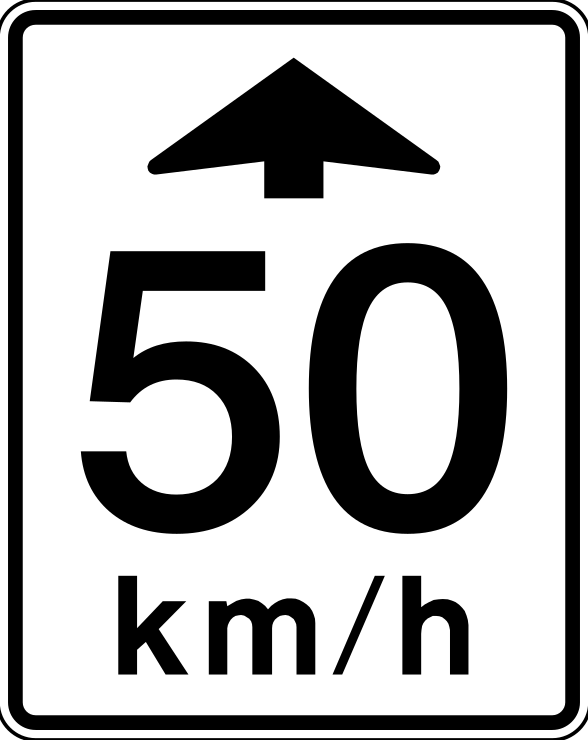
What does this sign tell you?
- A.A lower speed limit begins ahead, so start slowing downAnswer
- B.The minimum speed increases ahead
- C.The speed shown is an advisory speed for a curve
- D.A passing lane begins ahead
Explanation: This sign warns that a lower speed limit is coming up. Slow down now so that you are already at the new limit when you reach the sign that posts it.
5 of 100 · Regulatory signs
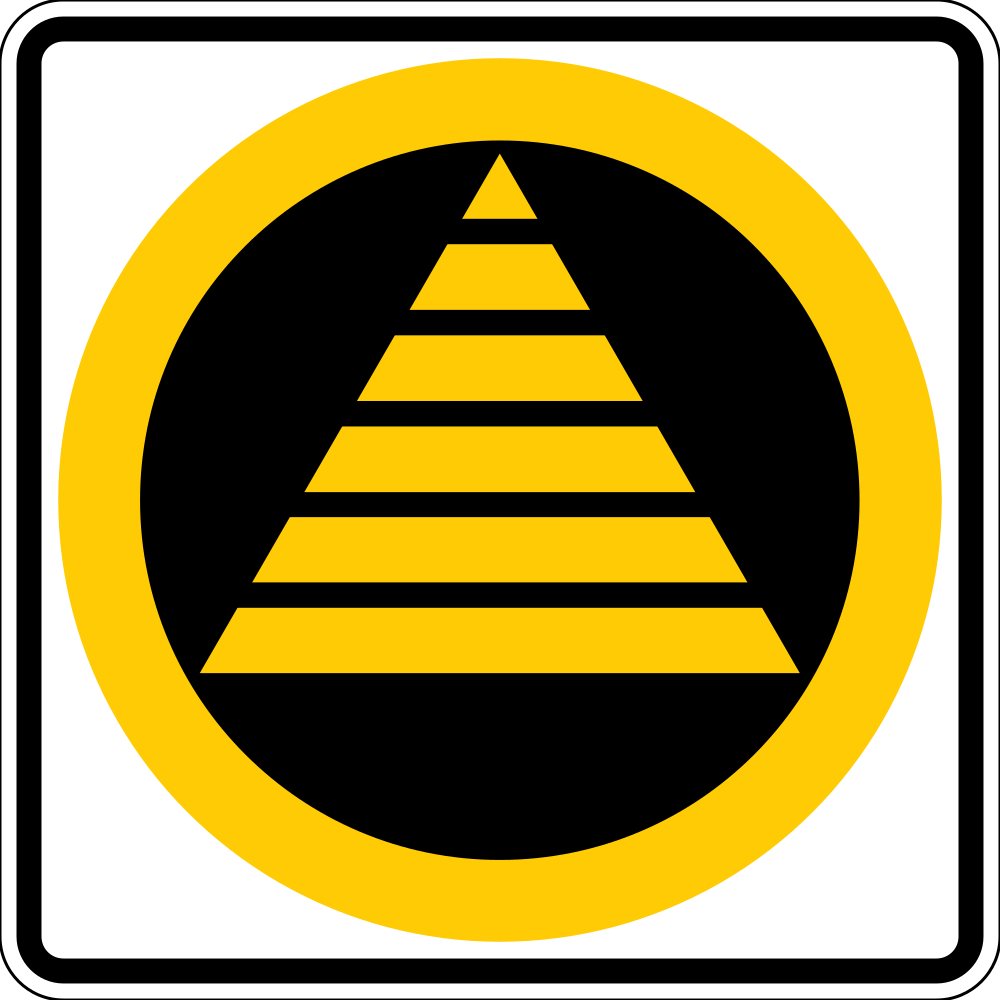
A major disaster has struck. What does this sign mean for you as a driver?
- A.Stay off this road; it may be used only by emergency vehiclesAnswer
- B.Use this road to evacuate as quickly as possible
- C.The road is closed to every vehicle, including emergency vehicles
- D.Stop and wait for a police escort
Explanation: A disaster response route is kept clear so that emergency vehicles can move. During a major disaster, other drivers must stay off it.
6 of 100 · Regulatory signs
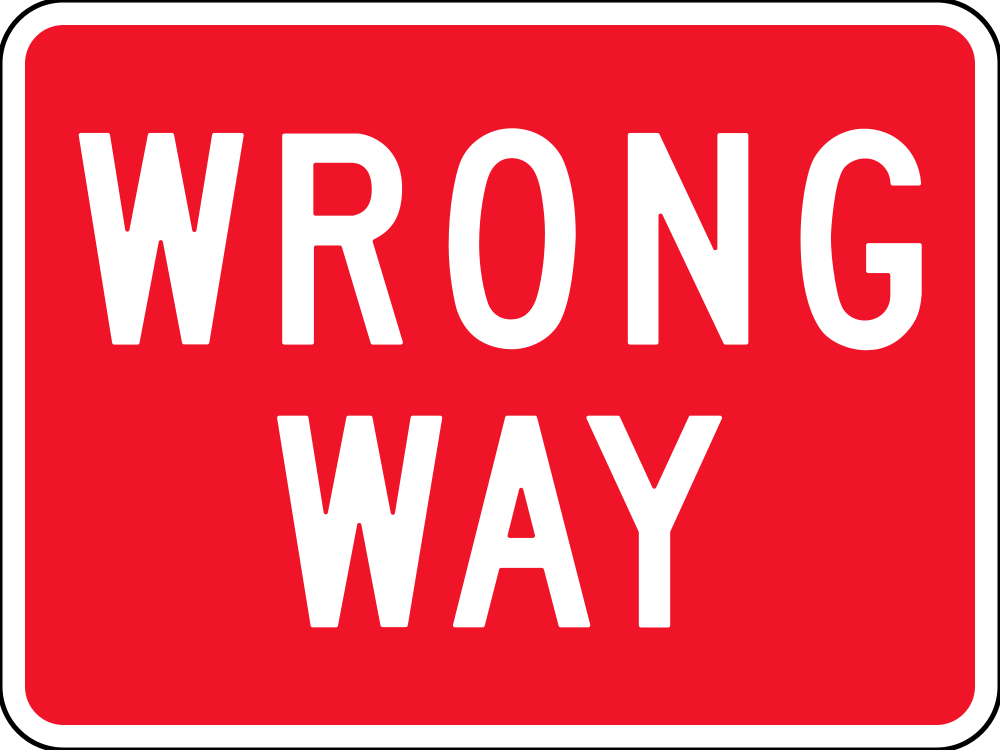
Where is this sign usually mounted, and what does it tell you?
- A.On exit ramps; you are heading against traffic, so do not go this wayAnswer
- B.At railway crossings; stop and wait for the train
- C.Before tunnels; turn on your headlights
- D.In school zones; slow down when children are present
Explanation: The wrong way sign faces drivers who are about to enter a road against the flow of traffic, typically an exit ramp. If you see it ahead of you, you are going the wrong way: stop and turn back safely.
7 of 100 · Regulatory signs
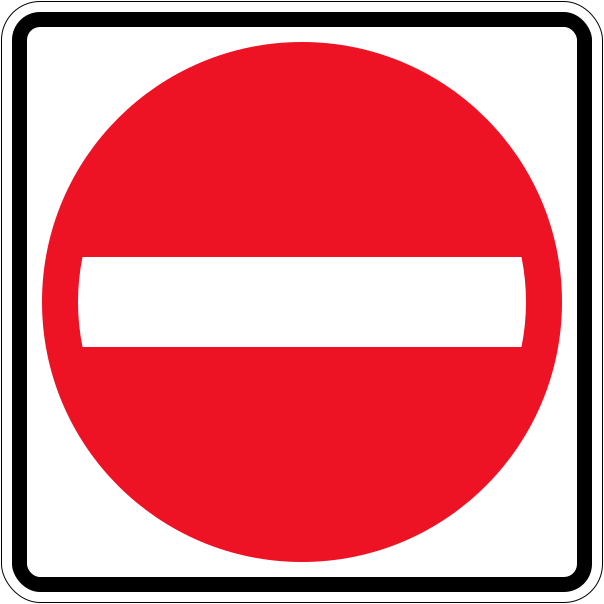
This sign is posted at the start of a road. What must you do?
- A.Do not drive into that roadAnswer
- B.Enter only after coming to a complete stop
- C.Enter only if you are turning right
- D.Enter with your headlights on
Explanation: Do not enter means exactly that: the road or lane beyond the sign is closed to you, often because traffic on it comes toward you. Find another route.
8 of 100 · Regulatory signs
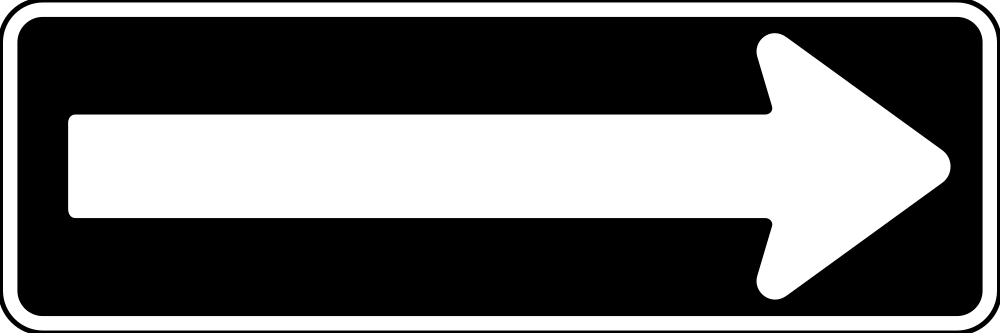
This sign is posted at an intersection. What does it tell you?
- A.Traffic on the cross street moves only in the direction of the arrowAnswer
- B.You must turn in the direction opposite to the arrow
- C.The road ahead is closed
- D.Two-way traffic begins on the cross street
Explanation: A one way sign gives the direction of traffic on the cross street. If you turn onto that street, you may go only the way the arrow points.
9 of 100 · Regulatory signs
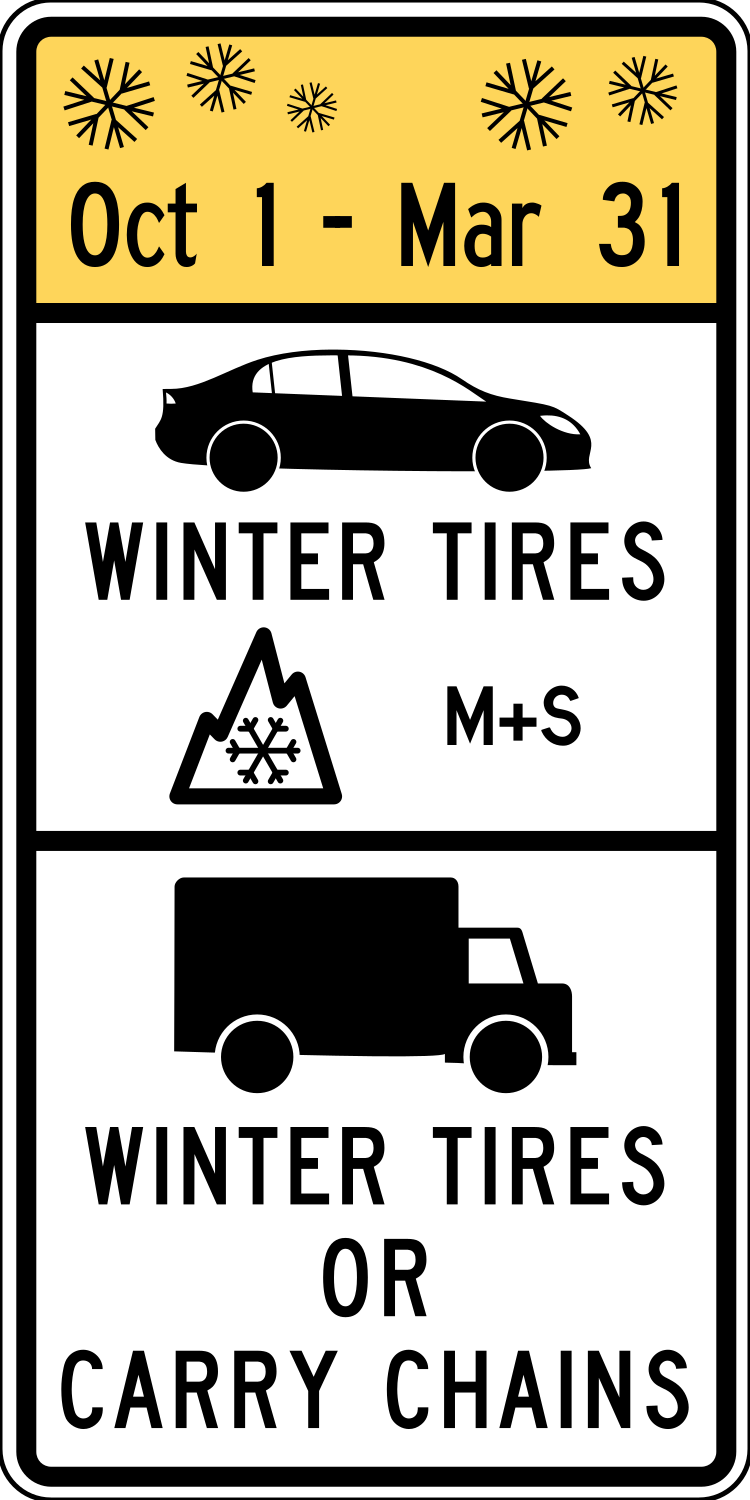
What does your vehicle need while this sign is displayed?
- A.Winter tires or chainsAnswer
- B.Headlights on high beam
- C.A slow-moving vehicle sign on the back
- D.Nothing special; the sign is only a weather warning
Explanation: This is a regulatory sign, not a suggestion: when it is displayed, winter tires or chains must be used to continue on the road.
10 of 100 · Regulatory signs
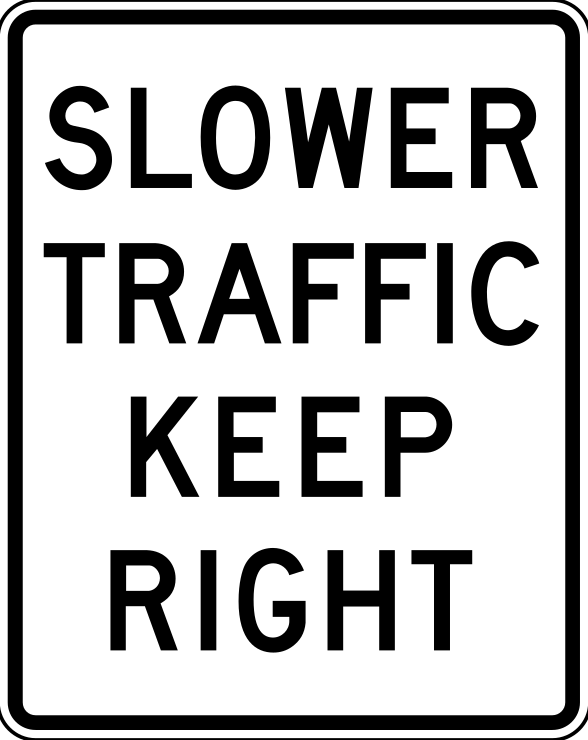
You are driving slower than the regular traffic on a multi-lane road with this sign. What should you do?
- A.Move into the right laneAnswer
- B.Stay in the left lane so others can pass on the right
- C.Pull onto the shoulder and stop
- D.Speed up beyond the limit to match the traffic
Explanation: Slower vehicles belong in the right lane so faster traffic can pass on the left. Driving at the speed limit does not entitle you to stay in the left lane.
11 of 100 · Regulatory signs
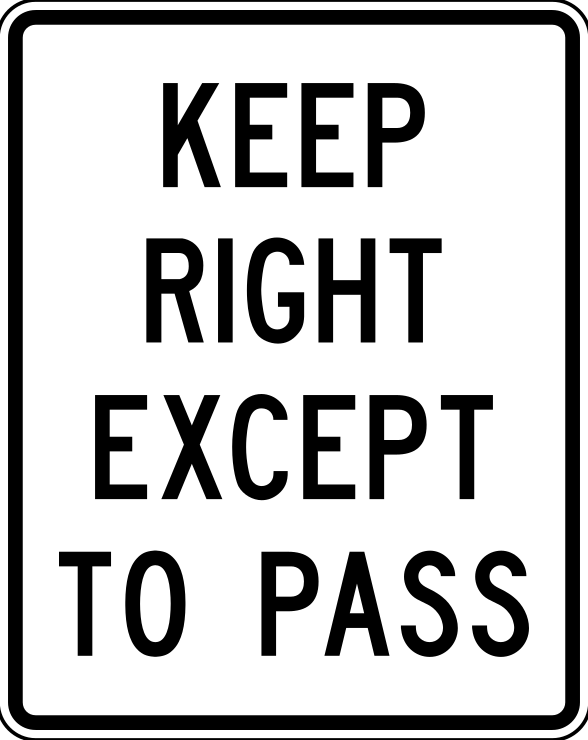
Where this sign is posted, when may you drive in the left lane?
- A.Only while passing another vehicleAnswer
- B.Whenever you are driving at the speed limit
- C.Whenever traffic is light
- D.Only when turning right at the next intersection
Explanation: Keep right unless passing: use the left lane to get by a slower vehicle, then move back to the right so the left lane stays free for passing.
12 of 100 · Regulatory signs
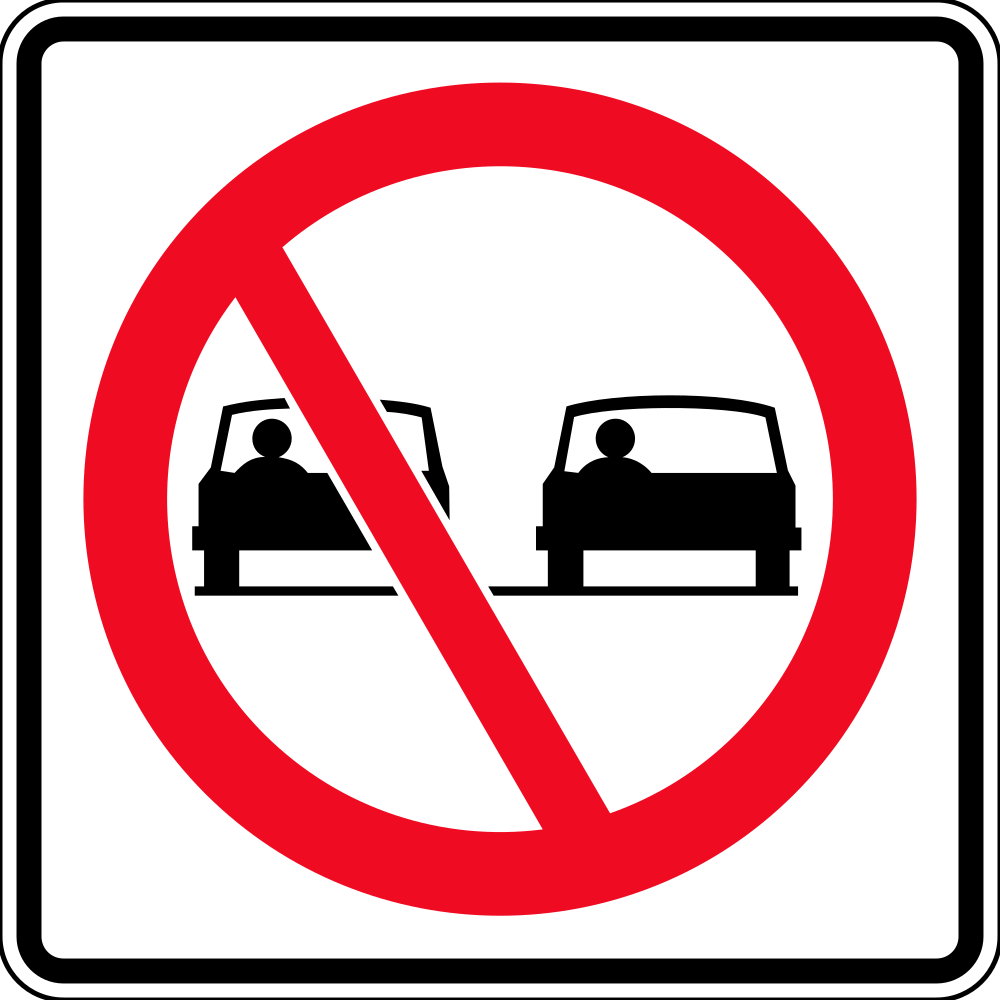
What does this sign mean?
- A.Do not pass other vehicles on this stretch of roadAnswer
- B.No parking on this stretch of road
- C.Passing is allowed on the right only
- D.Slower traffic must use the pullout
Explanation: The do not pass sign forbids passing where it would be dangerous, for example where you cannot see far enough ahead. Stay behind the vehicle in front until the road allows passing again.
13 of 100 · Regulatory signs
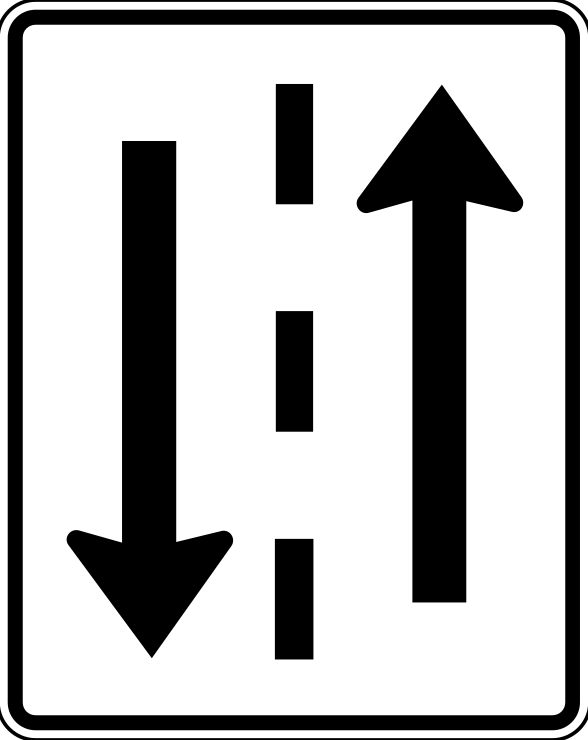
What does this sign tell you about the road?
- A.Traffic travels in both directions; keep right unless passingAnswer
- B.The road becomes one way ahead
- C.A divided highway begins ahead
- D.You must turn right at the next intersection
Explanation: On a two-way road there is oncoming traffic in the lane to your left. Keep to the right and move left only to pass, and only when it is safe and the markings permit.
14 of 100 · Regulatory signs
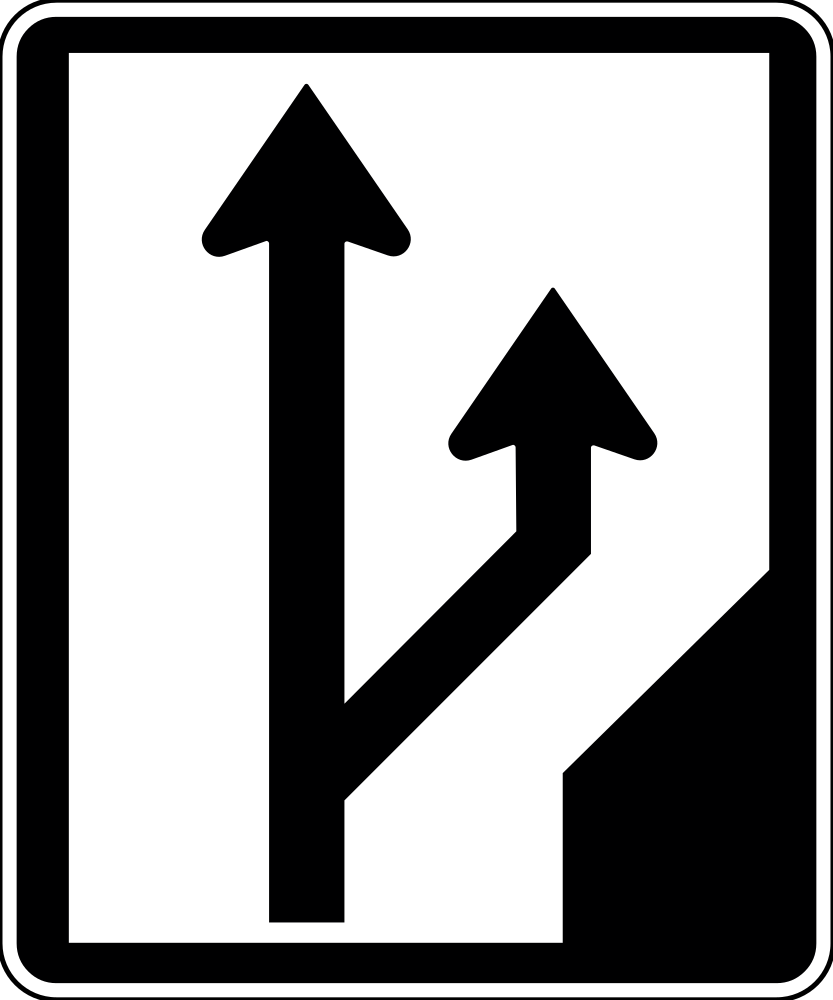
Faster traffic has built up behind you on a highway and you see this sign. What should you do?
- A.Keep right in the passing lane section and let the faster vehicles go by on the leftAnswer
- B.Move into the left lane so they can pass on the right
- C.Stop on the shoulder until they have all passed
- D.Speed up so nobody needs to pass
Explanation: A passing lane lets slower vehicles move right so faster ones can pass safely on the left. Keep right unless you are passing, and remember that traffic in both lanes must merge before the passing lane ends.
15 of 100 · Regulatory signs
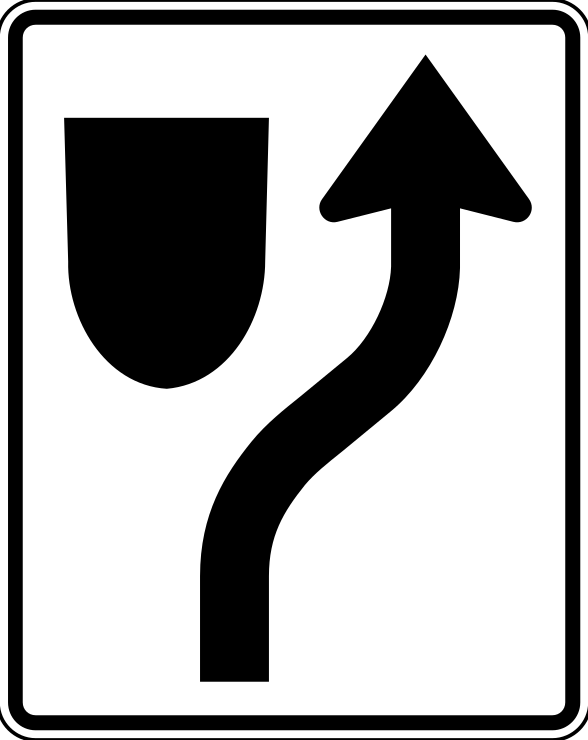
What does this sign tell you to do?
- A.Keep to the right of the divider aheadAnswer
- B.Turn right at the next intersection
- C.Merge left because the right lane ends
- D.Pull over to the right and stop
Explanation: Keep right of the divider: a median, island or other divider is ahead and traffic must pass it on the right-hand side.
16 of 100 · Regulatory signs
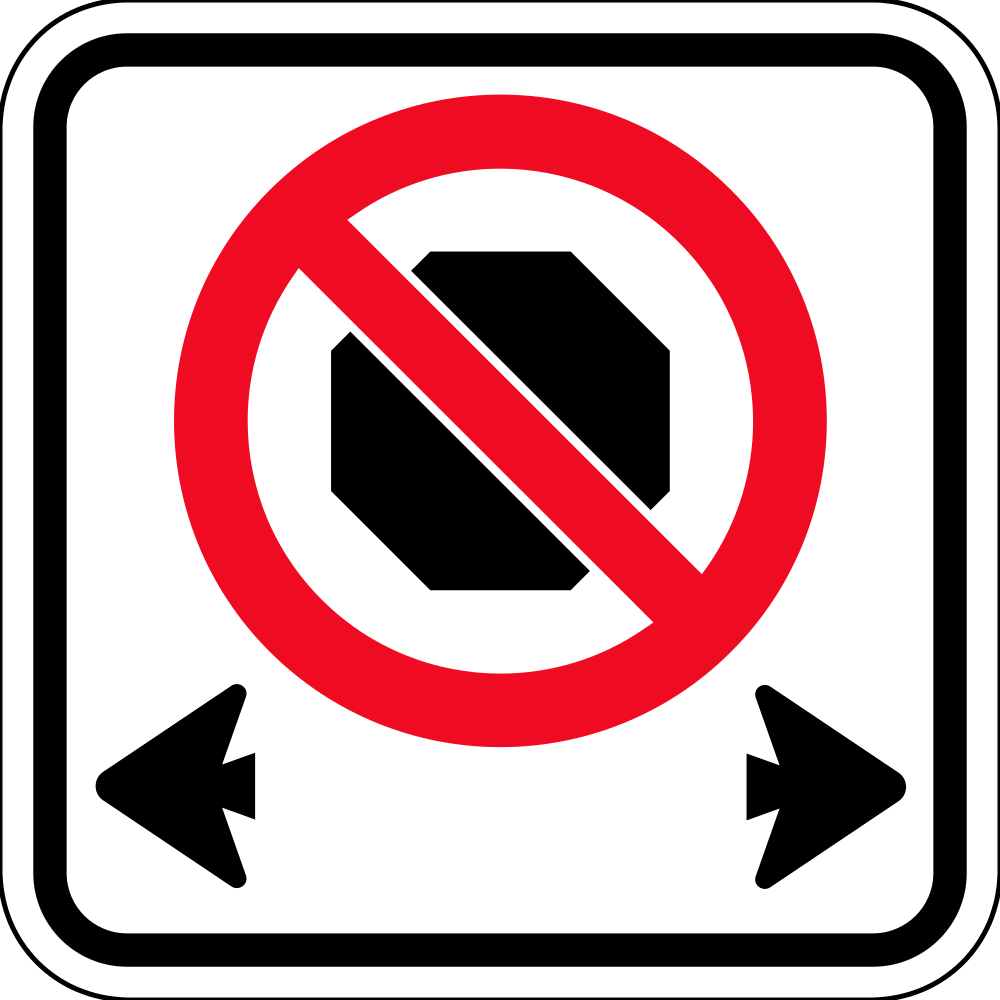
What are you allowed to do between this sign and the next no-stopping sign?
- A.You may not stop your vehicle there at allAnswer
- B.Stop briefly to drop off a passenger
- C.Park for up to the time shown on the sign
- D.Stop only to load or unload goods
Explanation: No stopping is stricter than no parking: you may not halt your vehicle at all in the stretch between the signs, even for a moment to let someone out.
17 of 100 · Regulatory signs
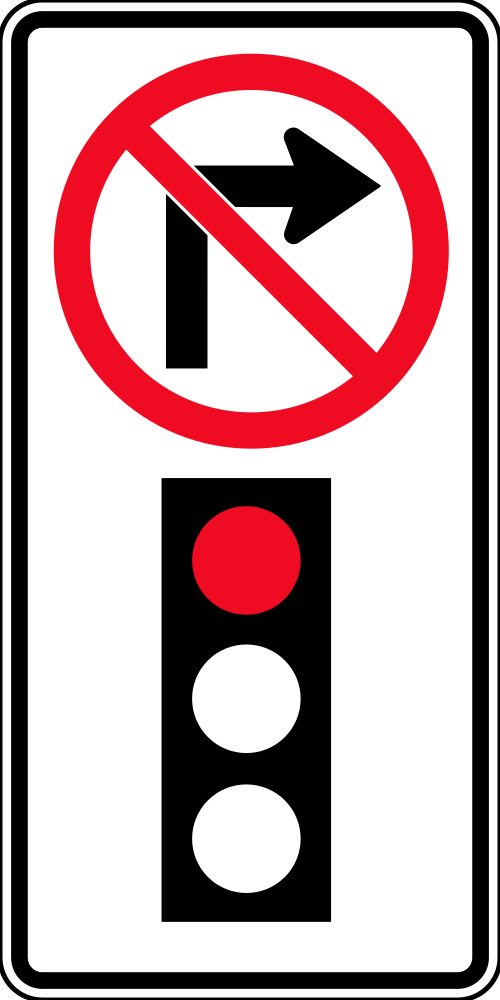
You are stopped at a red light beside this sign and want to turn right. What must you do?
- A.Wait for the green light before turningAnswer
- B.Turn right after a complete stop if the way is clear
- C.Turn right without stopping if no pedestrians are crossing
- D.Sound your horn and turn right
Explanation: Normally you may turn right on a red light after a full stop when the intersection is clear, unless a sign forbids it. This sign forbids it, so you must wait for the green.
18 of 100 · Regulatory signs
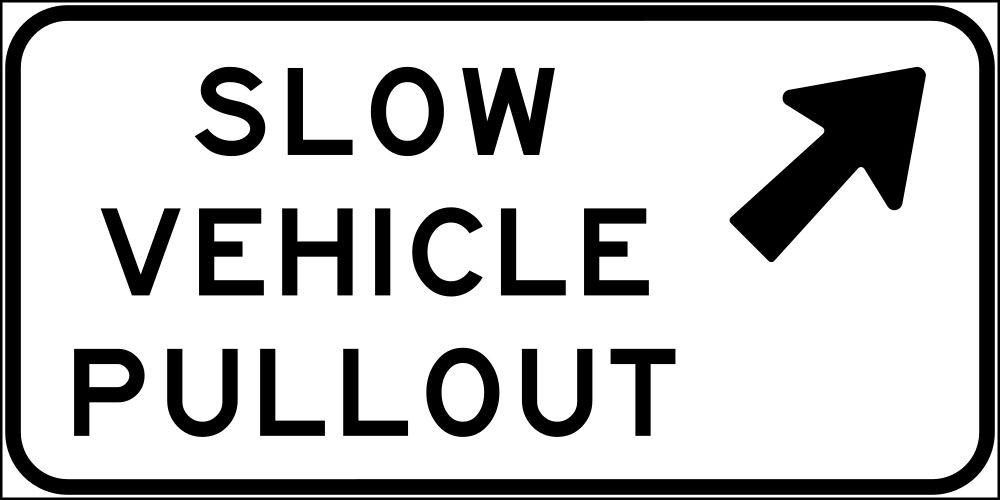
You are driving slowly on a highway and a line of 5 vehicles has formed behind you. What does this sign require of you?
- A.Pull into the pullout so the vehicles behind can passAnswer
- B.Nothing, as long as you are within the speed limit
- C.Wave the vehicles behind past you on the shoulder
- D.Speed up until nobody is following you
Explanation: Slow vehicle pullouts exist so that a slow driver can let a queue pass. Where the sign says slow traffic delaying 5 vehicles must use the pullout, using it is a requirement, not a courtesy.
19 of 100 · Regulatory signs
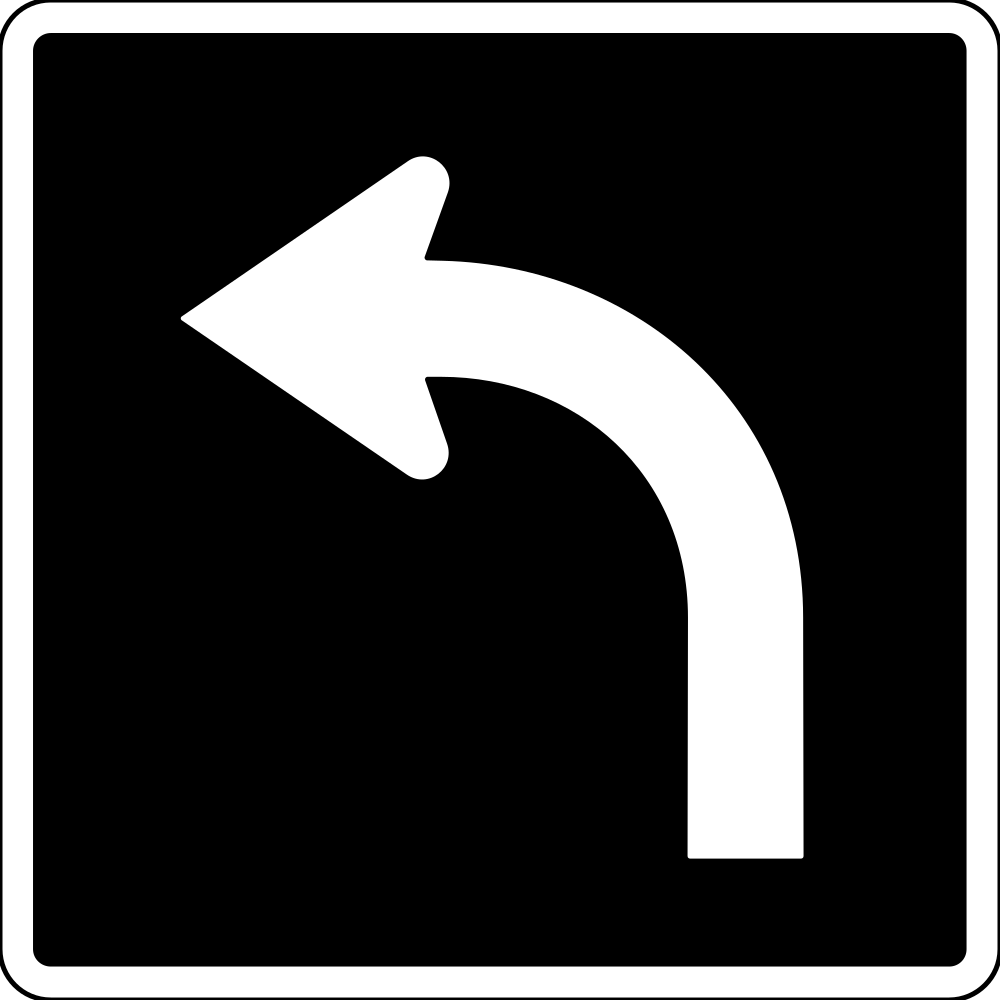
You are in a lane marked with this sign as you approach an intersection. What must you do?
- A.Turn left; you must follow the direction of the arrowAnswer
- B.Go straight or turn left, as you prefer
- C.Change lanes inside the intersection if you want to go straight
- D.Turn left only when a green arrow is showing
Explanation: Lane use signs are mounted above or beside a lane before the intersection. Once you are in a designated lane you must go where its arrow points, and you may not change into or out of it while in the intersection.
20 of 100 · Regulatory signs
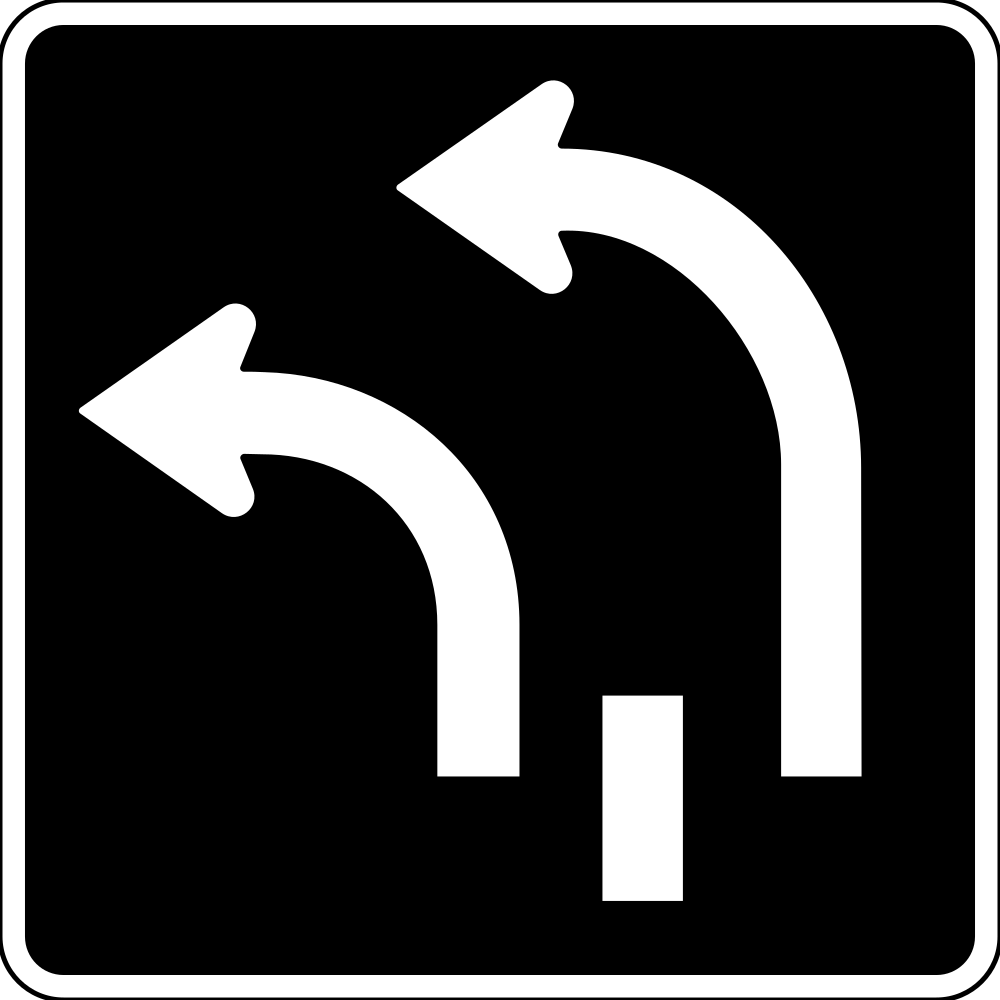
What does this lane use sign mean?
- A.Vehicles in both of these lanes must turn leftAnswer
- B.Only the far-left lane may turn left
- C.Left turns are prohibited from both lanes
- D.Both lanes must go straight through
Explanation: Large intersections may have more than one left-turn lane. Both lanes shown must turn left; stay in your own lane through the turn so you do not cut across the vehicle turning beside you.
21 of 100 · Regulatory signs
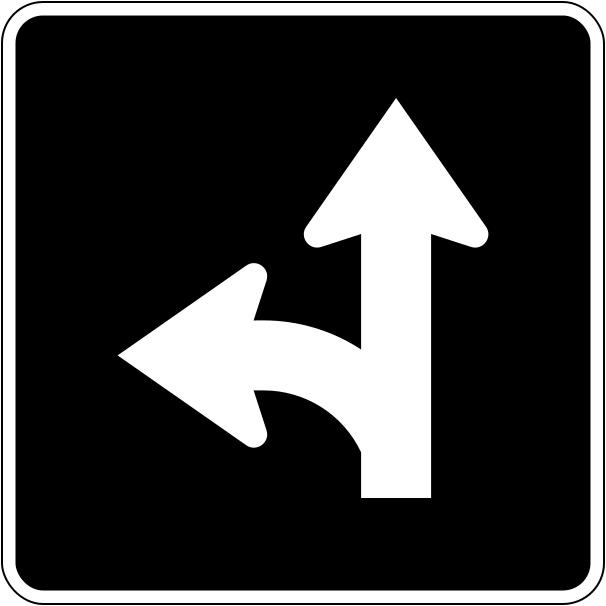
You are in a lane marked with this sign but you want to turn right. When may you move out of the lane?
- A.Before you reach the intersection, never while you are in itAnswer
- B.At any point, including inside the intersection
- C.Only once the light has turned green
Explanation: Lane use signs are posted before the intersection so you can choose the right lane in time. You may not move into or out of a designated lane while you are in the intersection; if you are in the wrong lane, follow its arrow and turn around later.
22 of 100 · Regulatory signs
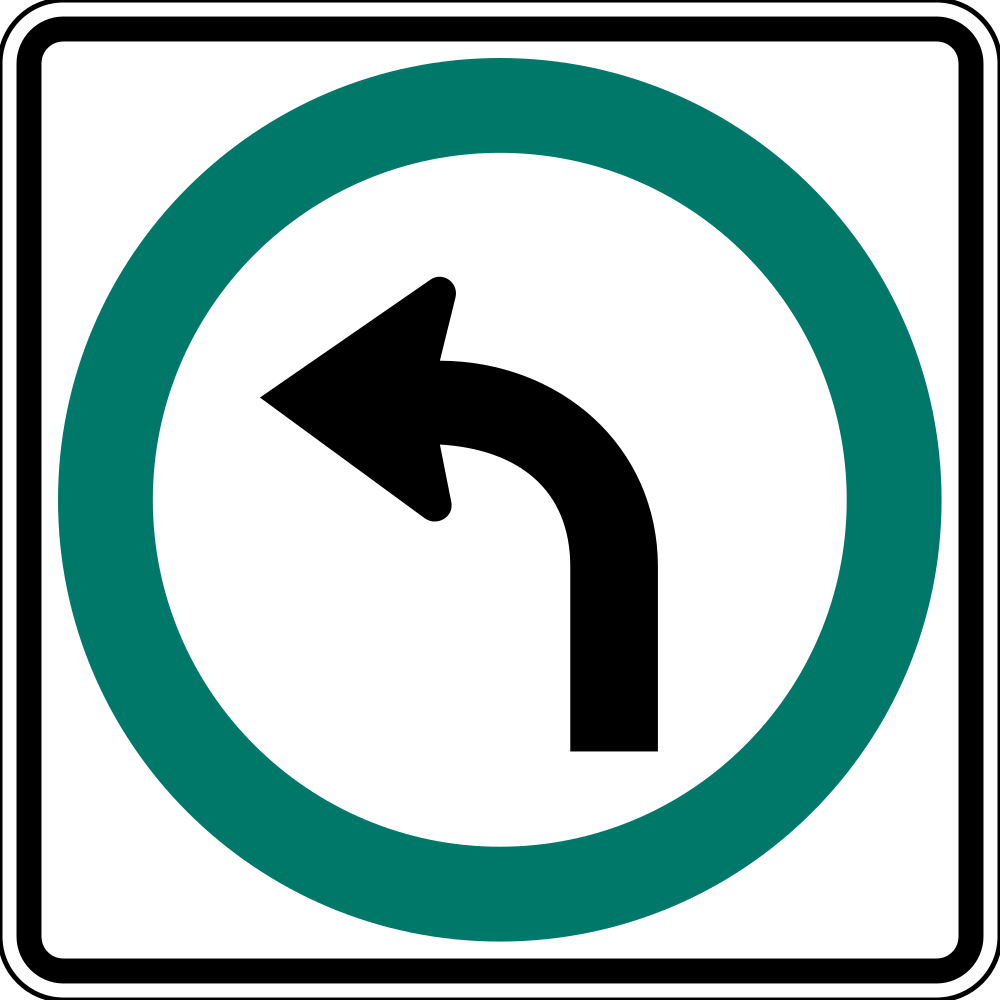
Where are turn control signs like this one mounted, and what do they require?
- A.Directly above the intersection; you must turn as the arrow showsAnswer
- B.At the roadside a block ahead; the arrow is only a suggestion
- C.On the far side of the intersection; they apply to oncoming traffic
Explanation: Turn control signs hang directly over the intersection and are regulatory: the arrow tells you the only movement allowed, and you must follow it.
23 of 100 · Regulatory signs
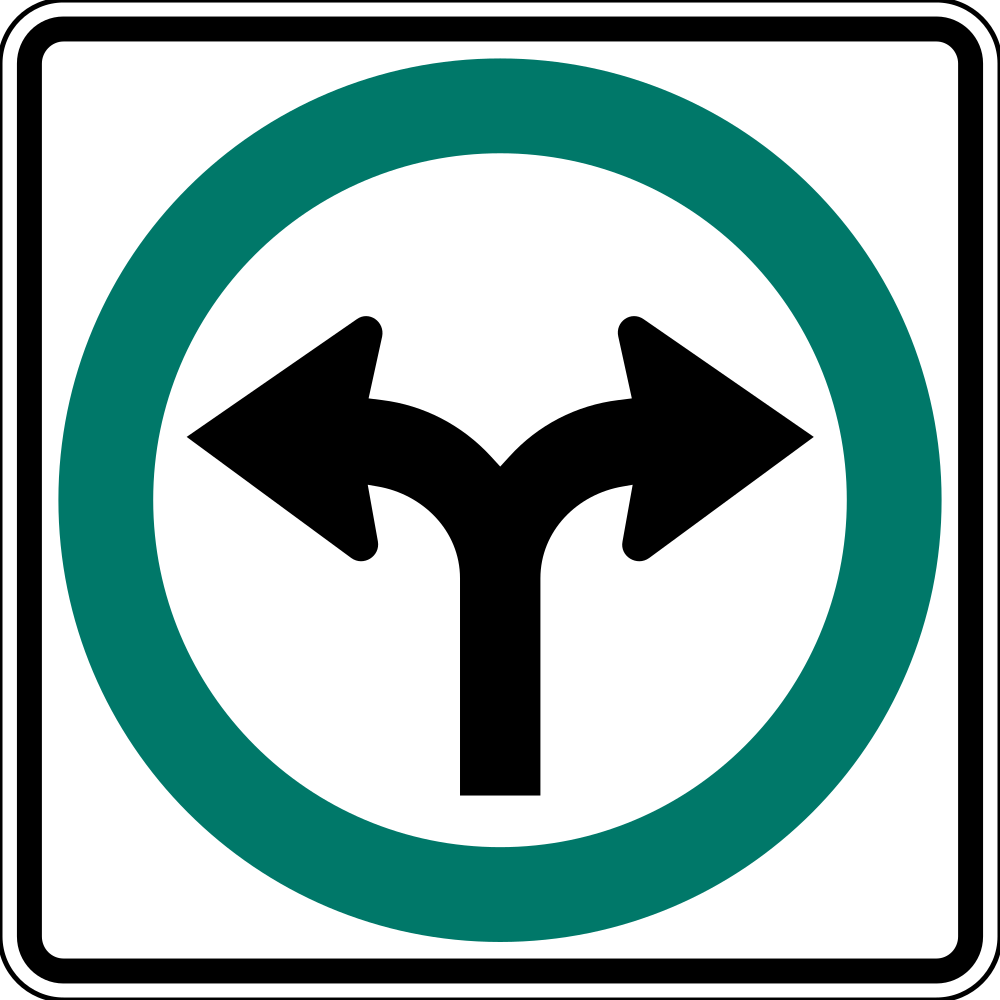
What are you not allowed to do at an intersection with this sign?
- A.Go straight throughAnswer
- B.Turn right
- C.Turn left
Explanation: This turn control sign allows a right or a left turn only. The road does not continue straight for you, so you must turn one way or the other.
24 of 100 · Regulatory signs
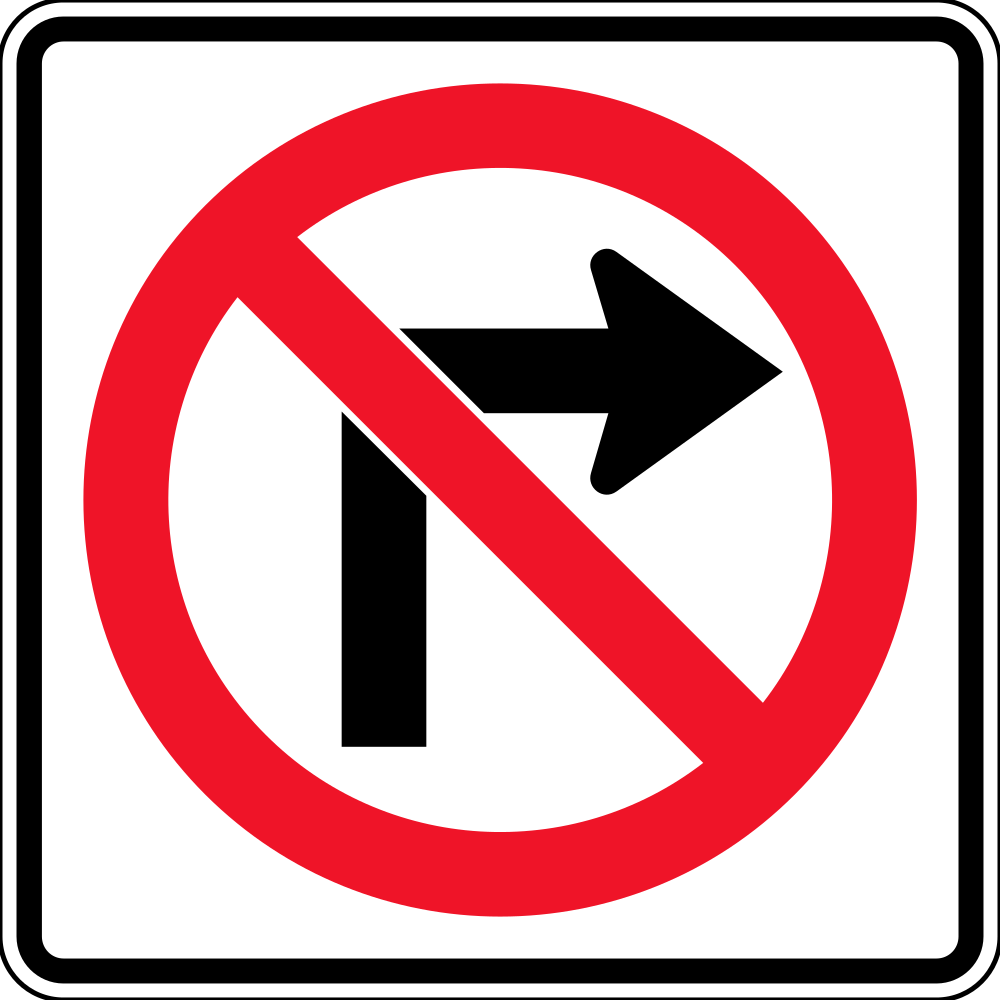
It is outside the hours shown on the tab under this sign. May you turn right here?
- A.Yes; the restriction applies only during the posted timesAnswer
- B.No; right turns are never allowed at this intersection
- C.Only if a green arrow is showing
- D.Only after stopping and sounding your horn
Explanation: A tab under a sign limits when it applies. Right turns are banned here only during the posted times, so at other times you may turn right as usual.
25 of 100 · Regulatory signs
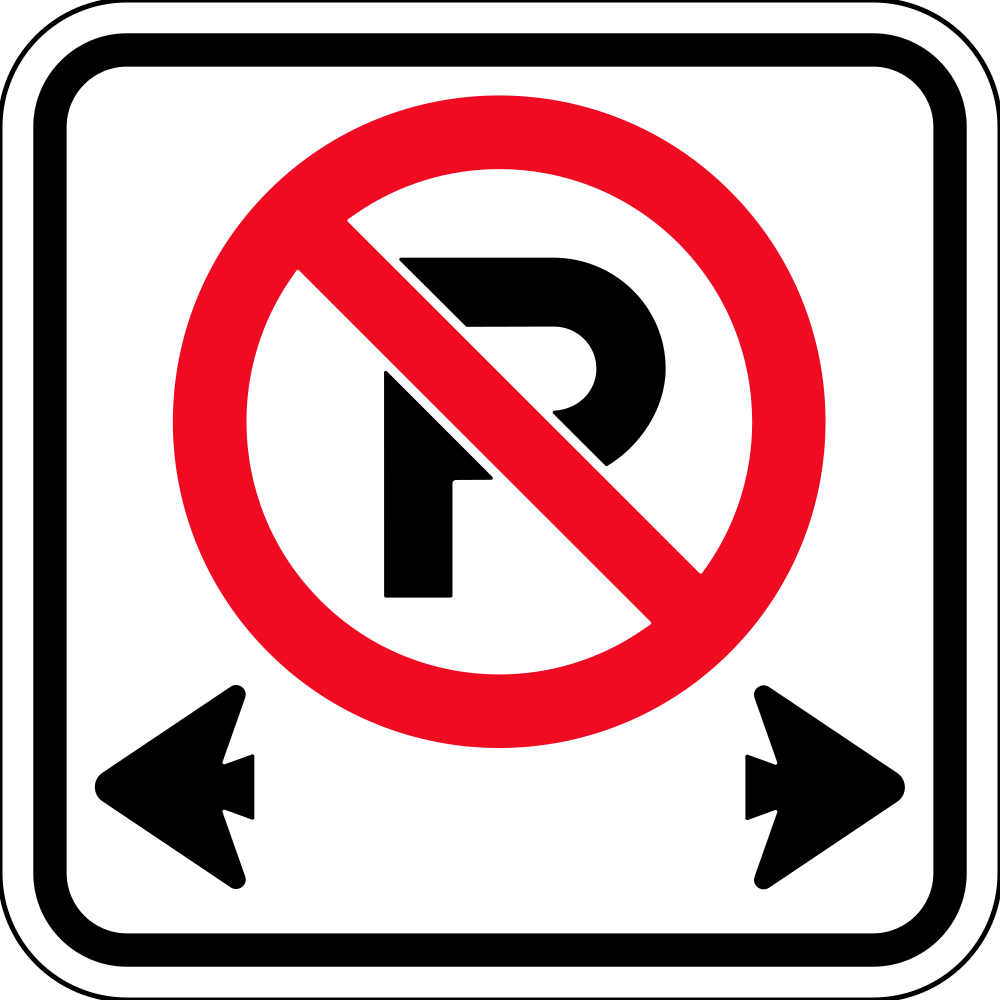
What can happen if you park where this sign is posted?
- A.You may be fined, your vehicle may be towed, or bothAnswer
- B.Nothing, as long as you stay in the vehicle
- C.Nothing, as long as you park for less than an hour
- D.Only a warning for a first offence
Explanation: Parking signs tell you where and when you may park. Parking where a sign prohibits it is illegal, and the guide warns that you may receive a fine, have your vehicle towed, or both.
26 of 100 · Regulatory signs
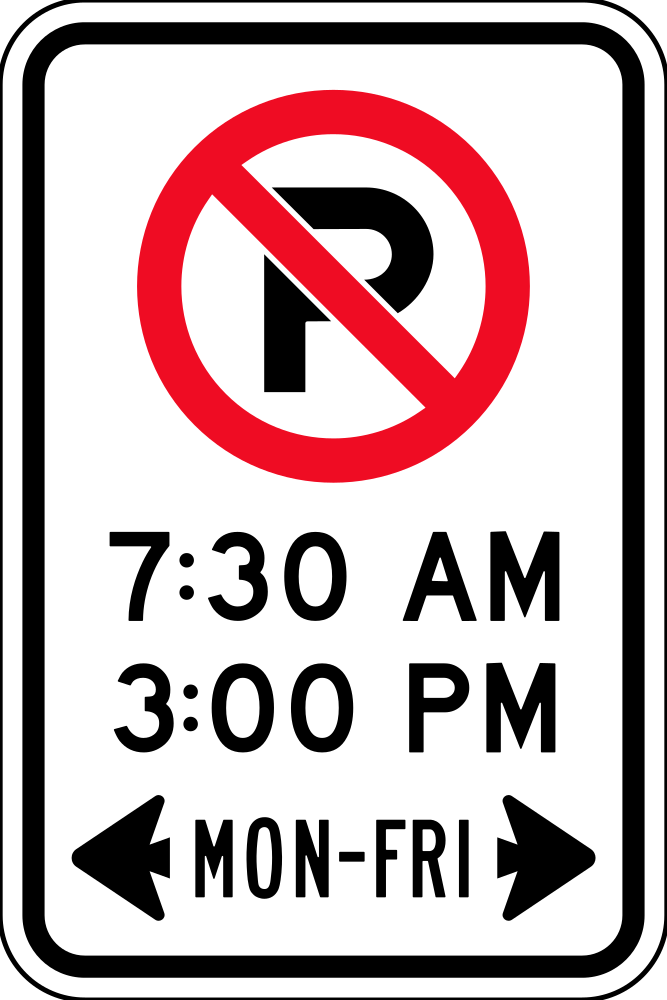
What does this parking sign mean?
- A.Parking is not allowed during the posted timesAnswer
- B.Parking is allowed only during the posted times
- C.No stopping at any time
- D.Parking is limited to the length of time shown
Explanation: Read the whole sign: this one bans parking during the days and hours on it, and outside those times you may park. Do not confuse it with a time-limited parking sign, which allows parking for a set length of time.
27 of 100 · Regulatory signs
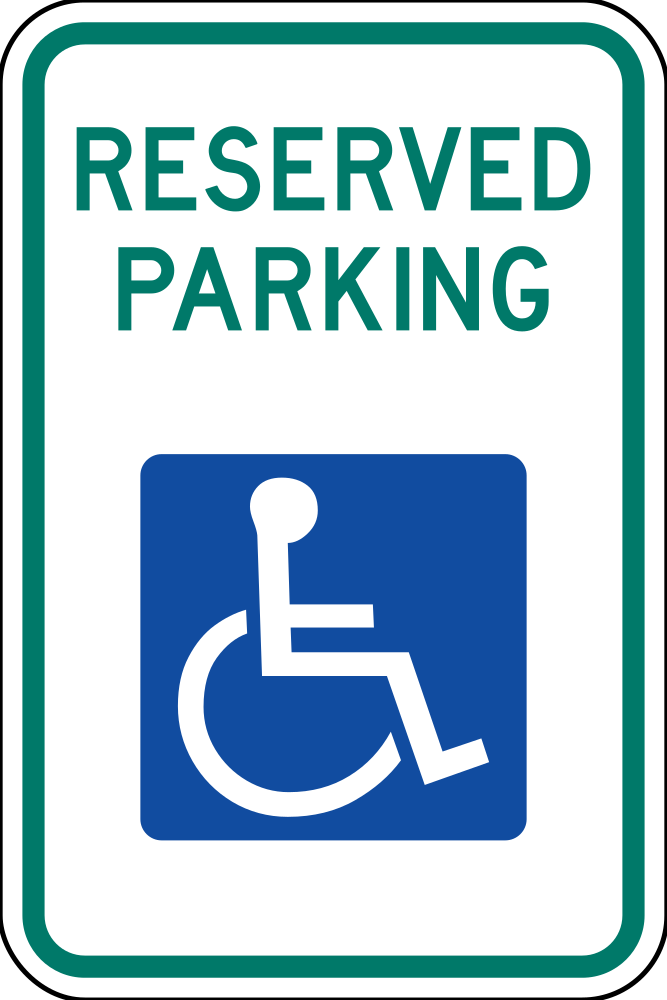
Who may park in a space marked with this sign?
- A.Only a vehicle displaying the disabled parking sign and carrying a person with disabilitiesAnswer
- B.Anyone, for up to the posted time limit
- C.Any vehicle carrying a person with disabilities, even without the sign
- D.Any vehicle, as long as the driver stays in it
Explanation: Both conditions must be met: the vehicle must display the disabled parking sign and must be carrying a person with disabilities. Displaying the sign while running an errand alone does not qualify.
28 of 100 · Regulatory signs
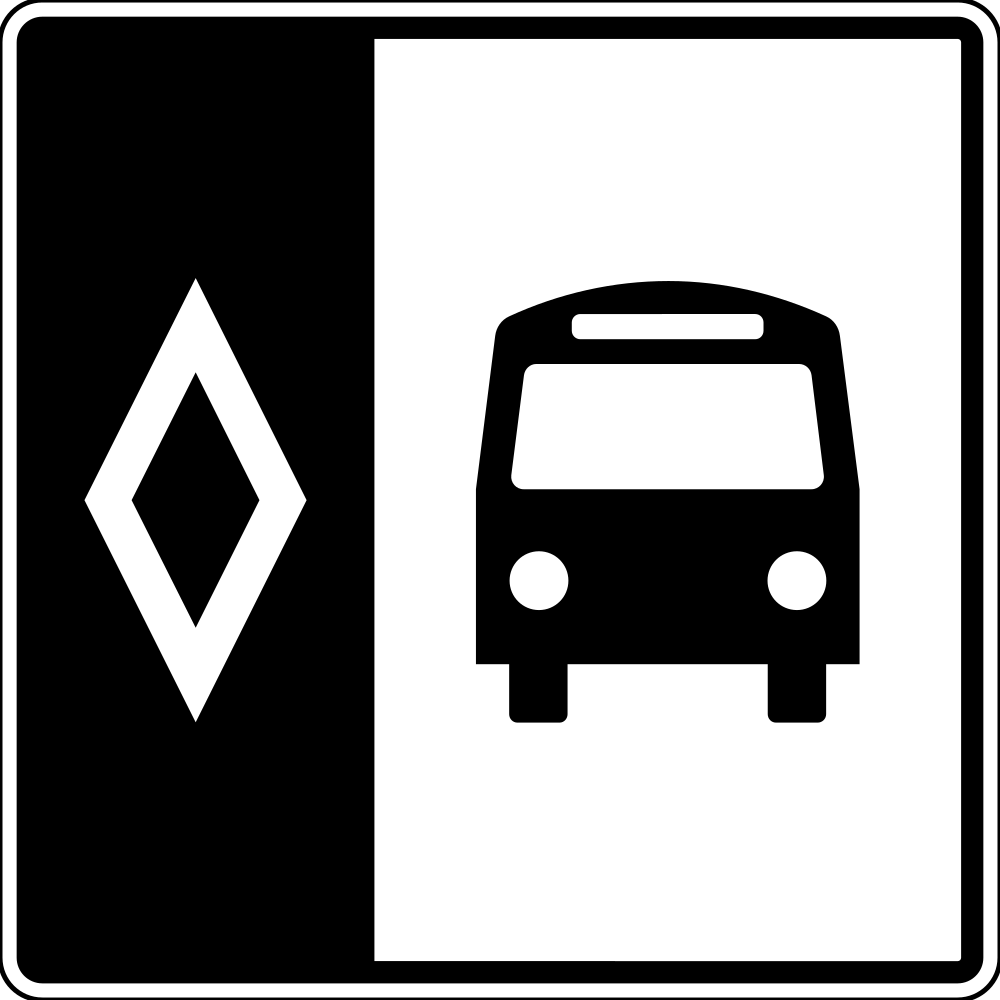
Who may drive in a lane marked with this sign?
- A.Only busesAnswer
- B.Buses and taxis
- C.Any vehicle carrying passengers
Explanation: A reserved lane sign with a bus symbol keeps that lane for buses. A white diamond painted on the road surface also marks a reserved lane, and other signs may add who else is allowed.
29 of 100 · Regulatory signs
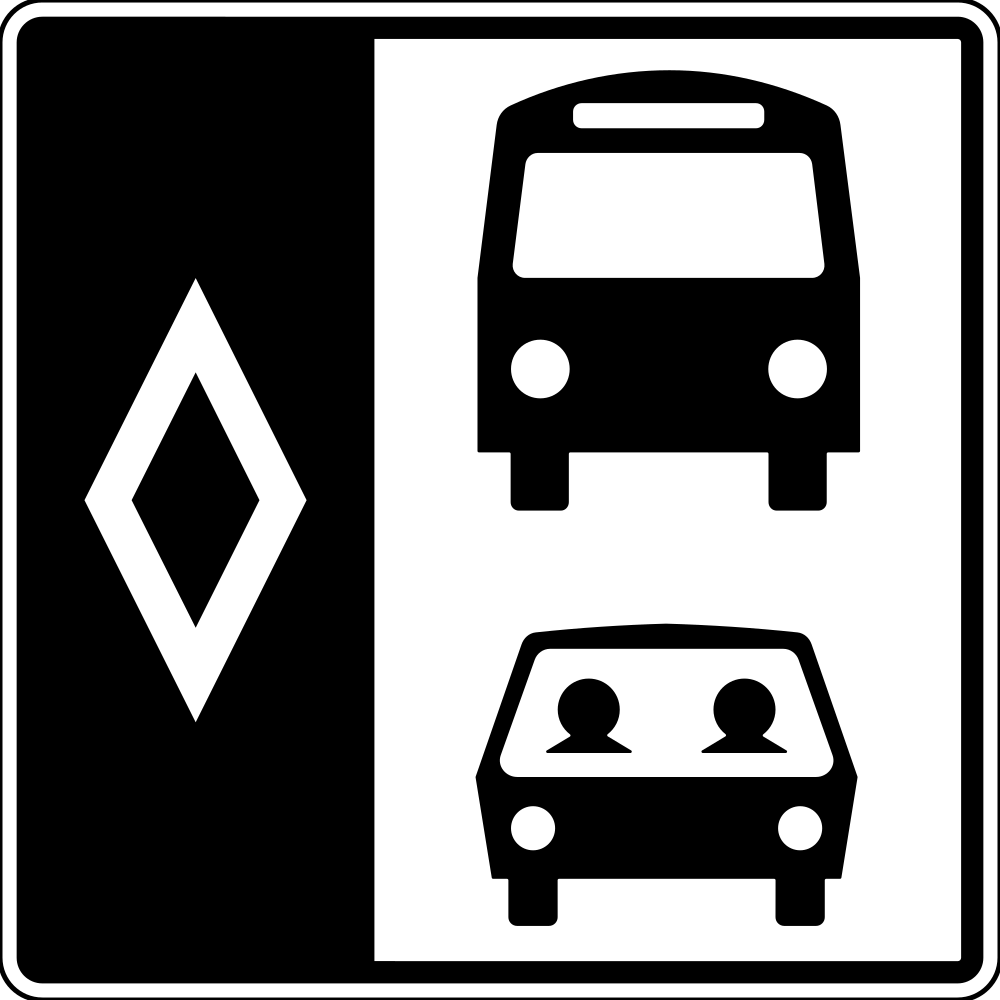
What does this reserved lane sign tell you?
- A.Only buses and HOVs may use the lane; it may show how many people an HOV must carryAnswer
- B.The lane is closed to all traffic
- C.Any vehicle may use the lane outside rush hour
- D.The lane is for trucks and buses only
Explanation: HOV lanes are reserved for buses and carpools so that more people move in fewer vehicles. Read the signs: they say when the lane operates and the minimum number of people a vehicle must carry, and you enter or leave only where the line is broken.
30 of 100 · Regulatory signs
What is true about regulatory signs, such as stop, speed limit and no parking signs?
- A.Disregarding them is an offence under the B.C. Motor Vehicle ActAnswer
- B.They are advisory, so following them is optional
- C.They warn of hazards on the road ahead
- D.They apply only when a police officer is present
Explanation: Regulatory signs state driving laws and regulations. Ignoring one is an offence under the Motor Vehicle Act and can bring penalties; warning of hazards is the job of yellow warning signs.
31 of 100 · Warning signs
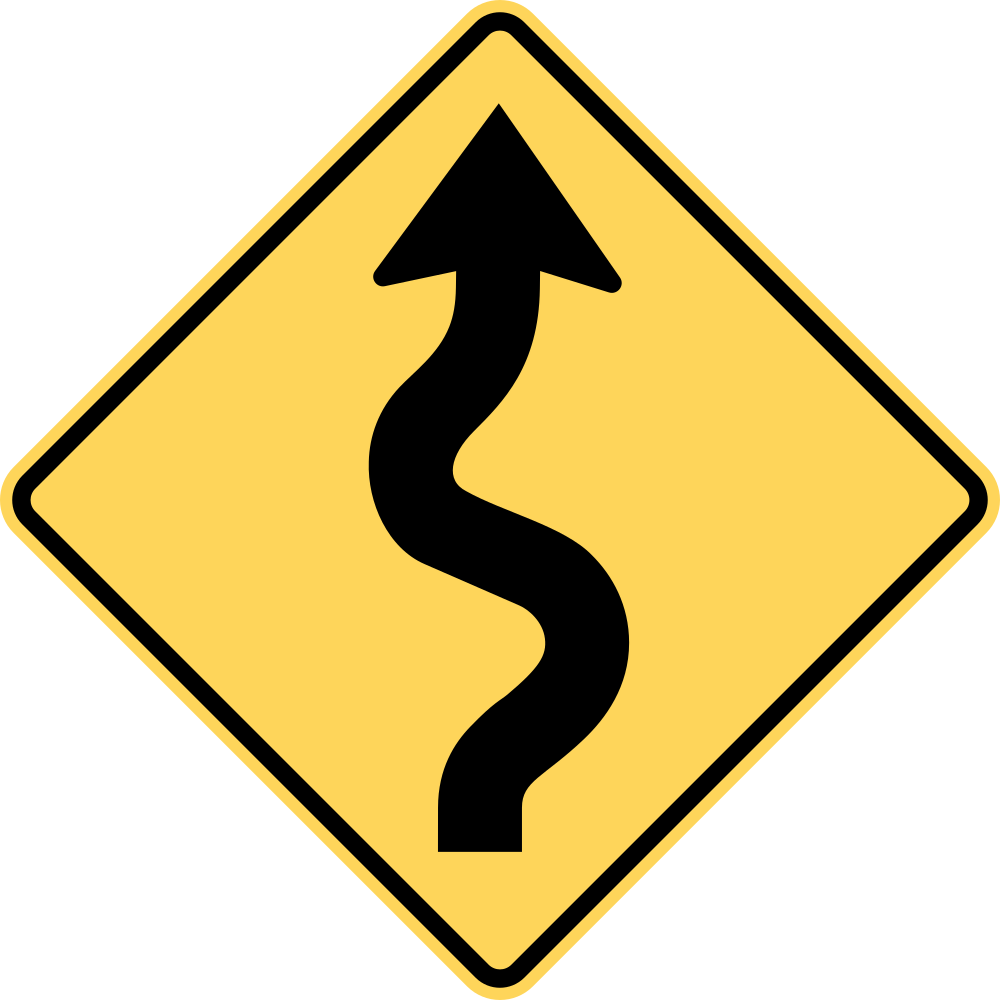
What shape and colour are most warning signs, such as this one?
- A.Yellow and diamond-shapedAnswer
- B.Red and octagonal
- C.Green and rectangular
- D.Blue and square
Explanation: Shape and colour let you read a sign before you can read its words. Most warning signs are yellow diamonds that warn of a possible hazard ahead, so slow down and look for what the symbol describes.
32 of 100 · Warning signs
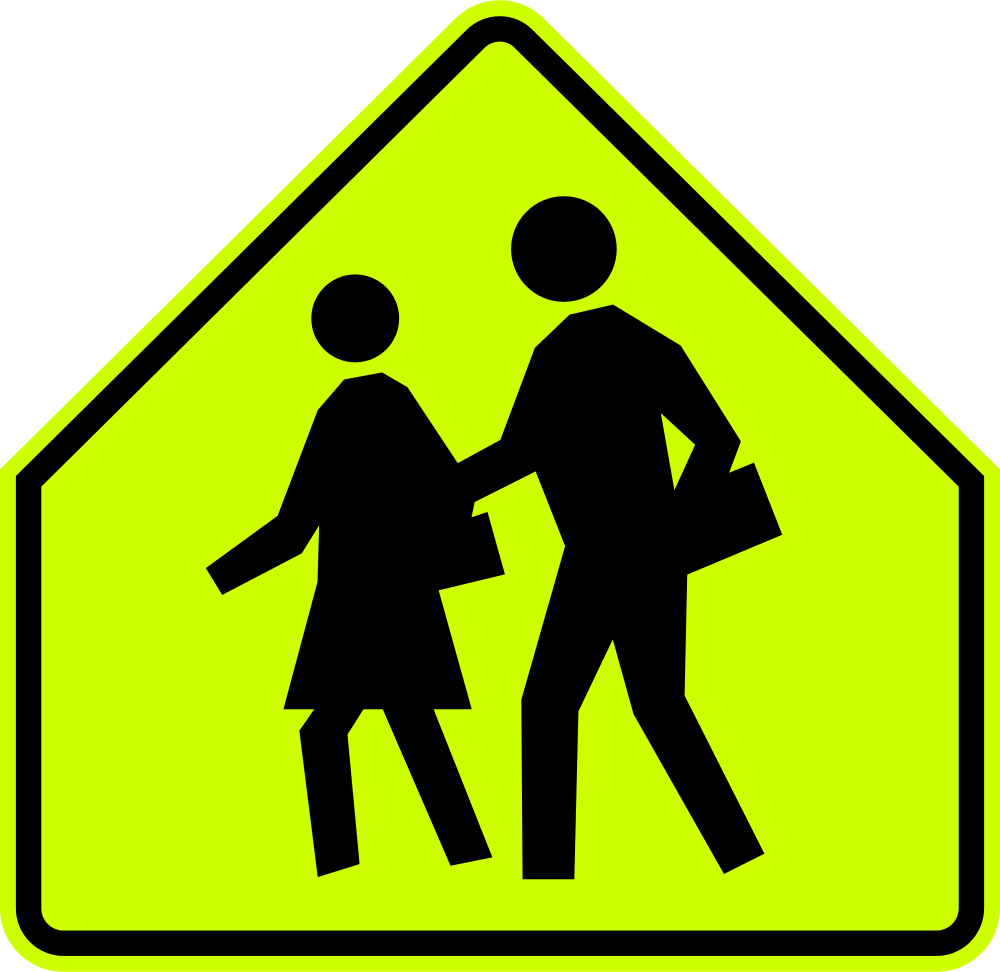
This fluorescent yellow-green sign has no speed tab under it. What does it ask of you?
- A.Reduce speed when children are presentAnswer
- B.Drive at 30 km/h at all times, day and night
- C.Stop before entering the zone
- D.Nothing; the sign only marks the school property
Explanation: School zone signs are fluorescent yellow-green. Without a tab, this one tells you to reduce speed when children are present; a tab underneath would set a specific limit and its hours.
33 of 100 · Warning signs
The tab under this school zone sign shows only 30 km/h. When is that limit in effect?
- A.From 8 a.m. to 5 p.m. on school daysAnswer
- B.Every day from dawn to dusk
- C.24 hours a day, every day of the year
- D.Only while children are actually on the roadway
Explanation: When the tab shows only a speed, that 30 km/h limit applies from 8 a.m. to 5 p.m. on school days. If the tab also shows hours, those hours apply instead. Do not confuse it with a playground zone, whose 30 km/h limit runs every day from dawn to dusk.
34 of 100 · Warning signs
The tab under this school zone sign shows both a speed limit and hours. What does that mean?
- A.The speed limit is in effect during the hours shown on the tabAnswer
- B.The speed limit applies at all times; the hours only show when the school is open
- C.The hours show when parking is prohibited
- D.The speed limit applies only on weekends
Explanation: A tab that gives both a speed and hours tells you exactly when the school zone limit applies. When the tab gives a speed only, the default period of 8 a.m. to 5 p.m. on school days applies.
35 of 100 · Warning signs
When is the 50 km/h limit on this school zone sign in effect?
- A.From 8 a.m. to 5 p.m. on school days, when children are on the roadway or shoulderAnswer
- B.Every day from dawn to dusk
- C.At all times on school days, whether or not children are present
- D.Only when the yellow lights on the sign are flashing
Explanation: This version of the school zone sign is used on faster roads. Its 50 km/h limit applies from 8 a.m. to 5 p.m. on school days when children are on the roadway or the shoulder, so watch for children as well as the clock.
36 of 100 · Warning signs
You have slowed to 30 km/h for this school zone. How do you know where the zone ends?
- A.When you reach the back of the school zone sign on the other side of the streetAnswer
- B.At the next intersection
- C.As soon as you have passed the school building
- D.When the fluorescent yellow-green sign changes to yellow
Explanation: School zone signs face traffic in each direction. The back of the sign for oncoming drivers marks the end of the 30 km/h zone for you; until you reach it, keep to the school zone speed.
37 of 100 · Warning signs
When is the 30 km/h limit on this playground zone sign in effect?
- A.Every day from dawn to duskAnswer
- B.From 8 a.m. to 5 p.m. on school days
- C.Only when children can be seen in the playground
- D.24 hours a day, every day
Explanation: A playground zone is not tied to the school calendar: its 30 km/h limit applies every day, including weekends and holidays, from dawn to dusk. At night the regular limit returns.
38 of 100 · Warning signs
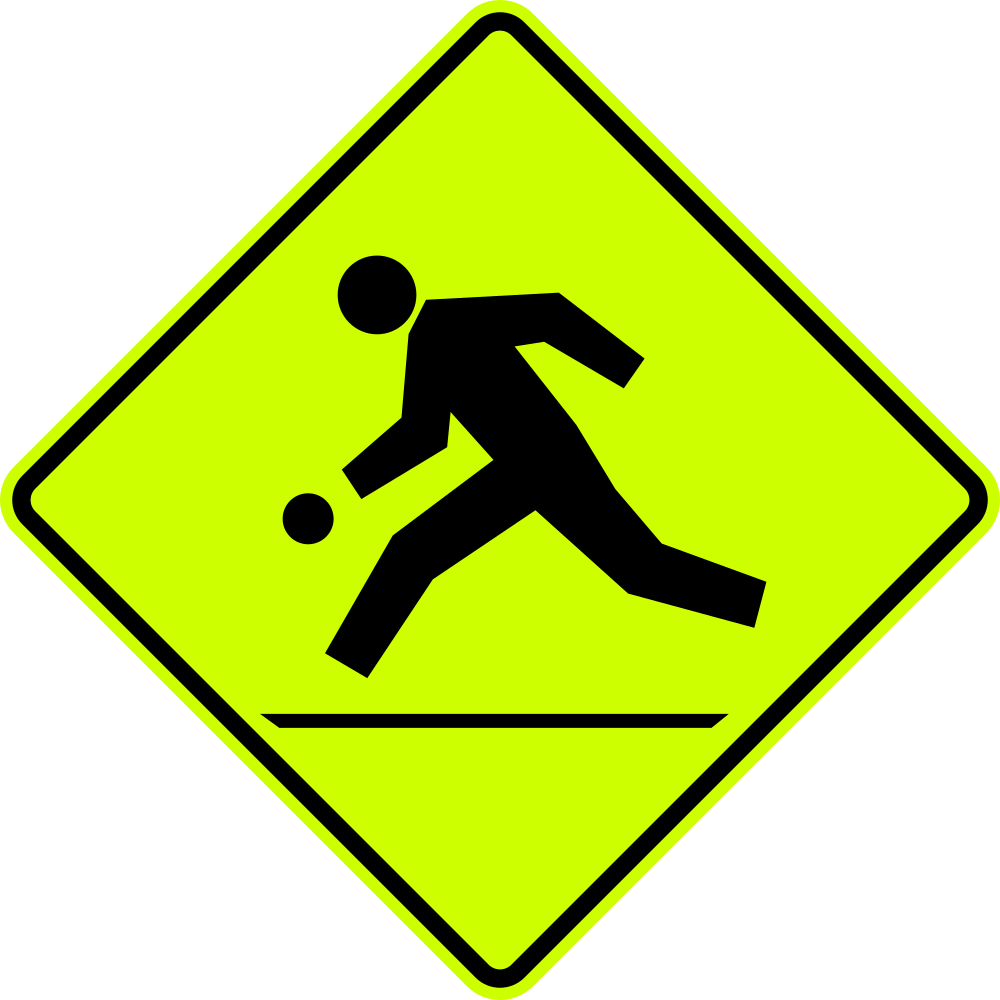
What does this sign ask you to do?
- A.Be prepared to slow down because a playground is nearbyAnswer
- B.Slow to 30 km/h immediately; a playground zone limit is in effect
- C.Stop and wait for children to cross
- D.Sound your horn to warn children
Explanation: Playground nearby is a warning to be ready to slow down and watch for children. It is the playground zone sign, with its speed tab, that sets a 30 km/h limit from dawn to dusk.
39 of 100 · Warning signs
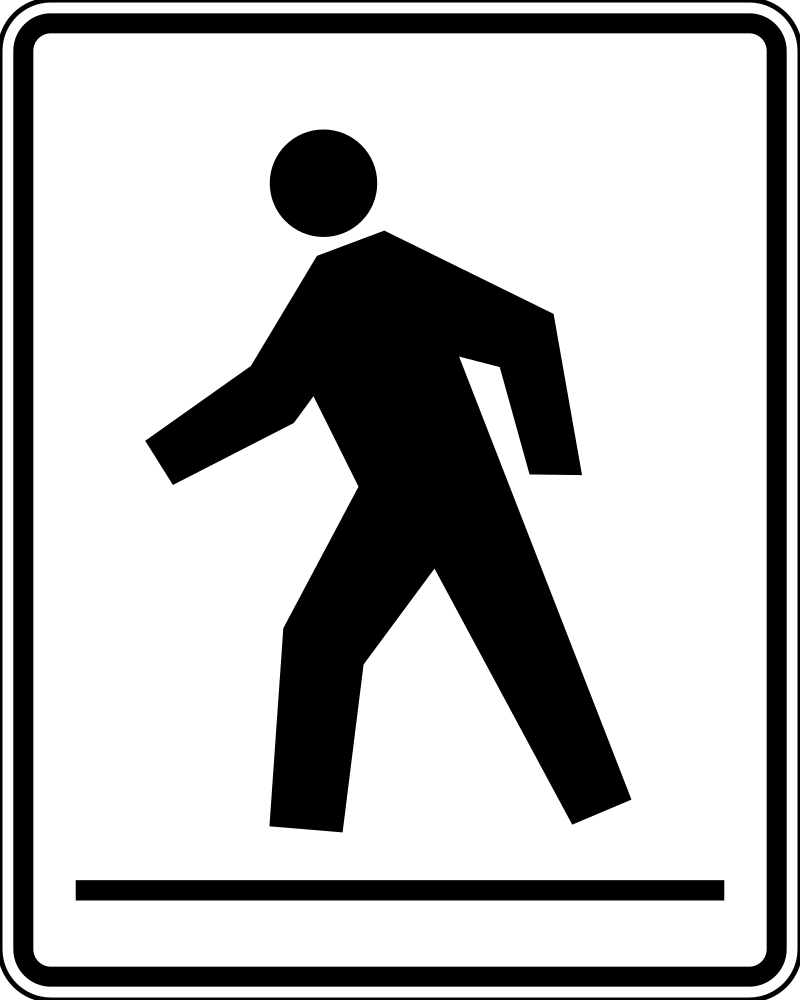
What must you do at a crosswalk marked with this sign?
- A.Yield to people crossingAnswer
- B.Come to a full stop even when nobody is crossing
- C.Sound your horn so pedestrians wait for you
- D.Speed up to clear the crosswalk quickly
Explanation: The pedestrian crosswalk sign marks a place where people cross the road. Slow down, scan the crosswalk and yield to anyone crossing or about to cross; never pass a vehicle stopped at a crosswalk.
40 of 100 · Warning signs
The light on this crosswalk sign is flashing. What does that mean?
- A.A pedestrian has activated the crossing; prepare to stopAnswer
- B.The crosswalk is closed to pedestrians
- C.You may proceed without slowing down
- D.The signal is out of order
Explanation: At a pedestrian activated crosswalk, a person presses a button to start the flashing light. When it flashes, someone is about to cross: slow down and be ready to stop for them.
41 of 100 · Warning signs
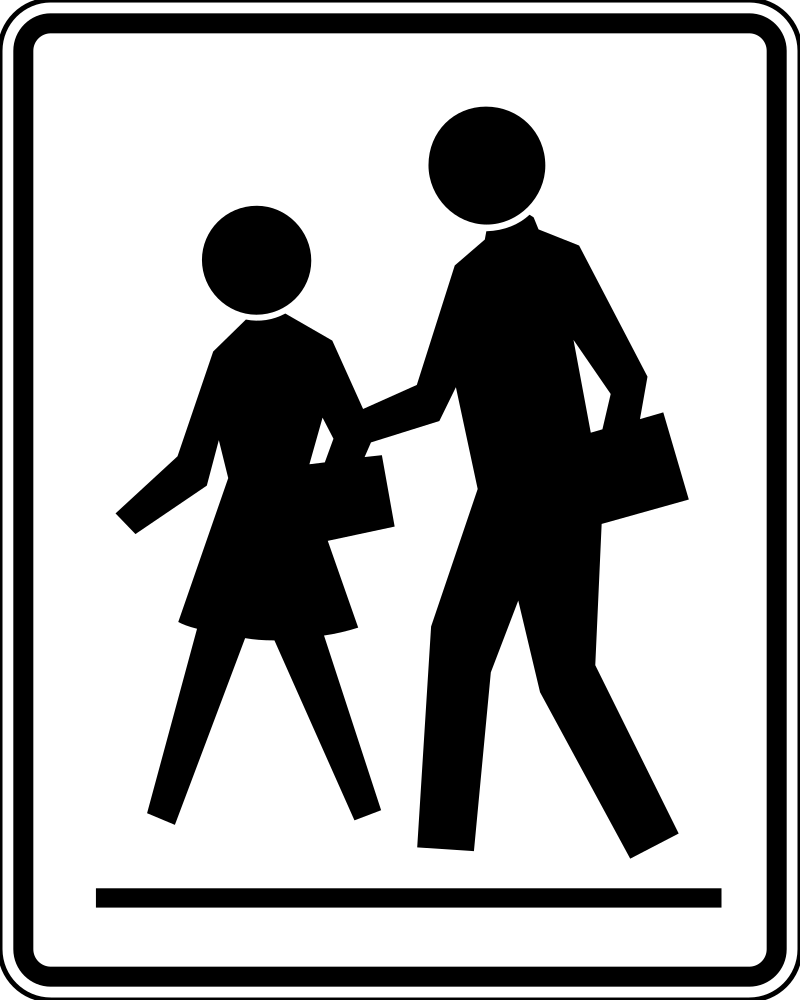
A crossing guard is on duty at a crosswalk marked with this sign. What must you do?
- A.Yield to the pedestrians and follow the crossing guard's directionsAnswer
- B.Proceed as soon as the guard is not looking at you
- C.Stop only if the children are very young
- D.Sound your horn so the guard clears the crosswalk
Explanation: At a school crosswalk you yield to pedestrians, and when a crossing guard or school patrol is there you must obey their directions at all times, even if the way looks clear to you.
42 of 100 · Warning signs
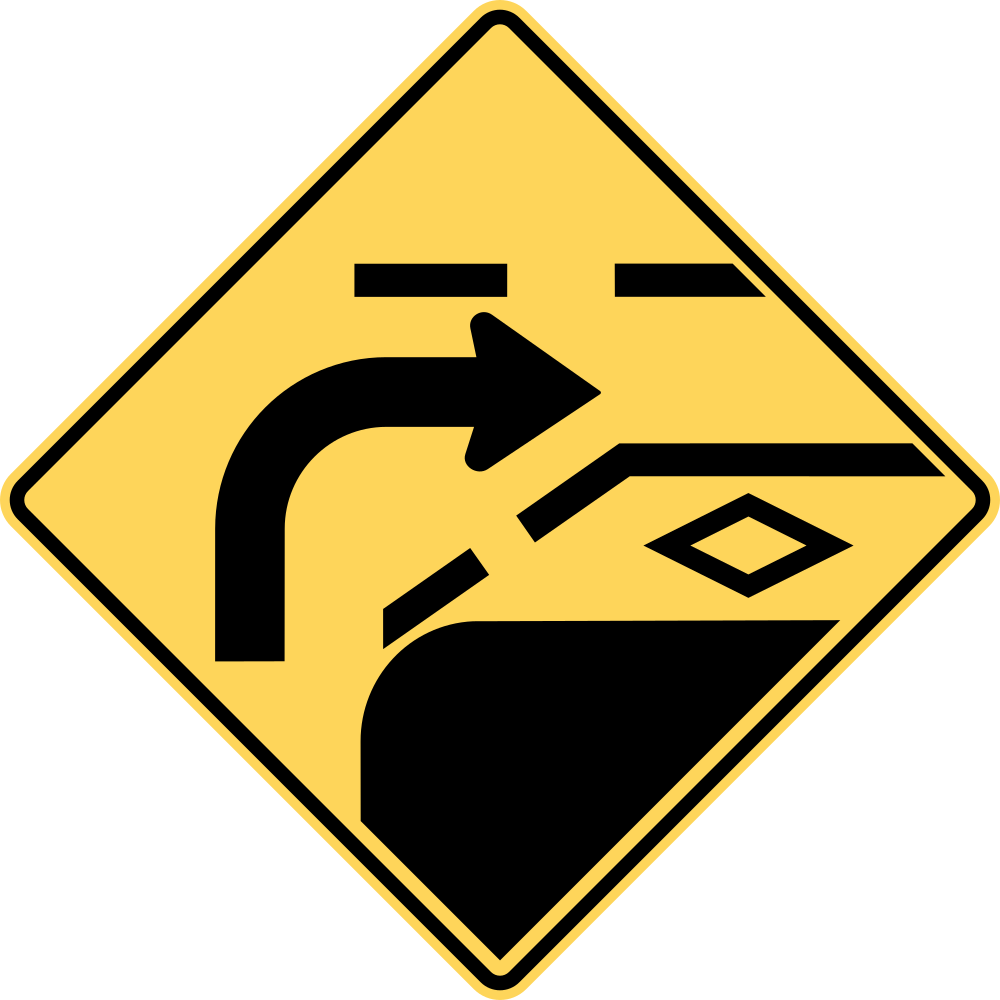
This sign warns that the curb lane of the cross street ahead is a reserved lane. When you turn onto that street, which lane should you turn into?
- A.The lane next to the reserved lane, unless you are entitled to use the reserved laneAnswer
- B.The reserved lane, because turning vehicles may always use it
- C.Whichever lane is empty at the time
Explanation: Reserved lanes are kept for the vehicles named on their signs. Unless your vehicle qualifies and you want to use the lane, turn into the lane beside it and leave the reserved lane free.
43 of 100 · Warning signs
Which of these warning signs is fluorescent yellow-green rather than yellow?
- A.School crosswalk aheadAnswer
- B.Railway crossing ahead
- C.Curve ahead
- D.Watch for deer ahead
Explanation: Signs about schools and school crossings use fluorescent yellow-green so they stand out from ordinary yellow warning signs. When you see that colour, expect children and slow down.
44 of 100 · Warning signs
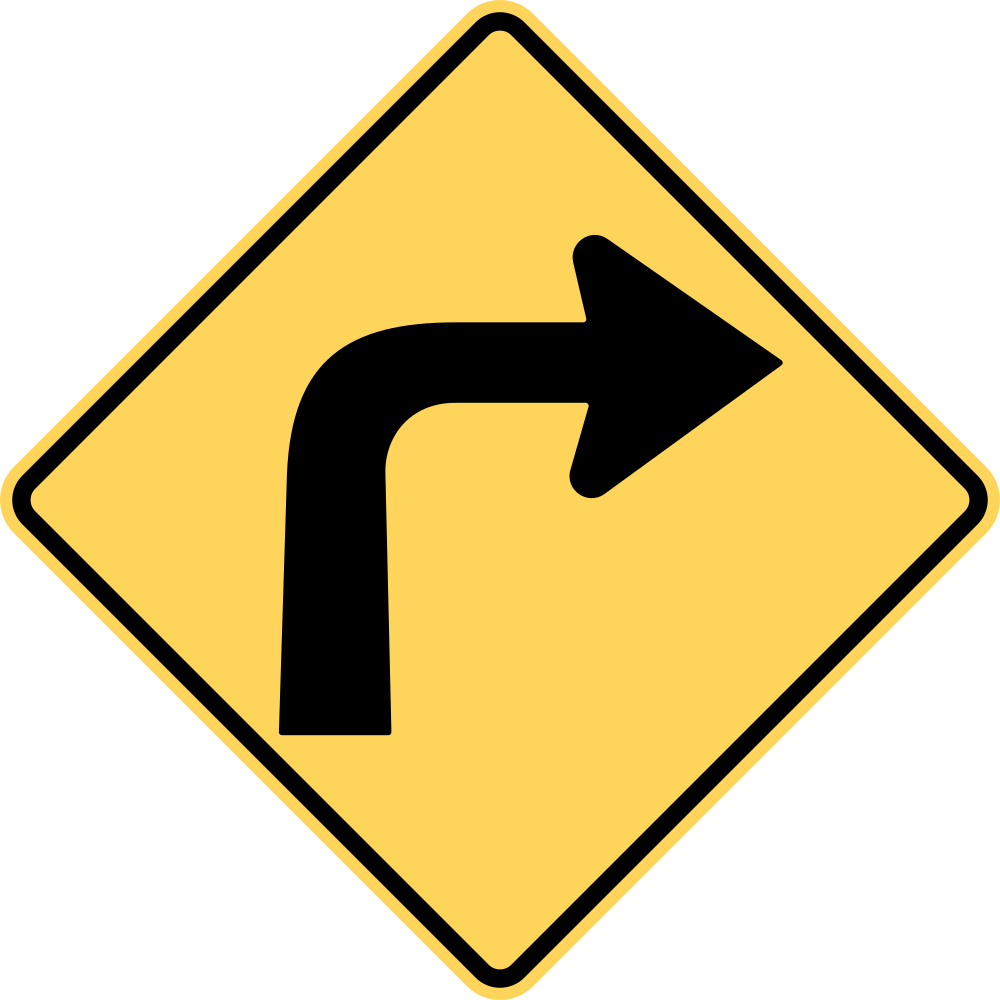
This sign has a speed shown on a tab below it. What is that speed?
- A.An advisory speed for the sharp curve; slow to it before you enter the curveAnswer
- B.The new legal maximum for the rest of the road
- C.The minimum speed you must maintain through the curve
- D.The speed limit that resumes after the curve
Explanation: A yellow warning sign with a speed tab gives an advisory speed: the safe speed for the hazard, which is lower than the posted limit for the road. Slow down before the curve, not in it.
45 of 100 · Warning signs
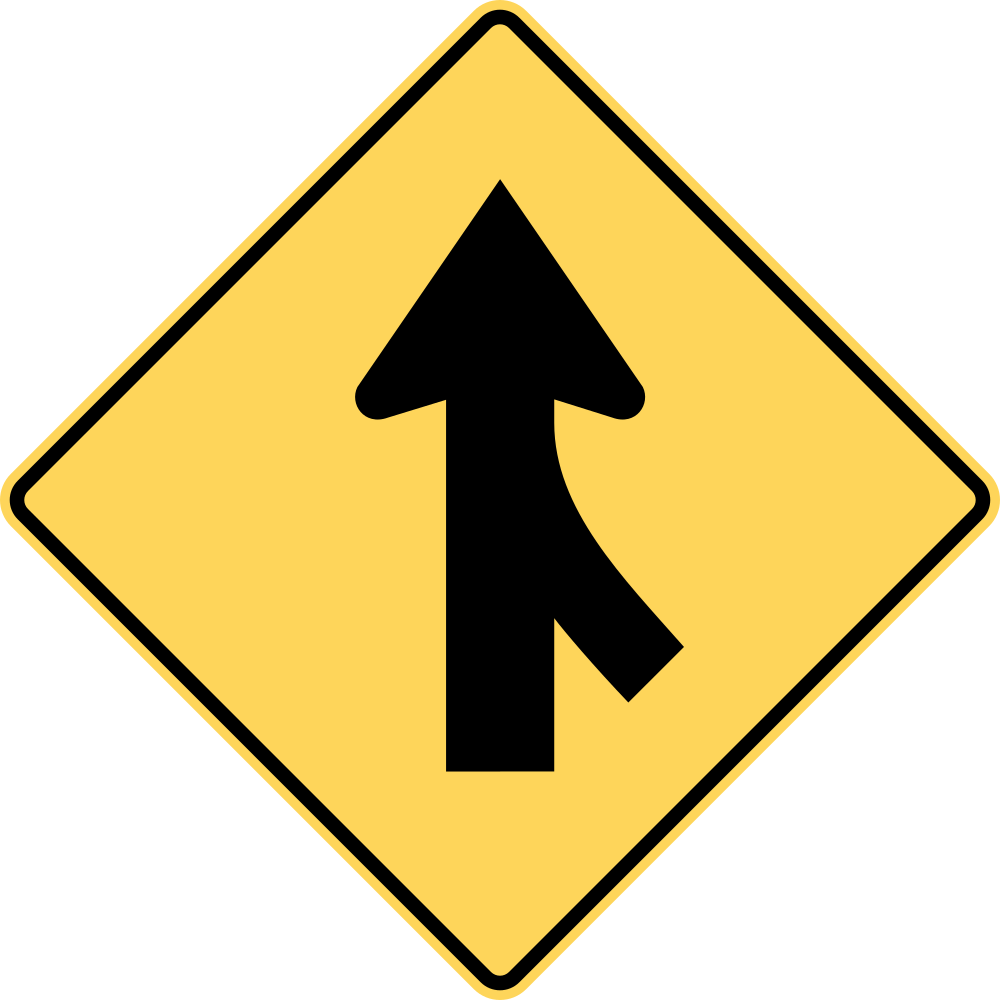
What does this sign warn you about?
- A.Traffic from another road merges into yours aheadAnswer
- B.The right lane ends ahead
- C.Two-way traffic begins ahead
- D.The divided highway ends ahead
Explanation: Merging traffic ahead means vehicles will be joining your road from the side. Check your mirrors and be ready to adjust your speed or change lanes so they can merge safely.
46 of 100 · Warning signs
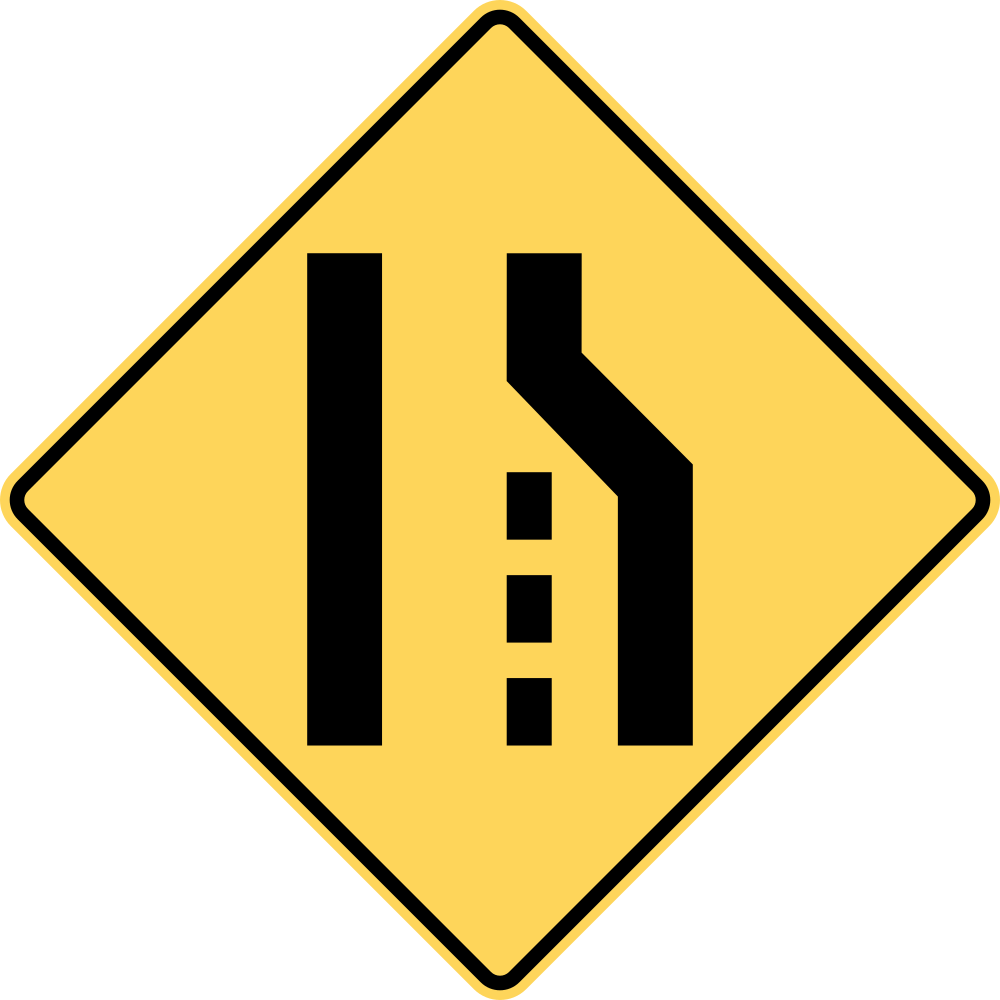
You are driving in the right lane and see this sign. What should you do?
- A.Adjust your speed within the limit and change lanes when there is a safe gapAnswer
- B.Speed up to get ahead of the vehicles in the left lane
- C.Stop and wait for the lane to reopen
- D.Continue on the shoulder until the lane resumes
Explanation: This sign tells you the right lane will end soon. Signal, match your speed to the traffic in the other lane without exceeding the limit, and merge only into a safe gap; drivers beside a lane that ends should help by adjusting their speed.
47 of 100 · Warning signs
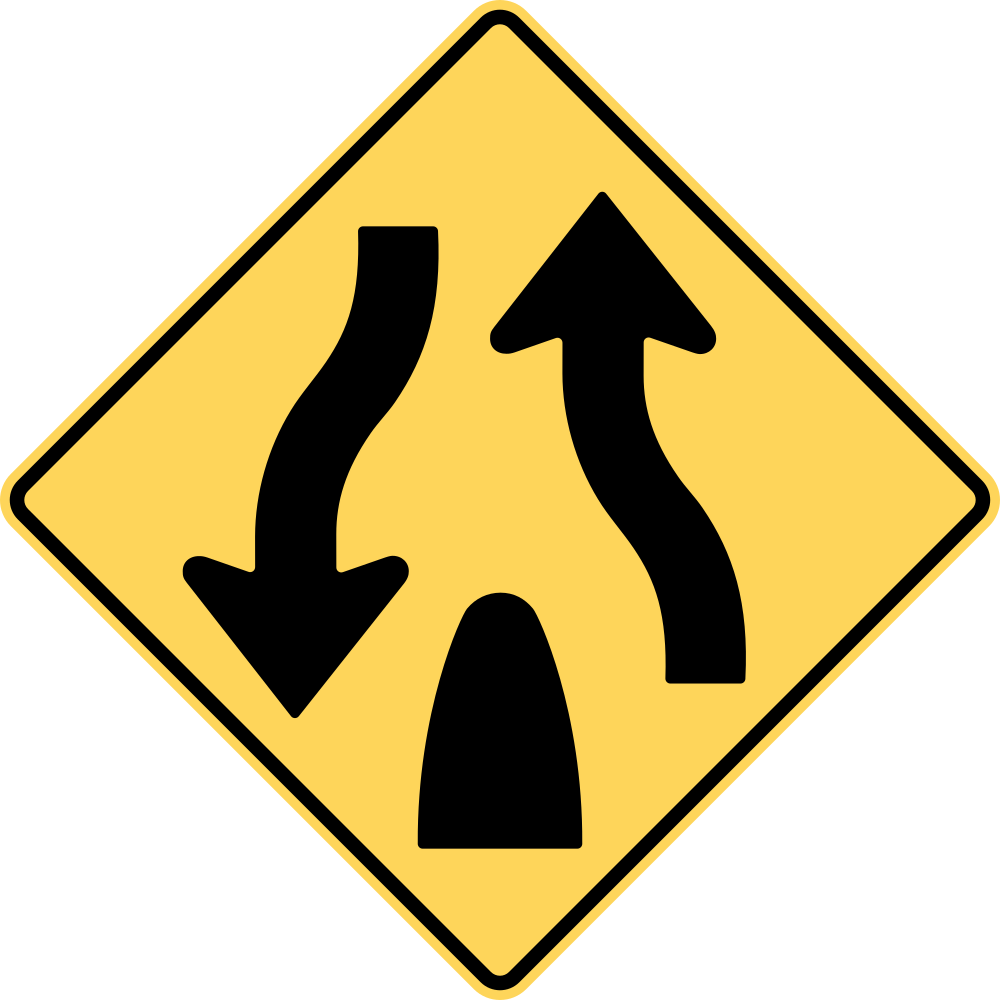
What does this sign warn, and what should you do?
- A.The divided highway ends ahead; keep rightAnswer
- B.A divided highway begins ahead; choose either roadway
- C.The right lane ends ahead; merge left
- D.The road narrows ahead; slow down
Explanation: Beyond this sign the median ends and oncoming traffic shares the same roadway with you. Keep to the right so that you are not in the path of vehicles coming the other way.
48 of 100 · Warning signs
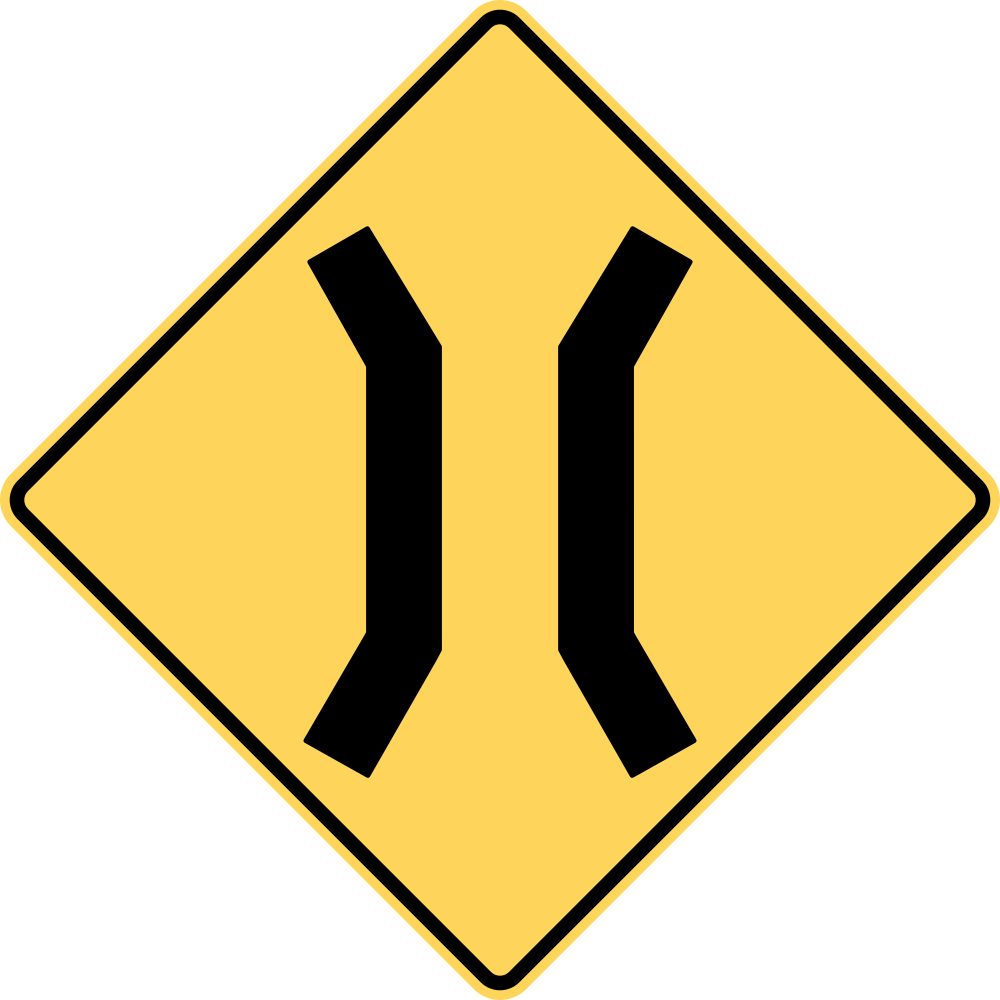
What does this sign usually warn of?
- A.A narrow structure ahead, often a bridgeAnswer
- B.A tunnel ahead; turn on your headlights
- C.A soft shoulder ahead; stay off it
- D.The pavement ends ahead
Explanation: A narrow structure such as a bridge leaves little room beside you. Slow down, keep well within your lane and be ready to share the space with oncoming traffic.
49 of 100 · Warning signs
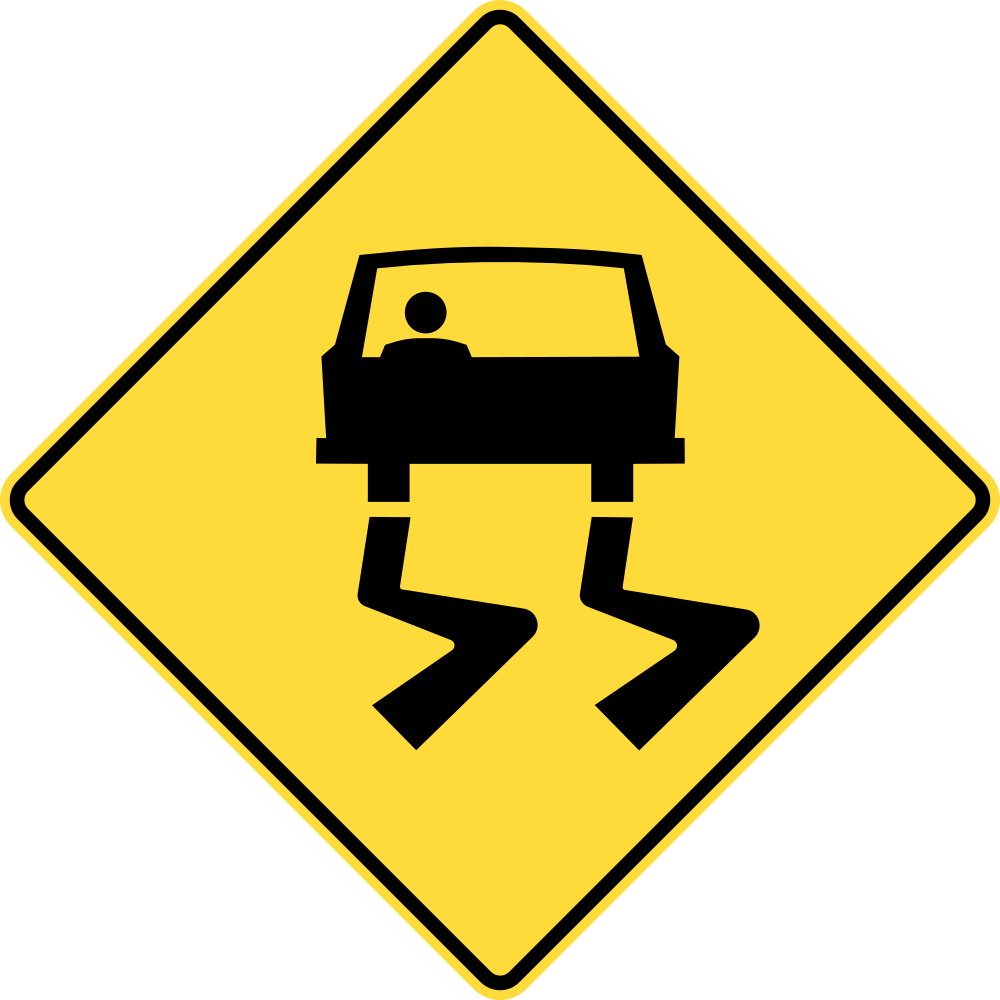
What should you do when you see this sign?
- A.Slow down; the road may be slippery aheadAnswer
- B.Speed up to get through the section before it gets worse
- C.Brake hard to test how much grip you have
- D.Stop and wait for the road to dry
Explanation: Slippery road warns that the surface ahead may give your tires less grip, for example when wet or icy. Slow down before you reach it and avoid sudden braking, accelerating or steering.
50 of 100 · Warning signs
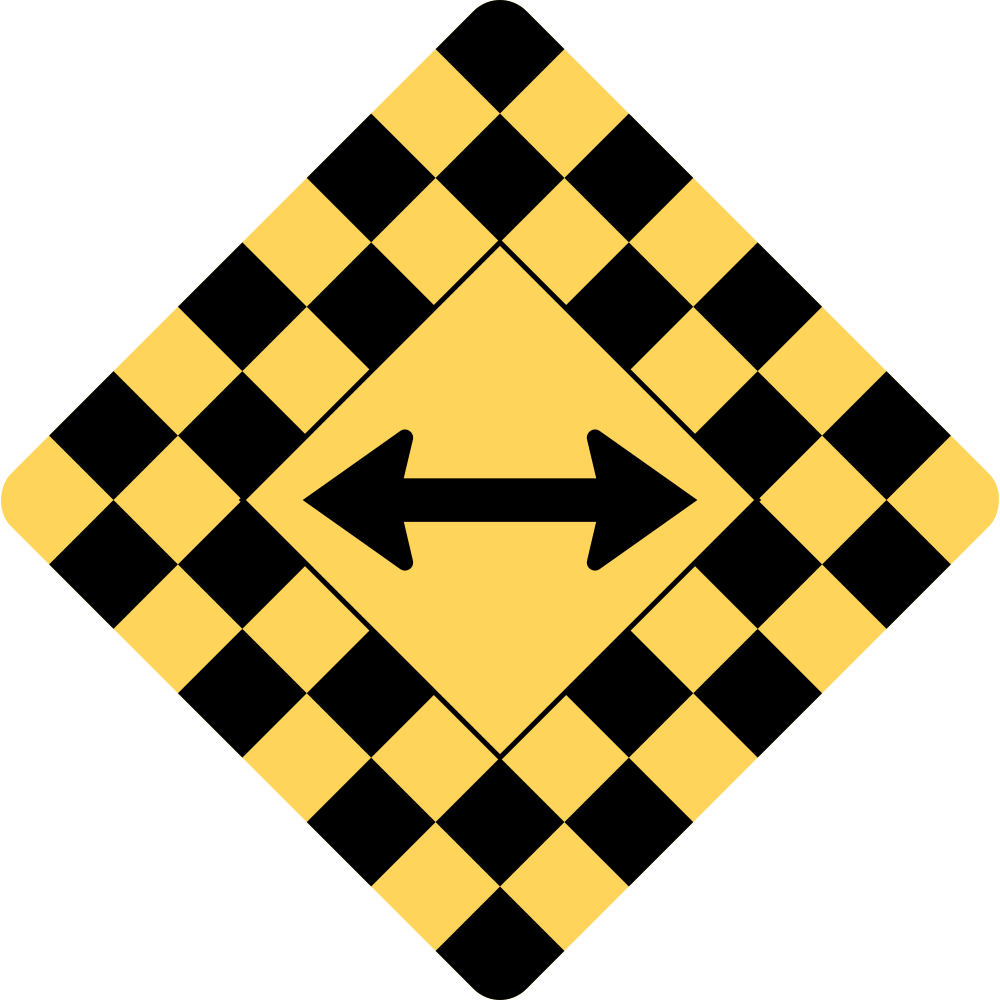
What does this sign mean?
- A.A hazard or danger is directly ahead; turn right or leftAnswer
- B.Keep right of an obstruction in the road
- C.The road narrows ahead
- D.A divided highway ends ahead
Explanation: This marker is placed where the road does not continue straight, such as the end of a T-intersection. The road ahead is a hazard, so slow down well before it and turn right or left.
51 of 100 · Warning signs
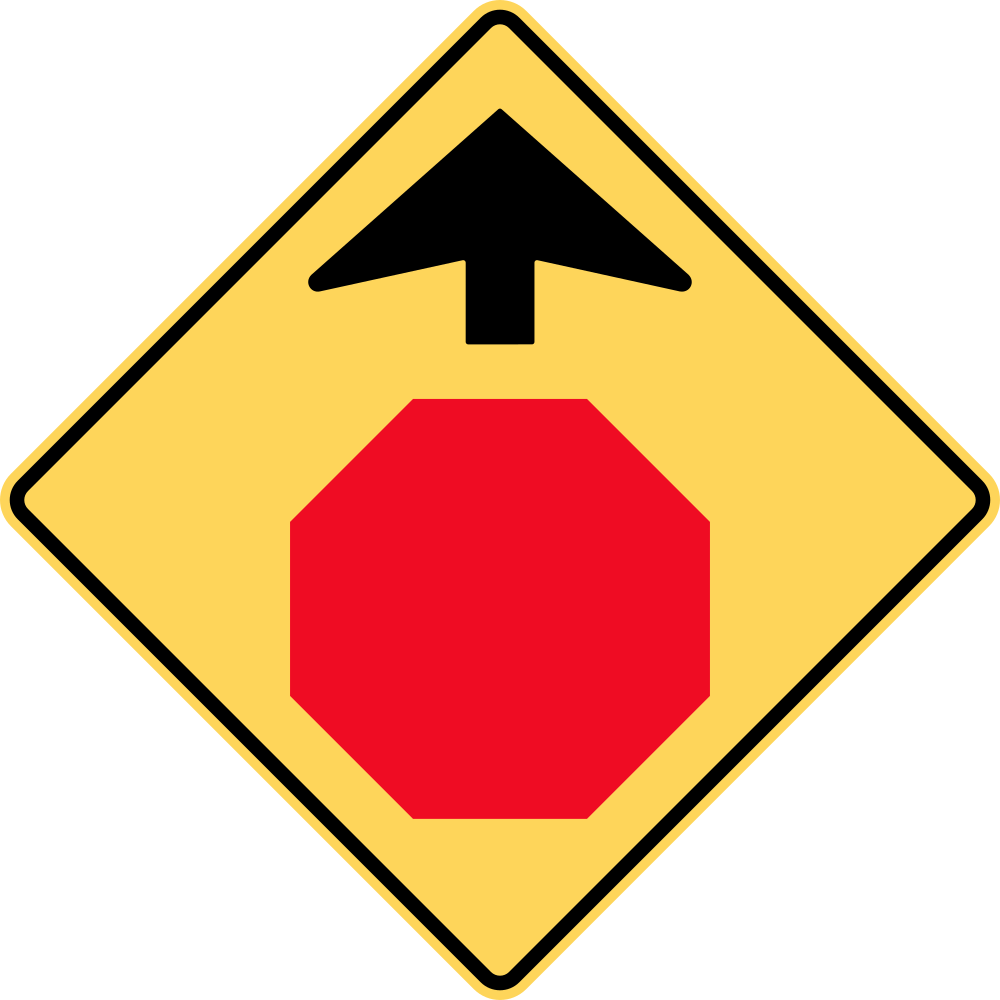
Why is this sign posted, and what should you do?
- A.A stop sign is ahead, often out of sight; slow down and be ready to stopAnswer
- B.You must stop right here at this sign
- C.Traffic signals are ahead
- D.A yield sign is ahead
Explanation: Stop sign ahead is a warning sign used where a curve, hill or other obstruction hides the stop sign until late. Start slowing now so you can stop at the stop sign, not at this one.
52 of 100 · Warning signs
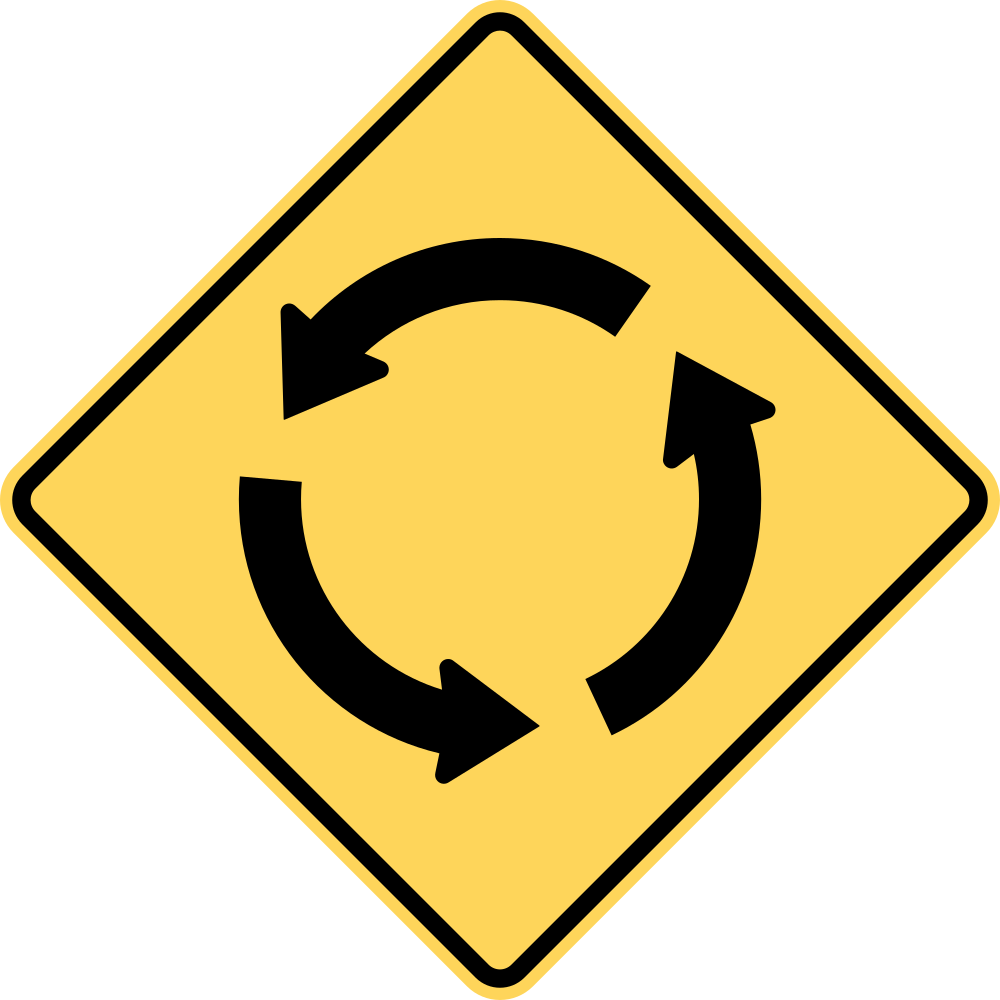
This sign is posted before a roundabout. What must you do as you enter it?
- A.Slow down and yield to any traffic already in the roundaboutAnswer
- B.Enter without slowing; traffic in the roundabout must yield to you
- C.Always come to a complete stop before entering
- D.Go around the roundabout in a clockwise direction
Explanation: Choose your lane before you reach the roundabout, slow down, yield to pedestrians in the crosswalk and to traffic already circulating, then go around counter-clockwise without changing lanes, signalling right before you exit.
53 of 100 · Warning signs
The yellow lights on this sign are flashing. What does that tell you?
- A.Prepare to stop at the signal lights aheadAnswer
- B.The signal lights ahead are out of order
- C.You may drive through the signal ahead without stopping
- D.A school zone begins here
Explanation: This sign is placed before a signal that drivers cannot see from far away. Its lights flash when the signal ahead is about to change against you, so slow down and be ready to stop.
54 of 100 · Warning signs
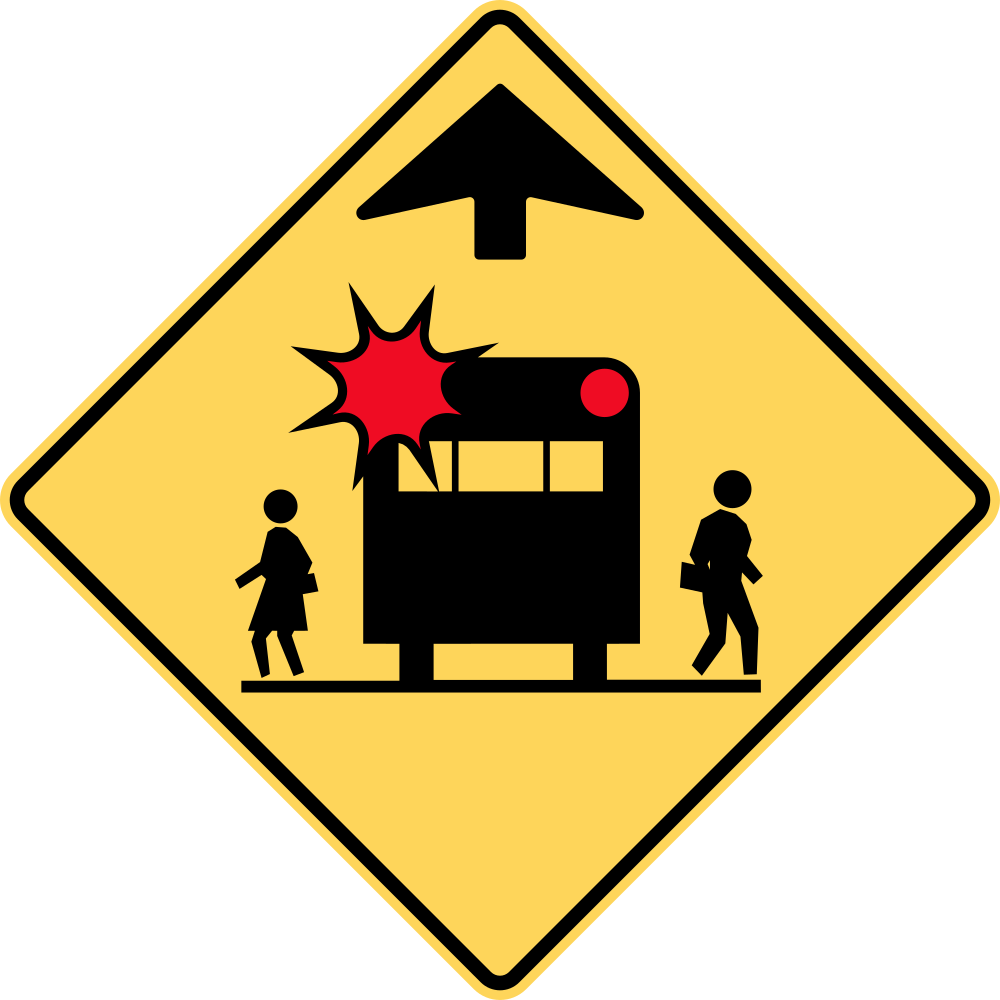
What does this sign warn you about?
- A.A school bus stops ahead; watch for children and be ready to stop for the busAnswer
- B.Only school buses may use the road ahead
- C.A bus lane begins ahead
- D.A school crosswalk is ahead
Explanation: Where a school bus stops, children gather at the roadside. Slow down, and remember that when a school bus shows its alternating flashing red lights you must stop whether you approach it from the front or the rear.
55 of 100 · Warning signs
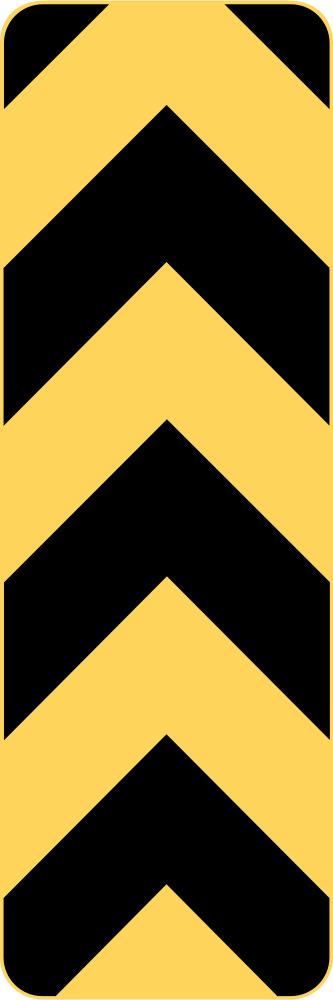
What does this object marker tell you?
- A.There is an obstruction ahead; you may pass it on the right or the leftAnswer
- B.You must pass the obstruction on the right only
- C.You must pass the obstruction on the left only
- D.The road is closed ahead
Explanation: Object markers are mounted on obstructions themselves, so pay special attention to them. The stripes show which side is open: this marker allows you to keep right or left of the obstruction.
56 of 100 · Warning signs
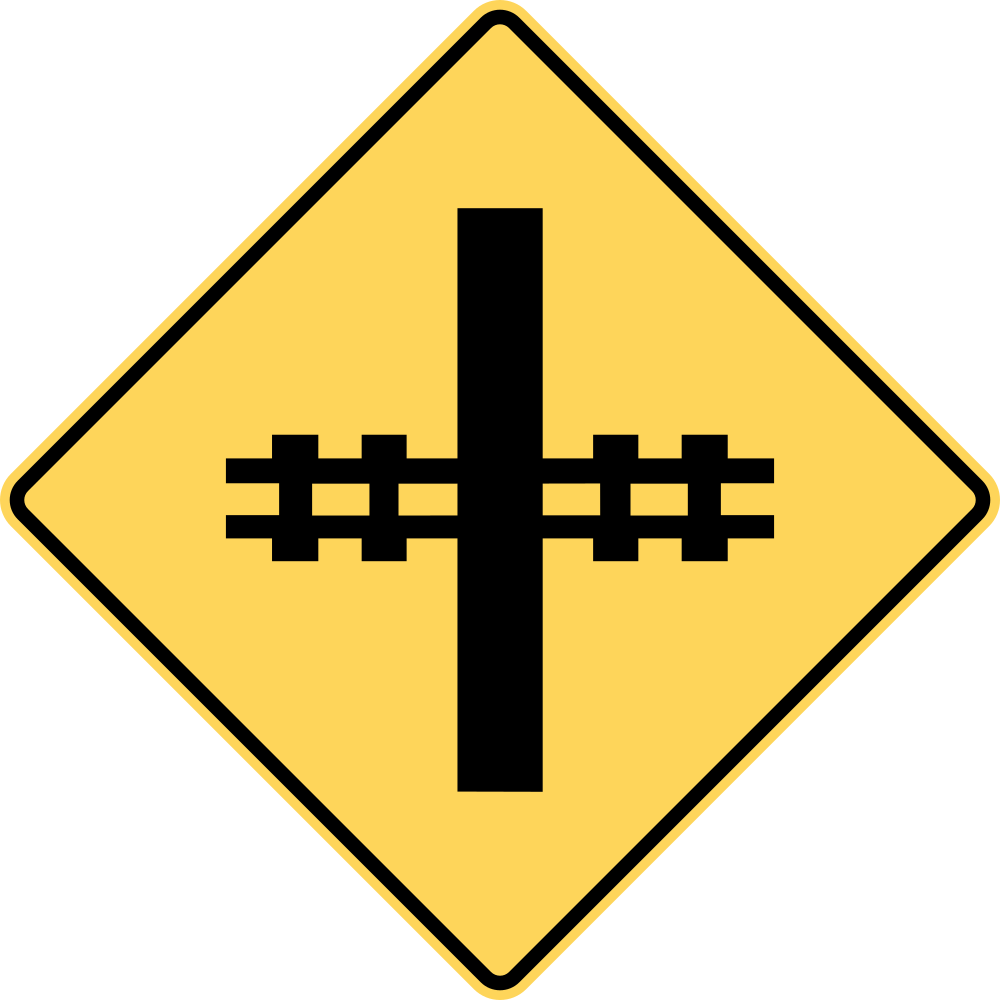
What should you do when you see this sign?
- A.Slow down, look and listen for a train, and be prepared to stopAnswer
- B.Speed up so you cross before any train arrives
- C.Stop here and wait for a signal to proceed
- D.Nothing; the sign only marks a disused railway
Explanation: The advance railway warning sign is posted where you may not yet see the crossing itself. Trains always have the right-of-way and cannot stop for you, so slow down and be ready to stop at the crossing.
57 of 100 · Warning signs

What does this railway crossing sign tell you to do?
- A.Stop, then proceed only when it is safeAnswer
- B.Proceed; you have the right-of-way over trains
- C.Yield only to passenger trains
- D.Change gears on the tracks to cross quickly
Explanation: This sign marks the crossing itself. You must always yield to trains: stop, look both ways along the track, and move across only when it is safe, never trying to beat a train.
58 of 100 · Warning signs
The gate at this crossing has come down. When may you cross the tracks?
- A.Only after the gate is fully raisedAnswer
- B.As soon as the train has passed, even if the gate is still down
- C.When the lights stop flashing, by driving around the gate
- D.Whenever you cannot see a train coming
Explanation: A lowered gate means a train is approaching. Stop and stay stopped until the gate is fully raised: a second train may be coming on another track behind the first one.
59 of 100 · Temporary condition signs
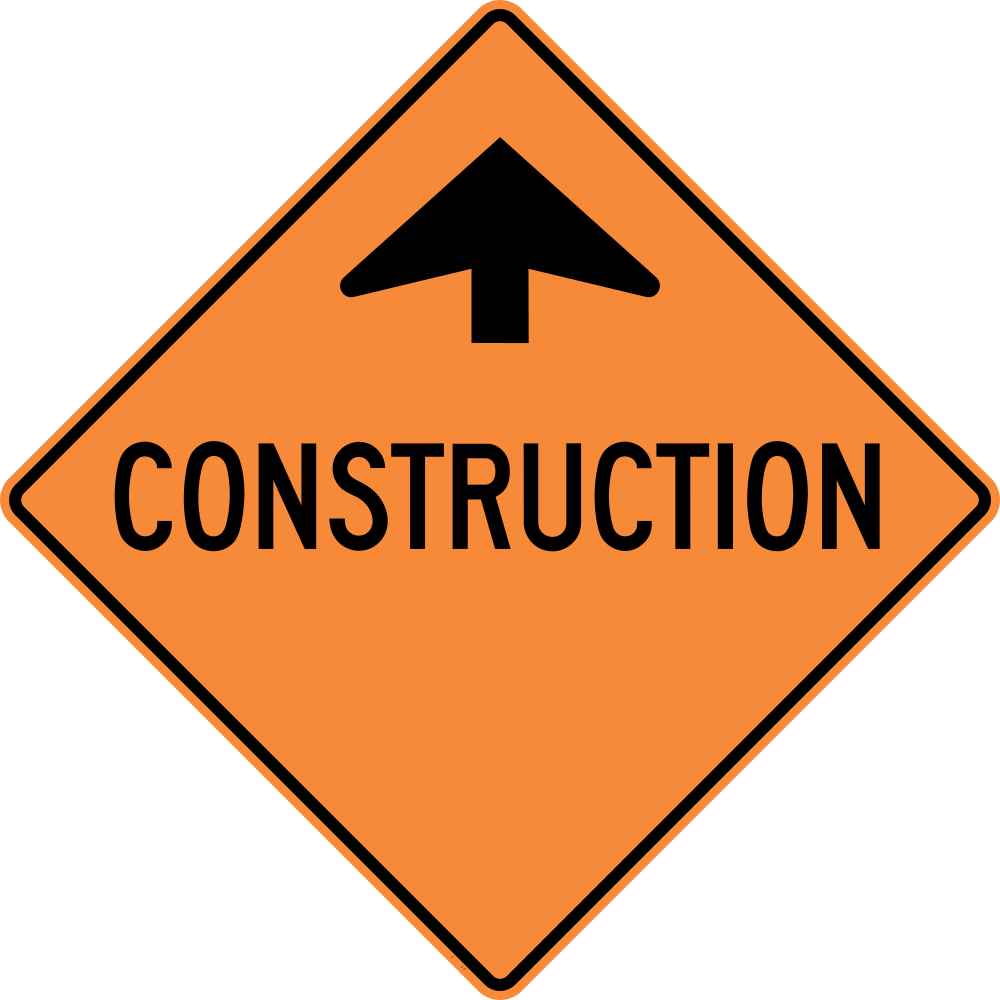
What must you do in the zone this sign warns of?
- A.Obey traffic-control persons, keep within the posted speed, stay well back from equipment and pass only when safeAnswer
- B.Drive at the normal speed limit unless a worker waves you down
- C.Pass the work vehicles quickly to clear the zone sooner
- D.Stop at the sign and wait to be escorted through
Explanation: Construction signs warn of road and maintenance work and carry instructions you must obey. Follow the traffic-control persons, respect the posted speed, keep clear of equipment and pass only where it is safe.
60 of 100 · Temporary condition signs
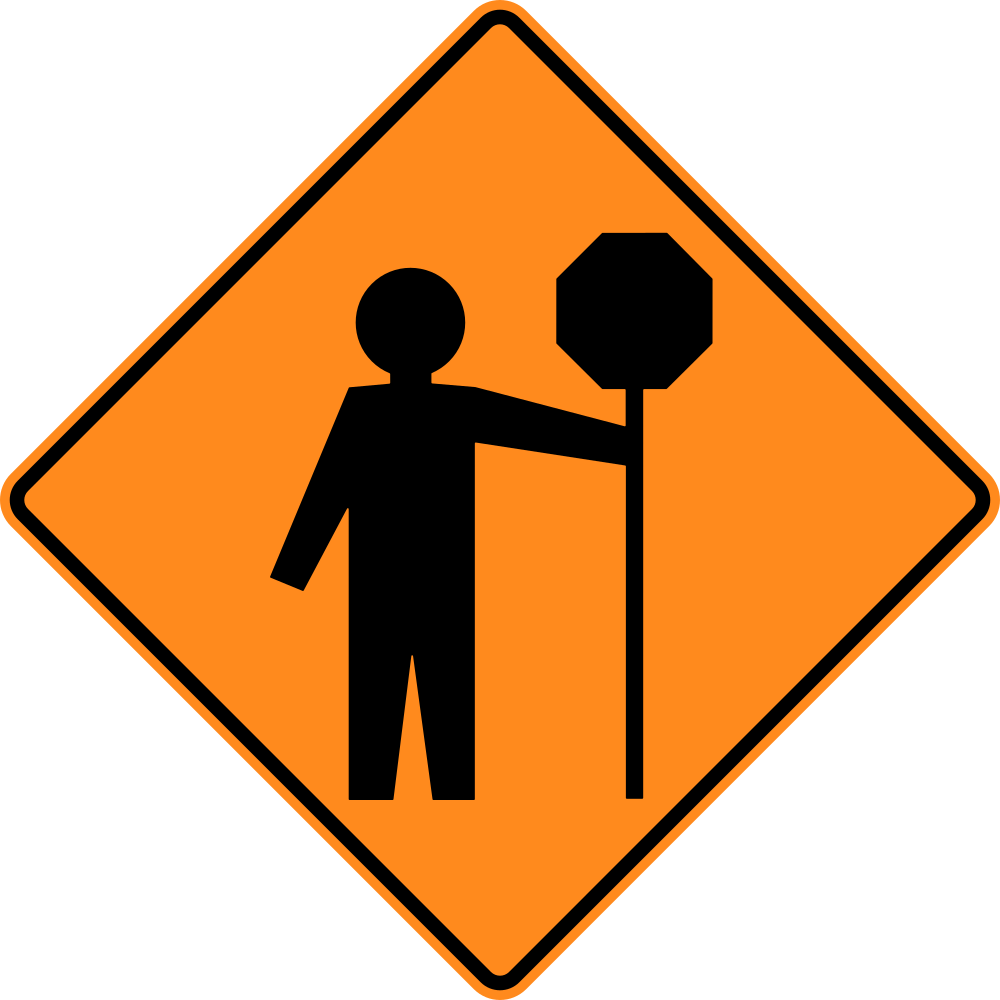
A traffic-control person ahead signals you to stop, although the road looks clear to you. What must you do?
- A.Stop; you must obey the traffic-control person's directionsAnswer
- B.Proceed slowly, since the road is clear
- C.Obey only if the person is a police officer
- D.Sound your horn and continue
Explanation: Traffic-control persons direct traffic through work zones and can see hazards you cannot, such as equipment about to cross. Their directions and the construction signs must be obeyed from the start to the end of the zone.
61 of 100 · Temporary condition signs
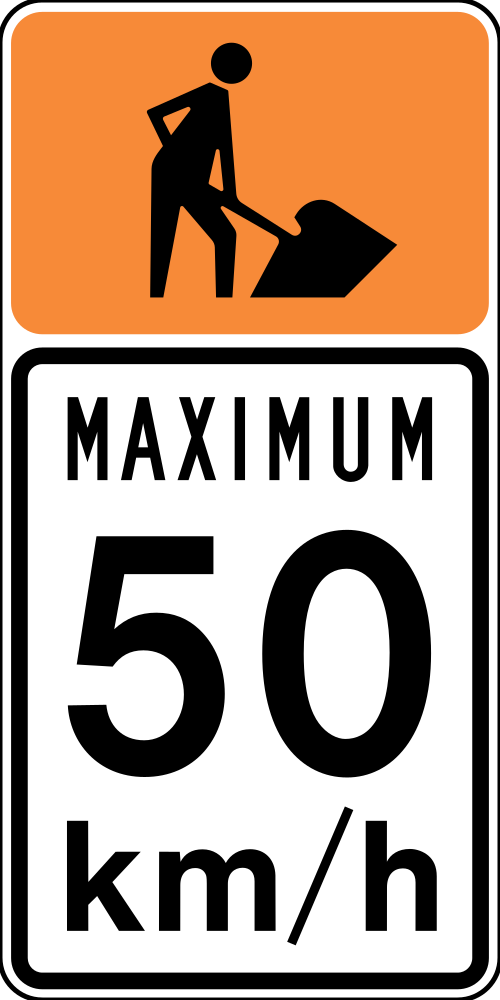
When does the construction zone speed limit posted with this sign apply?
- A.24 hours a day, whenever it is postedAnswer
- B.Only while workers are present
- C.Only during daylight hours
- D.Only on weekdays
Explanation: Construction zone limits are set for the road conditions, not just the crew, and apply 24 hours a day when posted. Much road work is done at night, and fines are double in construction zones.
62 of 100 · Temporary condition signs
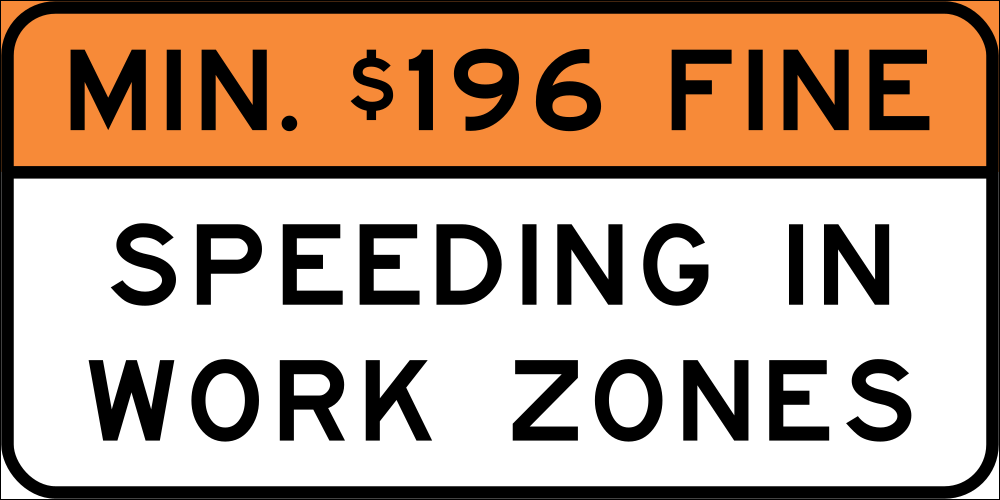
What does this sign tell you about speeding in a work zone?
- A.Traffic fines are double in construction zonesAnswer
- B.Speeding is tolerated if no workers are present
- C.Only trucks are fined for speeding here
- D.Fines are waived for first offences
Explanation: The fine notice is there because work zones are dangerous for crews and drivers alike. Slow to the posted construction speed: a speeding ticket there costs double the usual fine.
63 of 100 · Temporary condition signs
You see this lighted arrow board at a work zone. What should you do?
- A.Move in the direction of the lighted arrow, into the open laneAnswer
- B.Stop and wait for the arrow to turn off
- C.Turn around; the road ahead is closed
- D.Stay in your lane and drive past the board
Explanation: The arrow board tells you which way the open lane is. Merge early, as soon as it is safe, rather than driving to the end of the closed lane and forcing your way in.
64 of 100 · Temporary condition signs
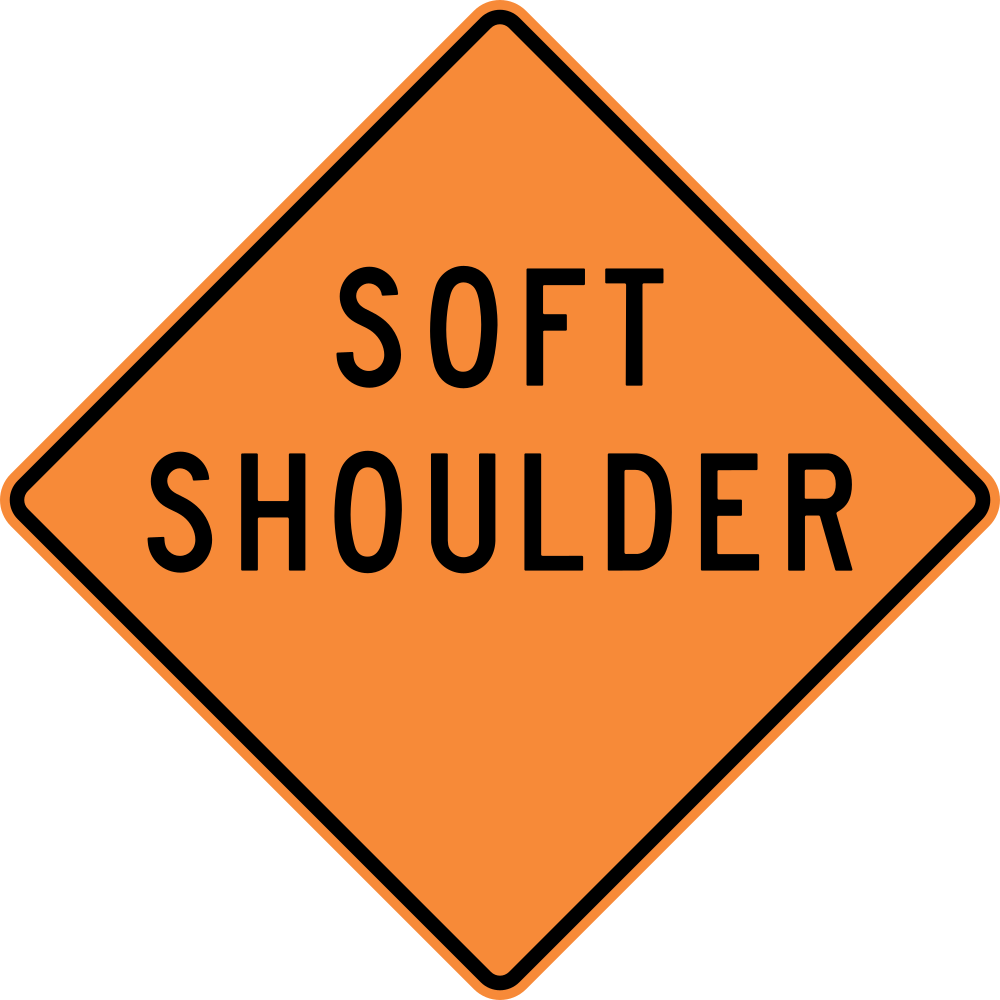
What does this sign mean?
- A.The shoulder ahead is soft; stay off itAnswer
- B.You may use the shoulder to pass slow vehicles
- C.Pull onto the shoulder to let traffic pass
- D.The pavement ends ahead
Explanation: A soft shoulder will not support your vehicle: a wheel that drops onto it can sink or pull you off the road. Keep all your wheels on the pavement through the work area.
65 of 100 · Temporary condition signs
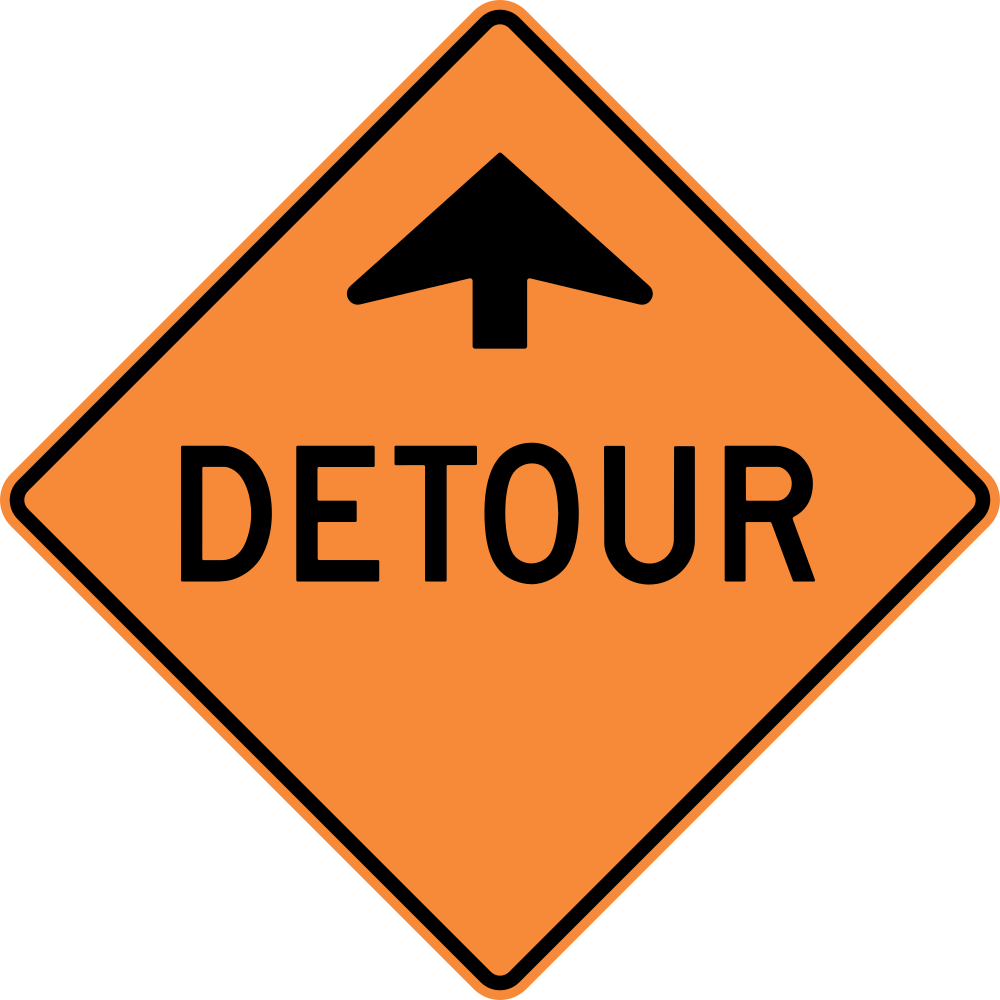
What does this sign tell you to expect?
- A.A detour ahead that takes you around a closed section of roadAnswer
- B.A slow vehicle pullout ahead
- C.A winding road ahead
- D.A freeway exit ahead
Explanation: Detour signs belong to the construction family: they warn that the normal route is closed and guide you around it. Follow the detour signs until you rejoin your route.
66 of 100 · Temporary condition signs
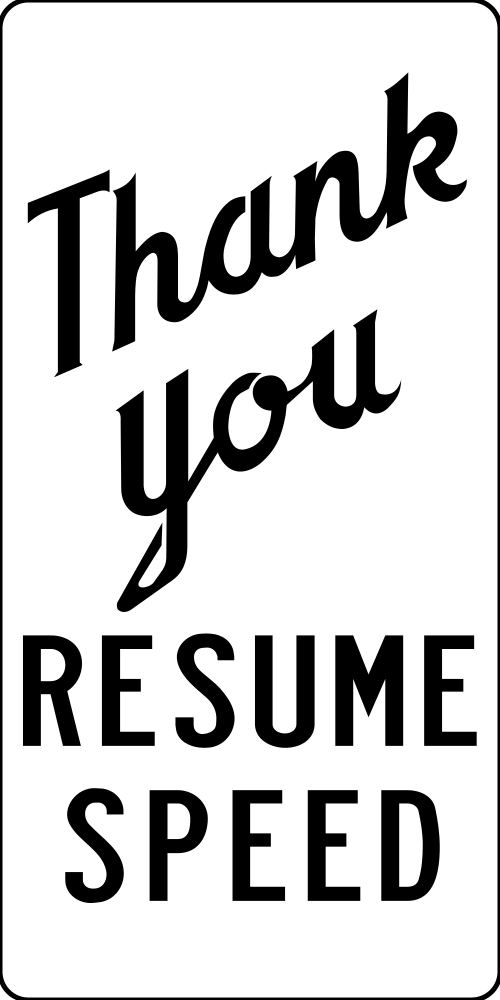
What does this sign mean?
- A.The construction zone speed limit ends hereAnswer
- B.A construction zone begins here
- C.The speed limit is reduced from this point
- D.Fines are doubled from this point
Explanation: This sign closes the construction zone speed limit. From here the regular speed limit for the road applies again, but keep watching for crews and equipment leaving the site.
67 of 100 · Information signs
In what units are the distances on this destination sign given?
- A.KilometresAnswer
- B.Miles
- C.Minutes of driving time
- D.Metres
Explanation: Destination signs list the places ahead with the distance to each. In B.C. those distances are in kilometres, matching the km/h on speed limit signs.
68 of 100 · Information signs
What kind of information do signs like this one give?
- A.Destinations, route numbers and facilitiesAnswer
- B.Driving laws and regulations
- C.Hazards on the road ahead
- D.Construction and maintenance work
Explanation: Information and destination signs help you find your way: they show directions and distances, identify highways and point to services. They do not impose rules or warn of hazards.
69 of 100 · Information signs
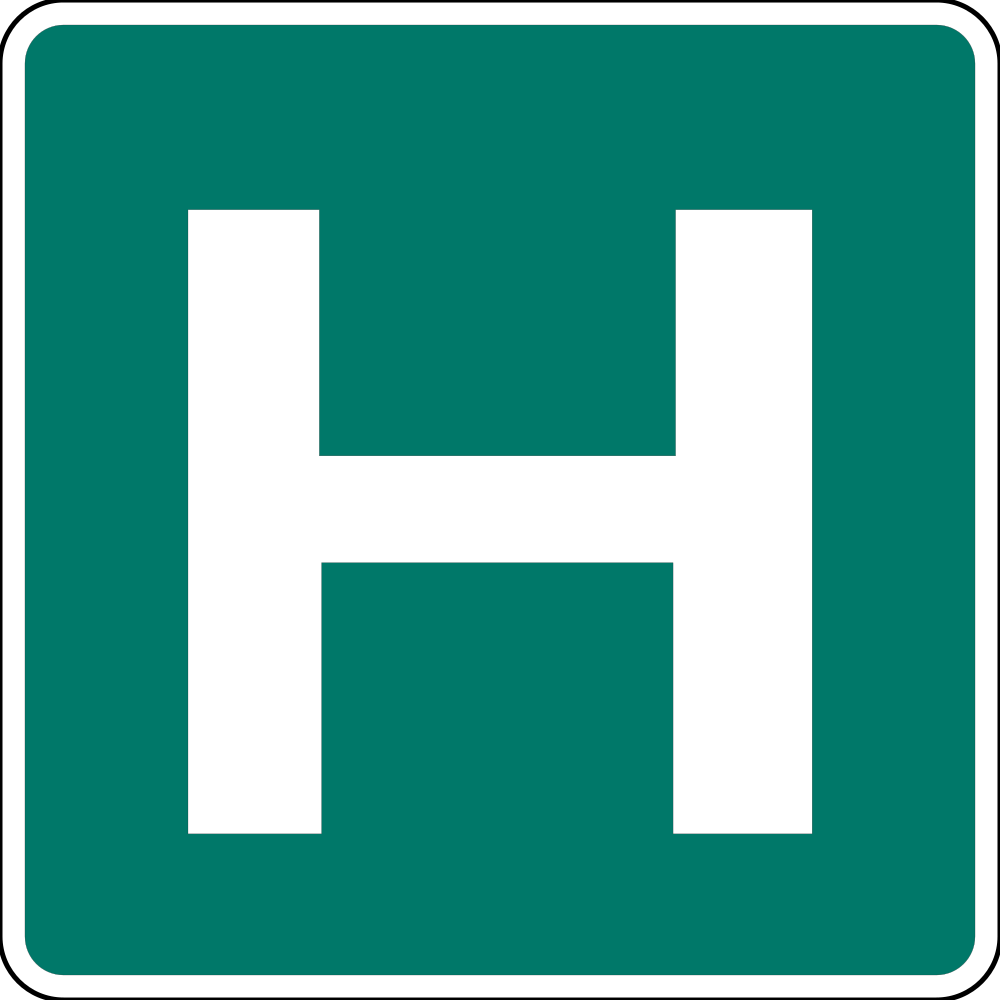
What does this sign mean?
- A.A hospital is nearbyAnswer
- B.A railway crossing is ahead
- C.Travel information is available ahead
- D.Emergency vehicles only beyond this point
Explanation: Information signs point the way to facilities along the road. This one tells you a hospital is nearby, which is worth knowing in an emergency.
70 of 100 · Information signs
What does this sign tell you?
- A.Gas is available aheadAnswer
- B.Fuel trucks use the road ahead
- C.No refuelling on the shoulder
- D.A rest area is ahead
Explanation: Signs that tell about motorist services, such as gas, accommodation or travel information, are information signs. They let you plan a stop before you need one.
71 of 100 · Information signs

What does this route marker identify?
- A.The Trans-Canada HighwayAnswer
- B.A primary provincial highway
- C.A scenic tourist route
- D.A route reserved for trucks
Explanation: Route markers identify the highway you are on. The maple-leaf marker is the Trans-Canada Highway; a different shield marks a primary provincial highway.
72 of 100 · Information signs
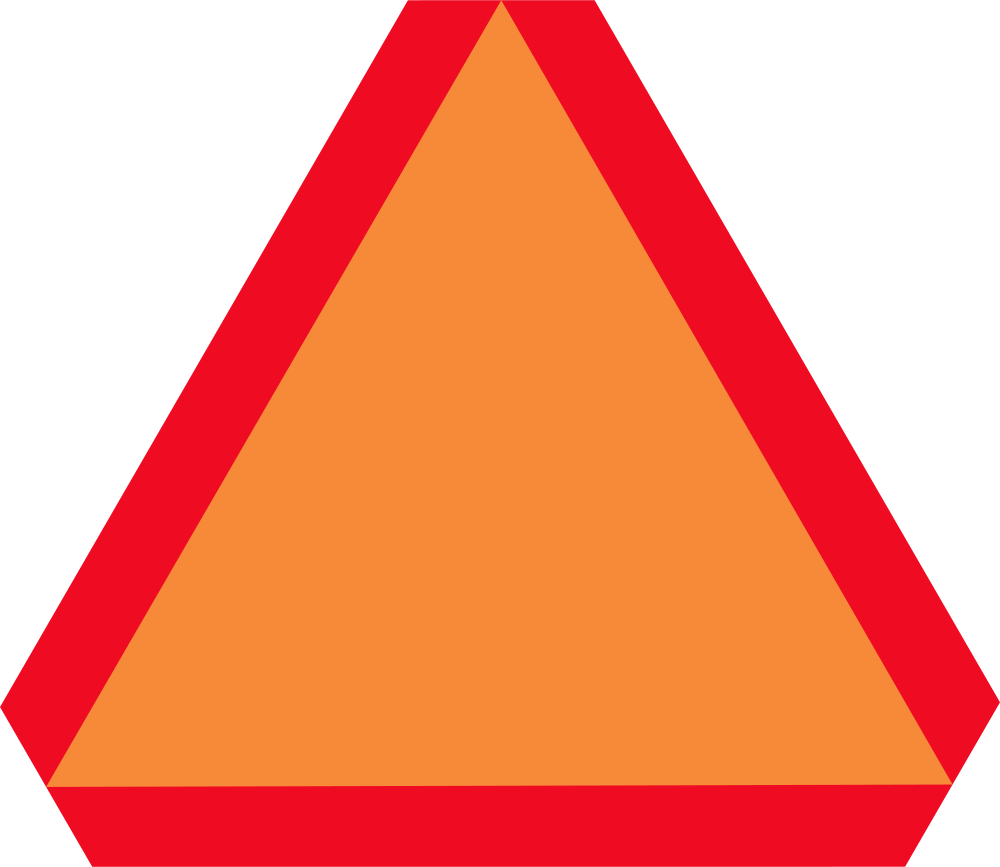
You see this sign on the back of a vehicle ahead of you. What does it tell you?
- A.The vehicle will be moving slowly; keep your distance and pass only when you are certain it is safeAnswer
- B.The vehicle is carrying dangerous goods
- C.The vehicle is about to turn left
- D.You must pass the vehicle immediately
Explanation: Farm equipment and other slow vehicles carry this sign so you can recognise them from a distance. Close the gap gradually, stay well back and pass only where it is safe and legal.
73 of 100 · Information signs
What does this sign tell you?
- A.Accommodation is available aheadAnswer
- B.A hospital is nearby
- C.A rest area with camping is ahead
- D.No overnight parking beyond this point
Explanation: This is a motorist services sign: it tells you a hotel, motel or other accommodation is available ahead. Like other information signs, it helps you plan rather than telling you what you must do.
74 of 100 · Traffic signals
You are stopped at a steady red light and want to turn left onto a one-way street. No sign forbids it. What may you do?
- A.After a full stop, turn left onto the one-way street once the intersection is clearAnswer
- B.Nothing; left turns on a red light are never allowed
- C.Turn left without stopping if no vehicle is coming
- D.Wait for a green arrow before turning
Explanation: A steady red means stop. After you have come to a full stop and checked that the intersection is clear of vehicles, cyclists and pedestrians, you may turn right, or turn left onto a one-way street, unless a sign forbids it.
75 of 100 · Traffic signals
What does a steady green light mean?
- A.Go, but only if the intersection is clear and it is safeAnswer
- B.Go immediately; you have the right-of-way over everyone
- C.When turning left, oncoming traffic must yield to you
- D.Pedestrians must wait until you have passed
Explanation: Green means go only when it is safe. On a fresh green, scan the intersection before moving; on a stale green, be ready for yellow. A driver turning left on a green must yield to oncoming traffic and wait for a safe gap.
76 of 100 · Traffic signals
The light turns steady yellow as you approach the intersection. What must you do?
- A.Stop before the intersection unless you cannot stop safely in timeAnswer
- B.Speed up to clear the intersection before the red
- C.Continue at the same speed; yellow means proceed with caution
- D.Stop in the middle of the intersection and wait
Explanation: A steady yellow warns that the signal is about to turn red. You must stop before entering the intersection; the only exception is when stopping safely is no longer possible, which is why you should watch for a stale green and decide your stopping point in advance.
77 of 100 · Traffic signals
What does a flashing red light at an intersection mean?
- A.Stop completely, then continue only when it is safeAnswer
- B.Slow down and proceed with caution without stopping
- C.Stop and wait until the light turns green
- D.The signal is broken; ignore it
Explanation: Treat a flashing red light like a stop sign: come to a complete stop, check the intersection, and move into it only when it is clear and safe. It will not turn green.
78 of 100 · Traffic signals
In B.C., what does a flashing green traffic light mean?
- A.A pedestrian-controlled light; go only if the intersection is clearAnswer
- B.An advance left turn; oncoming traffic is stopped
- C.The light is about to turn yellow; speed up
- D.Cross traffic has a green light too, so stop
Explanation: Unlike some other provinces, in B.C. a flashing green light is not an advance turn signal. It marks a pedestrian-controlled intersection: a pedestrian can press a button to turn it yellow and then red, and side-street traffic faces a stop sign. Continue only if the intersection is clear.
79 of 100 · Traffic signals
You are approaching a crosswalk with a flashing green light and see a pedestrian standing beside it. What should you do?
- A.Slow down and be prepared to stop; they have probably pressed the button and the light is about to changeAnswer
- B.Keep your speed; the light is green so you have the right-of-way
- C.Stop in the crosswalk and wave the pedestrian across
- D.Sound your horn so the pedestrian waits
Explanation: Crosswalks with flashing green lights are controlled by pedestrians. A person waiting there is a clue that the light will soon turn yellow and red, so slow down early instead of being caught by the change.
80 of 100 · Traffic signals
What does a flashing yellow light mean?
- A.Slow down and proceed with cautionAnswer
- B.Stop, then proceed when it is safe
- C.Stop and wait for a green light
- D.The lane ahead is closed
Explanation: A flashing yellow light does not require a stop; it tells you to slow down, look carefully and go through with caution. Cross traffic usually faces a flashing red and must stop.
81 of 100 · Traffic signals
You are in a left-turn lane facing a green arrow. What does it tell you?
- A.You may turn in the direction of the arrow; through traffic from the other direction is facing a red lightAnswer
- B.You may turn only after yielding to oncoming traffic
- C.You must go straight through only
- D.You must stop and wait for the round green light
Explanation: A green arrow gives you a protected turn: as long as it is shown, the through traffic you would cross is held by a red light. Still check for pedestrians before you turn.
82 of 100 · Traffic signals
What does a green arrow pointing straight up mean?
- A.Go straight through only; no turn is permittedAnswer
- B.Go straight or turn either way
- C.Turn right only
- D.Stop; the intersection is closed
Explanation: An arrow signal permits only the movement it points to. A straight-ahead green arrow lets through traffic go while turns are held, often because pedestrians or another movement have their own phase.
83 of 100 · Traffic signals
A flashing green left arrow is showing together with a steady red light. What may you do?
- A.Turn left; through traffic must stop for the red lightAnswer
- B.Go straight; the arrow overrides the red light
- C.Nothing; wait for a steady green light
- D.Turn right only
Explanation: The flashing green arrow with a steady red allows the left turn while everything else waits. Drivers going straight or turning right must obey the red light.
84 of 100 · Traffic signals
The flashing green arrow goes out and only the steady green light remains. Can you still turn left?
- A.Yes, but you must yield to pedestrians and oncoming trafficAnswer
- B.No; you must wait for the next green arrow
- C.Yes, and oncoming traffic must yield to you
- D.Only if no vehicle is behind you
Explanation: When the advance arrow is on the regular traffic light, the end of the arrow ends the protection, not the permission. You may still turn left on the green, but now you must wait for a safe gap in oncoming traffic and let pedestrians cross.
85 of 100 · Traffic signals
What does a yellow arrow mean?
- A.The advance left-turn signal is about to change; stop before the intersection unless you cannot stop safelyAnswer
- B.Turn left now with extra caution
- C.Left turns are prohibited at all times
- D.The signal is malfunctioning
Explanation: A yellow arrow works like a steady yellow light for the turning lane: the protected turn is ending. Stop before the intersection unless you are too close to stop safely, and wait for the next arrow or a green light.
86 of 100 · Traffic signals
A steady white rectangular light is showing at an intersection. Who may go on this signal?
- A.Only busesAnswer
- B.All vehicles in the curb lane
- C.Pedestrians only
- D.Any vehicle turning right
Explanation: The transit priority signal lets a bus move ahead of other traffic, for example to pull out of a stop or into a reserved lane. Other drivers wait for their own light, even if the bus beside them is moving.
87 of 100 · Traffic signals
This lane control signal is displayed over the lane you are in. What does it mean?
- A.Do not drive in this laneAnswer
- B.This lane is open for driving
- C.This lane is for left turns only
- D.Slow down and proceed with caution in this lane
Explanation: Lane control signals hang over each lane of a bridge, tunnel or reversible-lane road to show which lanes are open. This signal closes the lane, perhaps because it is carrying oncoming traffic: move out of it as soon as it is safe.
88 of 100 · Traffic signals
The lane control signals over all of the lanes are flashing yellow. What should you do?
- A.Slow down and proceed with cautionAnswer
- B.Stop and wait for a green arrow
- C.Move to the far-left lane
- D.Turn around; the road is closed
Explanation: A flashing yellow lane signal over one lane tells you to move out of it into a lane showing a green arrow. When every lane is flashing yellow there is nowhere to move to, so the message becomes: slow down and drive through carefully.
89 of 100 · Traffic signals

As you approach a green light, the pedestrian signal changes from the white walking figure to an orange hand. What is that a clue of?
- A.The green light is stale and about to turn yellowAnswer
- B.The light has just turned green
- C.Pedestrians may now start crossing
- D.The traffic light is out of order
Explanation: In many areas the crosswalk signal changes to the orange hand, or counts down, just before the traffic light turns yellow. Use it as a clue that the green is stale and decide your point of no return before you reach the intersection.
90 of 100 · Traffic signals
The traffic lights at an intersection have stopped working, or all of them are flashing. How should you treat the intersection?
- A.Like a four-way stopAnswer
- B.As an uncontrolled intersection where nobody needs to stop
- C.Go through; the main road has the right-of-way
- D.Wait until the lights are repaired
Explanation: When the lights go out or all of them flash, every driver stops and the four-way stop rules apply: the first to arrive and stop goes first, and if two arrive together the one on the right goes first. If a traffic control person is directing traffic, follow their directions instead.
91 of 100 · Pavement markings
What do yellow lines painted on the road divide?
- A.Traffic moving in opposite directionsAnswer
- B.Lanes of traffic moving in the same direction
- C.The roadway from the shoulder
- D.Parking spaces from the travel lane
Explanation: If there is a yellow line to your left, traffic on the other side of it is coming toward you. White lines, by contrast, separate lanes going the same way and mark crosswalks, stop lines and shoulders.
92 of 100 · Pavement markings
A broken yellow line separates your lane from oncoming traffic. What does it allow?
- A.Passing, when it is safeAnswer
- B.No passing in either direction
- C.Passing only during daylight
- D.Driving on either side of the line
Explanation: A broken yellow line means passing is allowed when it is safe: you may cross it to pass, provided you have a clear view far enough ahead and can return to your lane before meeting oncoming traffic.
93 of 100 · Pavement markings
The yellow centre line is solid on your side and broken on the other side. May you pass?
- A.No; you may pass only when the broken line is on your sideAnswer
- B.Yes, whenever the road ahead is clear
- C.Yes, but only at night
- D.Yes, if the vehicle ahead is driving slowly
Explanation: With a broken and a solid line together, the line nearest you is the one that applies. A solid line on your side means passing is not allowed from your direction, usually because sight distance is too short; drivers on the broken-line side may pass when safe.
94 of 100 · Pavement markings
What does a double solid yellow line in the centre of the road mean?
- A.No passing is allowedAnswer
- B.Passing is allowed with extra caution
- C.The lane beside you is reversible
- D.The centre lane is shared for left turns
Explanation: Two solid yellow lines mean neither direction may pass. Note the B.C. distinction: a single solid yellow line allows passing with extra caution, but a double solid line does not.
95 of 100 · Pavement markings
In B.C., what does a single solid yellow centre line mean?
- A.Passing is allowed with extra cautionAnswer
- B.No passing at any time
- C.The lane is reserved for buses
- D.Passing is allowed on the right only
Explanation: This is a B.C. rule that surprises many learners: a single solid yellow line does not ban passing, it warns you to pass only with extra caution. It is the double solid line that means no passing.
96 of 100 · Pavement markings
What does a double broken yellow line on each side of a lane mark?
- A.A reversible lane; a lane control signal shows whether you may use itAnswer
- B.A bicycle lane
- C.A no-passing zone
- D.A passing lane for slow traffic
Explanation: A reversible lane carries traffic in one direction at some times and the other direction at other times. Never enter it on the strength of the markings alone: look at the lane control signal overhead to see whether it is open to you.
97 of 100 · Pavement markings
A centre lane is marked with a solid yellow line on the outside and a broken yellow line on the inside of each edge. What is it for?
- A.Left turns by drivers travelling in either directionAnswer
- B.Passing slower vehicles in either direction
- C.Through traffic that wants to avoid the curb lanes
- D.Parking while loading or unloading
Explanation: This is a two-way left-turn lane, handy for turning left in the middle of a block. Vehicles from the opposite direction use the same lane to turn left, so enter it only when there is enough space and watch for them.
98 of 100 · Pavement markings
What does a solid white line between two lanes mean?
- A.Do not change lanesAnswer
- B.Lane changing is allowed when safe
- C.The lanes carry traffic in opposite directions
- D.The lane beside it is reserved for buses
Explanation: White lines separate lanes going the same way. A broken white line lets you change lanes when safe; a solid one, such as the line beside a freeway acceleration lane, tells you to stay in your lane.
99 of 100 · Pavement markings
What does a white diamond painted on the road surface mark?
- A.A reserved lane, such as a bus or HOV laneAnswer
- B.A pedestrian crossing
- C.A no-stopping zone
- D.A railway crossing ahead
Explanation: The white diamond is the mark of a reserved lane. Signs over or beside the lane say which vehicles may use it, such as buses, HOVs or bicycles, and when the restriction applies.
100 of 100 · Pavement markings
You come to a painted island on the road. What must you do?
- A.Keep to the right of it and do not drive on or over itAnswer
- B.Use it to pass a slower vehicle
- C.Stop on it while waiting for a gap to turn
- D.Drive over it to make a left turn
Explanation: A painted island separates or channels traffic just as a raised island would. Treat it as solid: keep to the right of it and never drive on or across it. Remember too that it is illegal to drive over freshly painted, wet pavement markings.